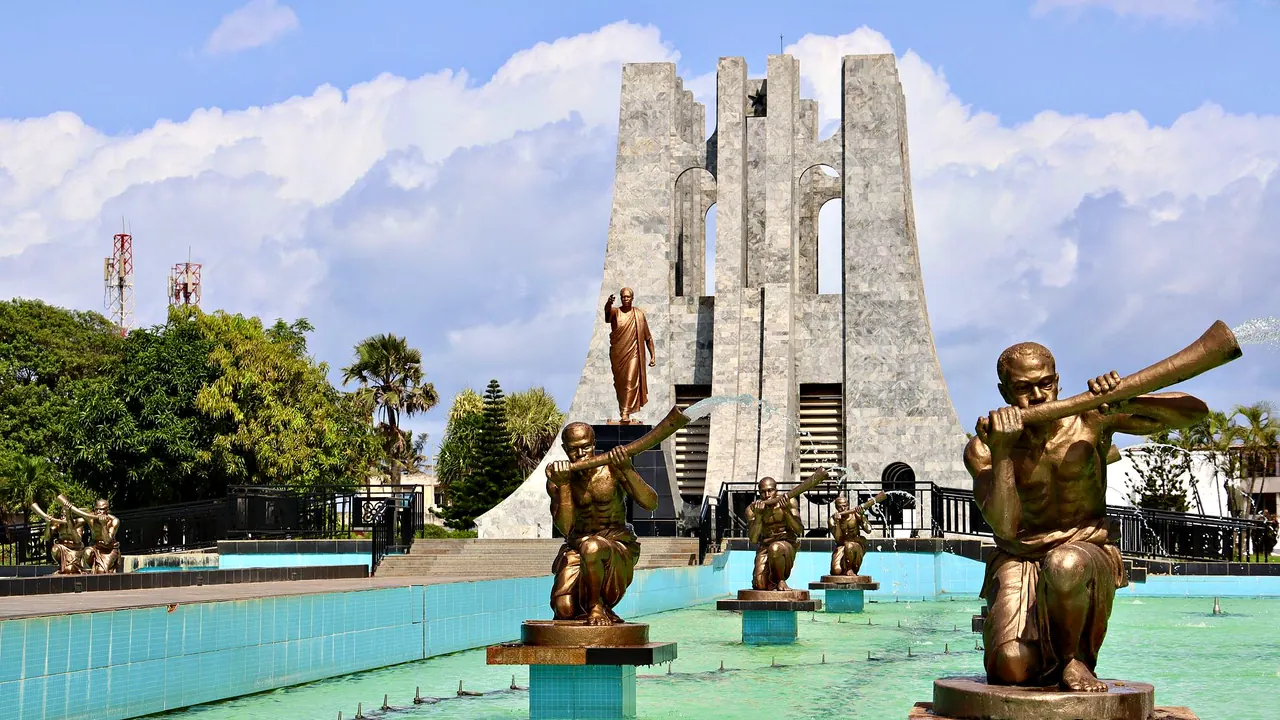
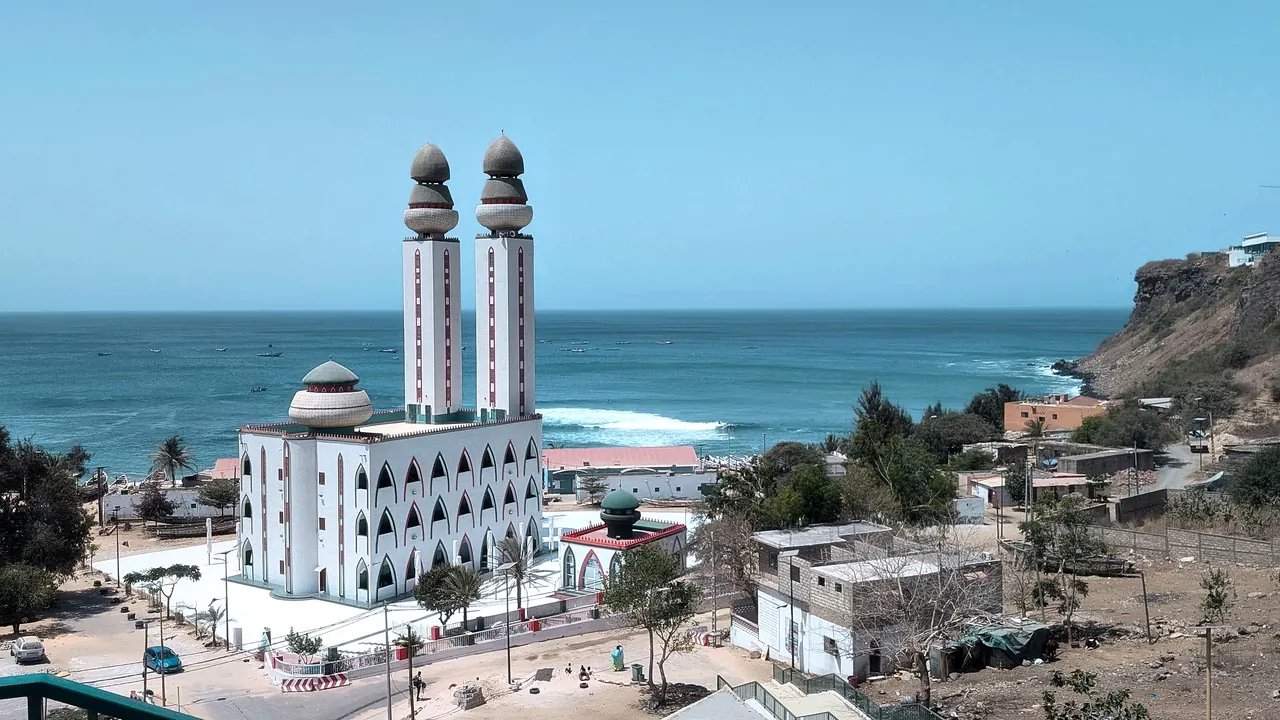
Photos: Accra by Ana Kenk, Pexels License; Dakar by Issathiome, CC BY-SA 4.0, cropped.
Accra or Dakar?
Our verdict in twelve categories, each scored against the same fixed benchmark cities, and the climate month by month, so you can choose for your trip.
Choose Accra for
- nightlife
- prices
Accra suits the traveller who comes for the people and the party rather than the sights. December is its great month, when the diaspora returns, the concert season fills the arenas and the nights out run from roadside grills to Afrobeats clubs. English is the everyday language, the sea stays warm all year, and a few days of Jamestown, the independence monuments and the craft markets, with a night up in the Aburi hills, make a rewarding first taste of West Africa.
Choose Dakar for
- culture and sights
- getting around
- beaches
Dakar is the stronger all-round choice for most visitors. Gorée Island and the Museum of Black Civilisations give it a cultural weight Accra lacks, the fish-and-rice cooking is among the best in the region, and mbalax bands play live late into the night. Beaches and surf breaks lie within the city, the TER makes the main corridors easier, and the long dry season brings warm days without the steady heat of the Gulf of Guinea.
Scoreboard
Twelve categories on one fixed scale from 0 to 100. The shaded stretch is the gap between the two.
Your match
Pick a travel style or drag the sliders, and both match scores follow your weighting.
Wins on nightlife and prices with your weighting.
Wins on culture and sights and getting around with your weighting.
What matters to you?
Category by category
What the scores mean for a trip.
Beaches & swimming
Dakar lives with the sea far more than Accra does. N'Gor, Yoff, Anse Bernard and the coves around the Almadies are all inside the city, and N'Gor island, a few minutes away by pirogue, has calm water for swimming. The catch is the season: from about December to May the upwelling keeps the water cool and the surf strong.
Accra's sea is warm all year, but heavy swells, rip currents and litter make the city shore, Labadi included, better for drumming and weekend crowds than for swimming. Its good beaches, Bojo on its sandbar and the surf village of Kokrobite, are trips out of town, not part of daily life.
Food & drink
Eating in Accra is about filling, pepper-hot comfort food. A meal is usually a starch, banku, fufu or kenkey, with a soup or fried fish, and jollof rice gives every cook something to argue about. You eat in chop bars and from street vendors in Osu, Jamestown and around Makola, and the snacks are just as substantial: waakye in the morning and kelewele after dark. Once you step beyond Ghanaian and Lebanese cooking, though, the choice runs out quickly.
Dakar gives you more variety from one meal to the next. Yassa is sharp with onion and lemon, mafé is rich with peanut, and on a coast where the catch comes in every day, fish turns up in many forms. Snacking is also more varied: fataya pastries, café Touba and sweet attaya tea in place of Accra's plantain and beans, as well as bissap and ginger juice, French bread and Lebanese mezze. Polished restaurants are scarce in both cities, so plan to eat home-style.
Culture & sights
Dakar has far more to see. Gorée's UNESCO-listed lanes and the House of Slaves are a short ferry ride away, and the Museum of Black Civilisations and the IFAN museum hold collections from across Africa. The Village des Arts and the Dak'Art biennale add a contemporary side, and the main sights fill three or four days.
Accra's story is the independence era, told through the Nkrumah mausoleum, Black Star Gate and the Du Bois Centre, together with the forts and lighthouse of Jamestown. Its museums are thin, and Ghana's great slave-trade castles at Cape Coast and Elmina are far from the city, so two or three days are enough.
Nightlife
The two are evenly matched, but the nights feel different. Accra's evening drifts from roadside beer and grilled meat to rooftop bars in Osu and Labone and on to Afrobeats and amapiano clubs. In December the homecoming season turns the whole month into one long party.
Dakar starts later and runs longer, with bars that barely fill before midnight and clubs that go on until dawn. In this mostly Muslim city a night out is more about dressing up and dancing than about drinking, there are ocean-facing lounges in Almadies and Ngor, and things go quiet during Ramadan.
Nature & outdoors
Dakar has the more dramatic natural setting, and it is on the doorstep. Basalt cliffs, the Mamelles hills, Africa's westernmost point and year-round surf breaks lie along the shore, with the Madeleine Islands bird park offshore and Lac Rose and Bandia about an hour away. Inland, though, the land is dry and has little shade.
Accra is flat and hemmed in by traffic, but its surroundings are greener. The cool Aburi ridge with its botanical gardens, the baboons and caves of the Shai Hills and boat trips on Lake Volta offer forest and hill country that Dakar lacks, though each takes a drive.
Day trips
Neither city is a strong base for outings, but Dakar's are more memorable. The Petite Côte gives easy days at Toubab Dialaw, Somone and Mbour, the shell island of Joal-Fadiouth makes a long but rewarding trip, and the Great Mosque of Touba is a realistic day out by motorway.
Accra's most important trip, to the castles of Cape Coast and Elmina, really needs a night away. Within reach for a day are the woodcarvers of Aburi, the Krobo bead-making villages and Akosombo on the Volta, which are pleasant but minor. Dakar's Saint-Louis also needs an overnight stay.
Good for families
Neither city is built around children. In both, families are warmly welcomed but have to plan around heat, traffic, broken pavements and malaria. In Accra the rough surf means hotel pools and air-conditioned malls do much of the work. The shade of Achimota Forest and the baboons of the Shai Hills make good outings, and older children who enjoy markets and drumming get the most out of a stay.
Dakar has more for children to do in the water. N'Gor island, a short pirogue hop offshore, has calm swimming, and the ferry to Gorée is an outing in itself. A drive inland to see giraffes and rhinos at Bandia makes a full day. Families tend to settle in Ngor or Almadies to be near the sea, or at a resort on the Petite Côte.
Getting around
Dakar is easier, if only up to a point. The TER railway and the rapid bus line are clean and straightforward along the main corridors, and taxis and ride-hailing cover everything else. The peninsula is long, though, so the trip from the Plateau to Ngor still takes a while.
Accra has no rail at all, so visitors depend on ride-hailing and taxis stuck in heavy traffic. The trotro minibuses are hard for a newcomer to work out. Walking only really works in parts of Osu and Jamestown, and day trips usually mean hiring a car with a driver.
Shopping & style
In both cities, the thing to bring home is cloth made up by a local tailor in a few days. In Accra that means wax print from Makola Market or kente and carvings from the Arts Centre, plus Krobo glass beads.
Dakar adds bazin and woven cloth at the HLM market and silver jewellery at Soumbédioune, and the covered Kermel market is calmer than anything Accra offers. Neither city has luxury shopping, and you are expected to bargain in both.
Affordability
Costs follow the same pattern in both cities. Street food, local lunches and taxis cost little, while comfortable hotels, imported wine and expat-oriented restaurants are surprisingly expensive.
The differences come down to timing and choice. In Accra, prices rise further during the December season. In Dakar, good mid-range guesthouses are scarce, so travellers who want comfort have little option but to pay close to European rates.
Live music & performing arts
Dakar's music scene has more to offer the visitor. Mbalax is played live late into the night, big names still come home to perform, sabar drumming breaks out at weddings and wrestling matches, and the Sorano theatre and the Grand Théâtre give the city two dependable formal stages.
Accra has highlife band nights in garden bars and arena concerts by Afrobeats stars, especially in December. The ship-shaped National Theatre has irregular programmes, so its standout cultural event is the yearly Chale Wote festival in Jamestown.
Wellness & relaxation
Neither city is restful. Both offer little beyond hotel spas and massage, and in both the most reliable way to relax is to leave the centre. In Dakar that is easier, since the car-free island of N'Gor is minutes offshore, although harmattan dust can make the city tiring.
Accra's escapes are further away, in the cooler air of the Aburi hills or the beach lodges at Kokrobite. Spending a night in one of them is the best way to balance a hot, loud city stay.
When should you go?
Pick your month. The climate figures are measured averages, not a forecast.
Accra in July
Dakar in July
Daytime high, °C
Rainfall in the month, mm
Temperature and rainfall are climate normals, averaged over the years shown. Accra: 1991-2020 normals, Accra (5.9 km from centre). Dakar: 1991-2020 normals, Dakar / Yoff (10 km from centre).
Accra is hot in every month. Daytime highs stay around 33°C from January to April, so walking the streets is sweaty work all year, and only July and August feel a little milder. The main rains come in May and June, peaking near 167mm, and a shorter wet spell returns in October. November and December are the most comfortable months, fairly dry and bright, with November the sunniest of the year. The sea is warm enough to swim in any month, though it cools a little in July and August.
Dakar works differently, and from November to June it is almost completely dry. From January to April the days are clearly milder, with highs around 26°C, and from March to May there is plenty of sun, so this is the best time for sightseeing. The catch is the Atlantic, which is cool in these months and drops to about 19°C in March. From July to October the sea is warm enough to swim, but the days are hotter and more humid, and August brings about 162mm of rain. For walking a city in the northern winter, Dakar's dry season is the gentler choice. For warm water in the same months, choose Accra.
Which traveller are you?
On a culture and arts trip, Dakar is the clear choice. Gorée Island is a short ferry ride away, the IFAN and Black Civilisations museums hold strong collections, and you can hear mbalax live in the clubs. Accra's museums are thin, and its great slave-trade castles lie hours away.
For an outdoors trip, Dakar again has the edge. It is a genuine surf city with reef and point breaks, and it has the seabird islands, Lac Rose among the dunes and giraffes at Bandia. Accra's best green spaces, the Aburi hills and Shai Hills, take a drive to reach.
On a food and nightlife trip, the choice is closer. Dakar eats better, with thieboudienne, grilled fish at Soumbédioune and dibiteries. Accra matches it after dark, though, and in December its run of parties and concerts outdoes Dakar's late, dance-focused and less drink-led nights.
Before you go
| Measure | Accra | Dakar |
|---|---|---|
| Official language | English | French, Wolof, Balanta, Badyara |
| Currency | Ghana Cedi (GHS) | CFA Franc BCEAO (XOF) |
| Sockets | G230 V, 50 Hz | CEK230 V, 50 Hz |
| Driving side | Right | Right |
| Time zone | UTC | UTC |
| Emergency number | 999 | Police 17, fire 18 |
| Elevation | 61 m | 10 m |
| Main airport | Kotoka International Airport (ACC)6 km from centre36 non-stop destinations | Blaise Diagne International Airport (DSS)39 km from centre32 non-stop destinations |
| Public holidays this year | 11 days | 9 days |
By the numbers
| Measure | Accra | Dakar |
|---|---|---|
| City population | 1,782,150 | 1,438,725 |
| People per km² | 10,301 | 18,029 |
| Museums within 10 km | 3 | 8 |
| UNESCO World Heritage sites within 50 km | 1 | 1 |
| Swim season, months above 21 °C | 12 months | 8 months |
Where else could you go?
Every comparison below shares a destination with this one, so you can follow Accra or Dakar somewhere new.
- Essaouiravs Dakar
- Marrakechvs Dakar
- Casablancavs Dakar
- Casablancavs Accra
- Nairobivs Accra
- Addis Ababavs Accra