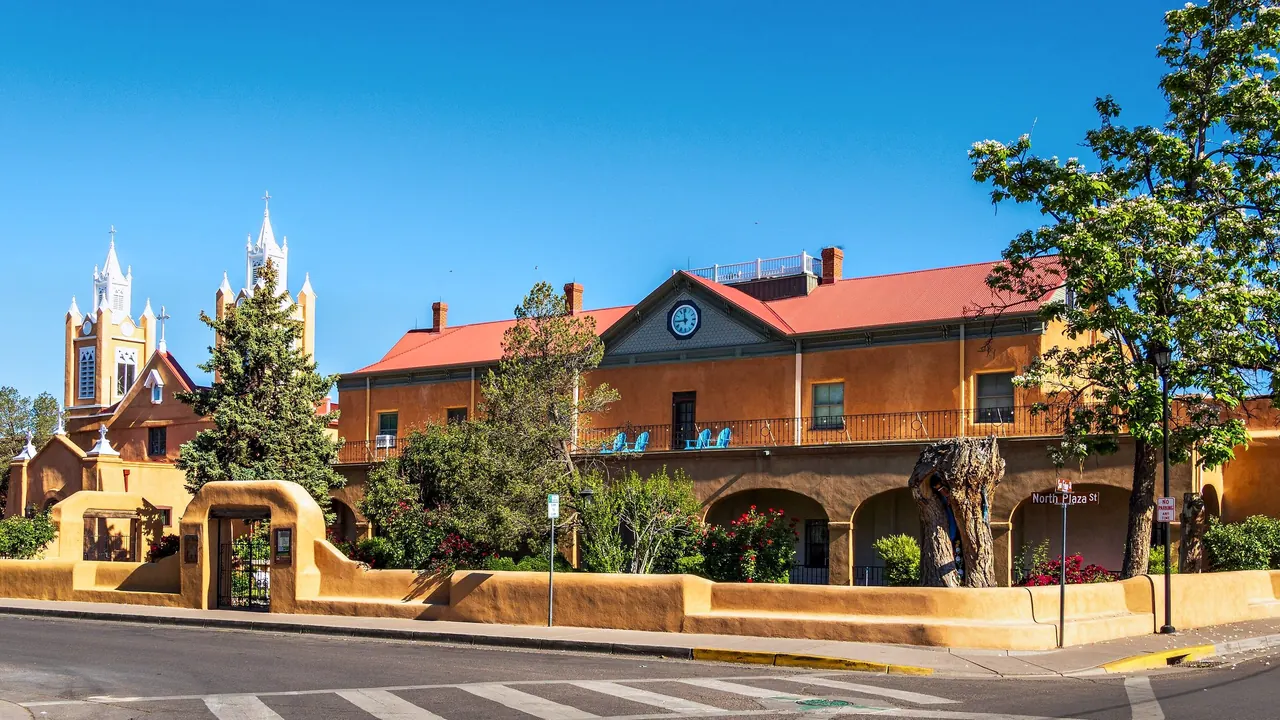
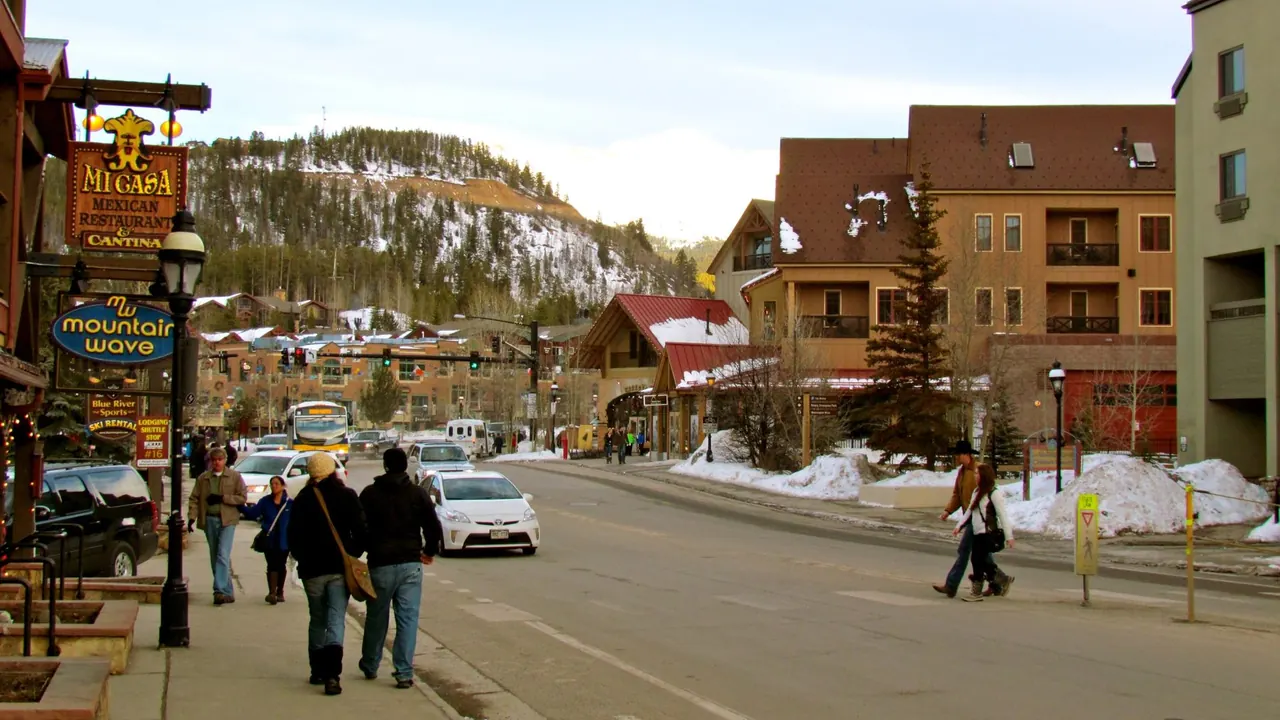
Photos: Albuquerque by dconvertini, CC BY-SA 2.0, cropped; Breckenridge by Jeff Gunn, CC BY 2.0, cropped.
Albuquerque or Breckenridge?
Our verdict in twelve categories, each scored against the same fixed benchmark cities, and the climate month by month, so you can choose for your trip.
Choose Albuquerque for
- prices
- food and drink
- culture and sights
Albuquerque is the better choice if you want a place with its own food, history and living Native culture. It has chile-driven New Mexican cooking, an adobe Old Town, the Pueblo-run cultural centre, and Santa Fe an hour up the road. It suits a road trip with a rental car, and a stay costs a good deal less.
Choose Breckenridge for
- getting around
- nature and the outdoors
Breckenridge is for people who come to be in the mountains: on its five ski peaks in winter, or on the trails and high passes in summer. You get around on foot and by free bus in a small Victorian mining town. The trade-off is a high bill and thin air, and there is little to do beyond the outdoors.
Scoreboard
Twelve categories on one fixed scale from 0 to 100. The shaded stretch is the gap between the two.
Your match
Pick a travel style or drag the sliders, and both match scores follow your weighting.
Wins on prices and food and drink with your weighting.
Wins on getting around and nature and the outdoors with your weighting.
What matters to you?
Category by category
What the scores mean for a trip.
Beaches & swimming
Neither city is a place to swim. Albuquerque sits on a desert plateau about 1,000km from the ocean, and Breckenridge is high in the Rockies. What differs is the temperature: Albuquerque's summer heat makes a hotel pool or an afternoon at Cochiti Lake genuinely pleasant. In Breckenridge, Lake Dillon and the alpine lakes are too cold for swimming, so being in the water means indoor pools and hot tubs.
Food & drink
Albuquerque has a cuisine of its own, and Breckenridge does not. New Mexican cooking is reason enough to plan your meals around the long-running family places in the valleys and along Route 66: red or green chile, carne adovada, posole and sopaipillas. In late summer the city smells of roasting chile.
Breckenridge feeds skiers well, with steakhouses, pizza and a few chef-led kitchens using elk, trout and bison, but this is resort dining rather than a food culture. Both towns take craft beer seriously, and Breckenridge also distils its own whiskey.
Culture & sights
Several stories overlap in Albuquerque, and they fill a couple of full days. Pueblo culture is told at the Indian Pueblo Cultural Center and in the petroglyphs carved into volcanic rock on the city's edge. Spanish colonial history lives in the adobe Old Town around its old church and at the National Hispanic Cultural Center, with the neon of Central Avenue and the nuclear science museum adding the highway and atomic eras.
Breckenridge has one story, the 1859 gold rush. Its large historic district of painted Victorian storefronts and miners' cabins tells it well, and there is a gold-mine tour. It fills an afternoon's walk, with no major museums behind it.
Nightlife
Neither is worth the trip for nightlife, but the evenings feel different. In Albuquerque, going out is an urban affair along Central Avenue. Downtown has bars and a few dance clubs at weekends, Nob Hill has calmer cocktail bars and taprooms, and the warm, dry nights suit sitting out on patios.
Breckenridge's nightlife follows the seasons. Après-ski starts at the base of the lifts, still in ski boots, and saloons in Victorian buildings stay busy past midnight on winter Saturdays. In spring and autumn the town goes very quiet. The altitude also makes every drink hit harder.
Nature & outdoors
Breckenridge sits right inside its landscape. Ski terrain spreads over five peaks above town, with Keystone, Copper Mountain and Arapahoe Basin nearby. In summer there is Quandary Peak a short drive south, trails through aspen meadows from the edge of town, and a paved path to Lake Dillon.
Albuquerque's outdoors comes a strong second. It has the tramway to the Sandia crest, the La Luz Trail, the cottonwood bosque with cranes on the river in winter, and volcanic escarpments to the west. The range is wider, from desert to pine forest, but nearly everything needs a drive, and the summer heat shortens the hiking season.
Day trips
Albuquerque has the stronger list. It is led by Santa Fe an hour north, which you can also reach by commuter train, with its plaza, the galleries of Canyon Road and serious museums. Acoma's Sky City, the cliff dwellings at Bandelier, Chimayo and the Turquoise Trail each make another day out, though all of them need a car.
From Breckenridge the best outings are more mining history, in Leadville over Hoosier Pass or in Georgetown with its narrow-gauge railway. Vail's pedestrian village is the other option. Denver is around two hours away, and winter roads can turn any of these into a long day.
Good for families
Both suit families about equally, in different ways. Albuquerque spreads its attractions across a relaxed, spread-out city. There is the BioPark's zoo, aquarium and garden, Explora and the dinosaur halls, the tramway, and the October Balloon Fiesta at dawn. The costs are the car journeys and the strong summer sun.
Breckenridge is built around the mountain, with ski schools that take young children, a free gondola and wide beginner slopes, then an alpine coaster and climbing walls in summer. Altitude sickness and winter gear are the hard parts, and there is little for children away from the mountain.
Getting around
Once you have arrived, Breckenridge is far easier. The centre is compact and walkable, a free gondola runs to the slopes, and free buses go to Frisco, Keystone and Copper Mountain, so a week without a car is realistic. The effort is in getting there: about two hours by shuttle or car from Denver's airport over I-70.
Albuquerque is the opposite. The airport is close and driving is simple, but outside Old Town and the Central Avenue bus line almost everything needs a rental car, from the petroglyphs to the mountains.
Shopping & style
For things to take home that you won't find elsewhere, Albuquerque is the stronger stop. Native American silver and turquoise, Pueblo pottery and Navajo weaving are best bought around Old Town or at the Indian Pueblo Cultural Center. Add chile ristras and the vintage shops of Nob Hill.
Breckenridge's Main Street is for gear, technical clothing, galleries of Western landscapes and souvenirs, all at resort prices. For anything more, the Silverthorne outlets are a short drive away.
Affordability
Albuquerque is far kinder to the budget. Hotels are fairly priced for most of the year and casual meals are generous. Tax, tips and the rental car you will almost certainly need still add up, and Balloon Fiesta week is the costly exception.
Breckenridge in the ski season is expensive at every turn: lodging near the slopes, lift tickets, lessons, gear and meals. Staying in Frisco or Silverthorne softens a winter bill. Summer and the quieter months between seasons cost much less, and the free buses and trails help.
Live music & performing arts
Year-round, the wider choice of evenings out is in Albuquerque. There are touring musicals and the philharmonic at Popejoy Hall, the Pueblo Deco KiMo Theatre, a strong flamenco tradition with its own festival, and Pueblo dances at weekends. In summer the open-air opera near Santa Fe is an evening drive away.
Breckenridge comes into its own in July and August, when the Riverwalk Center by the Blue River hosts a festival orchestra and a national orchestra academy. Outside summer it is mostly bands in après bars.
Wellness & relaxation
Neither town has a bathing tradition, and both rely on resort spas, so the difference is the setting. Near Albuquerque the draw is the mineral pools of Jemez Springs and the bathhouses around Santa Fe, and the city's dry air and quiet evenings make it easy to slow down.
In Breckenridge, relaxing means a hot tub steaming in the snow after a day's skiing, with the springs at Idaho Springs about an hour away. Even so, the thin air and early starts leave many visitors tired rather than rested.
When should you go?
Pick your month. The climate figures are measured averages, not a forecast.
Albuquerque in July
Breckenridge in July
Daytime high, °C
Rainfall in the month, mm
Where the figures come from
Breckenridge's temperatures are measured 38 km from the centre, at Leadville / Stringtown.
Breckenridge has no rain gauge within 25 km of the centre, so its rainfall comes from a gridded climate dataset read at the city rather than from a gauge further away.
Temperature and rainfall are climate normals, averaged over the years shown. Albuquerque: 1991-2020 normals, Albuquerque International Airport (7.3 km from centre). Breckenridge: 2006-2020 (rainfall 1991-2020) normals, Leadville / Stringtown (37.7 km from centre).
Albuquerque is dry and sunny, and its best weather comes in spring and autumn. April, May, September and October bring warm days and clear skies that suit Old Town and the foothill trails. From June to August highs reach about 33°C, which is too hot for long walks in the middle of the day. July and August are the wettest months, though there is still little rain by most standards. Winter days are cool but bright, with highs near 9°C.
Breckenridge runs on a different calendar. From December to March daytime highs stay around freezing, about -2°C at the coldest, and the steady precipitation falls as the snow the ski season depends on. June to September is the window for hiking and cycling, with highs near 21°C in July. May and October are cold, quiet months between the two seasons. Neither city has a beach season.
Which traveller are you?
On a culture and arts trip, Albuquerque is the clear choice. It has Old Town's adobe plaza, the Indian Pueblo Cultural Center, flamenco and Pueblo dances, and Santa Fe's museums a short drive north. Breckenridge offers an afternoon's walk along its Victorian Main Street.
For an outdoors trip, Breckenridge wins. Ski terrain on five peaks rises directly above town, and in summer trails through aspen and wildflower meadows lead towards 4,000m summits. Albuquerque's Sandias and riverside bosque are good, but in Breckenridge the mountains are the whole point.
On a tight budget, Albuquerque lets you fill whole days for almost nothing: wandering Old Town, walking among the petroglyphs and climbing the foothills trails. A winter week in Breckenridge is hard to do cheaply at all, so if it must be the Rockies, go outside the ski season.
Before you go
| Measure | Albuquerque | Breckenridge |
|---|---|---|
| Currency | US Dollar (USD) | US Dollar (USD) |
| Sockets | AB120 V, 60 Hz | AB120 V, 60 Hz |
| Driving side | Right | Right |
| Time zone | UTC-7, UTC-6 in summer | UTC-7, UTC-6 in summer |
| Emergency number | 911 | 911 |
| Elevation | 1,619 m | 2,926 m |
| Main airport | Albuquerque International Sunport (ABQ)6 km from centre27 non-stop destinations | Denver International Airport (DEN)124 km from centre231 non-stop destinations |
| Public holidays this year | 13 days | 12 days |
By the numbers
| Measure | Albuquerque | Breckenridge |
|---|---|---|
| City population | 564,559 | 5,078 |
| People per km² | 1,150 | 332 |
| Museums within 10 km | 10 | 0 |
| UNESCO World Heritage sites within 50 km | 0 | 0 |
Where else could you go?
Every comparison below shares a destination with this one, so you can follow Albuquerque or Breckenridge somewhere new.
- Copper Mountainvs Breckenridge
- Keystonevs Breckenridge
- Vailvs Breckenridge
- Beaver Creekvs Breckenridge
- Winter Park, Coloradovs Breckenridge
- Aspenvs Breckenridge