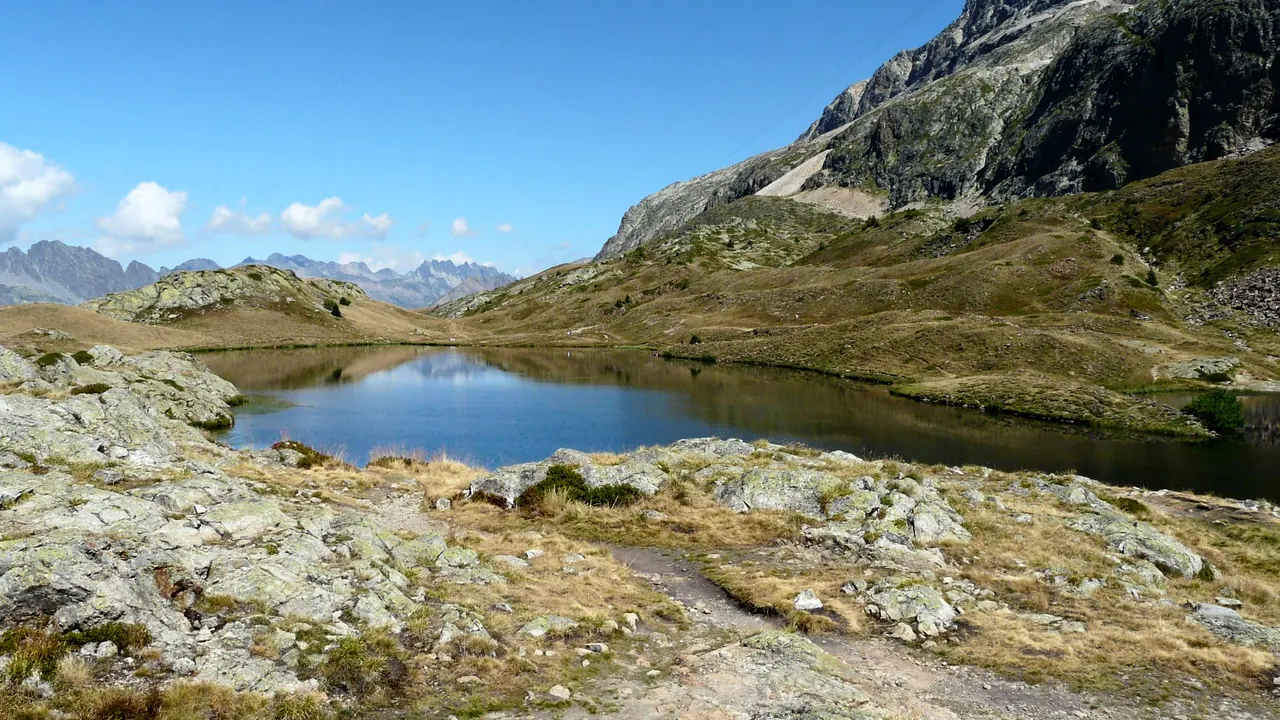
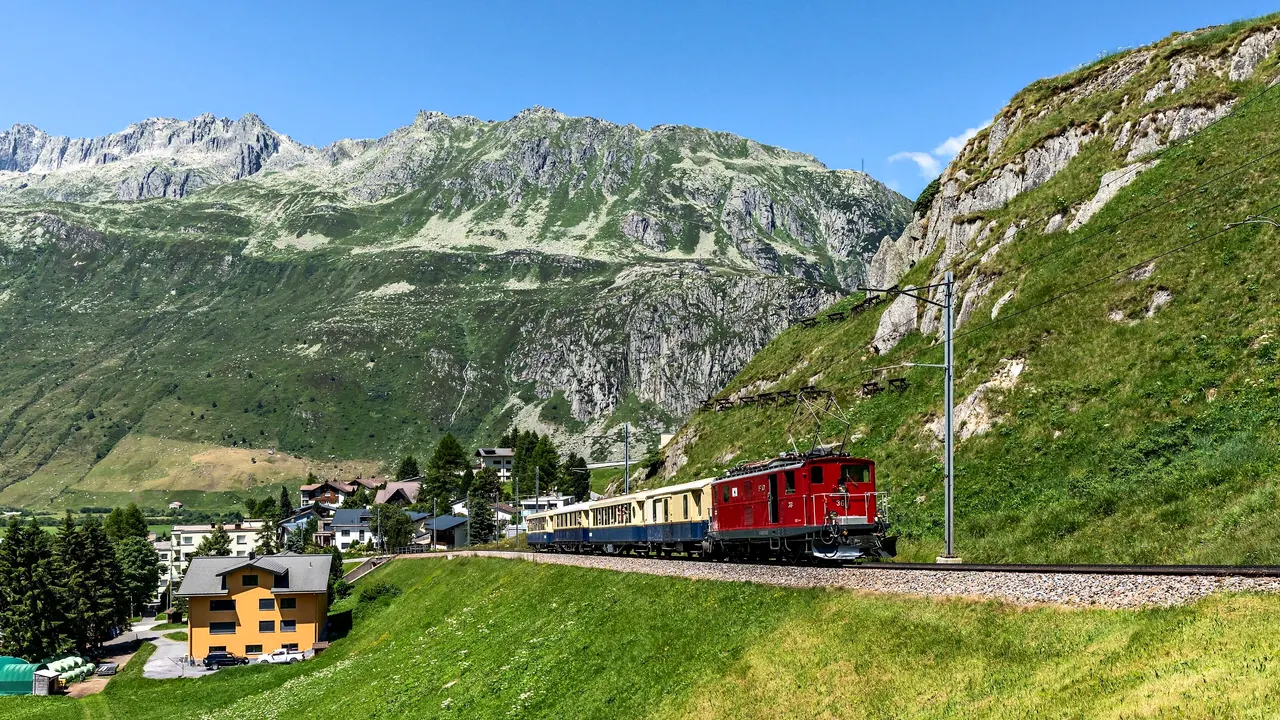
Photos: Alpe d'Huez by Beany, CC BY-SA 3.0, cropped; Andermatt by Kabelleger, CC BY-SA 4.0, cropped.
Alpe d'Huez or Andermatt?
Our verdict in twelve categories, each scored against the same fixed benchmark cities, and the climate month by month, so you can choose for your trip.
Choose Alpe d'Huez for
- nightlife
- families
- prices
Alpe d'Huez is the pick for a classic French ski week with a social side. Its sunny, south-facing slopes, kids' clubs and gentle beginner areas beside the village make it the easier choice for families. Après-ski bars and late pubs give groups of friends a proper night out. It is expensive, but less punishing than its Swiss neighbour, and a self-catering apartment keeps a week within reach.
Choose Andermatt for
- getting around
- day trips
- live music and the arts
Choose Andermatt for serious mountains in a small, quiet village where you will not need a car. The train stops right in the village, and the Gemsstock cable car leads to freeride terrain that experienced skiers travel for. Evenings end with a classical concert or dinner by the fire, and Lake Lucerne, Bellinzona and the Glacier Express line make good days out. It costs more at every turn and does far less for young children or night owls.
Scoreboard
Twelve categories on one fixed scale from 0 to 100. The shaded stretch is the gap between the two.
Your match
Pick a travel style or drag the sliders, and both match scores follow your weighting.
Too close to call, level with your weighting
Wins on nightlife and families with your weighting.
Wins on getting around and day trips with your weighting.
What matters to you?
Category by category
What the scores mean for a trip.
Beaches & swimming
Neither resort has anything for a beach trip, and the gap between them is small. Alpe d'Huez has the slightly better options for a swim: the Lac Besson lakes are just about bearable for a quick dip in July, the Romanche valley lakes are milder, and the sports centre has a public pool.
In Andermatt the Oberalpsee and the other high lakes are really there to look at. Swimming means a hotel pool.
Food & drink
Both offer hearty mountain food, and in both the choice runs out within a week. In Alpe d'Huez it is French Alpine cooking: tartiflette, diots with polenta, Beaufort and Reblochon, with génépi to finish, plus long lunches on sunny terraces by the slopes and pizzerias and brasseries in the village.
Andermatt does Swiss dishes like Älplermagronen and rösti in old wood-panelled inns, with game in autumn. Its big resort hotels also have Japanese and modern European dining rooms, which you rarely find in a village this small, but everything costs Swiss resort prices.
Culture & sights
Andermatt has the more to see, though neither is a sightseeing destination. Its old village of dark timber houses along the Reuss is real history, unlike the twentieth-century ski buildings of Alpe d'Huez. The Schöllenen gorge, with the Devil's Bridge and the memorial to the Russian army's crossing of 1799, is a memorable walk. In summer the Gotthard adds a hospice museum and a fortress dug into the mountain.
Alpe d'Huez fills an afternoon. You can see the tent-shaped church of Notre-Dame des Neiges, the small local museum and, in summer, the ruins of the medieval silver-mining village of Brandes.
Nightlife
Alpe d'Huez is the clear choice for going out. In winter the après-ski bars on the lower runs fill up as the lifts close, the crowd moves on to the village pubs, and a few bars and small clubs stay open past midnight. The young British, Dutch and French crowd makes the school-break weeks especially lively.
Andermatt has après-ski and a few bars in the village and hotel lobbies that stay open late on busy weekends, but no clubs at all. Outside winter, nights end early by the fire.
Nature & outdoors
Both resorts offer top-class mountain scenery, but in different ways. Alpe d'Huez is built for sun and long runs: south-facing slopes, the climb to Pic Blanc at 3,330m and the long Sarenne black run. In summer it has bike-park trails and the 21 famous hairpins from Bourg d'Oisans, one of cycling's best-known climbs.
Andermatt is wilder and more of a hub. From the village a cable car goes up the Gemsstock, known for its freeride slopes, and the snow is deep and dependable, with ski touring and cross-country trails on the valley floor. In summer four high passes open around it, and hikes lead to glaciers and to Lake Toma, the source of the Rhine.
Day trips
Andermatt makes the better base for days out. Lake Lucerne at Flüelen and Altdorf's William Tell monument are under an hour away, Lucerne is an easy train ride, and the Gotthard leads south to Bellinzona's Italian-speaking castles. The Glacier Express line goes over the Oberalp to the abbey at Disentis.
From Alpe d'Huez, every trip starts with the winding road down. Grenoble, with its Bastille cable car and fine-arts museum, is the main outing, with the Revolution museum at Vizille on the way. In the other direction, Vauban's fortified town of Briançon is the furthest worthwhile trip.
Good for families
Alpe d'Huez is better organised for children. It has ski schools with kids' clubs and wide beginner areas next to the village, the sunshine makes cold days easier, and there is an ice rink, a pool and sledging when legs are tired. In summer there are activity programmes as well as lake walks. The steep, spread-out layout is hard work with a pushchair, though.
Andermatt is compact and safe, with nursery slopes and sledging close to the hotels. Beyond the Oberalp train ride, though, there is little made for children, and teenagers may find the evenings dull.
Getting around
Andermatt is far easier to reach and get around. The village takes minutes to cross on foot, the station sits between the old centre and the cable car, and trains run down to the Gotthard line and east over the Oberalp. In summer, postbuses climb the passes, so hikers can manage without a car.
Alpe d'Huez has no railway, so you arrive by coach, transfer or car up the hairpins, sometimes with snow chains. Once there, free shuttles and a small gondola link the quarters, which helps on a steep slope where walking with skis is tiring.
Shopping & style
There is little shopping in either resort, beyond what a ski or hiking week needs. Alpe d'Huez has a little more, with technical outdoor brands, a few boutiques and delis selling Savoyard cheese and charcuterie, and Grenoble is close enough for a proper shopping day. In Andermatt you will find mostly hire shops, with local cheese and honey in the old village.
Affordability
Neither is cheap, but Alpe d'Huez is much easier to afford. It has more modest places to stay than the grandest French resorts, self-catering apartments cut costs a lot, and summer and quieter ski weeks cost noticeably less.
Andermatt is among the costliest places in the Alps. Its resort quarter is built around luxury hotels, and lift passes, meals and even simple lunches cost full Swiss prices. Older guesthouses and rail passes help only a little.
Live music & performing arts
Andermatt has the edge thanks to one unusual venue for a mountain village: a modern concert hall with a few hundred seats. Classical concerts, chamber music and visiting Swiss orchestras play there through the seasons, so a music lover can plan an evening around it.
Alpe d'Huez has no theatre or concert hall. Its music comes from organ recitals at Notre-Dame des Neiges and occasional outdoor gigs, and anything more means going to Grenoble.
Wellness & relaxation
Wellness in both resorts happens in hotel spas, and neither has a bathing tradition. The difference is in the setting. Andermatt's large hotel spas are among the most lavish in the Swiss mountains, several are open to non-residents, and the quiet village adds to the calm.
Alpe d'Huez has simpler spas in its hotels and apartment residences, plus the sports centre pool, and is noisy in the peak ski weeks. Early summer is when it is restful, and the historic thermal spa at Uriage-les-Bains is about an hour away by car.
When should you go?
Pick your month. The climate figures are measured averages, not a forecast.
Alpe d'Huez in July
Andermatt in July
Daytime high, °C
Rainfall in the month, mm
Where the figures come from
Alpe d'Huez has no weather station within reach, so its figures come from a gridded climate model rather than a measured record, and read a broad area rather than one spot.
Andermatt has no weather station within reach, so its figures come from a gridded climate model rather than a measured record, and read a broad area rather than one spot.
Temperature and rainfall are climate normals, averaged over the years shown. Alpe d'Huez: 2001-2020 normals, NASA POWER reanalysis grid, no weather station within 90 km. Andermatt: 1991-2020 normals, TerraClimate 4 km grid at the town, no weather station within 90 km.
Both resorts are winter places first. From December to March daytime highs stay around or below freezing, and Alpe d'Huez is the colder of the two in midwinter, at about -3°C in January. In summer the order flips: Alpe d'Huez warms to about 18°C in July and August, slightly milder than Andermatt, though in neither will you be swimming in the lakes. May, early June and October are the awkward months in both, when the snow is melting or not yet reliable.
The big difference is rain. Alpe d'Huez stays fairly dry all year, with no month much above 90mm, so a summer of hiking and cycling is usually dependable. Andermatt gets much wetter just as it warms up, with over 160mm a month from June to August. Its summer walks and pass rides come with a real chance of wet days, and September is often the more settled time to go.
Which traveller are you?
On a family trip with children, Alpe d'Huez is the better choice. Ski schools with kids' clubs, beginner slopes right by the village, an ice rink and sledging fill the days. Andermatt is safe and easy, but it has little built for children and rainy days are hard to fill.
For a food and nightlife trip, choose Alpe d'Huez. Après-ski spills into village pubs and a few late bars and small clubs, with Savoyard cheese dishes beforehand. Andermatt's evenings are early and quiet, and its handful of good dining rooms runs out within a few nights.
On a culture and arts trip, Andermatt comes out ahead. Its concert hall hosts classical and chamber music through the seasons, the Devil's Bridge is a short walk below the village, and Lucerne and Bellinzona's castles make good day trips. Alpe d'Huez has little beyond its organ church.
Before you go
| Measure | Alpe d'Huez | Andermatt |
|---|---|---|
| Official language | French | French, German, Italian, Romansh |
| Currency | Euro (EUR) | Swiss Franc (CHF) |
| Sockets | CE230 V, 50 Hz | CJ230 V, 50 Hz |
| Driving side | Right | Right |
| Time zone | UTC+1, UTC+2 in summer | UTC+1, UTC+2 in summer |
| Emergency number | 112 | 112 |
| Elevation | 1,860 m | 1,447 m |
| Main airport | Grenoble Alpes Isère Airport (GNB)65 km from centre16 non-stop destinations | Zürich Airport (ZRH)91 km from centre226 non-stop destinations |
| Public holidays this year | 11 days | 14 days |
By the numbers
| Measure | Alpe d'Huez | Andermatt |
|---|---|---|
| Population | - | 1,578 |
| People per km² | - | 25 |
| Museums within 10 km | 1 | 2 |
| UNESCO World Heritage sites within 50 km | 0 | 2 |
Where else could you go?
Every comparison below shares a destination with this one, so you can follow Alpe d'Huez or Andermatt somewhere new.
- Les Deux Alpesvs Alpe d'Huez
- Engelbergvs Andermatt
- Serre Chevaliervs Alpe d'Huez
- Grindelwaldvs Andermatt
- Les Menuiresvs Alpe d'Huez
- Val Thorensvs Alpe d'Huez