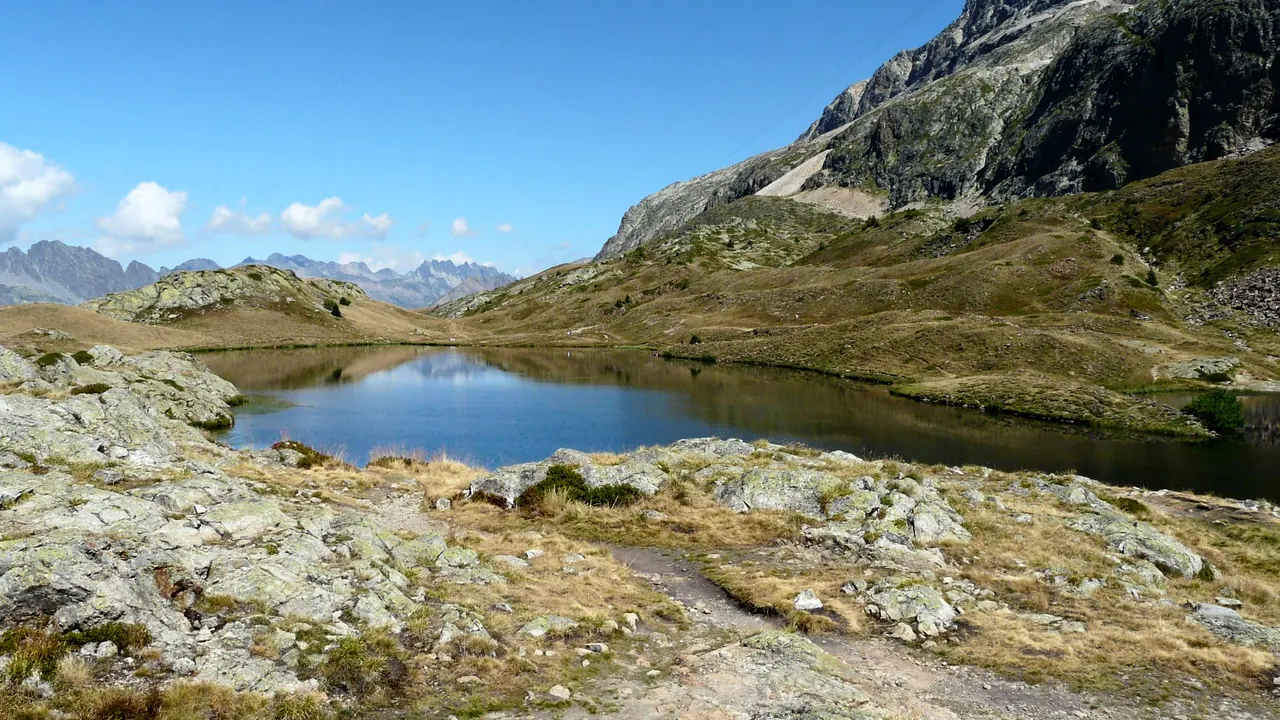
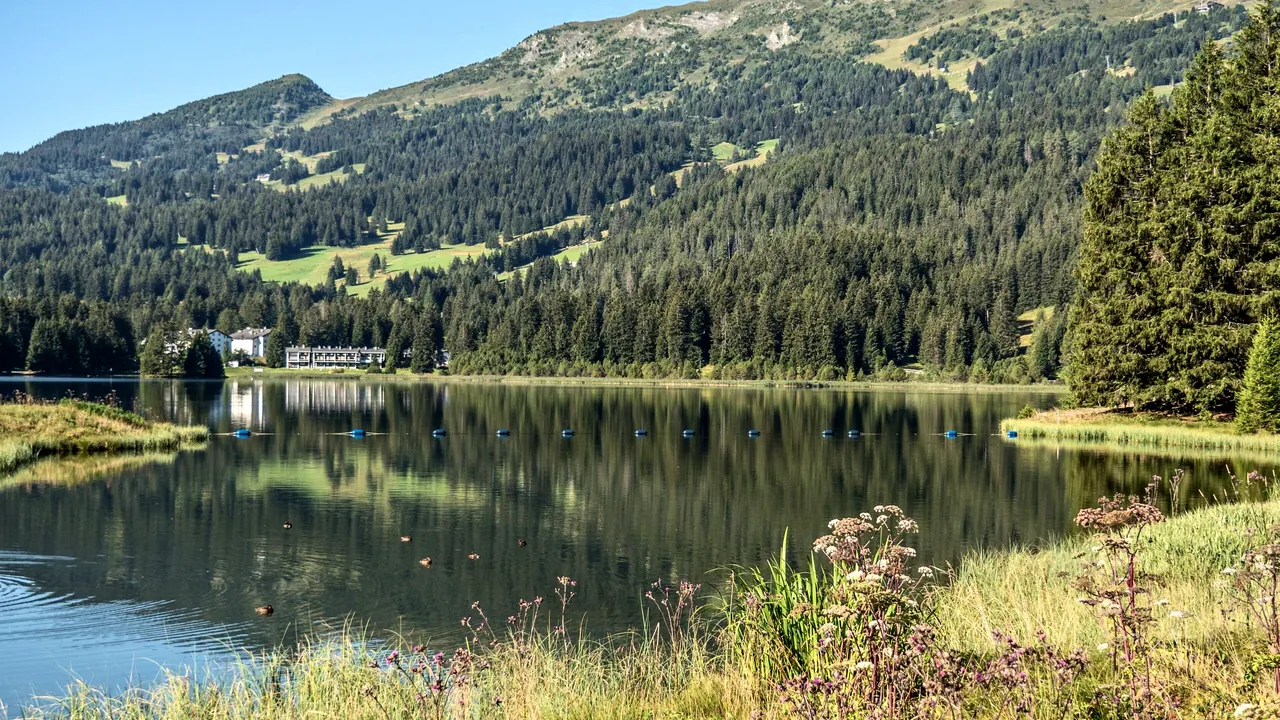
Photos: Alpe d'Huez by Beany, CC BY-SA 3.0, cropped; Lenzerheide by Jag9889, CC BY-SA 4.0, cropped.
Alpe d'Huez or Lenzerheide?
Our verdict in twelve categories, each scored against the same fixed benchmark cities, and the climate month by month, so you can choose for your trip.
Choose Alpe d'Huez for
- prices
- nightlife
- live music and the arts
Alpe d'Huez suits skiers who want their mountain days to carry on into the evening. The après-ski bars by the lower runs, the village pubs and the few late clubs give it a livelier night than its Swiss rival. Its south-facing slopes catch a lot of sun, and self-catering apartments make a week there easier to afford. In summer it also draws road cyclists, who come for the famous hairpins up from Bourg d'Oisans.
Choose Lenzerheide for
- day trips
- getting around
- beaches
Lenzerheide is the better pick for a calmer, more orderly mountain stay with more to do beyond the resort. The PostBus links it to the Swiss railway, so you can arrive and get around without a car, and Chur and the Albula line are close enough for easy days out. It is a strong base for mountain bikers and for families who want a summer by the lake. You pay full Swiss prices for all of this, and the evenings stay quiet.
Scoreboard
Twelve categories on one fixed scale from 0 to 100. The shaded stretch is the gap between the two.
Your match
Pick a travel style or drag the sliders, and both match scores follow your weighting.
Too close to call, 1 point apart
Wins on prices and nightlife with your weighting.
Wins on day trips and getting around with your weighting.
What matters to you?
Category by category
What the scores mean for a trip.
Beaches & swimming
Neither place is for a beach vacation, but Lenzerheide has the better summer swimming. The Heidsee lies at the foot of the village and has a lido and a grassy shore, so a cool dip fits easily into a lazy afternoon.
At Alpe d'Huez the small lakes on the Lac Besson plateau stay cold even in July, and the lakes down in the Romanche valley are only a little milder. Most visitors end up swimming in the sports centre pool or a hotel pool.
Food & drink
The two are close, and both serve hearty mountain food, but from different regions. Alpe d'Huez cooks the Savoyard way, with raclette, tartiflette, diots with polenta, and génépi to finish. Its high point is lunch on a sunny slope-side terrace, and the village adds pizzerias and brasseries.
Lenzerheide serves Graubünden dishes such as capuns, pizokel and air-dried beef, mostly in hotel dining rooms and mountain huts, and Bündner Herrschaft wines are on the list. In both resorts the choice gets repetitive over a week, and many places close between seasons.
Culture & sights
Neither resort has much in the way of sights. Alpe d'Huez at least gives you a short afternoon: the tent-shaped Notre-Dame des Neiges, a small local museum, and in summer the remains of Brandes, a medieval silver-mining village. Lenzerheide has a few small village churches and its Romansh place names, and for any real history you go down to Chur.
Nightlife
Alpe d'Huez is the clear choice for going out. As the lifts close, the après-ski bars by the lower runs fill up, then the crowd moves to the village pubs, and a few bars and small clubs stay open after midnight. Most of the crowd are young British, Dutch and French skiers.
Lenzerheide's après-ski is shorter and smaller. A couple of bars and one small club stay open late on peak weekends, and outside winter there is almost nothing open late.
Nature & outdoors
Both are first-rate mountain bases, but they are good at different things. Alpe d'Huez reaches higher and feels wilder. Lifts go up to the Pic Blanc at 3,330m, the Sarenne black run is one of the longest descents in the Alps, and the Écrins massif is close for hiking. In summer it is also home to one of road cycling's best-known climbs.
Lenzerheide is gentler: a wide bowl of larch forest and meadow, with a ski area that links to Arosa. It also offers cross-country trails round the Heidsee and a biathlon arena. Its summer strength is mountain biking, with a bike park that hosts international races.
Day trips
Lenzerheide has more within easy reach. Chur is half an hour away by PostBus, and the UNESCO-listed Albula line climbs towards St Moritz, a fine day out in itself. The wine villages, Maienfeld and Vaduz in Liechtenstein add gentler options.
From Alpe d'Huez, every outing starts with the long, winding drive down to the valley. Grenoble and the Château de Vizille are the main trips, along with Briançon's Vauban fortifications over the Col du Lautaret. After those, the choice runs out quickly.
Good for families
Both resorts work well for family ski weeks, with ski schools, kids' clubs and gentle sunny beginner slopes. Alpe d'Huez adds an ice rink and sledging, but its steep, spread-out layout makes life hard with pushchairs.
Lenzerheide is stronger in summer, with pedalos and playgrounds by the Heidsee, toboggan runs, rope parks and easy bike trails for young riders. Neither has much to do with children on a rainy day.
Getting around
Lenzerheide is easier to reach and to get around. The PostBus runs from Chur station, so you can get there by train. Local buses connect the villages and lift stations, and walking covers the centre and the lake.
Alpe d'Huez has no railway, so you arrive by coach, transfer or car up the hairpins, and in snow you may need chains. Once there, free shuttles and a small gondola link the quarters, but walking up its steep streets with ski gear is tiring.
Shopping & style
Both offer practical shops and little else: ski and bike rental, outdoor clothing and a few boutiques. The delis are the main difference. Alpe d'Huez sells Beaufort, Reblochon and Alpine charcuterie, while Lenzerheide sells Graubünden sausage and nut tart. For a proper shopping day you go to Grenoble from one and to Chur or Zurich from the other.
Affordability
Neither resort is cheap, but Alpe d'Huez is easier on the budget. It has more modest places to stay than the grander French resorts, self-catering apartments help cut costs, and summer and the quieter ski weeks are much cheaper.
In Lenzerheide almost everything costs Swiss prices, from rooms and lift passes to a plate of pizokel. The guest card with free local buses helps only a little.
Live music & performing arts
There is very little live performance in either resort. Alpe d'Huez has organ concerts at Notre-Dame des Neiges during the seasons. In Lenzerheide, music mostly means open-air concerts around big sporting events or a band at an après-ski bar. For a real programme, you go to Grenoble from Alpe d'Huez and to Chur from Lenzerheide.
Wellness & relaxation
Both rely on hotel spas rather than any bathing tradition of their own. Lenzerheide's larger hotels have the bigger spas, and its quiet evenings suit resting after an active day. Bad Ragaz is an hour away, and the stone baths at Vals are further.
Alpe d'Huez offers saunas and hot tubs in its residences, and Uriage-les-Bains is about an hour's drive away. Peak ski weeks are noisy there, so early summer is the best time for a restful stay.
When should you go?
Pick your month. The climate figures are measured averages, not a forecast.
Alpe d'Huez in July
Lenzerheide in July
Daytime high, °C
Rainfall in the month, mm
Where the figures come from
Alpe d'Huez has no weather station within reach, so its figures come from a gridded climate model rather than a measured record, and read a broad area rather than one spot.
Lenzerheide's temperatures are measured 33 km from the centre, at Samedan.
Lenzerheide's station stands 234 m above the city centre, so the centre is likely a little warmer than the figures say.
Lenzerheide has no rain gauge within 25 km of the centre, so its rainfall comes from a gridded climate dataset read at the destination rather than from a gauge further away.
Temperature and rainfall are climate normals, averaged over the years shown. Alpe d'Huez: 2001-2020 normals, NASA POWER reanalysis grid, no weather station within 90 km. Lenzerheide: 2015-2025 (rainfall 1991-2020) normals, Samedan (32.9 km from centre).
Both resorts have a winter and a summer season. From December to March they are snow resorts. Alpe d'Huez is the colder of the two, with daytime highs around -3°C in January, while Lenzerheide stays just below freezing. July and August are the months for walking and biking, with Alpe d'Huez reaching about 18°C and Lenzerheide about 20°C. Only then is the Heidsee warm enough for a brisk dip, while the lakes above Alpe d'Huez stay cold even in high summer. Spring and late autumn are cold in both places and fall between the two seasons.
The bigger difference is rain. Rainfall at Alpe d'Huez is fairly even through the year, and the high summer months are among its drier ones, with around 59mm in August. That makes it the safer choice for settled hiking and cycling weather. Lenzerheide is much wetter from May to November, reaching about 164mm in August, so expect showers on summer hikes and rides. Its driest stretch is January to March, which makes the ski season its most dependable time to visit.
Which traveller are you?
For a food and nightlife trip, choose Alpe d'Huez. Lunch on its sunny terraces and Savoyard cheese dinners are about level with Lenzerheide's Graubünden cooking. The difference comes after dark: Alpe d'Huez's après-ski bars, pubs and small late clubs keep going well past Lenzerheide's quieter evenings.
On a trip on a tight budget, Alpe d'Huez is the more realistic choice. Neither resort is cheap, but it has more modest places to stay and plenty of self-catering apartments. In Lenzerheide, rooms, lift passes and meals out all cost what you would expect in Switzerland.
For a relaxing and wellness trip, Lenzerheide fits better. The larger hotels have proper spas, the village is quiet at night, and the thermal baths at Bad Ragaz are about an hour away. Alpe d'Huez can be noisy in peak ski weeks.
Before you go
| Measure | Alpe d'Huez | Lenzerheide |
|---|---|---|
| Official language | French | French, German, Italian, Romansh |
| Currency | Euro (EUR) | Swiss Franc (CHF) |
| Sockets | CE230 V, 50 Hz | CJ230 V, 50 Hz |
| Driving side | Right | Right |
| Time zone | UTC+1, UTC+2 in summer | UTC+1, UTC+2 in summer |
| Emergency number | 112 | 112 |
| Elevation | 1,860 m | 1,473 m |
| Main airport | Grenoble Alpes Isère Airport (GNB)65 km from centre16 non-stop destinations | Zürich Airport (ZRH)112 km from centre226 non-stop destinations |
| Public holidays this year | 11 days | 9 days |
By the numbers
| Measure | Alpe d'Huez | Lenzerheide |
|---|---|---|
| Population | - | 2,641 |
| Museums within 10 km | 1 | 1 |
| UNESCO World Heritage sites within 50 km | 0 | 1 |
Where else could you go?
Every comparison below shares a destination with this one, so you can follow Alpe d'Huez or Lenzerheide somewhere new.
- Les Deux Alpesvs Alpe d'Huez
- Arosavs Lenzerheide
- Davosvs Lenzerheide
- Laaxvs Lenzerheide
- Klostersvs Lenzerheide
- St. Moritzvs Lenzerheide