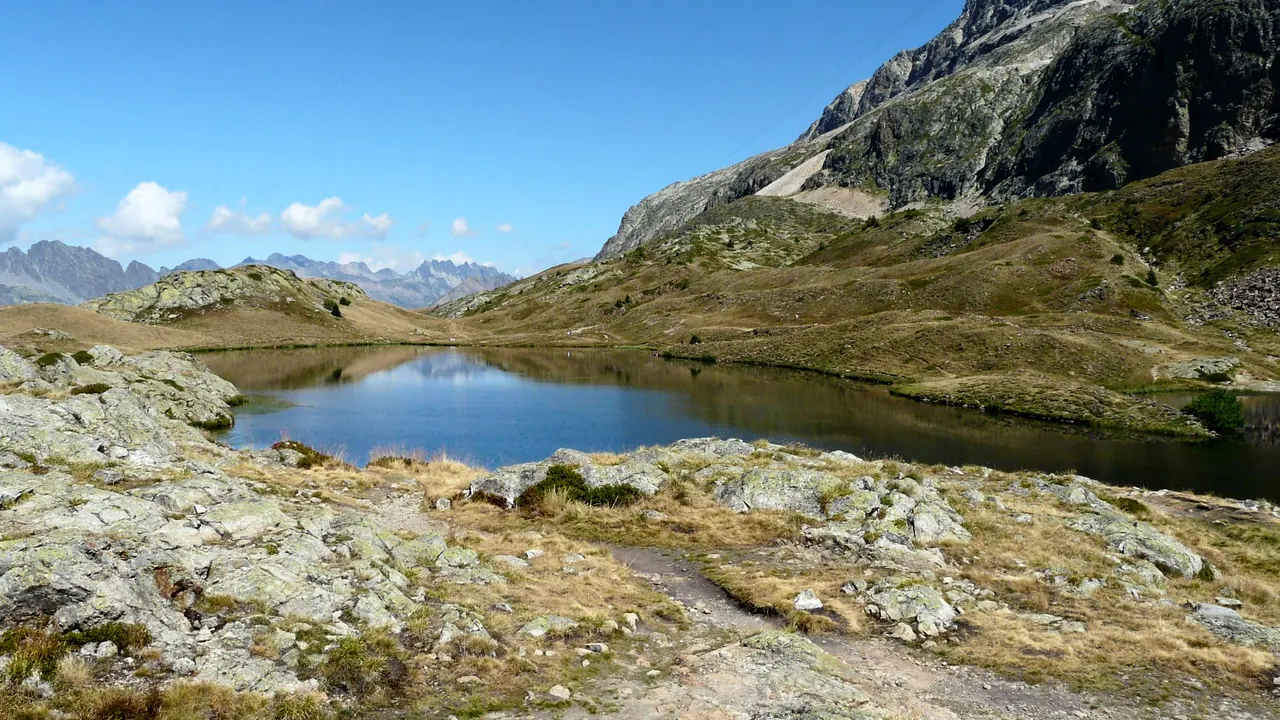
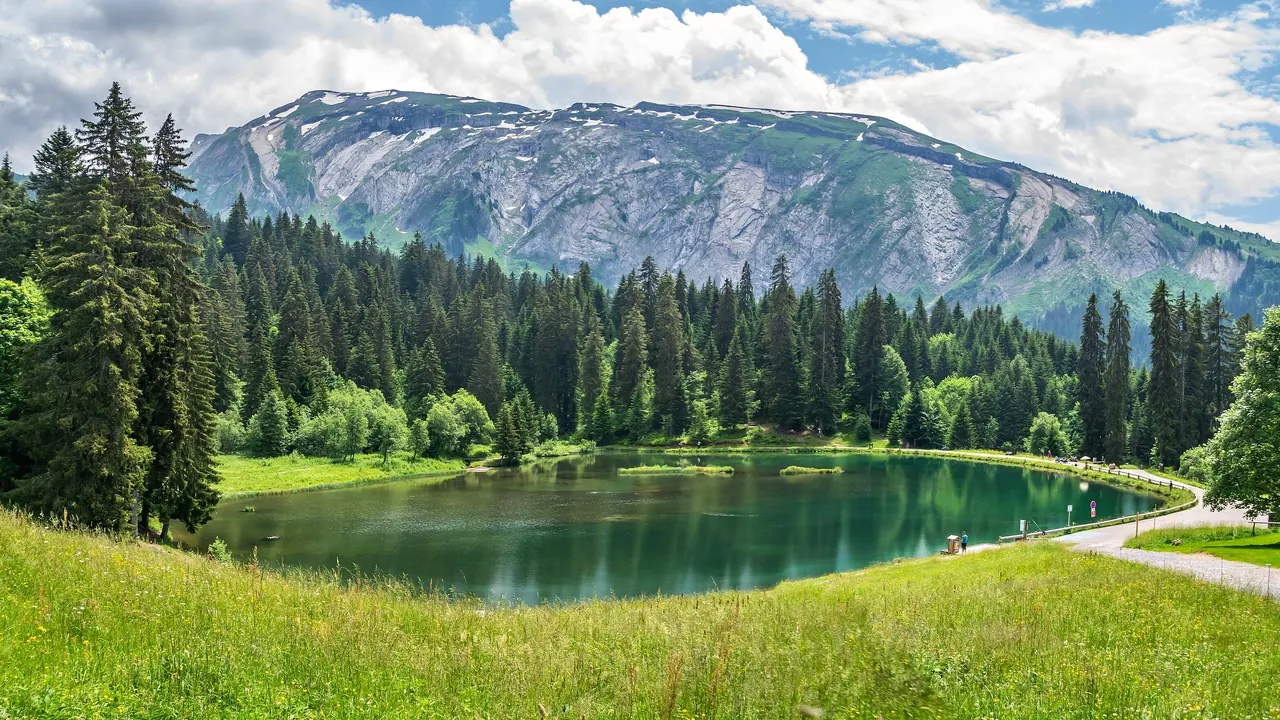
Photos: Alpe d'Huez by Beany, CC BY-SA 3.0, cropped; Morzine by Krzysztof Golik, CC BY-SA 4.0, cropped.
Alpe d'Huez or Morzine?
Our verdict in twelve categories, each scored against the same fixed benchmark cities, and the climate month by month, so you can choose for your trip.
Choose Alpe d'Huez for
- live music and the arts
- culture and sights
- nightlife
Alpe d'Huez suits skiers and riders who want to stay high and stay put. The village sits on a sunny shelf with lifts climbing to the Pic Blanc, the Sarenne run waiting at the top and ski-to-the-door lodging in many quarters. In summer it is a place of pilgrimage for road cyclists. Once you are up the hairpins there is little reason to leave, which is just as well, because the outings below are few.
Choose Morzine for
- beaches
- day trips
- prices
Morzine is the better choice if you want the mountain plus a region to explore. The Portes du Soleil runs across the border into Switzerland, and the summer bike scene is one of Europe's best known. Lake Geneva, Annecy and Geneva are all within a drive, and warm summer lake swimming and extra off-snow options for children make it the easier fit for families and for trips that mix sport with sightseeing.
Scoreboard
Twelve categories on one fixed scale from 0 to 100. The shaded stretch is the gap between the two.
Your match
Pick a travel style or drag the sliders, and both match scores follow your weighting.
Wins on live music and the arts and culture and sights with your weighting.
Wins on beaches and day trips with your weighting.
What matters to you?
Category by category
What the scores mean for a trip.
Beaches & swimming
Neither is a swimming destination, but in summer Morzine gets much closer. Alpe d'Huez has only the small lakes on the Lac Besson plateau, which stay cold even in July. For a real swim you end up in the sports centre pool or a hotel pool.
Morzine has Lac de Montriond a few minutes up the valley for cool afternoon dips. The Lake Geneva shore at Thonon and Evian is under an hour away, with grassy and pebble bathing spots and water warm enough for a proper swim in high summer.
Food & drink
The food is much the same in both: melted-cheese mountain cooking that gets repetitive over a week and thins out between seasons. At Alpe d'Huez the meal people remember is lunch on a sunny terrace at altitude, with diots, polenta and a génépi to finish.
Morzine is more about local produce, with Abondance cheese, Savoie white wines, a weekly market and cheese shops worth browsing. Many guests eat in catered chalets, so there are fewer restaurant evenings in the village.
Culture & sights
There is very little to see in either, but the character differs. Alpe d'Huez was built for skiing in the twentieth century. Its landmarks are the tent-shaped church of Notre-Dame des Neiges, a small local museum and, in summer, the ruins of the medieval silver-mining village of Brandes. Morzine grew from an old valley village, so a short walk takes in a baroque church, wooden farm chalets and the story of its slate quarries.
Nightlife
Both have a lively après-ski scene that is still a village affair, with a large British crowd and the busiest nights in school-break weeks. Alpe d'Huez starts in bars by the lower runs as the lifts close, then moves to village pubs and a few late bars and small clubs. Its crowd is more mixed, with Dutch and French skiers alongside the British.
Morzine's centre has bars with DJs and bands and a large seasonal-worker crowd. Its edge is summer, when mountain bikers keep a few bars busy, whereas summer evenings at Alpe d'Huez usually end with dinner on a terrace.
Nature & outdoors
Both are first-rate mountain bases, but the landscapes differ. Alpe d'Huez is high and sunny, with its south-facing slopes, the Sarenne run and lifts to the Pic Blanc at 3,330m. Its summers mean Lac Blanc walks, the Écrins massif and the famous road climb.
Morzine lies within the Portes du Soleil, a linked area that crosses into Switzerland, and the gondola leaves from the village. In summer it is one of Europe's great downhill and enduro bases, with forests, limestone peaks, the Cascade d'Ardent, and paragliding, canyoning and rafting on top.
Day trips
Morzine has much more within reach. From Alpe d'Huez every outing starts with the long descent. Grenoble, with its Bastille cable car and old town, is the main draw, along with the Revolution museum at Vizille and the road over the Lautaret to La Grave and Briançon.
From Morzine you can visit the painted cloister at Abondance, the Lake Geneva towns, walled Yvoire and the ferries to Lausanne and Montreux. Geneva, Annecy's canals and Chamonix under Mont Blanc are all easy day trips by car, each a drive of well under two hours, though snow can slow the roads in winter.
Good for families
Both work well for family ski weeks. Each has ski schools, nursery slopes close to the village, an ice rink and a pool, and in both the steep streets and the cold are hard work with pushchairs. Alpe d'Huez's sunny exposure and wide beginner areas make cold days easier for small children.
Morzine has more variety off the snow. Avoriaz above it is car-free, with a children's ski village and a tropical water park, and summer adds the goats of Les Lindarets and pedal boats at Lac de Montriond.
Getting around
Neither has a railway, and both are easy enough once you arrive. Alpe d'Huez is reached by coach or transfer up the hairpins from Grenoble. After that it is self-contained, with free shuttles and a small gondola linking quarters stacked up the slope, though walking between them in ski boots is tiring.
Morzine is a transfer from Geneva airport. Its centre is walkable and shuttles run to the lifts in season, but they largely stop between seasons. Because so much of Morzine's appeal lies down the valley, a car earns its keep there in a way it rarely does at Alpe d'Huez.
Shopping & style
Shopping in both is for the trip in hand, not a reason to go. Alpe d'Huez sells ski hire, technical clothing and regional delicacies, and serious shopping means Grenoble. Morzine adds bike shops and its weekly market, and sends shoppers to Geneva or Annecy.
Affordability
Both are expensive in winter, with lift passes, hire, lessons and school-break accommodation adding up fast. Morzine is a little gentler on the wallet. Catered chalets and self-catering help, and the quieter weeks of January and March give real savings.
At Alpe d'Huez the slope-side lunches cost especially dearly. Self-catering apartments and its more modest places to stay are the main way to cut costs. In both, summer is the cheaper season.
Live music & performing arts
Neither has a theatre or concert hall. Alpe d'Huez has one distinctive draw: seasonal concerts on the organ at Notre-Dame des Neiges, with Grenoble for anything more. In Morzine, live music means cover bands in après-ski bars and the odd summer village festival, with Geneva the nearest real programme.
Wellness & relaxation
Wellness looks much the same in both: hotel and chalet saunas, hot tubs and massages for tired legs, busy peak weeks and a calm off season. The difference is the thermal baths nearby. From Alpe d'Huez the historic spa at Uriage-les-Bains is about an hour's drive, and early summer brings clear air and empty terraces. From Morzine the baths of Evian are under an hour away and can easily be combined with a day by the lake.
When should you go?
Pick your month. The climate figures are measured averages, not a forecast.
Alpe d'Huez in July
Morzine in July
Daytime high, °C
Rainfall in the month, mm
Where the figures come from
Alpe d'Huez has no weather station within reach, so its figures come from a gridded climate model rather than a measured record, and read a broad area rather than one spot.
Morzine's temperatures are measured 63 km from the centre, at Bourg-St-Maurice.
Morzine has no rain gauge within 25 km of the centre, so its rainfall comes from a gridded climate dataset read at the destination rather than from a gauge further away.
Temperature and rainfall are climate normals, averaged over the years shown. Alpe d'Huez: 2001-2020 normals, NASA POWER reanalysis grid, no weather station within 90 km. Morzine: 1999-2020 (rainfall 1991-2020) normals, Bourg-St-Maurice (62.7 km from centre).
The two climates are very different. Alpe d'Huez is cold and high. Daytime highs stay below freezing from December to February and are still low in April, so the winter months are true ski weather. Even in July and August it only reaches about 18°C, which is fresh and comfortable for hiking or riding up the hairpins and never too hot. Rain is spread fairly evenly through the year, with May and November the wettest months.
Morzine's readings are much warmer and much wetter. Summer highs reach about 27°C from June to August, warm enough for a lake swim, and September stays mild for walking and riding. Winter days are cool rather than freezing, with highs of about 5°C to 8°C in the village from December to February, although it is colder on the slopes above. Rain is heavy in every month and peaks at around 160mm in December, so pack proper waterproofs whenever you go.
Which traveller are you?
On a beach and sun trip, Morzine is the only realistic option. In summer it is warm, Lac de Montriond is minutes away and the bathing spots on Lake Geneva at Thonon and Evian are under an hour's drive. Alpe d'Huez offers little more than icy alpine lakes and a pool.
On a family trip with children, Morzine has more to offer away from the snow. Avoriaz has a car-free children's ski village and an indoor water park, and in summer there are the goats of Les Lindarets and pedal boats on the lake. Alpe d'Huez counters with sunny beginner slopes.
For road cyclists, Alpe d'Huez is the reason to come. The 21 hairpins up from Bourg d'Oisans are among the most famous climbs in the sport, and the Écrins and Col du Lautaret are close by. Morzine's two-wheeled appeal lies with downhill mountain biking instead.
Before you go
| Measure | Alpe d'Huez | Morzine |
|---|---|---|
| Official language | French | French |
| Currency | Euro (EUR) | Euro (EUR) |
| Sockets | CE230 V, 50 Hz | CE230 V, 50 Hz |
| Driving side | Right | Right |
| Time zone | UTC+1, UTC+2 in summer | UTC+1, UTC+2 in summer |
| Emergency number | 112 | 112 |
| Elevation | 1,860 m | 890 m |
| Main airport | Grenoble Alpes Isère Airport (GNB)65 km from centre16 non-stop destinations | Geneva International Airport (GVA)47 km from centre150 non-stop destinations |
| Public holidays this year | 11 days | 11 days |
By the numbers
| Measure | Alpe d'Huez | Morzine |
|---|---|---|
| Population | - | 2,658 |
| People per km² | - | 60 |
| Museums within 10 km | 1 | 1 |
| UNESCO World Heritage sites within 50 km | 0 | 3 |
Where else could you go?
Every comparison below shares a destination with this one, so you can follow Alpe d'Huez or Morzine somewhere new.
- Les Getsvs Morzine
- Avoriazvs Morzine
- Les Deux Alpesvs Alpe d'Huez
- Samoënsvs Morzine
- Châtelvs Morzine
- Flainevs Morzine