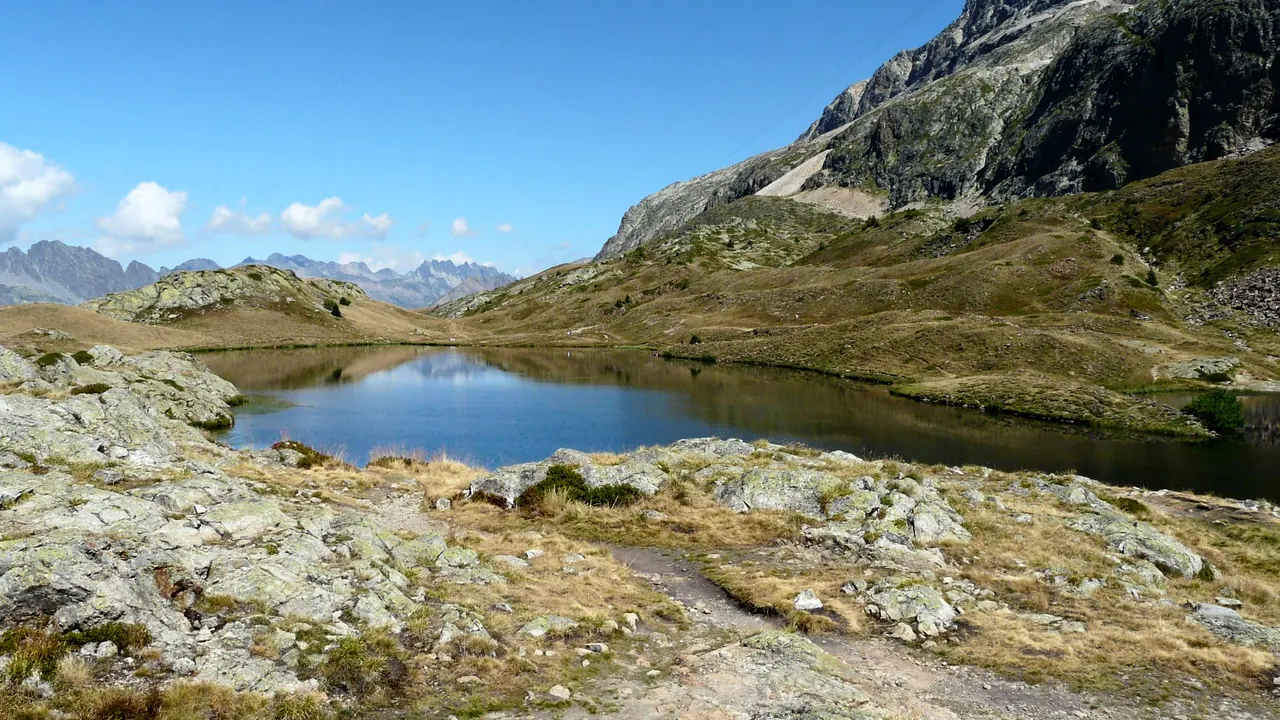
Photos: Alpe d'Huez by Beany, CC BY-SA 3.0, cropped.
Alpe d'Huez or Verbier?
Our verdict in twelve categories, each scored against the same fixed benchmark cities, and the climate month by month, so you can choose for your trip.
Choose Alpe d'Huez for
- families
- prices
- culture and sights
Alpe d'Huez suits a family ski week or a group keeping an eye on costs. Its gentle beginner slopes sit right by the village and the ski schools run kids' clubs. A winter week is never cheap, but self-catering apartments and simpler places to stay make it far easier on the wallet than Verbier. In summer, road cyclists get the famous hairpin climb from Bourg d'Oisans.
Choose Verbier for
- day trips
- nightlife
- live music and the arts
If the mountain is the whole point and money matters less, Verbier is the stronger choice. Its off-piste and freeride slopes draw expert skiers from around the world, and the bars around the Place Centrale make for longer nights. Dinner leans towards chef-led cooking and Valais wine, and the Rhône valley, Lake Geneva and Aosta are all within a day's drive. A music lover can also time a summer visit for the Verbier Festival.
Scoreboard
Twelve categories on one fixed scale from 0 to 100. The shaded stretch is the gap between the two.
Your match
Pick a travel style or drag the sliders, and both match scores follow your weighting.
Wins on families and prices with your weighting.
Wins on day trips and nightlife with your weighting.
What matters to you?
Category by category
What the scores mean for a trip.
Beaches & swimming
Neither is a swimming destination, and both send you to the sports centre or a hotel pool. The small difference is in the open water. At Alpe d'Huez you can at least take a cold dip in the lakes of the Lac Besson plateau, or try the milder lakes down in the Romanche valley. At Verbier the lakes above the village, such as Lac des Vaux, are for looking at, and the nearest proper open water is the shore of Lake Geneva, more than an hour's drive away.
Food & drink
Both feed you cheese, but Verbier does it better. The Val de Bagnes makes one of Switzerland's most famous raclette cheeses, scraped at the table from a half wheel. The village has a cluster of ambitious chef-led restaurants, and the Rhône valley vineyards supply Fendant, Petite Arvine and Cornalin to every wine list.
Alpe d'Huez sticks to hearty Savoyard cooking, such as tartiflette, fondue and diots with polenta, along with pizzerias and brasseries. It is fine for a week of skiing, but it gets repetitive. Its one advantage is more casual everyday food, which Verbier largely lacks.
Culture & sights
Neither resort is worth visiting for sights, since both were built for skiing in the twentieth century. Alpe d'Huez has slightly more on the doorstep: the tent-shaped church of Notre-Dame des Neiges, a small local museum, and in summer the remains of Brandes, a medieval silver-mining village up on the plateau. In Verbier the village itself has nothing, and the old church, the Bagnes museum and the surviving granaries are down the valley in Le Châble.
Nightlife
Verbier has the bigger night out. After the terraces at the foot of the slopes, the crowd moves to the packed bars around the Place Centrale and then to a handful of clubs that stay open into the small hours. Seasonal workers and wealthy international visitors end up in the same rooms.
Alpe d'Huez follows a similar pattern on a smaller scale. Après-ski starts by the lower runs, then moves to the village pubs and a few late bars, mostly with young British, Dutch and French skiers. In both resorts the scene shrinks to a quiet drink once the winter season ends.
Nature & outdoors
Both offer outstanding mountain scenery, so the difference is in the kind of mountain. Verbier is where serious skiers go for freeride and off-piste. It has the huge 4 Vallées area, ski touring in every direction and views from Mont Fort to Mont Blanc and the Matterhorn. In summer the Haute Route passes nearby and paragliders launch off the ridges.
Alpe d'Huez suits those who like long descents and a road bike. The Sarenne black run drops for kilometres from the Pic Blanc. In summer the 21 hairpins up from Bourg d'Oisans are one of cycling's great climbs, and the Écrins massif is close by for hiking.
Day trips
Verbier is far better placed for outings. Martigny's Roman remains and art foundation are about half an hour away, and Sion's hilltop castles and the ancient abbey at Saint-Maurice are close as well. Chillon, Montreux and the Lavaux terraces lie along Lake Geneva, and over the pass you reach the Great St Bernard hospice and Roman Aosta in Italy.
From Alpe d'Huez every trip starts with the long drive down the hairpins. Grenoble is the main prize, with the Bastille cable car and the old town, and the Revolution museum at Vizille is on the way. Over the Col du Lautaret you reach La Grave and Vauban's Briançon, and after that there is little else within reach.
Good for families
Alpe d'Huez is the more family-friendly resort. Its wide, gentle beginner slopes are right next to the village, and the ski schools come with kids' clubs. Off the snow there are an ice rink, sledging and the pool. In summer it runs outdoor activity programmes.
In Verbier, small children usually learn in the snow gardens or travel across to La Tzoumaz and Savoleyres, because the slopes above the village are steep. The evenings there are built around après-ski. Both villages are steep and spread out, which makes either hard work with a pushchair.
Getting around
Verbier is easier to reach. Trains climb the valley to Le Châble, and a gondola lifts you straight into the resort. Alpe d'Huez has no railway, so you arrive by coach, transfer or car up the hairpins, sometimes with chains on in snowy weather.
Once you are there, the two are closer. Alpe d'Huez links its quarters with free shuttles and a small gondola, and many places to stay let you ski from the door. In Verbier the chalets are scattered across the hillside, so you either walk uphill in ski boots or take the shuttle. A car is useful mainly for Verbier's many day trips.
Shopping & style
Both resorts are mainly about ski gear, and for real shopping you go to the cities below. Verbier has a little more beyond rental shops: upmarket fashion, jewellery and interior boutiques aimed at chalet owners, plus Valais wine and cured meats to take home, with Lausanne and Geneva for anything more. Alpe d'Huez has technical clothing, delis selling regional cheese and charcuterie, and souvenir shops, and you would go to Grenoble for more.
Affordability
Neither is cheap, but Alpe d'Huez costs clearly less. Lift passes, equipment hire, lessons and slope-side lunches all add up there too. Even so, its self-catering apartments and more modest places to stay give you ways to save, especially in summer and the quieter weeks of winter.
Verbier is among the most expensive places in the Alps, with hotels, chalets and restaurants priced for a wealthy clientele. Self-catering or sleeping down in Le Châble helps a little, but even the shoulder seasons stay expensive.
Live music & performing arts
Verbier wins because of one event. Since 1994 the Verbier Festival has brought leading soloists, conductors and chamber musicians to the village for a few summer weeks, with masterclasses open to the public, so music lovers should plan their trip around it. Alpe d'Huez has nothing like it, only organ concerts in Notre-Dame des Neiges and occasional outdoor gigs. Outside the festival, both resorts send you down to the larger towns for any performance.
Wellness & relaxation
The two are much alike here. Wellness means a hotel spa, a sauna and a massage after skiing, plus the public pool, and in both the quiet months are calmer than the loud peak weeks. Verbier's luxury chalets often have private spas, and the warm-spring baths at Saillon and Lavey-les-Bains are within an hour. From Alpe d'Huez the nearest equivalent is the historic spa town of Uriage-les-Bains near Grenoble, and early summer up on the plateau is the most restful time to stay.
When should you go?
Pick your month. The climate figures are measured averages, not a forecast.
Alpe d'Huez in July
Verbier in July
Daytime high, °C
Rainfall in the month, mm
Where the figures come from
Alpe d'Huez has no weather station within reach, so its figures come from a gridded climate model rather than a measured record, and read a broad area rather than one spot.
Verbier has no weather station within reach, so its figures come from a gridded climate model rather than a measured record, and read a broad area rather than one spot.
Temperature and rainfall are climate normals, averaged over the years shown. Alpe d'Huez: 2001-2020 normals, NASA POWER reanalysis grid, no weather station within 90 km. Verbier: 1991-2020 normals, TerraClimate 4 km grid at the town, no weather station within 90 km.
Both are winter and summer resorts, with a quiet stretch in between. Alpe d'Huez is the colder of the two in deep winter, with daytime highs below freezing from December to February and around -3°C in January, while Verbier stays nearer zero. Verbier is much the wetter all year round, and its heaviest months come in early winter, with about 145mm in December, roughly twice what Alpe d'Huez gets. At that height much of it falls as snow, which feeds the slopes but means more days with snow falling.
Summer evens them out. Both reach about 18°C in July and August. That is cool, fresh weather for hiking and biking, and never too hot for walking about. In Verbier, September is the driest month of the year. At Alpe d'Huez, May and November are the wettest months, when the snow is either melting or not yet reliable. In Verbier, May is almost as wet as midwinter. So late spring and late autumn are the least rewarding times to visit either resort. Neither is ever warm enough for a beach trip.
Which traveller are you?
On a family trip with young children, Alpe d'Huez is the easier choice. Its wide beginner areas sit close to the village, the ski schools run kids' clubs, and off the snow there are an ice rink and sledging. Verbier is famous for steep, difficult terrain.
For a trip on a tight budget, go to Alpe d'Huez. It is still expensive in peak weeks, but self-catering apartments and more modest places to stay keep a week manageable. Verbier is priced for a wealthy crowd, and there is no cheap way to do it.
On a food and nightlife trip, Verbier gives more. You get raclette made with the valley's own cheese, chef-led dining rooms and Valais wines with dinner. Afterwards, the Place Centrale bars and late clubs keep going well past the point where Alpe d'Huez winds down.
Before you go
| Measure | Alpe d'Huez | Verbier |
|---|---|---|
| Official language | French | French, German, Italian, Romansh |
| Currency | Euro (EUR) | Swiss Franc (CHF) |
| Sockets | CE230 V, 50 Hz | CJ230 V, 50 Hz |
| Driving side | Right | Right |
| Time zone | UTC+1, UTC+2 in summer | UTC+1, UTC+2 in summer |
| Emergency number | 112 | 112 |
| Elevation | 1,860 m | 1,490 m |
| Main airport | Grenoble Alpes Isère Airport (GNB)65 km from centre16 non-stop destinations | Geneva International Airport (GVA)88 km from centre150 non-stop destinations |
| Public holidays this year | 11 days | 9 days |
By the numbers
| Measure | Alpe d'Huez | Verbier |
|---|---|---|
| Museums within 10 km | 1 | 4 |
| UNESCO World Heritage sites within 50 km | 0 | 0 |
Where else could you go?
Every comparison below shares a destination with this one, so you can follow Alpe d'Huez or Verbier somewhere new.
- Les Deux Alpesvs Alpe d'Huez
- Crans-Montanavs Verbier
- Chamonixvs Verbier
- Châtelvs Verbier
- Avoriazvs Verbier
- Samoënsvs Verbier