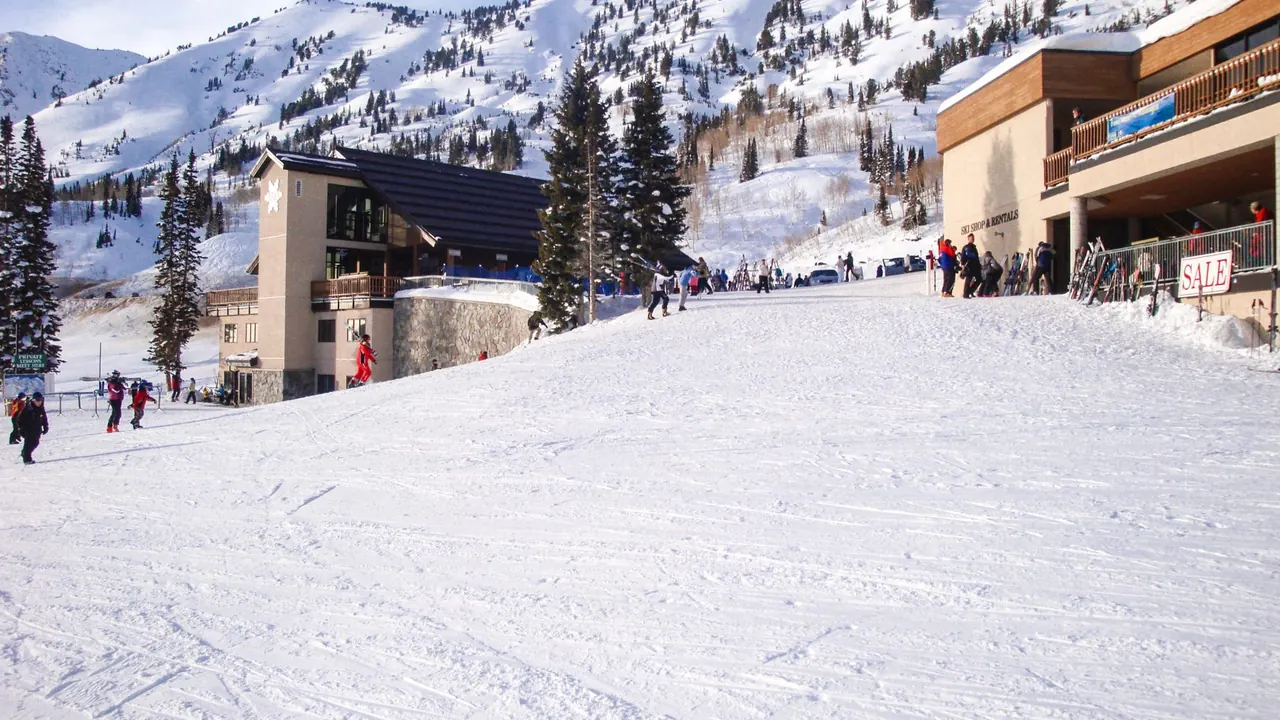
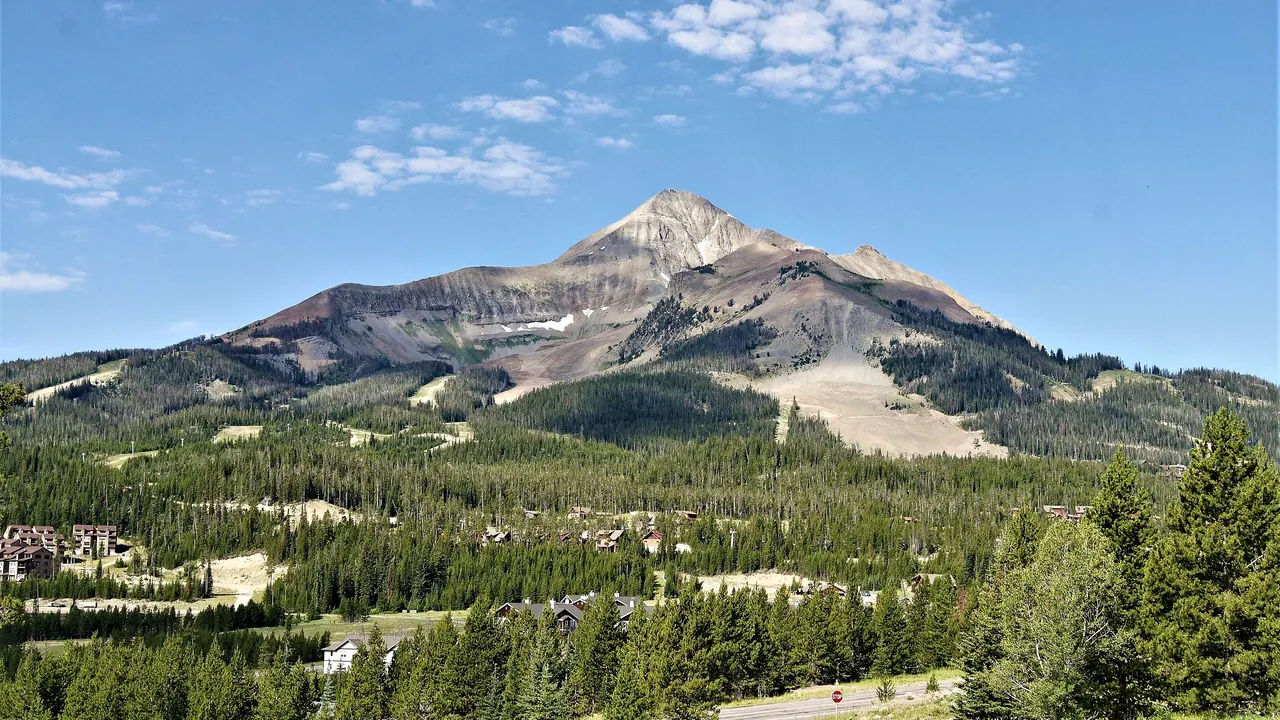
Photos: Alta, Utah by Sumanch, CC BY 3.0, cropped; Big Sky by Greg Gjerdingen, CC BY 2.0, cropped.
Alta, Utah or Big Sky?
Our verdict in twelve categories, each scored against the same fixed benchmark cities, and the climate month by month, so you can choose for your trip.
Choose Alta, Utah for
- day trips
- getting around
- prices
Alta suits the dedicated skier who wants nothing between them and the snow. It is a tiny village at the head of Little Cottonwood Canyon with lodges at the foot of the lifts, deep dry powder, serious backcountry touring and evenings that end early. It is also the easier of the two to reach. Salt Lake City's airport, museums, restaurants and concerts are less than an hour down the canyon, as long as the road is open.
Choose Big Sky for
- families
- live music and the arts
- nightlife
Big Sky is the better choice for a broader mountain vacation, especially if the group includes children or people who don't ski. Lone Peak's huge ski area, the summer adventure park, rafting and fly fishing on the Gallatin and Yellowstone's wildlife an hour away give you far more to do. The resort also offers more in the evening, with après decks, canyon saloons and concerts in Meadow Village. The price is a higher bill, and a car is needed for almost everything beyond the resort.
Scoreboard
Twelve categories on one fixed scale from 0 to 100. The shaded stretch is the gap between the two.
Your match
Pick a travel style or drag the sliders, and both match scores follow your weighting.
Wins on day trips and getting around with your weighting.
Wins on families and live music and the arts with your weighting.
What matters to you?
Category by category
What the scores mean for a trip.
Beaches & swimming
Neither place offers swimming in any real sense, so on this point they are level. In Alta, summer swimming means a lodge pool or hot tub, because the Great Salt Lake below is too shallow and too salty for bathing. Big Sky at least has small ponds for a quick paddle on a hot afternoon and riverbank picnics beside the cold Gallatin.
Food & drink
Big Sky eats better, though neither is a place to come for the food. Its restaurants are spread across Mountain Village, Town Center, Meadow Village and the canyon roadhouses, and they serve bison, elk, Montana beef and trout. A few lodge kitchens aim higher, and there is a local brewing culture. Some places close or cut their hours between seasons.
In Alta you mostly eat where you sleep. Many guests stay on half board, with set dinners at communal tables, and lunch is at the cafeterias on the mountain. Utah's liquor rules shape how drinks are served. For more choice, Alta guests drive down to Salt Lake City, while Big Sky guests head an hour to Bozeman.
Culture & sights
There is little culture to see in either place. Alta has the deeper history, as a silver-mining camp that became one of the oldest ski areas in the West, but all that remains are traces of old mines on the slopes, with no museum. Big Sky has only been built since the 1970s, yet it does have one small museum, the log cabins of the Crail Ranch homestead in Meadow Village.
Nightlife
Big Sky has more going on after the lifts close. Skiers clump in their boots onto the sunny decks at the base of Mountain Village, a few taverns in Town Center stay open after dinner, and old saloons in the Gallatin Canyon have pool tables and a ranch-country crowd. Even so, it is a place for a drink, not for clubs.
In Alta the evening is one après-ski drink in a lodge bar and then bed, and regulars like it that way. For a livelier après you go to the neighbouring resort down the road, and for anything more you go to Salt Lake City.
Nature & outdoors
Both are outstanding mountain destinations, and they differ in character. Alta is about the snow. Storms off the Great Salt Lake often drop more than 12m of dry powder in a winter, the steep terrain is reserved for skiers, and backcountry touring into the avalanche-prone bowls is taken seriously. In summer, Albion Basin turns into one of the Rockies' great wildflower meadows, and moose and mountain goats are seen on the trails.
Big Sky offers more scale and variety. Lone Peak rises to 3,403m above one of the largest ski areas in North America, with cross-country trails in the meadows below. In summer you can hike into the Spanish Peaks and the Lee Metcalf Wilderness, fish for trout or go rafting on the Gallatin, and drive about an hour to see Yellowstone's geysers and wolves.
Day trips
Alta has the better choice of towns within a day's reach. Salt Lake City, with Temple Square and the State Capitol, is under an hour away. Park City's old silver-mining Main Street and Ogden's railway street are further options. Every winter outing depends on the canyon road staying open after storms.
From Big Sky, most outings head into the landscape rather than to towns. Bozeman has a Western main street and the Museum of the Rockies with its dinosaur fossils. The boardwalked gold-rush towns of Virginia City and Nevada City are about two hours away, which makes for a long day.
Good for families
Big Sky is much easier with children. Besides the ski school and beginner slopes, in summer the base area becomes an adventure park with zip lines, ropes courses and gondola rides. Gentle rafting, horse riding and bison in Yellowstone give children memories that have nothing to do with skiing.
Alta works only for families who ski. It has lessons and gentle terrain near the base, but no attractions made for children, and during heavy storms guests may have to stay indoors while avalanche control goes on. In both places the altitude can tire small children at first, especially in Alta at around 2,600m.
Getting around
Alta is simpler to reach and to move around. Salt Lake City's airport is about 50km away, the lodges sit at the foot of the lifts, and a village shuttle covers the rest. The weak point is the single canyon road, which backs up with traffic on powder mornings and closes after storms.
Big Sky is spread along about 15km of road from the canyon up to Mountain Village. A free bus links the villages, but walking between them isn't practical. Bozeman airport is an hour's drive away, and you need a car for Yellowstone or anything else beyond the resort.
Shopping & style
Neither is somewhere to shop, but Big Sky has a little more to browse. In Town Center and Mountain Village there are a few boutiques with a Western feel and galleries selling wildlife and landscape art. Alta stops at ski rental and tuning shops and branded souvenirs, so shoppers go to Park City or Salt Lake City.
Affordability
Both are expensive, and Alta is the somewhat gentler of the two. Its few lodge beds charge high rates in season, but dinner is often included and lift tickets are moderate by major American resort standards. It also has none of the luxury-retail gloss of the glitzier resorts. Staying in the Salt Lake valley and taking the bus up is the usual way to save.
Big Sky sets its prices around slopeside luxury. Lift passes, ski school, guided fishing and meals out all cost a great deal. Summer and the shoulder seasons are cheaper, but sleeping in the canyon or in Bozeman to save money means a lot of driving.
Live music & performing arts
Big Sky has a real, if seasonal, arts life. A small arts centre in Meadow Village hosts touring musicians, chamber music and theatre through the winter. In summer there are free concerts on the lawn in Town Center and a short classical music festival.
Alta has nothing of the kind, so evenings are spent in the lodges. For a play, a concert or the symphony, Alta's visitors drive down to Salt Lake City.
Wellness & relaxation
Neither has thermal water or a bathing tradition, and both offer much the same post-ski relaxation. Alta's version is simpler and quieter: outdoor hot tubs steaming in the snow, saunas, a few small spas in the lodges, and a village so small and still that storm days are naturally restful. Big Sky's large resorts have full-service spas with proper massage menus, the nights are clear and starry, and natural hot springs lie about an hour away towards Bozeman.
When should you go?
Pick your month. The climate figures are measured averages, not a forecast.
Alta, Utah in July
Big Sky in July
Daytime high, °C
Rainfall in the month, mm
Where the figures come from
Alta, Utah has no weather station within reach, so its figures come from a gridded climate model rather than a measured record, and read a broad area rather than the city itself.
Big Sky has no weather station within reach, so its figures come from a gridded climate model rather than a measured record, and read a broad area rather than the city itself.
Temperature and rainfall are climate normals, averaged over the years shown. Alta, Utah: 1991-2020 normals, TerraClimate 4 km grid at the town, no weather station within 90 km. Big Sky: 2001-2020 normals, NASA POWER reanalysis grid, no weather station within 90 km.
Neither place has any kind of beach season. Both are at their best either deep in the ski season or in high summer. Alta's winter is cold but not harsh, with daytime highs around 0°C from December to February. Its rainfall and snowfall are spread evenly through the year, and July and August, at about 22°C, are the months for Albion Basin's wildflowers and the walk up to Cecret Lake. Spring and late autumn are in-between months, with little snow left to ski and little warmth for hiking.
Big Sky has the bigger swings. Its winter is noticeably colder, with highs around -4°C in December and January, and its summer is warmer, reaching about 26°C in July. Late spring is the weak spot. April to June are the wettest months, with close to 80mm each, so trails can be muddy and the weather unsettled. July and August are both the driest and the warmest months, which makes them the best time for Yellowstone, rafting and the high trails.
Which traveller are you?
On a family trip with children, Alta offers little beyond ski lessons and gentle beginner terrain. Big Sky is the clear choice, with zip lines, ropes courses and a climbing wall at the base in summer, plus horse riding and bison in Yellowstone.
For a food and nightlife trip, Alta means a set dinner in your lodge and an early night. Big Sky gives you an evening out: bison, trout and wood-fired pizza across three villages, local beer on the après decks, then a canyon saloon.
On a trip on a tight budget, Alta stretches the money a little further. Its lift tickets are moderate for a major American resort, and cheaper beds in the Salt Lake valley are a ski-bus ride below. Big Sky's cheaper base, in the canyon or Bozeman, means much more driving.
Before you go
| Measure | Alta, Utah | Big Sky |
|---|---|---|
| Currency | US Dollar (USD) | US Dollar (USD) |
| Sockets | AB120 V, 60 Hz | AB120 V, 60 Hz |
| Driving side | Right | Right |
| Time zone | UTC-7, UTC-6 in summer | UTC-7, UTC-6 in summer |
| Emergency number | 911 | 911 |
| Elevation | 2,610 m | 2,200 m |
| Main airport | Salt Lake City International Airport (SLC)37 km from centre108 non-stop destinations | Bozeman Yellowstone International Airport (BZN)59 km from centre27 non-stop destinations |
| Public holidays this year | 12 days | 12 days |
By the numbers
| Measure | Alta, Utah | Big Sky |
|---|---|---|
| City population | 228 | 3,591 |
| People per km² | 19 | 12 |
| Museums within 10 km | 0 | 0 |
| UNESCO World Heritage sites within 50 km | 0 | 0 |
Where else could you go?
Every comparison below shares a destination with this one, so you can follow Alta, Utah or Big Sky somewhere new.
- Snowbirdvs Alta, Utah
- Deer Valleyvs Alta, Utah
- Park Cityvs Alta, Utah
- Salt Lake Cityvs Alta, Utah
- Jackson Holevs Big Sky
- Moabvs Alta, Utah