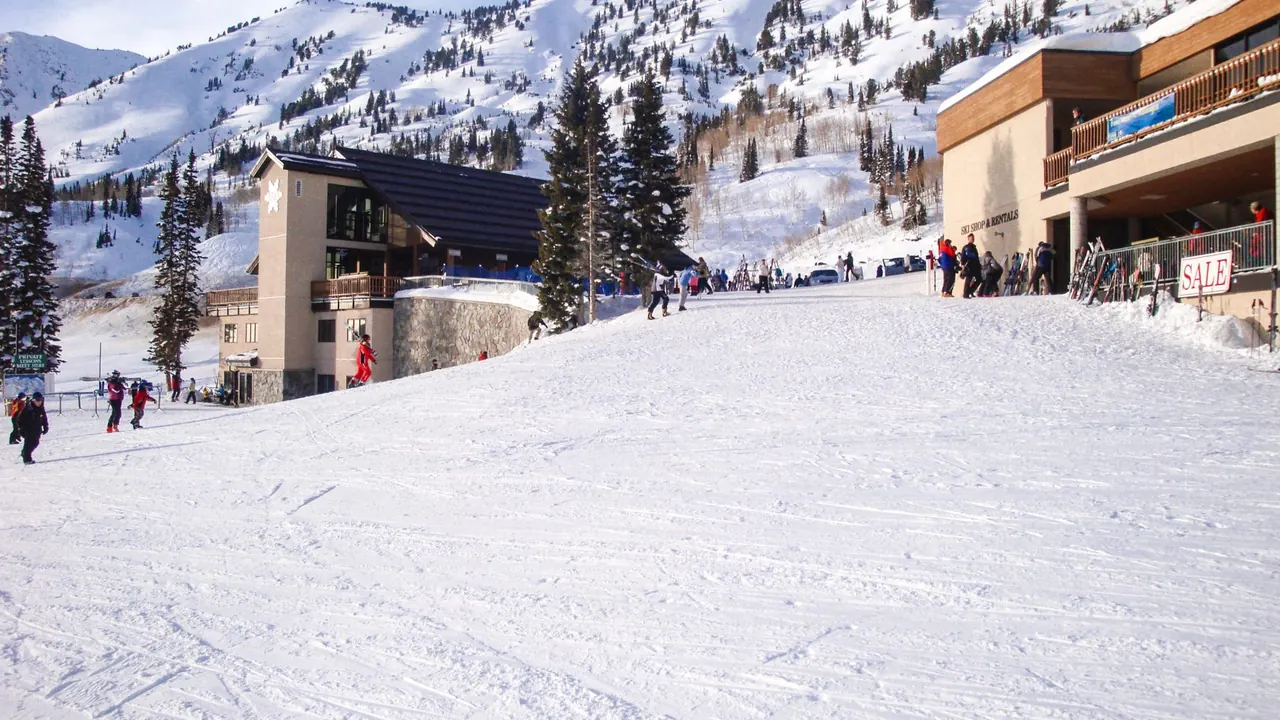
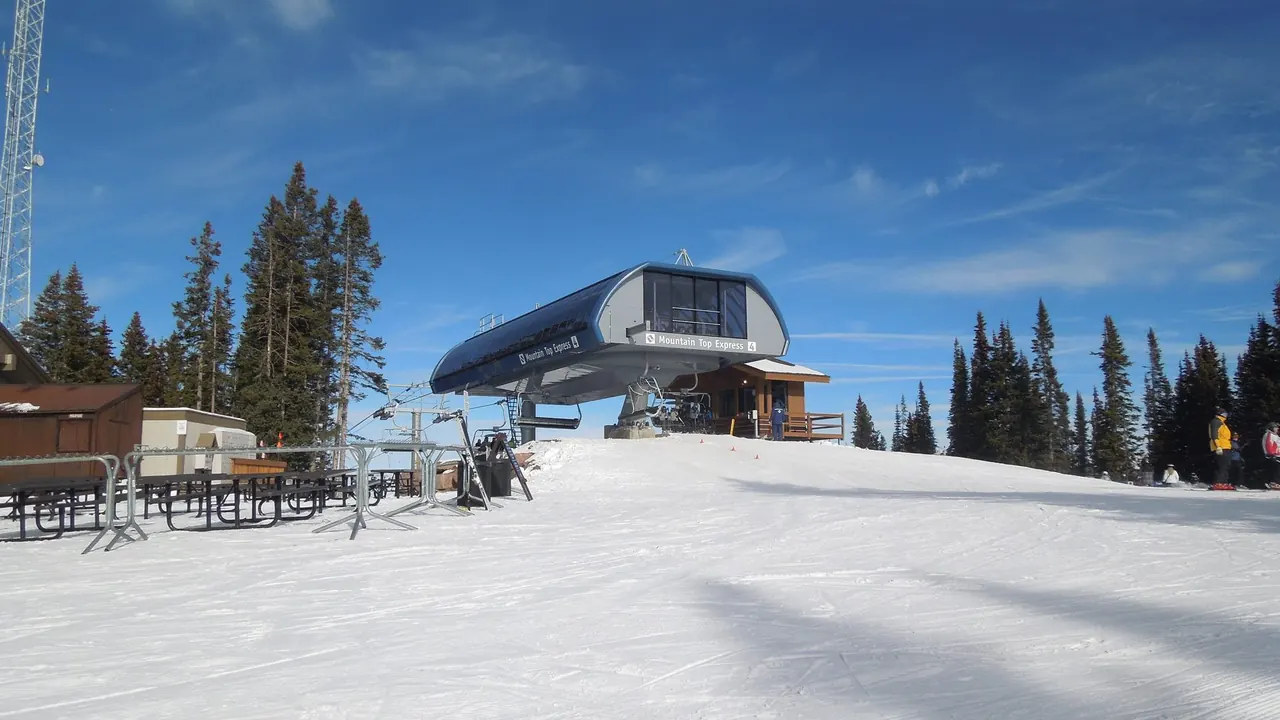
Photos: Alta, Utah by Sumanch, CC BY 3.0, cropped; Vail by DReifGalaxyM31, CC BY 3.0, cropped.
Alta, Utah or Vail?
Our verdict in twelve categories, each scored against the same fixed benchmark cities, and the climate month by month, so you can choose for your trip.
Choose Alta, Utah for
- prices
Alta suits the skier who wants snow and very little else. The powder here is some of the deepest in North America, the slopes are kept for skiers, and the lodges sit at the lifts, with dinner on the table and the village asleep soon after. It is also the somewhat cheaper of the two, mainly because staying in the Salt Lake valley and riding up each day is a realistic option. If you would rather have restaurants, bars and shops than more untracked snow, Alta will feel bare.
Choose Vail for
- live music and the arts
- shopping
- getting around
Vail is the fuller resort. Its terrain is just as strong, but it adds a car-free village with real restaurants, an après-ski crowd, upmarket shops, polished spas and serious summer music and dance. That makes it the easier choice for families, for mixed groups where not everyone skis all day, and for anyone visiting outside winter. The trade-off is cost, since few places in North America are dearer for a ski week.
Scoreboard
Twelve categories on one fixed scale from 0 to 100. The shaded stretch is the gap between the two.
Your match
Pick a travel style or drag the sliders, and both match scores follow your weighting.
Wins on prices with your weighting.
Wins on live music and the arts and shopping with your weighting.
What matters to you?
Category by category
What the scores mean for a trip.
Beaches & swimming
Neither has a beach, and you should not expect to swim outdoors at either. The difference is small. Around Vail there are mountain lakes and reservoirs where people paddle and lie in the sun in summer, cold water and all. Alta's nearest open water is the Great Salt Lake, too shallow and briny for swimming, so a swim there means a lodge pool or hot tub.
Food & drink
Vail gives you a real choice of where to eat. Vail Village and Lionshead have Alpine fondue rooms, steak and game restaurants, sushi and wine-heavy hotel dining rooms, with Colorado lamb, elk and trout on the menus and the state's craft beer easy to find. It is pricey and has no cheap end, and some kitchens close in the quiet spring and autumn weeks.
Alta has no restaurant street at all. Most guests are on half board, eating set dinners at long tables in their lodge and lunching in slopeside cafeterias, and Utah's liquor rules shape how drinks are served. For a change of scene you have to drive down the canyon to Salt Lake City, weather permitting.
Culture & sights
Neither town is somewhere to go sightseeing, though Vail gives you slightly more to do on a day off the slopes. The Colorado Snowsports Museum tells the story of the Tenth Mountain Division ski troops, and the Betty Ford Alpine Gardens are worth a summer stroll, although the faux-Tyrolean village itself dates only from the 1960s. Alta's past as a silver-mining camp shows only in old mine workings on the slopes, and for museums you go down to Salt Lake City.
Nightlife
Vail has an evening scene and Alta does not. When the lifts close in Vail, the terraces and slopeside bars of Vail Village and Lionshead fill up, and on winter weekends a few bars and a small club stay open past midnight. The mood is affluent and festive, and it fades in summer and almost disappears in the off-seasons.
In Alta, an evening means a drink in the lodge bar and an early night before first lifts. Regulars like it that way, and anyone wanting more has to go to the neighbouring resort or down to Salt Lake City.
Nature & outdoors
Both are first-rate mountain bases, so the real question is what kind of mountains you want. Alta is about the snow itself: lake-effect storms off the Great Salt Lake bury its steep terrain under some of the deepest, driest powder on the continent, the slopes are reserved for skiers, and there is serious backcountry touring in avalanche terrain. In summer, Albion Basin's wildflower meadows and the walk to Cecret Lake are the highlights, and you may see moose or mountain goats.
Vail is about scale and variety. The groomed front side, the open Back Bowls and Blue Sky Basin make for a huge ski area, and in summer the Gore Range and Holy Cross wilderness add lakes and peaks above 4,000m. There is also fly fishing on Gore Creek, rafting on nearby rivers and gold aspens in autumn, the kind of water-based variety Alta does not have.
Day trips
Both have a short list of outings, and the difference is in kind. From Alta the big draw is a real city: Salt Lake City, with Temple Square and the State Capitol, is under an hour away, and Park City's old mining Main Street is about the same. Every trip depends on the canyon road, which closes after heavy storms.
From Vail you mostly visit other mountain towns, such as polished Beaver Creek, Victorian Breckenridge and the old silver town of Leadville. Glenwood Springs, about an hour away, makes the best day out, and Aspen and Denver are both around two hours' drive.
Good for families
Vail is much better set up for children. Its ski schools are large and well run, children can walk the car-free village safely, and in summer the top of the gondola has ropes courses, a mountain coaster and tubing, with creekside paths and parks in town.
Alta only really works for families who ski. It has children's lessons and gentle beginner slopes near the base, but little else for children, and storm days can keep everyone indoors during avalanche control. In both places the altitude can wear out small children for the first day or two.
Getting around
Vail is easier to get around without a car. Vail Village and Lionshead are pedestrian, the gondolas leave from town, and a free bus runs the length of the valley, so many visitors manage a whole week on foot and by bus. Reaching it is harder, since there is no train and the interstate over Vail Pass can close in heavy snow.
Alta is easy once you are there, with ski-in, ski-out lodges and a winter shuttle around the village. Getting there and back is the problem: it is about 50km up from Salt Lake City on a single canyon road that jams on powder mornings, closes after storms and often needs chains. Outside ski season, you need a car.
Shopping & style
Vail at least has somewhere to shop. Its pedestrian lanes have upmarket ski clothing, Western boots and hats, jewellery and galleries of mountain paintings, though it is narrow, expensive and short on anything independent. Alta has ski rental and tuning shops and a few outdoor-gear counters, and that is all, so shoppers head to Park City or Salt Lake City.
Affordability
Both are expensive, but Alta is the gentler of the two. It has only a handful of lodges and charges high rates in season, though dinner is often included, its lift tickets are moderate by major American standards, and you can stay in the Salt Lake valley and take the bus up.
In Vail, almost everything costs far more than normal American levels: slopeside beds, lift tickets, ski school, equipment hire and meals, and peak winter weeks push prices higher still. The free bus, off-season rates and staying further down the valley ease the bill without making it cheap.
Live music & performing arts
In summer, Vail is a real destination for music and dance, and Alta has nothing to compare. Bravo! Vail brings major orchestras in residence to the open-air Gerald R. Ford Amphitheater, with picnics on the lawn and peaks behind the stage, and there are also the Vail Dance Festival and a long-running jazz festival. In winter, Vail's offer shrinks to après-ski bands.
Alta has no theatre, concert hall or music venue in any season. For a concert or a play, you have to go down to Salt Lake City.
Wellness & relaxation
Alta's wellness is the simple post-ski kind: outdoor hot tubs in the snow, plus saunas and massage in the larger lodges' small spas. What it really offers is stillness. The village is tiny, there is nothing to keep you up, and on storm days the snow muffles everything. That suits a tired skier more than someone planning a spa vacation.
Vail does more for pampering. The big hotels in Vail Village and Lionshead have polished spas with steam rooms, saunas and hot tubs under the peaks. About an hour down the canyon, Glenwood Springs has large mineral pools and vapour caves that have been used since the 1800s, which makes for a full day of soaking that Alta's lodge spas cannot match.
When should you go?
Pick your month. The climate figures are measured averages, not a forecast.
Alta, Utah in July
Vail in July
Daytime high, °C
Rainfall in the month, mm
Where the figures come from
Alta, Utah has no weather station within reach, so its figures come from a gridded climate model rather than a measured record, and read a broad area rather than the city itself.
Vail's temperatures are measured 47 km from the centre, at Kremmling.
Vail's station stands 186 m below the city centre, so the centre is likely a little cooler than the figures say.
Vail has no rain gauge within 25 km of the centre, so its rainfall comes from a gridded climate dataset read at the city rather than from a gauge further away.
Temperature and rainfall are climate normals, averaged over the years shown. Alta, Utah: 1991-2020 normals, TerraClimate 4 km grid at the town, no weather station within 90 km. Vail: 2006-2025 (rainfall 1991-2020) normals, Kremmling (46.5 km from centre).
Both are winter destinations first, and in midwinter they feel much alike, with daytime highs around or below freezing from December to February. They differ in spring. Alta stays wintry far longer and is still only about 10°C in May, so its snow season runs well into spring. Vail warms quickly and is already in the high teens by May. Neither is a wet place, though Alta gets a little more precipitation through the year, most of it falling as snow in the cold months.
In summer the two are clearly different. Alta peaks at about 22°C in July, mild enough for wildflower walks and hiking without any heat. Vail reaches about 29°C, warm enough for long days outdoors, and it stays pleasant into September with highs in the mid-20s, while Alta has cooled to about 17°C by then. October is a shoulder month in both: cool, and too late for hiking but too early for skiing.
Which traveller are you?
On a trip on a tight budget, Alta is the one to choose, although neither will feel cheap. Dinner usually comes with the room and there is little in the village to spend money on, so a week is mostly bed and lift pass. In Vail, every meal, lesson and evening out adds to the bill.
On a family trip with children, Vail is the better choice, especially if not everyone skis. Children have things to do on and off the snow, in summer as well as winter, and parents can eat out and stroll in town. In Alta, a child who does not ski soon runs out of things to do.
For a food and nightlife trip, Vail is the only real option of the two, and it is at its best in the ski season. In the evenings there is a genuine choice of places to eat and somewhere to go afterwards. Alta is built around early nights, and anything livelier means driving down a canyon road that storms can close.
Before you go
| Measure | Alta, Utah | Vail |
|---|---|---|
| Currency | US Dollar (USD) | US Dollar (USD) |
| Sockets | AB120 V, 60 Hz | AB120 V, 60 Hz |
| Driving side | Right | Right |
| Time zone | UTC-7, UTC-6 in summer | UTC-7, UTC-6 in summer |
| Emergency number | 911 | 911 |
| Elevation | 2,610 m | 2,445 m |
| Main airport | Salt Lake City International Airport (SLC)37 km from centre108 non-stop destinations | Eagle County Regional Airport (EGE)48 km from centre16 non-stop destinations |
| Public holidays this year | 12 days | 12 days |
By the numbers
| Measure | Alta, Utah | Vail |
|---|---|---|
| City population | 228 | 4,835 |
| People per km² | 19 | 400 |
| Museums within 10 km | 0 | 1 |
| UNESCO World Heritage sites within 50 km | 0 | 0 |
Where else could you go?
Every comparison below shares a destination with this one, so you can follow Alta, Utah or Vail somewhere new.