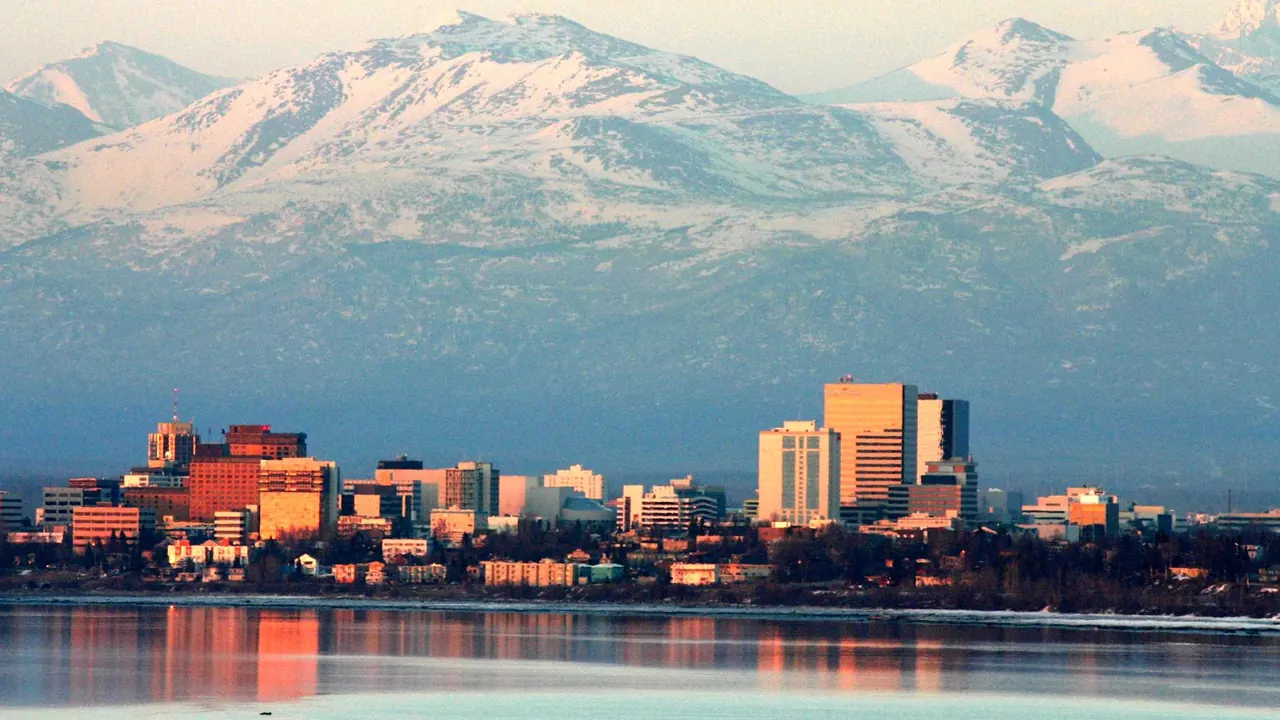
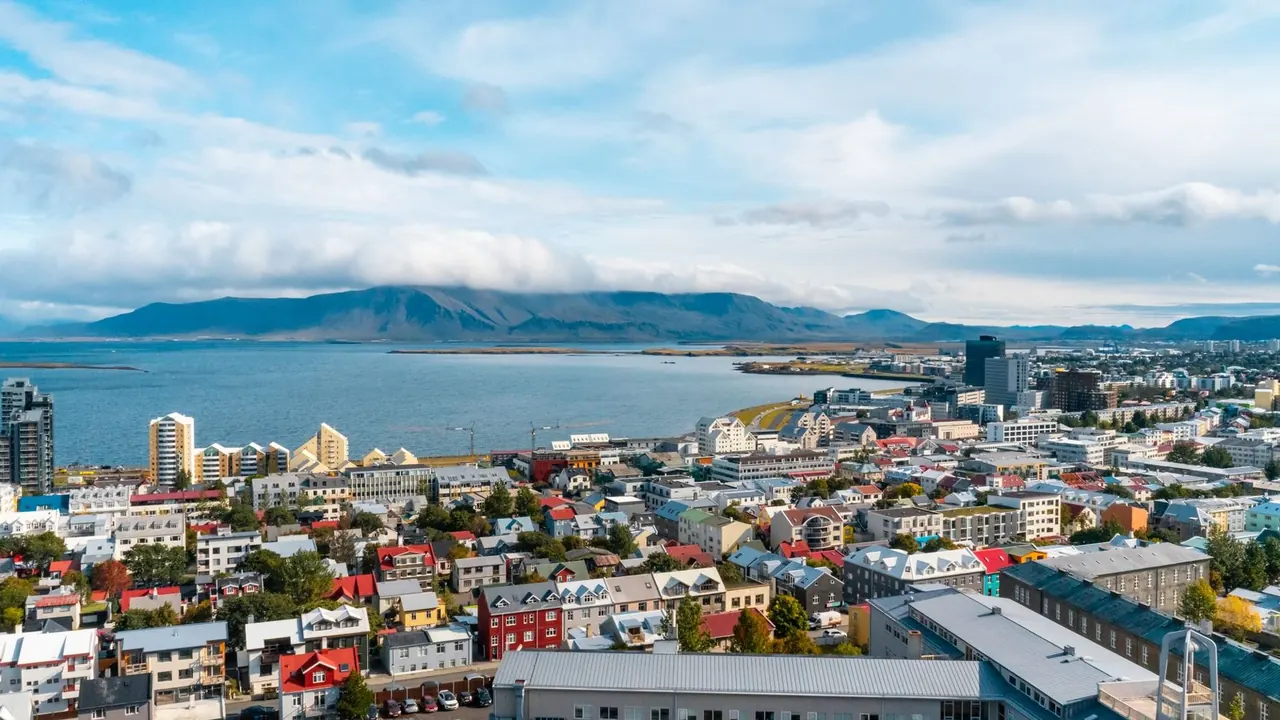
Photos: Anchorage by Frank K., CC BY 2.0, cropped; Reykjavik by Atlantic Ambience, Pexels License.
Anchorage or Reykjavik?
Our verdict in twelve categories, each scored against the same fixed benchmark cities, and the climate month by month, so you can choose for your trip.
Choose Anchorage for
- prices
- culture and sights
- shopping
Anchorage suits travellers who want mountains and wildlife right on the edge of town and are happy to drive to them. Moose in the parks, trails into the Chugach and belugas along Turnagain Arm are close by, and the museums give a fuller picture of Alaska Native life than anything in Reykjavik. It is expensive, but less punishing than Iceland, and its summer days are warmer.
Choose Reykjavik for
- wellness
- getting around
- nightlife
Reykjavik is the better pick for a compact, walkable capital where evenings and rest days count as much as the scenery. Soaking in the neighbourhood hot pools is a daily ritual. Weekend nights out along Laugavegur and concerts at Harpa fill the evenings, and organised tours to geysers and waterfalls mean you can do without a car. Expect to pay a great deal for all of it.
Scoreboard
Twelve categories on one fixed scale from 0 to 100. The shaded stretch is the gap between the two.
Your match
Pick a travel style or drag the sliders, and both match scores follow your weighting.
Wins on prices and culture and sights with your weighting.
Wins on wellness and getting around with your weighting.
What matters to you?
Category by category
What the scores mean for a trip.
Beaches & swimming
Neither is a place for beach time, and the swimming on offer is quite different. Anchorage's Cook Inlet is silty, icy and dangerous on its mudflats, so a summer swim means one of the city lakes such as Goose Lake or Jewel Lake, during a few warm weeks.
Reykjavik's answer comes from geothermal heat. At Nauthólsvík you can take a cold dip in the sea and then sit in a warm lagoon, and the heated outdoor pools let you swim properly in any month.
Food & drink
The two cities eat at a similar level, and both build their menus on cold northern water. Anchorage is the more hearty and casual of the two: summer plates of wild salmon, halibut and king crab, reindeer sausage from street carts, and a good brewery culture in midtown and Spenard.
Reykjavik cooks with more restraint, putting cod, Arctic char, lamb and skyr into pared-back New Nordic dishes, with lamb soup and harbour-side hot dogs for cheaper meals. Its scene is smaller and dearer, which is why so many visitors cook for themselves.
Culture & sights
Anchorage has more to teach a visitor. The Anchorage Museum and the Alaska Native Heritage Center together give a serious grounding in Arctic art and Indigenous life, and the aviation museum beside the floatplanes of Lake Hood adds something distinctly Alaskan. That is two or three good days of sights.
Reykjavik's list is shorter: Hallgrímskirkja, Harpa and a few small museums, the best of them the Settlement Exhibition around its Viking-age longhouse. It does have the more pleasant old town to stroll, with painted iron-clad houses around Tjörnin, which Anchorage lost when it was rebuilt after 1964.
Nightlife
Reykjavik has the livelier nights, at least at weekends. On Fridays and Saturdays the runtur pub crawl fills the few blocks around Laugavegur, small bars become dance floors after midnight, and in midsummer you walk home in daylight.
Anchorage is about a beer after a day outdoors. Its taprooms and dive bars are scattered across downtown and Spenard Road with no real club scene, and its nights go very quiet in the winter dark. Both cities are calm midweek.
Nature & outdoors
Both are outstanding, but they offer different wildernesses. Anchorage gives you mountains and animals at the doorstep: Flattop and the Chugach behind the suburbs, moose in the neighbourhoods, the Coastal Trail along the inlet, and Dall sheep and belugas on the Turnagain Arm drive to the Portage glaciers.
Reykjavik's draw is raw geology. There is the rift at Þingvellir, Strokkur erupting every few minutes, Gullfoss, the steaming lava fields of Reykjanes and the waterfalls of the south coast, though most of it lies a drive or coach tour away. Both cities offer northern lights in winter.
Day trips
The two are much alike here: small places along scenic roads, best reached by car. The difference is the age of what you find. From Anchorage the stops are frontier heritage, such as Eklutna's spirit houses, Palmer's New Deal colony barns, the Independence Mine gold camp and the odd one-tower town of Whittier.
Reykjavik's excursions carry far older history. They include the open-air parliament site at Þingvellir, the old bishopric at Skálholt and the saga country around Borgarnes and Reykholt.
Good for families
Both work equally well with children, through different pleasures. In Anchorage the appeal is animals: the zoo's bears and musk oxen, moose and bison at the conservation centre near Portage, and wild moose in the parks. The costs are long drives and bright summer nights that make bedtime difficult.
In Reykjavik the appeal is water. The daily treat is a heated pool with slides, and there are farm animals at Laugardalur and an ice cave inside Perlan. The streets are safe to walk, but coach days are long and feeding a family is costly.
Getting around
Reykjavik is much easier without a car. Everything central lies within a half-hour walk, buses run out to the pools and Perlan, an airport coach covers Keflavík, and organised tours reach the Golden Circle and the south coast.
Anchorage has a walkable downtown grid, but beyond it the city sprawls along wide roads and the buses are limited. Trailheads, glaciers and outlying towns all need wheels, so a rental car is close to essential, with the summer railway as a scenic extra.
Shopping & style
Wool and local craft are what to bring home from either city. In Anchorage the worthwhile buys come from Alaska Native artists: carved ivory and soapstone, ulu knives, and qiviut scarves knitted from musk-ox underwool, sold in downtown galleries and at the Heritage Center. A summer weekend market and good outdoor-gear stores add to them, but the shops are scattered between galleries, souvenir shops for cruise passengers and malls.
Reykjavik's equivalent is a hand-knitted lopapeysa, along with ceramics and jewellery made from lava stone and fish leather. Its shops are the more pleasant to browse, gathered along Laugavegur and Skólavörðustígur and including record shops full of Icelandic music, though the choice is small and everything is dear.
Affordability
Neither is cheap, but Anchorage costs noticeably less. Its expense comes mostly from summer hotel demand, a hire car and paid excursions such as glacier cruises and flightseeing, while trails and parks are free and winter is cheaper.
In Reykjavik the high prices are everywhere: guesthouses, ordinary meals, heavily taxed drinks, fuel and tours. Supermarkets, self-catering and the cheap public pools help, but you need to budget for high costs from the start.
Live music & performing arts
Reykjavik offers more for an evening out. Harpa is home to the Iceland Symphony Orchestra and has superb acoustics, and the city's alternative and electronic music fills small venues most weekends. Iceland Airwaves takes over those venues in late autumn, though theatre is almost always in Icelandic.
Anchorage centres on the Alaska Center for the Performing Arts, with symphony, opera and touring Broadway, and folk and bluegrass in its taprooms. Its season falls mostly in winter, when few visitors are there.
Wellness & relaxation
This is where the two differ most. In Reykjavik soaking is part of daily life: every district has a geothermal pool with hot tubs, a cold plunge and often a steam room. The Blue Lagoon and quieter hot springs on the Golden Circle are within easy reach.
Anchorage has no bathing tradition. Beyond hotel spas, the best soak is the Nordic-style spa in Girdwood, about forty minutes south. Its calm comes instead from empty trails and long, light evenings.
When should you go?
Pick your month. The climate figures are measured averages, not a forecast.
Anchorage in July
Reykjavik in July
Daytime high, °C
Rainfall in the month, mm
Temperature and rainfall are climate normals, averaged over the years shown. Anchorage: 1991-2020 normals, Anchorage Air Force Base (7 km from centre). Reykjavik: 1991-2020 normals, Reykjavik (2.3 km from centre).
Anchorage has a sharp split between seasons. From November to February daytime highs stay below freezing, about -6°C in January, and the days are very short. May to August is the time to come, with comfortable walking weather and July afternoons reaching about 20°C. Early summer is fairly dry, but rain builds from July, and August and September are the wettest months at around 80mm each. The inlet stays far too cold for swimming all year.
Reykjavik moves through a much narrower range. Winter highs sit around 3°C rather than well below zero, and even July only reaches about 15°C. Most months are wet and windy, and the drier, sunnier stretch from May to July is the most comfortable time to explore. Rain returns in September and the dark, wet months peak in December. The sea is good only for a quick plunge. In short, Anchorage gives the warmer summer and much the harsher winter, while Reykjavik stays mild but grey for much of the year.
Which traveller are you?
For a relaxing and wellness trip, Reykjavik is the clear choice. Every neighbourhood has a geothermal pool with hot tubs, and the Blue Lagoon lies on the airport road. Anchorage offers hotel spas and one Nordic spa in Girdwood, and little more.
On a trip on a tight budget, Anchorage is the less painful of two costly places. Its trails, parks and moose-spotting cost nothing, and winter rates drop. In Reykjavik every meal, drink and tour is priced among the highest anywhere.
For a short city break, Reykjavik works far better. Its sights, cafés and bars sit within a half-hour walk, and a weekend night out, a Harpa concert and a morning soak fit easily into a few days. Anchorage needs a car and more time.
Before you go
| Measure | Anchorage | Reykjavik |
|---|---|---|
| Official language | - | Icelandic |
| Currency | US Dollar (USD) | Iceland Krona (ISK) |
| Sockets | AB120 V, 60 Hz | CF230 V, 50 Hz |
| Driving side | Right | Right |
| Time zone | UTC-9, UTC-8 in summer | UTC |
| Emergency number | 911 | 112 |
| Elevation | 31 m | 8 m |
| Main airport | Ted Stevens Anchorage International Airport (ANC)7 km from centre49 non-stop destinations | Keflavik International Airport (KEF)37 km from centre88 non-stop destinations |
| Public holidays this year | 12 days | 16 days |
By the numbers
| Measure | Anchorage | Reykjavik |
|---|---|---|
| City population | 291,247 | 138,772 |
| People per km² | 58 | 569 |
| Museums within 10 km | 5 | 23 |
| UNESCO World Heritage sites within 50 km | 0 | 1 |
| Swim season, months above 21 °C | None | None |
Where else could you go?
Every comparison below shares a destination with this one, so you can follow Anchorage or Reykjavik somewhere new.