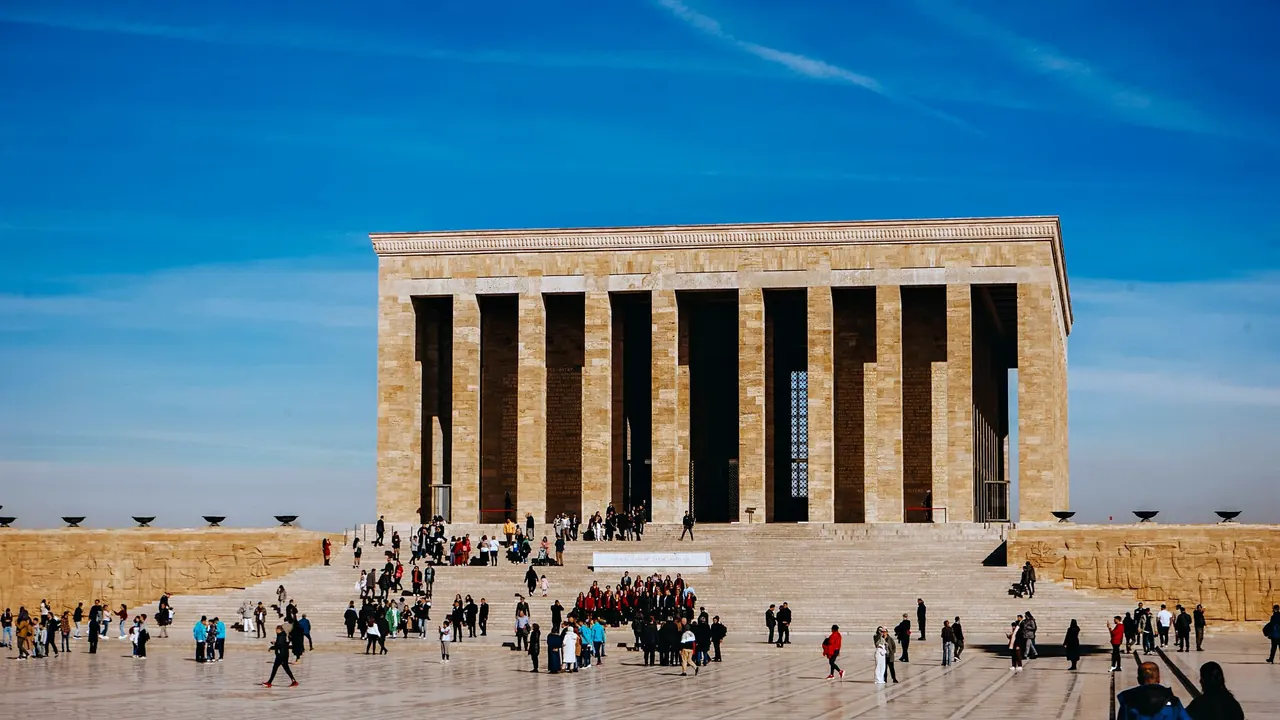
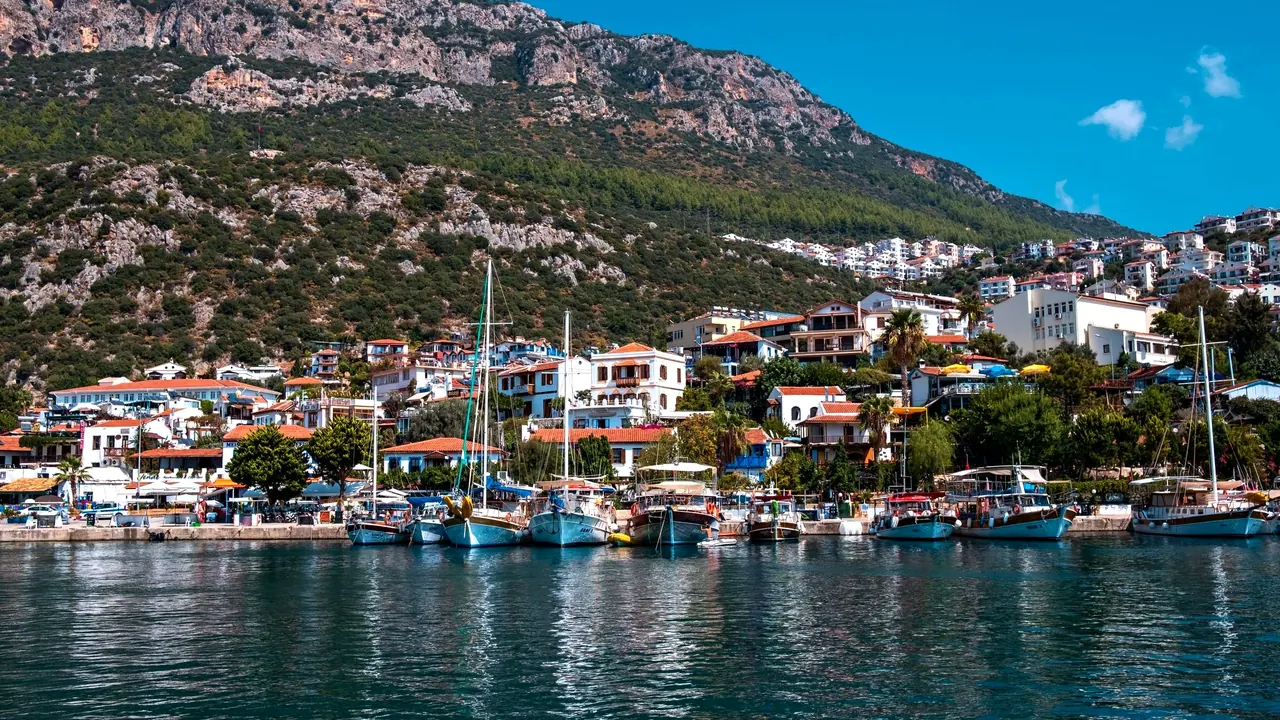
Photos: Ankara by Batuhan Kocabaş, Pexels License; Kas by Ahmet Çığşar, Pexels License.
Ankara or Kas?
Our verdict in twelve categories, each scored against the same fixed benchmark cities, and the climate month by month, so you can choose for your trip.
Choose Ankara for
- live music and the arts
- culture and sights
- prices
Ankara is the trip for someone curious about Turkey beyond its coast. In a few days you get one of the region's great archaeological museums, Atatürk's mausoleum, the state opera and orchestras, and dinner at prices set for locals rather than tourists. It suits culture-minded travellers, people on a budget and anyone who wants to see how the modern Republic presents itself. Don't expect a sea, a beach or much scenery.
Choose Kas for
- beaches
- nature and the outdoors
- day trips
Kas asks you to slow down and spend your days outdoors. You swim in very clear water from rock platforms, dive on reefs and wrecks, walk stretches of the Lycian Way and take boats to sunken ruins and a Greek island across the strait. Choose it for sun, sea and landscape. It costs more, and its evenings are quiet.
Scoreboard
Twelve categories on one fixed scale from 0 to 100. The shaded stretch is the gap between the two.
Your match
Pick a travel style or drag the sliders, and both match scores follow your weighting.
Wins on live music and the arts and culture and sights with your weighting.
Wins on beaches and nature and the outdoors with your weighting.
What matters to you?
Category by category
What the scores mean for a trip.
Beaches & swimming
These two are as far apart as they can be. Ankara is an inland capital. Its lakes are for rowing, not swimming, so in summer you swim in a hotel or municipal pool, and the sea is a separate trip.
Kas is built around the water. You swim from wooden decks and rock platforms straight into deep, clear sea, with two small pebble beaches near the harbour. For sand, Kaputas cove is a short ride west, and the long dune-backed strand at Patara is under an hour away.
Food & drink
Ankara eats better, though not because it offers more choice. Its strength is honest everyday cooking: esnaf lokantası canteens serving stews and vegetables from steam trays, kebab and pide houses around Ulus, long unhurried breakfasts, and Ankara tava, the city's own baked lamb and rice. The restored houses of Hamamönü suit tea and a simple meal, and Kızılay and Tunalı Hilmi add cafés and meyhanes. You end up eating the same few dishes, but they are well made and cheap.
Kas cooks in the coastal style, and grilled fish is the one thing it does that inland Ankara cannot. Evenings bring cold mezes and rakı at harbour tables, mornings bring village breakfasts with local honey and gözleme, and some kitchens make careful use of herbs from the Lycian hills. The catch is that a few streets of restaurants all do much the same thing at prices that follow the yachts, so a long stay soon feels repetitive.
Culture & sights
Ankara is well ahead. The Museum of Anatolian Civilizations runs from Çatalhöyük to the Phrygians, and Anıtkabir shows the Republic's architecture at its most deliberate. Around them are the citadel, the Temple of Augustus and the Roman baths, which together fill two or three good days.
In Kas, the remains of Antiphellos are part of the walk around town: a small theatre facing the sea, rock tombs in the cliff and the Lion Tomb at the top of the shopping lane. They take a morning. The great Lycian sites are outside town.
Nightlife
Neither town is a big party destination, but Ankara has much more going on after dark. Its students fill the multi-storey bars off Kızılay, which play rock, serve beer and keep the meyhanes busy, and the bars of Tunalı Hilmi and Çankaya draw an older crowd. Term-time weekdays can be surprisingly lively.
In Kas, an evening is a late dinner followed by a cocktail on a terrace above the sea. A few bars stay busy past midnight in high summer. The town has no clubs and goes quiet early in the cooler months.
Nature & outdoors
Kas has some of the most dramatic scenery on the Turkish coast, where limestone mountains drop straight into very clear sea. It is a diving centre with walls, caves and wrecks, and the Lycian Way passes the town. You can also kayak over the ruins at Kekova, paraglide off the mountain or wade up Saklikent gorge.
Ankara's steppe is open and austere. The Atatürk Forest Farm and the lakes give you space to walk and cycle, and Soğuksu National Park has pine forest about an hour north. For serious hiking you would have to go much further.
Day trips
Both towns make good bases, for different reasons. High-speed trains bring Konya and Eskişehir within easy reach of Ankara, and Gordion, with King Midas's great mound, and the timber town of Beypazarı are an easy drive away. Hattusa makes a long day out.
Kas has more on its doorstep, and much of it is reached by water. You can take the ferry to Kastellorizo in Greece or a boat to the sunken city at Kekova, and Myra and the church of Saint Nicholas are at Demre. Patara, Xanthos and Letoon are about an hour west, so most of ancient Lycia is a day trip from Kas.
Good for families
Neither is built around children, and the two are close, but Ankara is slightly easier. Gençlik Parkı and the lakes give children room to run, there are dinosaurs at the MTA Natural History Museum, and the Rahmi M. Koç Museum has trains and boats children can climb into. The malls are a fallback when the weather is bad.
Kas is calm and safe for evening walks by the harbour. In town, though, you swim from ladders into deep water, so families with small children usually go to the shelving sand at Patara or Kaputas. Older children who snorkel or try diving get the most out of a stay there.
Getting around
Ankara is a little easier to get around. Its metro lines and the Ankaray light rail meet at Kızılay, and the metro links that hub with Ulus, so the citadel, the Museum of Anatolian Civilizations and the old quarter are a short ride from the centre. For Kavaklıdere, Tunalı Hilmi and Çankaya up the hill, you take a city bus on the same rechargeable card or a cheap taxi. Away from those routes the city is built for cars, with broad boulevards, underpasses and steep climbs.
Kas works the other way round. The harbour, old quarter and swimming decks are close enough to walk between, though the lanes climb steeply. Beyond the town you rely on coastal minibuses to Kalkan, Patara and Demre and on boats to Kekova, and most visitors rent a car for the winding road to the inland ruins.
Shopping & style
Ankara has more shops, though most of them are practical: big malls with chains, plus boutiques and bookshops around Tunalı Hilmi. The interesting part is below the citadel in Samanpazarı, with coppersmiths, spice stalls, dried fruit and angora wool goods.
Kas has a couple of lanes in the old quarter shaded by bougainvillea, with silver jewellery, linen clothes, ceramics and kilims. It makes a pleasant evening browse, but it won't take long.
Affordability
Ankara is clearly the cheaper of the two. It is a government and business city with none of the pricing aimed at tourists, so hotels, canteen meals, metro rides and taxis all stay well below Western European levels. The main extra costs are alcohol and the museum entry fees.
Kas is one of the more upmarket small resorts on the coast. In summer, boutique hotels, harbourside dinners, dives and boat trips cost about what they would in southern Europe. Pensions in the back streets, pide bakeries and the minibuses help keep costs down, and the whole town is cheaper in spring and autumn.
Live music & performing arts
Ankara is the country's home for state performance. The State Opera and Ballet perform at the historic house near Ulus, and the Presidential and Bilkent Symphony Orchestras give regular concerts. Tickets are easy to get and inexpensive. The State Theatres perform only in Turkish, and the Kızılay bars lean towards Turkish rock and folk.
Kas has no theatre or concert hall. On summer evenings there are acoustic sets in bars, and there is the occasional concert in the ancient theatre by the sea. Those are pleasant if you happen to be there, but they are not worth planning a trip around.
Wellness & relaxation
Ankara has a real bathing tradition, though it is aimed at locals. There are working neighbourhood hammams in Ulus and Hamamönü, and thermal springs at Kızılcahamam and Haymana, each about an hour out of the city.
Kas has no historic baths or springs. It helps you relax through its pace instead: long breakfasts, afternoons on a sun deck above the sea, hotel hammams and massage rooms on the peninsula, and yoga retreats in the hills in spring and autumn.
When should you go?
Pick your month. The climate figures are measured averages, not a forecast.
Ankara in July
Kas in July
Daytime high, °C
Rainfall in the month, mm
Where the figures come from
Kas's temperatures are measured 47 km from the centre, at Finike.
Kas has no rain gauge within 25 km of the centre, so its rainfall comes from a gridded climate dataset read at the city rather than from a gauge further away.
Temperature and rainfall are climate normals, averaged over the years shown. Ankara: 1991-2020 normals, Ankara / Central (4.1 km from centre). Kas: 1991-2020 normals, Finike (47 km from centre).
Ankara is on a high plateau, so its seasons are sharp. Winter is cold and grey, around 5°C in January, often with snow. Late spring and early autumn are the best times to walk between the citadel and the museums. July and August reach about 31°C, but they are very dry and sunny, and the heat on the steppe is easier to bear than on the coast. The wettest months are April and May, though the rain is never heavy.
Kas has the opposite pattern. Its winters are mild but very wet, with up to 179mm of rain in January. Its summers have barely any rain, and the heat peaks at about 35°C in August. From June to October the sea is warm enough for a long swim, and it reaches 28°C at its warmest. For hiking and exploring ruins, April, May and October are the months to choose. That means one city is at its best for sightseeing in late spring and autumn, and the other is at its best for swimming in high summer.
Which traveller are you?
On a beach and sun trip, Kas is the clear choice. You can swim from decks into deep, clear water, Kaputas and Patara offer sand, and boats stop at coves with no road access. Ankara is hours from any coast, so swimming there means a pool.
For a culture and arts trip, choose Ankara. The Museum of Anatolian Civilizations, Anıtkabir and the Roman remains around Ulus give you more than Kas's small theatre and rock tombs. The capital's opera, ballet and symphony seasons add evenings that Kas cannot match.
On a trip with a tight budget, Ankara goes further. Hotels, canteen meals, kebab houses and the metro are priced for people who live and work there. Kas is an upmarket resort where boat trips and harbour dinners cost close to southern European prices.
Before you go
| Measure | Ankara | Kas |
|---|---|---|
| Official language | Turkish | Turkish |
| Currency | Turkish Lira (TRY) | Turkish Lira (TRY) |
| Sockets | CF230 V, 50 Hz | CF230 V, 50 Hz |
| Driving side | Right | Right |
| Time zone | UTC+3 | UTC+3 |
| Emergency number | 112 | 112 |
| Elevation | 938 m | 8 m |
| Main airport | Esenboğa International Airport (ESB)25 km from centre92 non-stop destinations | Dalaman International Airport (DLM)95 km from centre61 non-stop destinations |
| Public holidays this year | 14 days | 14 days |
By the numbers
| Measure | Ankara | Kas |
|---|---|---|
| City population | 5,803,482 | 58,600 |
| People per km² | - | 26 |
| Museums within 10 km | 51 | 2 |
| UNESCO World Heritage sites within 50 km | 0 | 1 |
| Swim season, months above 21 °C | - | 6 months |
Where else could you go?
Every comparison below shares a destination with this one, so you can follow Ankara or Kas somewhere new.