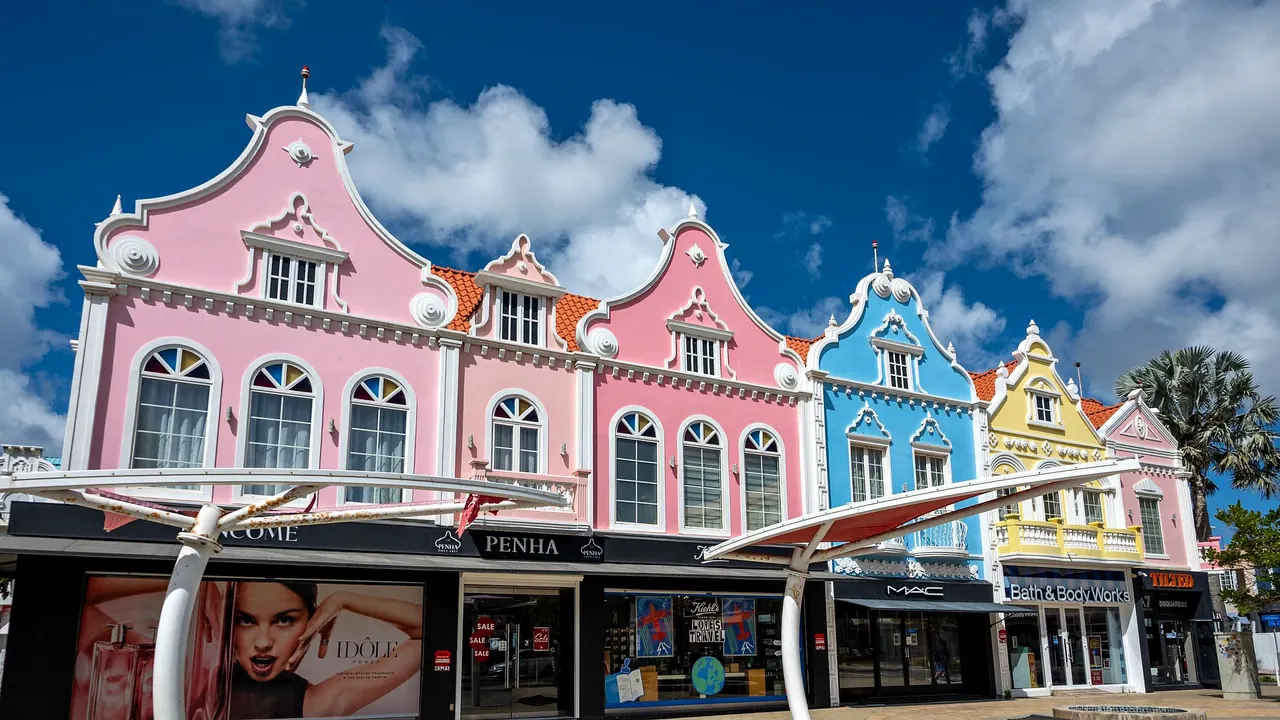
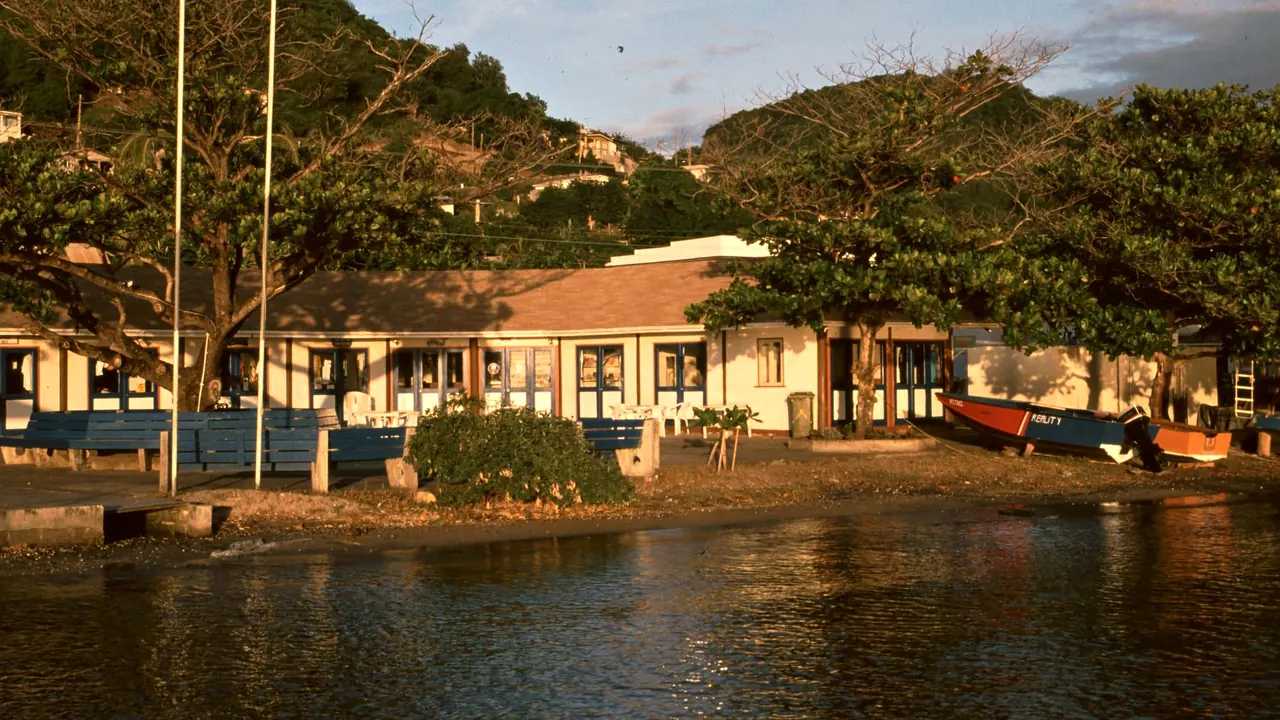
Photos: Aruba by xiquinhosilva, CC BY 4.0, cropped; Bequia by qwesy qwesy, CC BY 3.0, cropped.
Aruba or Bequia?
Our verdict in twelve categories, each scored against the same fixed benchmark cities, and the climate month by month, so you can choose for your trip.
Choose Aruba for
- nightlife
- families
- shopping
Aruba is the easier choice for a sun-and-sand week with no surprises. Its long white beaches at Eagle Beach and Palm Beach, near-certain dry weather for most of the year and well-run resorts suit families, first-time Caribbean visitors and anyone who wants evenings with a bit of life in them. There are bars, casinos and party buses after dark, and duty-free shops in Oranjestad. What it gives up is character: the food and the resort strips feel much like other big Caribbean resort areas.
Choose Bequia for
- day trips
- nature and the outdoors
- prices
Bequia rewards travellers who want a small, slow island where the sea matters more than the sunbed. Its bays are smaller and quieter, the evenings end with a rum punch on the waterfront, and the real draw is the water around it: sailing the Grenadines, diving its reefs and taking a boat to the Tobago Cays. It is harder to reach, plainer for children and very quiet at night, but it costs a little less than Aruba and has more island-hopping within reach.
Scoreboard
Twelve categories on one fixed scale from 0 to 100. The shaded stretch is the gap between the two.
Your match
Pick a travel style or drag the sliders, and both match scores follow your weighting.
Wins on nightlife and families with your weighting.
Wins on day trips and nature and the outdoors with your weighting.
What matters to you?
Category by category
What the scores mean for a trip.
Beaches & swimming
Both islands are built around their beaches, but Aruba has more and bigger ones. Eagle Beach gives you a wide, open stretch of white sand, Palm Beach adds piers and water sports, and Baby Beach, Arashi and Mangel Halto cover lagoon swimming and snorkelling. Weather on the sheltered west and south coasts is reliable enough to plan every day around the sand.
Bequia's beaches are smaller and more natural. Princess Margaret Beach and Lower Bay curve around Admiralty Bay, with yachts at anchor and trees for shade, and Friendship Bay, Industry Bay and Hope Bay give you quieter options. Expect a towel under a tree rather than rows of sunbeds. That suits some travellers better, even though Aruba has more variety.
Food & drink
Neither island is a reason to travel for food, but Aruba gives you more choice. Its resort strips have plenty of steakhouses, grills and sunset tables, and the more interesting Dutch Caribbean cooking, such as keshi yena, pastechi and funchi, is found in Oranjestad, Savaneta and San Nicolas, along with jetty fish restaurants and late food trucks.
Bequia's cooking is simpler and closer to the sea: grilled catch, lobster in season, conch and rotis, eaten on the Admiralty Bay waterfront or in Lower Bay rum shops. There are so few places to eat that a week means going back to the same tables.
Culture & sights
Both islands have only a day or two of sightseeing, but the stories differ. Aruba's is Dutch colonial and Indigenous: Fort Zoutman and the archaeological museum in Oranjestad, the gold mill ruins, the cave drawings in Arikok and the murals of San Nicolas. Bequia's is seafaring: the whaling museum at Paget Farm, model boat builders at work in Port Elizabeth, and the cliffside stone houses of Moonhole.
Nightlife
Aruba is clearly ahead after dark. The Palm Beach strip fills with beach bars and lounges after dinner, hotel casinos stay open late and a few clubs run into the small hours. Party buses are a fun way for groups to see the bars, and Oranjestad has a more local weekend scene.
Bequia has no clubs at all. Evenings mean a drink with yacht crews along the Belmont Walkway or rum punch at Lower Bay, with a barbecue and a band on a few nights a week. Outside the Easter regatta, most people are in bed or back on their boats soon after dinner.
Nature & outdoors
Bequia has the richer natural setting, mainly because of where it sits. The Grenadines offer some of the Caribbean's best sailing, with short hops between sheltered anchorages, and there are reefs and walls to dive off the west and south coasts and turtles in the shallows at the Tobago Cays. On land, the island is green and hilly, with paths up Mount Pleasant and a hawksbill turtle sanctuary.
Aruba's landscape is dry and stark: cactus, wind-bent divi-divi trees, the Ayo and Casibari boulders, and the caves and dunes of Arikok. Its water sports are more about wind and wrecks, with strong kitesurfing near Fisherman's Huts and the large SS Antilla wreck to dive.
Day trips
Bequia has more places to go for a day. The ferry to St Vincent takes about an hour, and there you can walk Kingstown's market streets, see the botanic garden and visit Fort Charlotte. Sailing trips and charters reach Mustique and Mayreau further down the chain, though each is tiny.
Aruba has almost nothing beyond its own shores. San Nicolas and Savaneta are simply parts of the island, and Curaçao and Bonaire need a flight, so anyone who likes a change of scene will run out of outings within days.
Good for families
Aruba is much easier with children. Baby Beach is a nearly enclosed lagoon, the big Palm Beach and Eagle Beach resorts have pools and kids' clubs, English is spoken everywhere, and there are small outings to fill the gaps, such as the butterfly farm, the donkey sanctuary and glass-bottom boats.
Bequia's calm leeward bays work for young swimmers, and a boat trip to snorkel with turtles is a real highlight. But nothing on the island is designed for children, the hills are hard going with a pushchair, medical care is basic, and getting there adds a connecting flight or a ferry.
Getting around
Getting around is just as easy on both islands, in different ways. Aruba runs on roads: buses link Oranjestad with the beaches on the west coast, and a hire car reaches everything else within about forty minutes, apart from the Natural Pool, which needs a four-wheel drive. Bequia runs on foot and by boat. A waterside path links Port Elizabeth to its main beaches, minibuses and water taxis cover the rest, and the harder part is the journey there through St Vincent.
Shopping & style
Aruba is the better place to shop, though only for one kind of shopping. Oranjestad's pedestrian main street and the harbour malls sell duty-free watches, jewellery, perfume and designer labels to cruise and resort visitors, along with aloe products and Dutch cheese.
Bequia has no shopping streets at all. Its one real find is the hand-carved model boats from Port Elizabeth workshops, which are good enough for collectors. Beyond that there is batik, carving and beachwear from a few waterfront stalls.
Affordability
Both are expensive, because nearly everything arrives from outside, but Bequia is easier on the budget. Family-run guesthouses, roti and rum shop lunches and shared minibuses make a modest stay possible, although boat charters to the Tobago Cays quickly add up.
Aruba's resort rooms on Palm Beach and Eagle Beach are costly in every season, and meals and tours are priced for well-off North American visitors. Food trucks, supermarkets and the public bus help a little, but prices stay high across the board.
Live music & performing arts
Neither island has much in the way of theatre or concerts, so the difference is in the one big event each year. Aruba's is Carnival, which builds over weeks before Lent with parades, tumba music contests and road marches, alongside folk evenings at Fort Zoutman. Bequia's is the Bequia Music Fest in late January, with several days of blues, jazz, reggae and soca on outdoor stages. The rest of the year, both offer steel pan and bar bands as background to dinner.
Wellness & relaxation
Both islands are easy places to unwind, with no bathing tradition of their own, but they offer rest in different forms. Aruba has polished resort comfort: full-service spas, adults-only hotels, beach massages and aloe treatments, all with a cooling trade wind. Bequia offers stillness rather than pampering, with little traffic, long empty afternoons and early nights, and only a few small spas and hotel massage rooms.
When should you go?
Pick your month. The climate figures are measured averages, not a forecast.
Aruba in July
Bequia in July
Daytime high, °C
Rainfall in the month, mm
Where the figures come from
Aruba has no rain gauge within 25 km of the centre, so its rainfall comes from a gridded climate dataset read at the destination rather than from a gauge further away.
Bequia has no weather station within reach, so its figures come from a gridded climate model rather than a measured record, and read a broad area rather than one spot.
Temperature and rainfall are climate normals, averaged over the years shown. Aruba: 2005-2025 (rainfall 1991-2020) normals, Queen Beatrix Airport (8.5 km from centre). Bequia: 2001-2020 normals, NASA POWER reanalysis grid, no weather station within 90 km.
Aruba is dry and hot for nearly the whole year, with daytime highs between 30°C and 33°C. February to August are the driest months. Some showers come from October to December, peaking around 76mm in November, but even then rain rarely spoils a beach day. The heat makes midday walking in Oranjestad tiring at any time of year, so mornings and late afternoons are best for exploring the island.
Bequia is a few degrees milder, at 27°C to 29°C year round, but its seasons are much more distinct. January to April is the dry, settled spell and the best time for beaches, walking and sailing. From June the rains build, reaching about 270mm in October, and the wet season runs through November. In both places the sea stays warm enough to swim every month. In summer and autumn, Aruba is clearly the more reliable of the two.
Which traveller are you?
On a family trip with young children, Aruba is the better fit. Calm, shallow water at Baby Beach, resort pools and kids' clubs, short drives and small attractions like the butterfly farm make the days easy. Bequia has steep hills, basic medical care and a longer journey.
For an outdoors trip, Bequia wins. It sits in the heart of the Grenadines, with excellent sailing, reef and wall diving off the west and south coasts, and day charters to the Tobago Cays. Aruba's outdoor strengths are narrower: kitesurfing, the Antilla wreck and Arikok's dry trails.
On a food and nightlife trip, Aruba gives you more to work with. It has the Palm Beach strip of bars, lounges and late casinos, party buses, food trucks and jetty fish restaurants on the south coast. Bequia offers waterfront sundowners and the odd barbecue jump-up, and it is quiet soon after dinner.
Before you go
| Measure | Aruba | Bequia |
|---|---|---|
| Official language | Dutch, Papiamento | English |
| Currency | Aruban Florin (AWG) | East Caribbean Dollar (XCD) |
| Sockets | ABF127 V, 60 Hz | ACEGIK230 V, 50 Hz |
| Driving side | Right | Left |
| Time zone | UTC-4 | UTC-4 |
| Emergency number | 911 | Police 911/999, fire 911/999 |
| Main airport | Queen Beatrix International Airport (AUA)35 non-stop destinations | J F Mitchell Airport (BQU)6 non-stop destinations |
| Public holidays this year | 12 days | 12 days |
By the numbers
| Measure | Aruba | Bequia |
|---|---|---|
| Population | 106,739 | 4,300 |
| People per km² | 553 | 238 |
| Swim season, months above 21 °C | 12 months | 12 months |
Where else could you go?
Every comparison below shares a destination with this one, so you can follow Aruba or Bequia somewhere new.