
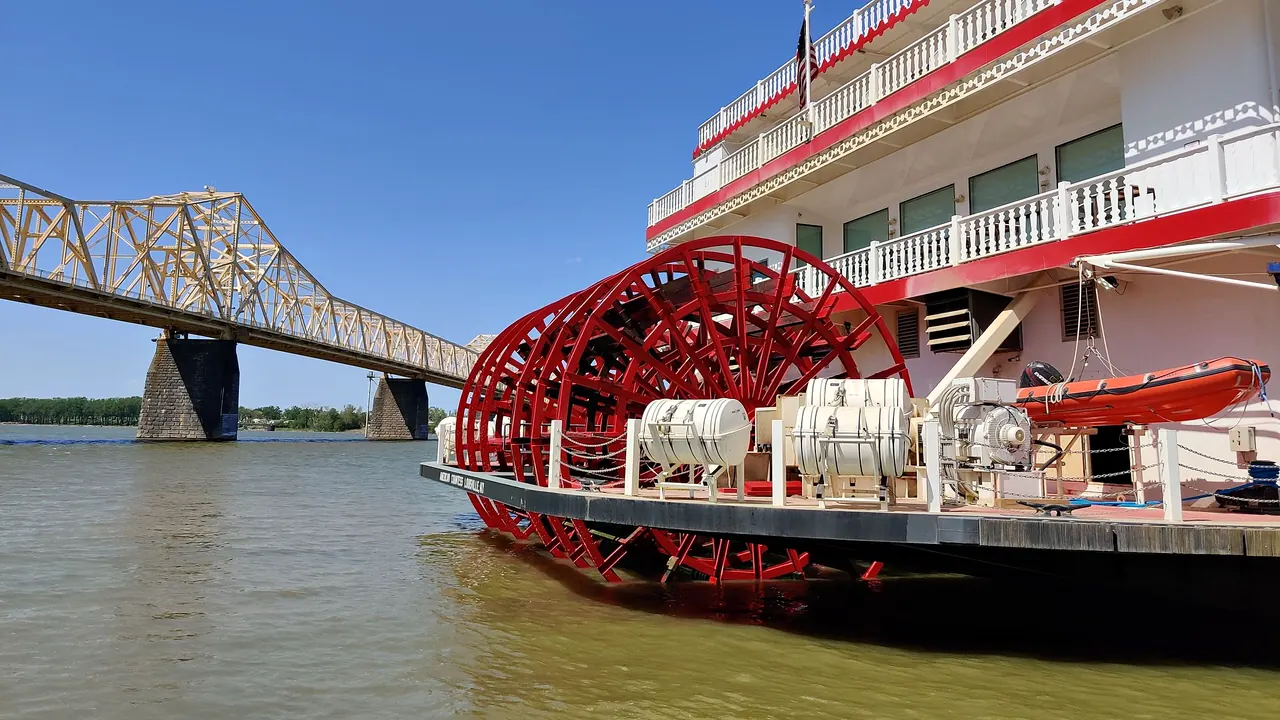
Photos: Atlanta by DXR, CC BY-SA 4.0, cropped; Louisville by NachoServant, CC BY-SA 4.0, cropped.
Atlanta or Louisville?
Our verdict in twelve categories, each scored against the same fixed benchmark cities, and the climate month by month, so you can choose for your trip.
Choose Atlanta for
- nightlife
- shopping
- families
Atlanta suits the traveller who wants a big city's range. It has the deeper food scene, with Southern cooking alongside the international kitchens of Buford Highway, a club culture built on the hip-hop it sends around the world, and stronger stages and shops. It is also the better choice with children, thanks to the aquarium, Fernbank and the theme parks. In return you get more sprawl and heavier traffic, and on most days you will be in a car.
Choose Louisville for
- day trips
Louisville is a smaller, easier city that does a few things very well. Choose it if bourbon, horse racing and the Kentucky countryside appeal more than nightclubs and malls. The distilleries around Bardstown and the thoroughbred farms near Lexington make for better day trips than anything within reach of Atlanta, and a relaxed pace, mild traffic and an evening on Bardstown Road make up for the narrower list of things to do.
Scoreboard
Twelve categories on one fixed scale from 0 to 100. The shaded stretch is the gap between the two.
Your match
Pick a travel style or drag the sliders, and both match scores follow your weighting.
Wins on nightlife and shopping with your weighting.
Wins on day trips with your weighting.
What matters to you?
Category by category
What the scores mean for a trip.
Beaches & swimming
Neither city is a beach destination. In both, summer swimming means a pool or a drive to a reservoir.
The difference is small. From Atlanta, Lake Lanier is about an hour away and has proper sandy swimming areas in warm water. Louisville's own river is a working waterway with strong currents, so its lake days are further out in the Kentucky countryside and lean more towards boating.
Food & drink
Both cities cook in the Southern tradition, but Atlanta has much more range. Its meat-and-three cafeterias, soul food kitchens and serious Sunday brunches are only half the story. The Korean, Vietnamese, Mexican and Ethiopian restaurants along Buford Highway give it a second food city, and food halls along the BeltLine add a third layer.
Louisville is more focused. Bourbon sets the tone, and the plates are its own: the hot brown, burgoo and Derby pie, served in NuLu, the Highlands and Butchertown. It is distinctive and rewarding for a few days, but once you step outside the bourbon and Southern traditions the choice thins quickly, which is not true of Atlanta.
Culture & sights
Both cities fill two or three days rather than a week, but their histories are very different. Atlanta's weight lies in the civil rights movement: King's birth home and Ebenezer Baptist Church on Auburn Avenue, and the national centre downtown. The High Museum adds the stronger art collection. After the 1864 burning, though, there is little old townscape to explore on foot.
Louisville makes up for that with streets. Old Louisville's blocks of Victorian mansions and the cast-iron fronts of Whiskey Row are good for an afternoon's wandering. Its sights are about sport and fame: the twin spires of Churchill Downs, the Ali Center and the Slugger museum.
Nightlife
Atlanta is the place to go out. It has clubs with a national reputation for hip-hop and trap, small dance floors packed along Edgewood Avenue, one of the South's largest LGBTQ scenes in Midtown, and bottle-service lounges in Buckhead. The drawback is that each district is a separate pocket, and you need a ride to get between them.
Louisville is a bar town with only a small club scene. A night out means the dive bars and patios of Bardstown Road or bourbon and cocktail bars in NuLu, and some of them stay open very late. Its biggest nights come around the Derby rather than on an ordinary weekend.
Nature & outdoors
Atlanta has the better outdoors within reach. You can climb Stone Mountain's bare granite dome or paddle the Chattahoochee below wooded bluffs without leaving the metro area. A two-hour drive brings you to the Blue Ridge foothills, Amicalola Falls and the southern end of the Appalachian Trail.
Louisville's strength is in the city itself. Olmsted's Cherokee and Iroquois parks have wooded hills, and at the Falls of the Ohio you can walk out across fossil beds at low water. Beyond the city, Bernheim Forest and Mammoth Cave are worthwhile, but the rolling farmland never reaches the drama of the Georgia mountains.
Day trips
This is the one category where Louisville clearly comes out ahead. Bourbon country starts about 45 minutes south at Bardstown, and the roads beyond lead to distilleries you can tour and taste at. Lexington's white-fenced horse farms and Keeneland, Shaker Village and Lincoln's birthplace are all easy outings.
Atlanta's choices are pleasant rather than memorable: college-town Athens, Dahlonega's gold-rush square and vineyards, and Chattanooga's aquarium and Lookout Mountain about two hours north. Its best-known nearby town, Savannah, is too far to visit in a day.
Good for families
Atlanta has more for children, and the attractions are bigger. The Georgia Aquarium's whale sharks and belugas, the dinosaur skeletons at Fernbank, the Center for Puppetry Arts and the Six Flags roller coasters could fill a week. The cost is long drives in heavy traffic.
Louisville is the more relaxed choice. The zoo, the hands-on floors of the science centre, the water park at Kentucky Kingdom and the underground tram tours of the Mega Cavern are all a short drive apart. That suits younger children, even if there is less to see overall.
Getting around
You will want a car in both cities, but for different reasons. Atlanta has one useful MARTA rail line, which runs from the airport through downtown and Midtown to Buckhead and covers the main central sights. Off that line, distances are long and rush-hour motorway traffic is notoriously bad.
Louisville has no rail at all, but it is small. Downtown along Main Street and NuLu can be walked, and the traffic is mild enough that driving out to Churchill Downs or the Highlands is quick and easy.
Shopping & style
Atlanta is the better shopping city. The large malls facing each other on Peachtree Road and the designer boutiques of Buckhead Village cover the luxury end, and Little Five Points adds vintage clothing and records. Like most American cities, though, it has no local craft to take home.
Louisville's shopping is modest: a few design shops in NuLu and antiques along Bardstown Road. Its one real advantage is the souvenir itself. Bourbon bottles that are hard to find elsewhere, along with Derby hats, give a visitor something specific to bring home.
Affordability
Both cost about the same as an ordinary mid-priced American city, with tax and tips on every meal and a car or rides every day. Where you save money differs. In Atlanta, hotels away from Buckhead and convention weeks are good value, the King sites are free and Buford Highway eats cheaply, but the big family attractions charge steep entry fees.
In Louisville, moderate hotel rates and easy parking help, as do the free parks and Old Louisville's streets. Derby week in spring is the exception: rooms then cost several times their usual rate, so anyone on a budget should plan around it.
Live music & performing arts
Both cities have an orchestra, an opera, a ballet and a 1920s movie palace for touring shows, but Atlanta has the stronger programme. The Atlanta Symphony is known for its choral recordings, and the Alliance Theatre stages serious new work. Above all, its place in hip-hop, R&B and gospel brings a steady stream of major tours, with the Tabernacle and the clubs of Little Five Points covering the smaller acts.
Louisville punches above its size with the new American plays at Actors Theatre and free Shakespeare in the park in summer. In its bars, bluegrass and Americana take the place of Atlanta's hip-hop.
Wellness & relaxation
Neither city is somewhere to unwind, but Atlanta has one real draw: the large Korean bathhouses about half an hour out, with hot and cold pools, sauna rooms and lounging halls, some open round the clock. Day spas in Buckhead and Midtown cover the rest.
Louisville has hotel spas and little more. Its calmer pace and slow porch afternoons in the Highlands help, and for a real spa break, the old mineral-spring resorts of French Lick and West Baden Springs are about an hour and a half away in Indiana.
When should you go?
Pick your month. The climate figures are measured averages, not a forecast.
Atlanta in July
Louisville in July
Daytime high, °C
Rainfall in the month, mm
Where the figures come from
Atlanta has no rain gauge within 25 km of the centre, so its rainfall comes from a gridded climate dataset read at the city rather than from a gauge further away.
Atlanta's sunshine is measured 29 km from the centre, at Hartsfield-Jackson Atlanta.
Temperature and rainfall are climate normals, averaged over the years shown. Atlanta: 2006-2020 (sunshine 1981-2010, rainfall 1991-2020) normals, Atlanta / Carroll Heights (12.5 km from centre). Louisville: 1991-2020 (sunshine 1981-2010) normals, Standiford Field (8.2 km from centre).
Neither city is on the coast, so the only swimming is at the lakes, and that is a June to September plan in both, when afternoons reach about 30°C. High summer is sticky and too hot for long walks in either place. The real difference comes in winter. Atlanta's January days reach around 12°C, so a winter city break is comfortable enough, while Louisville sits nearer 6°C and feels properly cold from December to February. Atlanta's wettest months are winter and early spring. Louisville gets its heaviest rain in late spring, around 132mm in May.
For walking and outdoor sightseeing, spring and autumn are best in both cities. Atlanta warms up earlier, and March is already mild there, while Louisville is at its best in April and again in late September and October. In both cities July peaks at about 32°C. Louisville's summer sunshine is the stronger of the two, but its winter days are noticeably greyer than Atlanta's.
Which traveller are you?
On a food and nightlife trip, Atlanta is the better pick. You can eat soul food on the west side and Korean or Vietnamese along Buford Highway, then go out to the Edgewood Avenue bars, the Midtown scene or the big clubs that play Atlanta's own hip-hop.
On a family trip with children, Atlanta again comes out ahead. The Georgia Aquarium's whale sharks, the dinosaurs at Fernbank, puppet shows in Midtown and the Six Flags rides add up to more days of entertainment than Louisville's zoo, science centre and Kentucky Kingdom.
For a bourbon trip, Louisville has no rival. Distillery tasting rooms line Whiskey Row, Bardstown and the Kentucky distilleries are within an easy drive, and the shops sell bottles you will rarely find anywhere else. Atlanta has craft breweries but nothing like this.
Before you go
| Measure | Atlanta | Louisville |
|---|---|---|
| Currency | US Dollar (USD) | US Dollar (USD) |
| Sockets | AB120 V, 60 Hz | AB120 V, 60 Hz |
| Driving side | Right | Right |
| Time zone | UTC-5, UTC-4 in summer | UTC-5, UTC-4 in summer |
| Emergency number | 911 | 911 |
| Elevation | 225 m | 142 m |
| Main airport | Hartsfield Jackson Atlanta International Airport (ATL)14 km from centre238 non-stop destinations | Louisville Muhammad Ali International Airport (SDF)10 km from centre40 non-stop destinations |
| Public holidays this year | 12 days | 14 days |
By the numbers
| Measure | Atlanta | Louisville |
|---|---|---|
| City population | 498,715 | 246,161 |
| People per km² | 1,433 | 1,434 |
| Museums within 10 km | 27 | 15 |
| UNESCO World Heritage sites within 50 km | 0 | 0 |
Where else could you go?
Every comparison below shares a destination with this one, so you can follow Atlanta or Louisville somewhere new.
- Chattanoogavs Atlanta
- Gatlinburgvs Atlanta
- Pigeon Forgevs Atlanta
- Nashvillevs Louisville
- Ashevillevs Atlanta
- Pigeon Forgevs Louisville