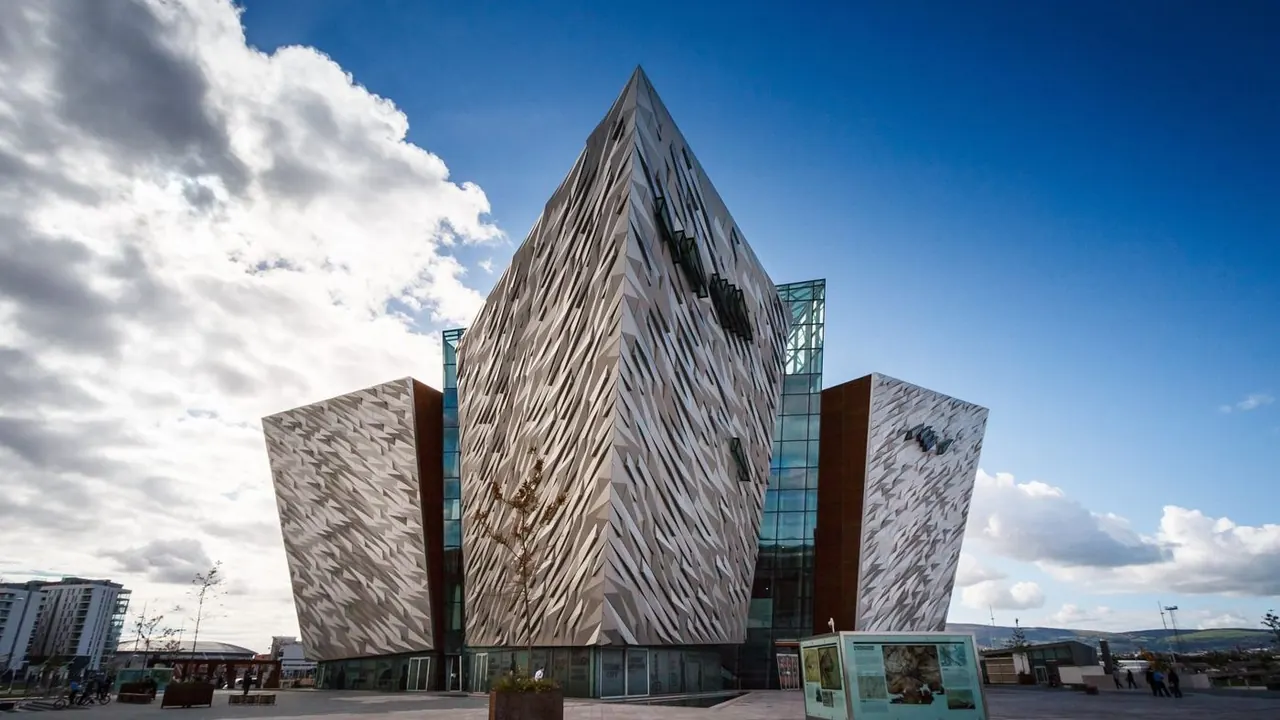
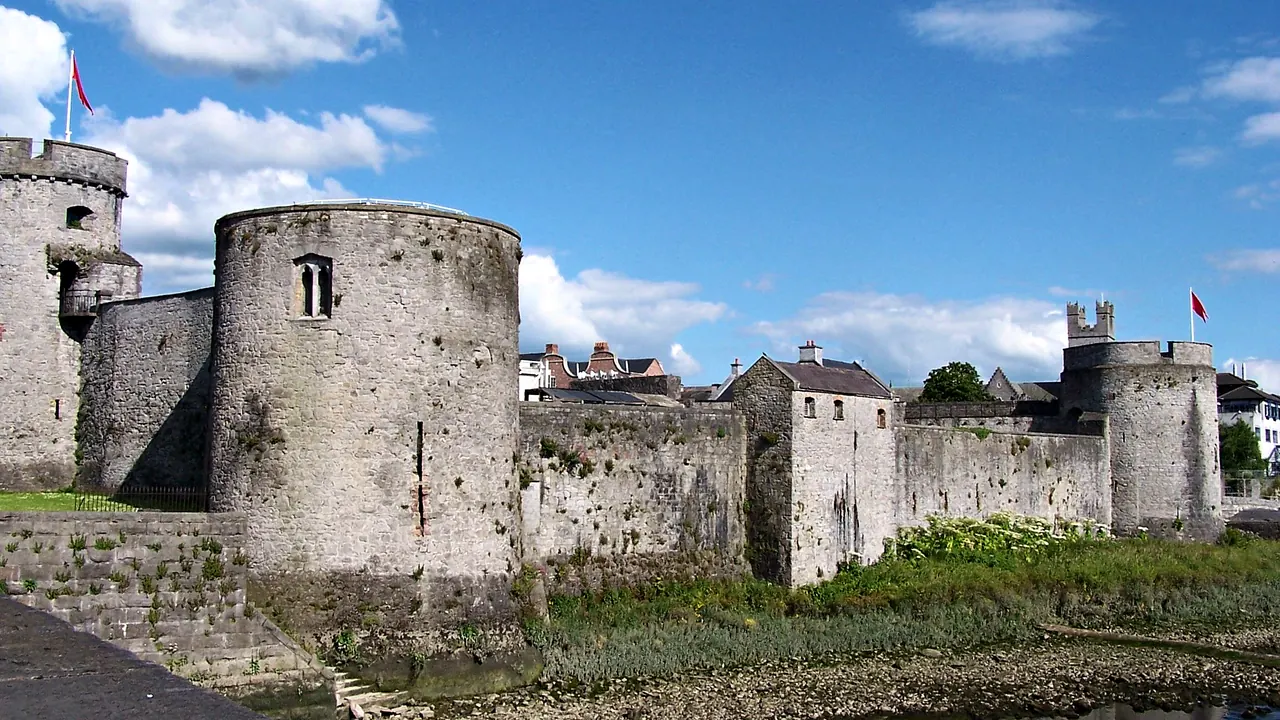
Photos: Belfast by Nico Kaiser, CC BY 2.0, cropped; Limerick by ingawh, CC BY-SA 3.0, cropped.
Belfast or Limerick?
Our verdict in twelve categories, each scored against the same fixed benchmark cities, and the climate month by month, so you can choose for your trip.
Choose Belfast for
- families
- culture and sights
- live music and the arts
Belfast is the stronger pick for a city stay in its own right. It has more to fill the days: the shipyard story at Titanic Belfast, the murals of the Falls and Shankill, a pub scene with traditional sessions most nights, and real theatre and orchestral music. Cave Hill sits behind the streets, the Mournes and the Causeway Coast are within reach, and families get W5 and a zoo. It also tends to cost a little less.
Choose Limerick for
Limerick does not lead in any category we score.
Limerick works best as a quiet, practical base for touring the west of Ireland by car. The city itself takes a day or two: King John's Castle, St Mary's Cathedral, the Hunt Museum and the Georgian terraces. After that you are well placed for Bunratty, Adare, Lough Derg, the Burren and the Cliffs of Moher. Choose it for the region around it rather than for its own streets.
Scoreboard
Twelve categories on one fixed scale from 0 to 100. The shaded stretch is the gap between the two.
Your match
Pick a travel style or drag the sliders, and both match scores follow your weighting.
Wins on families and culture and sights with your weighting.
Has no clear advantage with the weighting you have chosen.
What matters to you?
Category by category
What the scores mean for a trip.
Beaches & swimming
Neither is a beach destination, but Belfast makes sand a little easier to reach. Helen's Bay and Crawfordsburn are a short train ride down the County Down shore, and Whiterocks and Portstewart are a longer drive north.
Limerick is a river city, and its nearest beaches at Kilkee, Lahinch and Ballybunion are an hour or more away by car. They are wide, wild Atlantic strands better suited to surfers in wetsuits than to swimmers.
Food & drink
Belfast gives you more to eat. Mourne lamb, dry-aged beef and Strangford shellfish appear on short seasonal menus in the Cathedral Quarter and along the Lisburn Road, and the Ulster fry is a local signature. Behind the pints of stout there are deep shelves of Irish whiskey.
Limerick eats honestly from Munster farmland, with its own tradition of cured ham, and the Milk Market is a good weekend browse. However, it has only a handful of ambitious kitchens and no real local cuisine, so meals are pleasant rather than a reason to visit.
Culture & sights
Belfast's history is recent and industrial, and it is told with force. You can see the Harland and Wolff slipways and drawing offices, the domed City Hall, Crumlin Road Gaol and the peace walls, ideally with a local guide.
Limerick's history goes back much further but is thinner on the ground. King John's Castle and the twelfth-century St Mary's Cathedral on King's Island, the Treaty Stone and the Hunt Museum's medieval objects make a satisfying day rather than a full itinerary.
Nightlife
Both cities go out to the pub, but Belfast has more to choose from. The cobbled entries around Hill Street and the Victorian snugs of the Crown Liquor Saloon make the Cathedral Quarter a proper evening's round, and Botanic Avenue fills in term time.
Limerick's bars along O'Connell Street and Thomas Street are friendly, with open fires and a few clubs open late at weekends. They are busiest on student weeknights or when Munster play at Thomond Park, and quiet the rest of the time.
Nature & outdoors
Belfast's outdoors starts at the edge of town. Cave Hill's basalt cliffs and the Black Mountain are a bus ride away, and the Lagan towpath runs straight out of the centre. The Mournes and the Causeway Coast, with the Giant's Causeway and Carrick-a-Rede, are big landscapes within easy reach.
Limerick offers riverside walks in town, with the best scenery a drive away. That means kayaking on Lough Derg, trails in the Galtees and Ballyhoura, and the limestone Burren beside the Cliffs of Moher. It is fine country, but you need a car to see it.
Day trips
Both make good bases, and they open up different parts of Ireland. From Belfast, the train reaches Dublin in about two hours. The Antrim coast road links Dunluce, Bushmills and Portrush, and Derry's walls, Armagh's cathedrals and Carrickfergus Castle round out the north.
Limerick looks south and west, with Bunratty and thatched Adare about twenty minutes out. The Rock of Cashel is an hour away, and Galway, Cork and Kilkenny make longer days out. Most of these trips need a car or a coach tour.
Good for families
Belfast has much more to keep children busy. W5's hands-on science and the zoo on Cave Hill are both there, and Titanic Belfast and the trams at the Ulster Folk and Transport Museum suit older children. The Botanic Gardens give space for running about between showers.
In Limerick, the battlements and siege displays at King John's Castle and the village at Bunratty Folk Park are the highlights. With no zoo or aquarium nearby, families usually stay a night or two and move on.
Getting around
Both centres are flat and easy to walk, but Belfast's transport stretches further. The Glider rapid buses cross the city, and suburban trains run along the lough to Holywood, Bangor and Carrickfergus. You will still want a car or tour for the Causeway Coast and the Mournes.
In Limerick you can walk from the castle to the Georgian Quarter in well under half an hour, and the central station has trains to Dublin, Ennis and Galway. Rural buses are sparse, so a hire car from Shannon Airport becomes almost essential for exploring.
Shopping & style
Belfast has the larger high street around Donegall Place and the glass-domed Victoria Square, with independents on the Lisburn Road. Irish linen is a souvenir with real roots in the city.
Limerick's O'Connell Street is mostly practical, and the Milk Market's craft and secondhand stalls are its most characterful stop. Limerick lace is the local craft, but it is hard to find for sale.
Affordability
Belfast is the gentler city on the budget. Its hotels are fairly priced outside big event weekends, and the Ulster Museum, the Botanic Gardens and City Hall tours are free. Restaurants and paid coast tours still add up.
In Limerick, the town itself is cheap to walk around and its sights are modestly priced. However, eating out and drinks are expensive, and hotel rooms cost more on rugby weekends. Most visitors also need to budget for a hire car.
Live music & performing arts
Belfast has the fuller stage. You can hear the Ulster Orchestra at the Ulster Hall and see touring musicals and opera at the ornate Grand Opera House. Add Irish drama at the Lyric, nightly sessions in the pubs and spring and autumn arts festivals.
Limerick's strength is its university. The Irish Chamber Orchestra and the University Concert Hall are based there, and its Irish music and dance programme feeds the pub sessions. The Lime Tree and the Belltable cover drama, but for opera you go to Dublin.
Wellness & relaxation
Neither city is built for unwinding, and both send you out of town for it. In Belfast, the local habit is a cold dip in the lough with the sea swimmers, or a slow walk in the Botanic Gardens.
Limerick has a gentler option within reach. The hot seaweed baths of the Atlantic towns are about an hour away, and there are spas in the country-house hotels around Adare and Lough Derg.
When should you go?
Pick your month. The climate figures are measured averages, not a forecast.
Belfast in July
Limerick in July
Daytime high, °C
Rainfall in the month, mm
Temperature and rainfall are climate normals, averaged over the years shown. Belfast: 1991-2020 normals, Belfast / Aldergrove Airport (19.4 km from centre). Limerick: 1991-2020 normals, Shannon Airport (20.1 km from centre).
Belfast is at its best from May to September, when daytime highs reach about 19°C and the evenings are long. May is both its driest month, at around 55mm, and its sunniest, so late spring is the best time for Cave Hill, the Mournes and the Causeway Coast. The rain builds again through autumn, and October and November are the wettest months. The sea is warmest in September and October, but only at about 14°C, so swimming is for hardy dippers in any month.
Limerick has the same summer season but is a little milder all year, reaching about 20°C in July. Its winters are clearly wetter, with around 113mm of rain in December. May is its sunniest month too. Neither city gets a beach summer. In winter both are mild enough for walking the streets, but the days are short, grey and damp, so you will spend more time in museums and pubs.
Which traveller are you?
On a family trip with children, Belfast is the easier choice. W5's hands-on science, the zoo on Cave Hill and the steam engines at Cultra give you indoor and outdoor options for rainy days. Limerick has the castle and Bunratty, then little else aimed at children.
For a culture and arts trip, Belfast has more depth. The Titanic slipways, the Ulster Museum, guided mural walks, the Lyric's Irish drama and the Grand Opera House add up to several full days. Limerick's medieval core and the Hunt Museum fill one or two.
On a food and nightlife trip, Belfast is the better choice. St George's Market, Strangford oysters, tasting menus and an evening through the Cathedral Quarter's old pubs give you more range. Limerick offers the Milk Market and good pints, but fewer memorable meals or late nights.
Before you go
| Measure | Belfast | Limerick |
|---|---|---|
| Official language | English | English, Irish |
| Currency | Pound Sterling (GBP) | Euro (EUR) |
| Sockets | G230 V, 50 Hz | G230 V, 50 Hz |
| Driving side | Left | Left |
| Time zone | UTC, UTC+1 in summer | UTC, UTC+1 in summer |
| Emergency number | 112 or 999 | 112 |
| Elevation | 3 m | 10 m |
| Main airport | George Best Belfast City Airport (BHD)4 km from centre25 non-stop destinations | Shannon Airport (SNN)21 km from centre39 non-stop destinations |
| Public holidays this year | 10 days | 11 days |
By the numbers
| Measure | Belfast | Limerick |
|---|---|---|
| City population | 345,006 | 62,702 |
| People per km² | 3,000 | 3,015 |
| Museums within 10 km | 8 | 6 |
| UNESCO World Heritage sites within 50 km | 1 | 0 |
| Swim season, months above 21 °C | None | - |
Where else could you go?
Every comparison below shares a destination with this one, so you can follow Belfast or Limerick somewhere new.