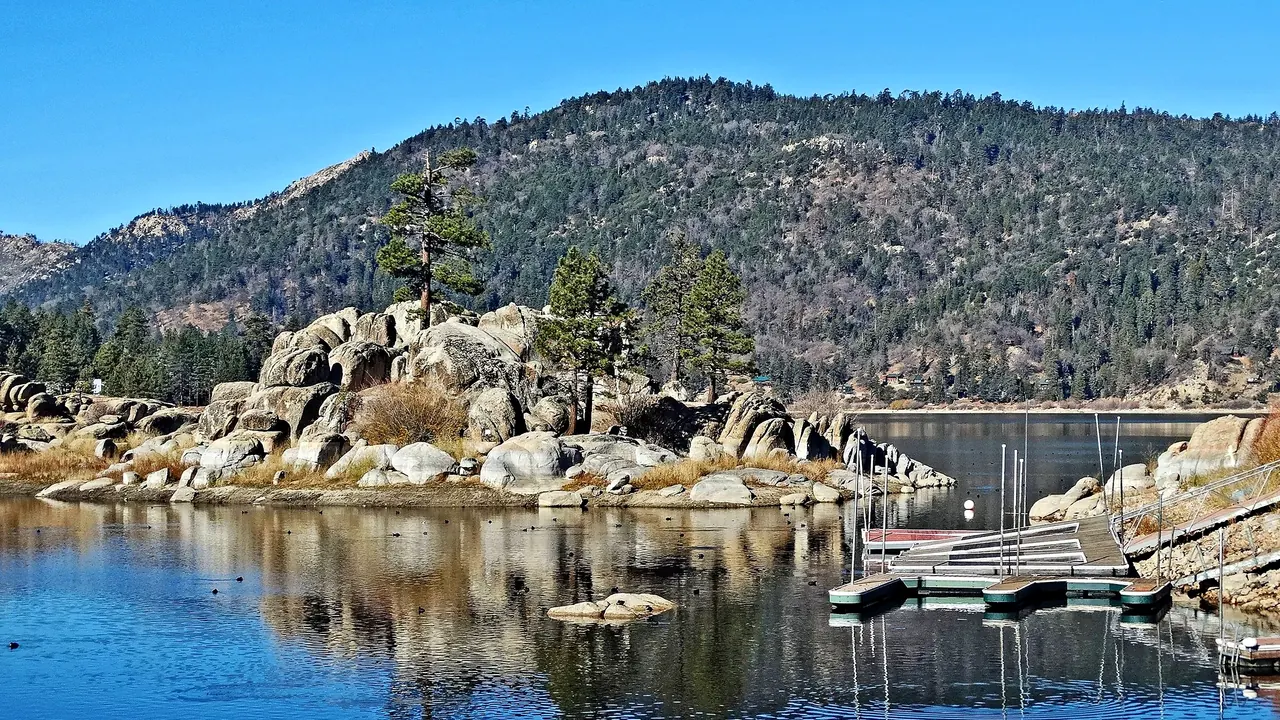
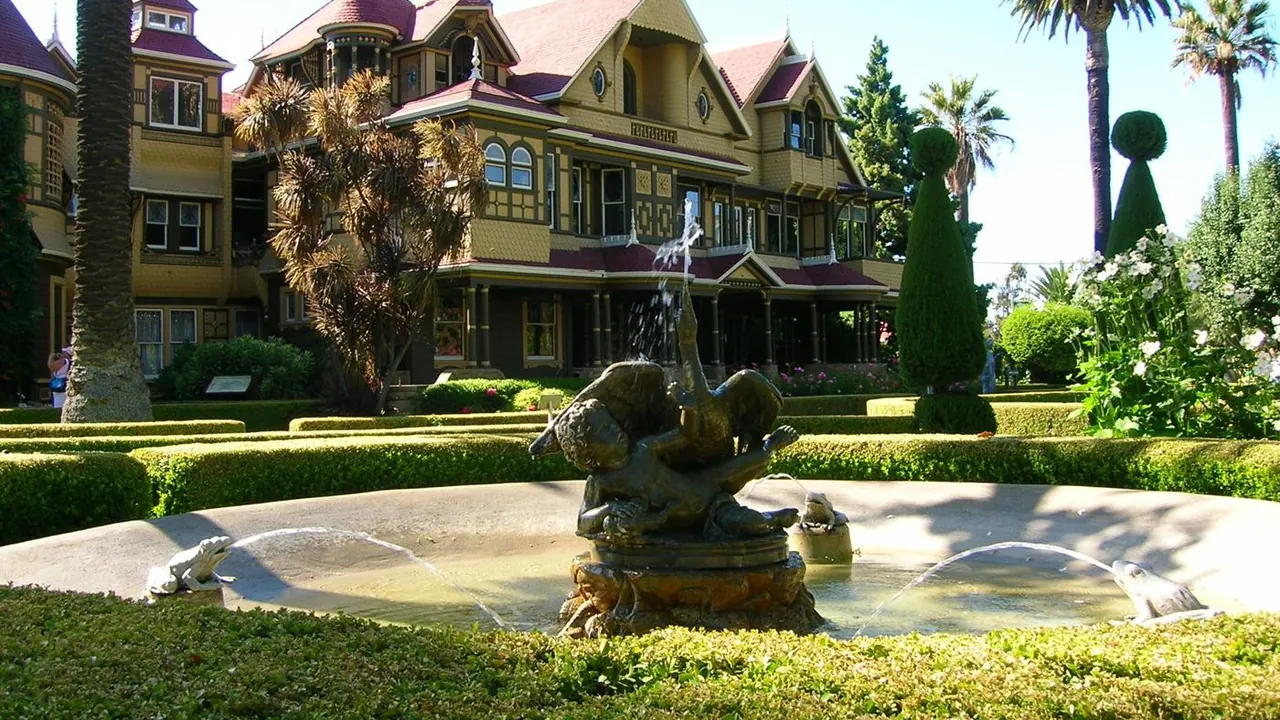
Photos: Big Bear Lake by inkknife_2000, CC BY-SA 2.0, cropped; San Jose by Roxanna Salceda, CC BY-SA 2.0, cropped.
Big Bear Lake or San Jose?
Our verdict in twelve categories, each scored against the same fixed benchmark cities, and the climate month by month, so you can choose for your trip.
Choose Big Bear Lake for
- prices
- nature and the outdoors
- wellness
Big Bear Lake is the choice for a mountain vacation spent outside. In winter that means skiing, snowboarding and sledding, and once the snow goes it means hiking, mountain biking and paddling on the lake. Evenings are a hot tub and a wood stove in a rented cabin rather than restaurants or bars, and that is the appeal. It suits families and groups who want to cook for themselves, stay put and spend their days among the pines.
Choose San Jose for
- day trips
- shopping
- food and drink
Travellers who want more variety will do better in San Jose. The city is modest on its own, but it eats well, especially at its Vietnamese and Mexican places, has a few real curiosities, and puts San Francisco, Monterey, Santa Cruz and the redwoods within easy reach. It costs more, and nearly every outing involves a drive, but there is far more to fill a week.
Scoreboard
Twelve categories on one fixed scale from 0 to 100. The shaded stretch is the gap between the two.
Your match
Pick a travel style or drag the sliders, and both match scores follow your weighting.
Wins on prices and nature and the outdoors with your weighting.
Wins on day trips and shopping with your weighting.
What matters to you?
Category by category
What the scores mean for a trip.
Beaches & swimming
Neither is a beach destination, but San Jose gives you the better day by the water. A drive over the Santa Cruz Mountains brings you to the sandy, sheltered beaches of Santa Cruz and Capitola, which have real surf-town character, although the Pacific is too cold for more than a paddle without a wetsuit.
Big Bear Lake's water is actually the warmer of the two in summer, but the shore is mostly rocky. Supervised swimming is limited to the small beach at Meadow Park, and a swim there is a quick cool-off between boat trips rather than the point of the day.
Food & drink
San Jose is far ahead. Its large Vietnamese community, serious taquerias, and Korean and Indian restaurants make it worth eating your way through the suburban plazas, even if the best places are spread out and need a car. Japantown and the restaurants of Los Gatos and Saratoga add a slower, more polished side.
Big Bear Lake offers hearty resort food: diner breakfasts, burgers, barbecue and a brewpub pint, with the most choice in the Village. Many visitors cook in their cabins, and on winter weekends the queues are long.
Culture & sights
San Jose's few sights are odd and well worth seeing, while Big Bear Lake has almost nothing to visit. On the mountain, the Discovery Center covers the forest and its wildlife, a small museum covers local history, and a dirt-road drive takes you past old cabins and mining remains from the 1860s gold rush in Holcomb Valley.
San Jose can fill a couple of days. The Winchester Mystery House has staircases that lead nowhere, the Rosicrucian museum has Egyptian antiquities, Mission Santa Clara tells of the Spanish colonial founding, and the Computer History Museum tells Silicon Valley's own story.
Nightlife
After dark, Big Bear Lake offers après-ski and an early night, and San Jose offers a modest weekend scene. On the mountain, a night out is a drink in the bars near the slopes in ski season or a brewpub or sports bar in the Village. There are no clubs, and nothing stays open late.
San Jose's evenings centre on a few downtown blocks. San Pedro Square has pubs, beer halls and a covered food market for before and after events at the arena. SoFA, along South First Street, has cocktail bars, dive bars and a few dance clubs, busy on Fridays and Saturdays and quiet the rest of the week.
Nature & outdoors
Both are strong for the outdoors, but Big Bear Lake has the edge because you are already in the mountains. Two ski areas, a forested alpine lake for kayaking and sailing, the Pacific Crest Trail and the San Gorgonio Wilderness all start close to your door, and bald eagles winter around the shore.
San Jose's nature is wider in range but further away: redwood groves at Big Basin and Henry Cowell, foothill preserves, the Lick Observatory on Mount Hamilton, and sea otters and whales in the Monterey Bay. Nearly all of it means a drive, and it has no snow.
Day trips
This is where the two differ most. From San Jose, San Francisco is an easy day by Caltrain, and Monterey, Carmel, Santa Cruz's boardwalk, Stanford, Berkeley and the Santa Cruz Mountains wineries are all close enough for comfortable outings.
Big Bear Lake sits at the end of winding mountain roads. Lake Arrowhead, Oak Glen's orchards and Riverside's Mission Inn are possible, but anything further means a long and often slow day, so most people stay on the mountain.
Good for families
San Jose has the wider range for children. Great America, Happy Hollow's gentle zoo, two hands-on museums downtown, and day trips to the Santa Cruz Beach Boardwalk and the Monterey Bay Aquarium will keep a family busy for a week, at the cost of many hours in the car.
Big Bear Lake is simpler, built around snow play, beginner ski lessons, the Alpine Zoo's rescued bears and bobcats, and in summer the alpine slide and pedal boats. For lowland children seeing snow for the first time, that can be enough on its own.
Getting around
Both effectively need a car, but for different reasons. In Big Bear Lake, the steep mountain highways are the only way in and may require snow chains in winter. Once you are there, the Village is walkable and a local bus and seasonal trolley serve the ski areas, though the forest cabins mean driving for most errands.
San Jose has a compact, flat downtown, light rail and Caltrain up to San Francisco. Beyond those lines it is freeways, slow buses and rush-hour traffic.
Shopping & style
San Jose is clearly the better place to shop. On the west side, a very large regional mall and its open-air boutique street cover most international and luxury brands, and Willow Glen, Los Gatos, Japantown and the Asian supermarkets give you more varied browsing.
Big Bear Lake's Village has gift shops, fudge, bear souvenirs and outdoor outfitters, which is enough for an hour's browse and not much more.
Affordability
Big Bear Lake is the cheaper of the two, provided you choose your dates. A shared cabin midweek or in the shoulder seasons, with your own cooking, is reasonable, while winter weekends, school vacations, lift tickets and ski hire push the cost up quickly.
San Jose is expensive throughout, and the pattern runs the opposite way: business hotels are dearest midweek and cheaper at weekends. Car hire and parking add up, and the suburban Vietnamese and Mexican eateries and the free trails are the main ways to save.
Live music & performing arts
San Jose has a real arts calendar, if a small one. Opera San José performs in the restored California Theatre, the symphony and touring Broadway shows play the Center for the Performing Arts, and the arena and the summer jazz festival bring big concerts.
Big Bear Lake has community theatre, free lakeside concerts in summer and the Oktoberfest bands in autumn. Otherwise it is a guitarist in a bar.
Wellness & relaxation
In Big Bear Lake you unwind in private and outdoors, and in San Jose you go to a bathhouse or spa. Many Big Bear cabins have their own hot tub on a deck among the pines, and on quiet midweek days the clear mountain air and slow pace are restful. Busy winter weekends spoil the calm.
San Jose has more you can book: Korean-style bathhouses with saunas and soaking pools in the valley towns, hotel spas, and day spas in the wealthier suburbs. The Japanese gardens at Hakone and Kelley Park are calm places for an hour, but around them is a busy city built around the working week.
When should you go?
Pick your month. The climate figures are measured averages, not a forecast.
Big Bear Lake in July
San Jose in July
Daytime high, °C
Rainfall in the month, mm
Where the figures come from
Big Bear Lake has no rain gauge within 25 km of the centre, so its rainfall comes from a gridded climate dataset read at the city rather than from a gauge further away.
Temperature and rainfall are climate normals, averaged over the years shown. Big Bear Lake: 2014-2025 (rainfall 1991-2020) normals, Big Bear City (5 km from centre). San Jose: 1991-2020 normals, San Jose / Santa Clara Trailer Village (8.2 km from centre).
Big Bear Lake has two distinct seasons. Winter at altitude is cold, with daytime highs around 7°C in January, and most of the year's precipitation falls from December to February, which is what keeps the slopes and sledding hills in business. From June to September it turns dry and warm, peaking near 26°C in July: the time for hiking, biking and the lake. Spring and late autumn are cool and changeable, and fine for walking if you bring layers.
San Jose is mild all year. Even in winter the days are pleasant for sightseeing, and from May to October it is almost completely dry, with highs around 27°C. Its moderate rain falls mostly from December to February. The Monterey Bay stays cold all year and reaches only about 15°C at its warmest in late summer, so the coast is better for walks and wetsuit surfing than for swimming. Summer suits both cities. In winter, San Jose is the comfortable choice for getting around, and Big Bear Lake is the choice if you want snow.
Which traveller are you?
On an outdoors trip, Big Bear Lake is the better base. You can ski or sled in winter, and in summer there are hiking trails, mountain-bike trails on the ski runs and the Pacific Crest Trail. The lake for paddling and fishing is right outside the cabin door, so you are not driving out to the hills every day.
For a food and nightlife trip, San Jose wins clearly. Little Saigon's pho and banh mi, the taquerias and the Korean and Indian corridors beat mountain diners easily, and San Pedro Square and SoFA give you a weekend night out that Big Bear Lake simply lacks.
On a trip on a tight budget, Big Bear Lake is the easier one to manage. A midweek or shoulder-season cabin shared with friends, with your own cooking, keeps costs down, and San Jose's business-priced hotels and constant car costs make it hard to save.
Before you go
| Measure | Big Bear Lake | San Jose |
|---|---|---|
| Currency | US Dollar (USD) | US Dollar (USD) |
| Sockets | AB120 V, 60 Hz | AB120 V, 60 Hz |
| Driving side | Right | Right |
| Time zone | UTC-8, UTC-7 in summer | UTC-8, UTC-7 in summer |
| Emergency number | 911 | 911 |
| Elevation | 2,058 m | 25 m |
| Main airport | Ontario International Airport (ONT)67 km from centre28 non-stop destinations | Mineta San Jose International Airport (SJC)8 km from centre39 non-stop destinations |
| Public holidays this year | 13 days | 13 days |
By the numbers
| Measure | Big Bear Lake | San Jose |
|---|---|---|
| City population | 5,046 | 1,013,240 |
| People per km² | 299 | 2,167 |
| Museums within 10 km | 1 | 19 |
| UNESCO World Heritage sites within 50 km | 0 | 0 |
| Swim season, months above 21 °C | - | None |
Where else could you go?
Every comparison below shares a destination with this one, so you can follow Big Bear Lake or San Jose somewhere new.
- Palm Springsvs Big Bear Lake
- San Franciscovs San Jose
- Palm Desertvs Big Bear Lake
- Montereyvs San Jose
- Carmel-by-the-Seavs San Jose
- Anaheimvs Big Bear Lake