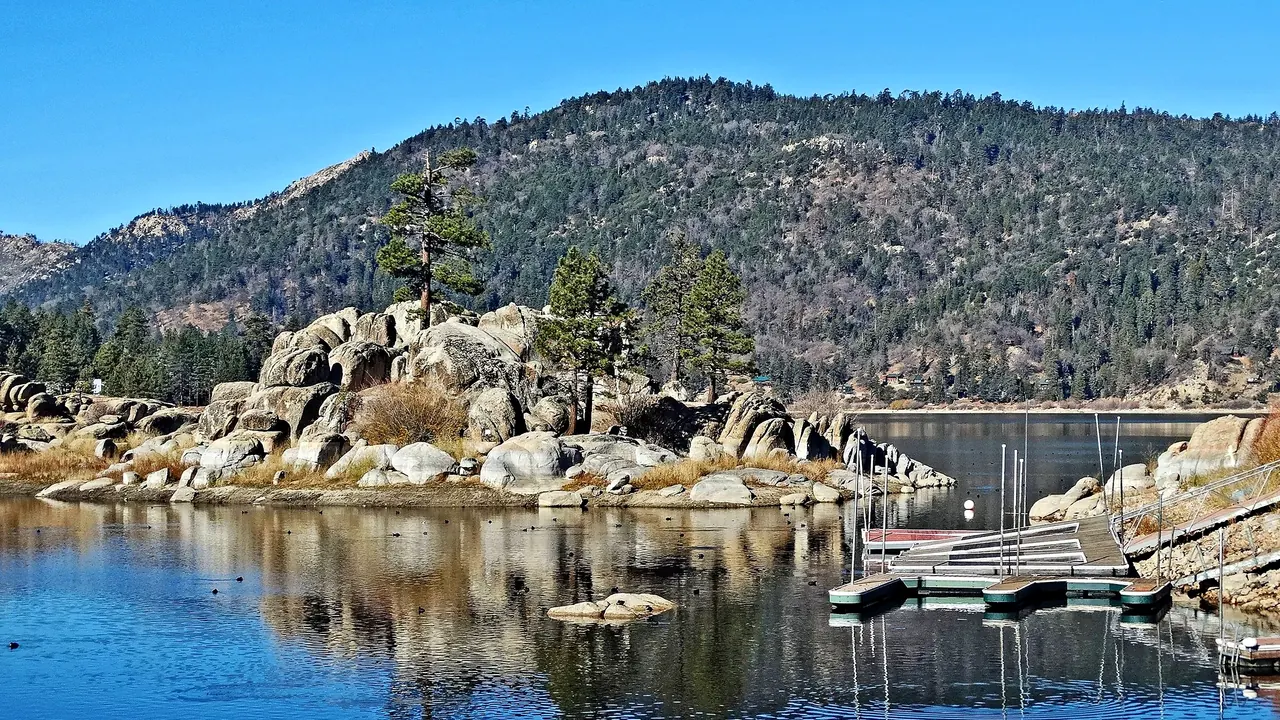
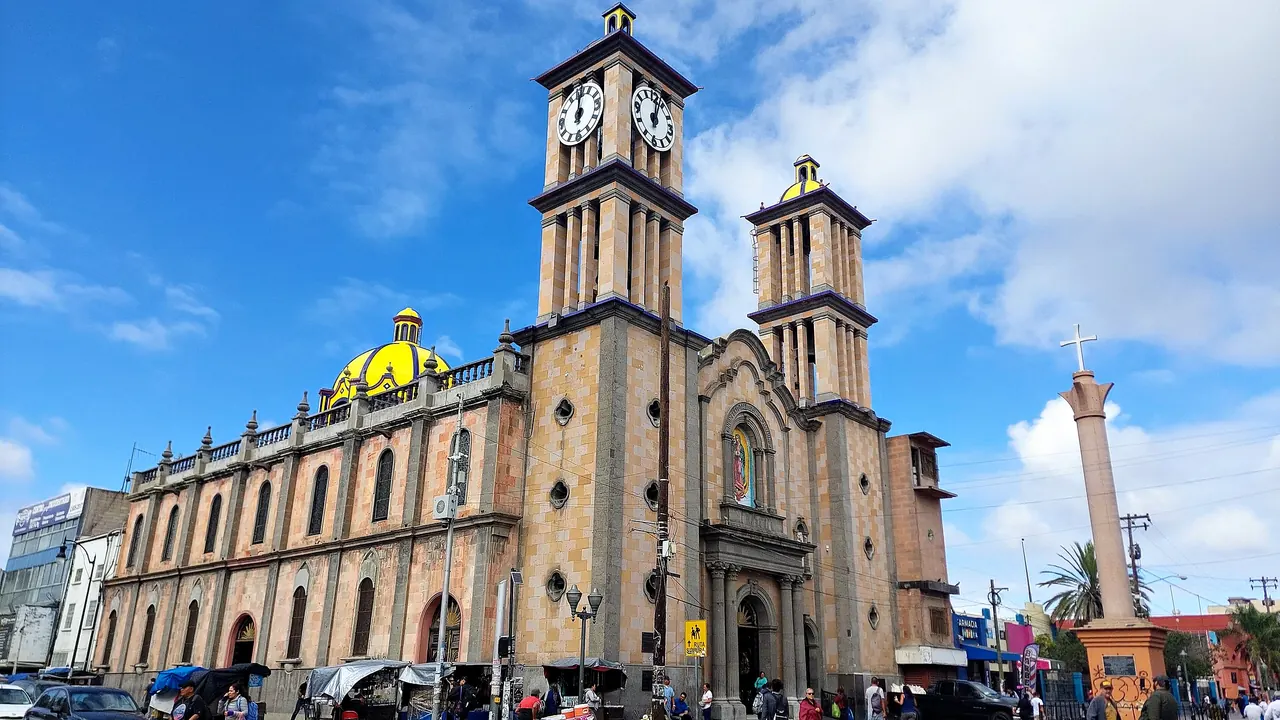
Photos: Big Bear Lake by inkknife_2000, CC BY-SA 2.0, cropped; Tijuana by Exprimidor, CC BY-SA 4.0, cropped.
Big Bear Lake or Tijuana?
Our verdict in twelve categories, each scored against the same fixed benchmark cities, and the climate month by month, so you can choose for your trip.
Choose Big Bear Lake for
- nature and the outdoors
- families
- wellness
Big Bear Lake is for travellers who want the mountain itself: skiing and sledding when the snow comes, then hiking, mountain biking and paddling the lake through the dry summer. A forest cabin with a wood stove and a hot tub completes the trip. It suits families from the lowlands especially well. The evenings are quiet and the food is plain, and most people who come here are happy with that.
Choose Tijuana for
- food and drink
- nightlife
- prices
Anyone who travels to eat and stay out late should pick Tijuana. Its taco stands, Baja Med kitchens and craft taprooms lead into nights on Calle Sexta. The city costs much less day to day and makes a better base for outings, with Rosarito, Ensenada and the Valle de Guadalupe to the south and San Diego across the border. You give up green space and calm, and the city is loud and spread out.
Scoreboard
Twelve categories on one fixed scale from 0 to 100. The shaded stretch is the gap between the two.
Your match
Pick a travel style or drag the sliders, and both match scores follow your weighting.
Wins on nature and the outdoors and families with your weighting.
Wins on food and drink and nightlife with your weighting.
What matters to you?
Category by category
What the scores mean for a trip.
Beaches & swimming
Neither is somewhere to plan a swimming vacation, and both have cool water. Tijuana does give you a real seashore, though: the long sand and promenade of Playas de Tijuana, ending at the border fence, and the wider beaches of Rosarito half an hour south.
Big Bear's lakeshore is mostly rocky, with only one supervised swimming spot, at Meadow Park. In Tijuana, by contrast, swimming near the city is often unwise because of runoff and strong surf, so the beach there is more for walking and lunch than for the water.
Food & drink
This is where the two differ most. Tijuana is a reason to travel in itself. It has spit-roasted adobada, birria and late-night carne asada stands, plus ceviche carts, Baja Med cooking in Zona Río and Chapultepec, and a serious craft beer scene.
Big Bear serves resort comfort food: big breakfasts, pizza, barbecue and a pint after the slopes. Many visitors simply cook in their rented cabin.
Culture & sights
Neither has much heritage, but Tijuana offers more to fill a day or two. The Museo de las Californias tells the story of the peninsula, Avenida Revolución keeps its Prohibition-era character, and the mural-covered border fence is a sight you will not forget. Big Bear has the Discovery Center, a small history museum and the old gold-rush traces in Holcomb Valley, and that is about it.
Nightlife
Tijuana has a real night out. There are rowdy bars on Revolución, cantinas and small dance spots on Calle Sexta, and cocktail bars in Zona Río and Colonia Cacho, all busy late at weekends. It pays to stay in those areas after dark.
In Big Bear the evening is some après-ski in winter, a brewpub, then the hot tub. There are no clubs, and nothing runs late.
Nature & outdoors
Big Bear Lake is the outdoor destination of the pair. It has an alpine lake ringed by pine forest, skiing in winter, and mountain-bike trails on the summer slopes. The Pacific Crest Trail passes along the north shore, and the San Gorgonio Wilderness is next door. Bald eagles spend the winter around the lake.
Tijuana itself is dry, scrubby hills with few parks. Its nature lies down the coast: surf breaks near Rosarito, cliffs along the toll road to Ensenada and winter whale-watching, with gentle walking in the vineyards.
Day trips
Tijuana is a far better base for outings, and they reach two countries. Rosarito and Puerto Nuevo are close by, and Ensenada, the Valle de Guadalupe wineries and Tecate are all an easy day. San Diego lies just north, though the crossing back into the United States can take hours.
Big Bear sits at the end of slow mountain roads. Lake Arrowhead and Oak Glen are about an hour away, but Los Angeles and Palm Springs make for long days, so most visitors stay up on the mountain.
Good for families
Big Bear is built for families. It has snow-play hills and beginner ski lessons, an alpine zoo of rescued bears and bobcats, an alpine slide in summer and pedal boats on the lake. Cabins with kitchens make the logistics easy.
Tijuana has El Trompo science museum, the IMAX dome and Parque Morelos, but little else for children. The pavements are patchy, the city's attractions are spread far apart, and the theme parks are across the border.
Getting around
Both places really need wheels, but for different reasons. In Big Bear the difficulty is the steep highway up the mountain, which can need snow chains and crawls on busy weekends, and the cabins scattered through the forest. The Village is walkable, and a seasonal trolley helps.
Tijuana's core can be reached on foot from the San Ysidro crossing. Beyond that it sprawls with no metro, but plentiful cheap ride-hailing means you can manage without driving yourself.
Shopping & style
Tijuana has more to browse. There are curio markets for silver, leather and pottery, chillies and vanilla at Mercado Hidalgo, small galleries and record shops in the arcades off Revolución, and big malls in Zona Río. Big Bear's Village offers fudge, bear souvenirs and outdoor outfitters, which is a pleasant hour and no more.
Affordability
Tijuana is much cheaper. Street tacos, taxis and mid-range hotels cost little, and only the Revolución strip and the smarter Baja Med and wine-country tables approach international prices.
Big Bear can work for a group sharing a cabin midweek. On winter weekends and in school vacations, though, rates, lift tickets and equipment hire make it an expensive trip.
Live music & performing arts
Tijuana has more on stage. The Centro Cultural concert hall is home to the Baja California orchestra, and a local opera company stages an open-air performance each year. Around the city you will hear norteño bands in cantinas, mariachis at Plaza Santa Cecilia and the Nortec sound in the Calle Sexta bars.
Big Bear offers community theatre, free summer concerts by the lake and the Bavarian bands of its autumn Oktoberfest.
Wellness & relaxation
Big Bear is the more restful of the two, though it has no spa tradition. What it offers is calm: a deck among the pines, a private hot tub and clear, quiet midweek days, at least away from the busy winter weekends. Tijuana is loud and traffic-heavy, its health trade is medical rather than restorative, and anyone looking for real quiet heads out to the vineyard estates.
When should you go?
Pick your month. The climate figures are measured averages, not a forecast.
Big Bear Lake in July
Tijuana in July
Daytime high, °C
Rainfall in the month, mm
Where the figures come from
Big Bear Lake has no rain gauge within 25 km of the centre, so its rainfall comes from a gridded climate dataset read at the city rather than from a gauge further away.
Tijuana has no rain gauge within 25 km of the centre, so its rainfall comes from a gridded climate dataset read at the city rather than from a gauge further away.
Tijuana's sunshine is measured 26 km from the centre, at San Diego International Airport.
Temperature and rainfall are climate normals, averaged over the years shown. Big Bear Lake: 2014-2025 (rainfall 1991-2020) normals, Big Bear City (5 km from centre). Tijuana: 2006-2020 (sunshine 1981-2010, rainfall 1991-2020) normals, San Diego / Bandini (6.7 km from centre).
Big Bear Lake has a true mountain year. Winter days are cold, and December to February is the wettest stretch, at up to about 135mm a month, much of it arriving as snow, which is what brings the skiers and sledders. Spring stays cool and still fairly wet into April. From June to September the days turn warm, reaching about 26°C in July, and there is very little rain, so this is the time for hiking, biking and getting out on the lake. October is crisp, drier than winter and still good for walking.
Tijuana is mild all year. Winter days sit around 19°C, with modest rain from December to March, and the streets are comfortable to walk in every month. The dry season runs from May to September, when barely any rain falls. July and August are the sunniest months, with April close behind. The warmest days come in September, at about 27°C, and the Pacific is at its least cold in August and September, though even then it reaches only about 21°C, so beach days are for the sand more than the water. In summer the two are similarly warm by day, and the choice comes down to mountain trails or the coast. In winter they split completely: Big Bear means snow, while Tijuana offers mild, easy days for walking and eating.
Which traveller are you?
On an outdoors trip, Big Bear Lake is the clear pick. It has two ski areas in winter, and in summer the Pacific Crest Trail, Castle Rock and the lake for kayaking and fishing. Tijuana's outdoors mostly means driving down the coast to surf or watch whales.
For a food and nightlife trip, choose Tijuana. Adobada tacos, seafood tostadas and Baja Med dinners are followed by cantinas and taprooms that stay open late. In Big Bear the choice is diners, burgers and a brewpub, and most people are back at the cabin early.
On a trip with a tight budget, Tijuana makes your money go much further. Street food, hotels in Zona Río and ride-hailing all cost little. In Big Bear, prices climb steeply on winter weekends, and lift tickets and equipment hire add up quickly.
Before you go
| Measure | Big Bear Lake | Tijuana |
|---|---|---|
| Official language | - | Spanish, Nahuatl, Yucatec Maya |
| Currency | US Dollar (USD) | Mexican Peso (MXN) |
| Sockets | AB120 V, 60 Hz | AB127 V, 60 Hz |
| Driving side | Right | Right |
| Time zone | UTC-8, UTC-7 in summer | UTC-8, UTC-7 in summer |
| Emergency number | 911 | 911 |
| Elevation | 2,058 m | 20 m |
| Main airport | Ontario International Airport (ONT)67 km from centre28 non-stop destinations | General Abelardo L. Rodriguez International Airport (TIJ)6 km from centre38 non-stop destinations |
| Public holidays this year | 13 days | 9 days |
By the numbers
| Measure | Big Bear Lake | Tijuana |
|---|---|---|
| City population | 5,046 | 1,810,645 |
| People per km² | 299 | 2,842 |
| Museums within 10 km | 1 | 3 |
| UNESCO World Heritage sites within 50 km | 0 | 0 |
| Swim season, months above 21 °C | - | 1 month |
Where else could you go?
Every comparison below shares a destination with this one, so you can follow Big Bear Lake or Tijuana somewhere new.
- Palm Springsvs Big Bear Lake
- Palm Desertvs Big Bear Lake
- Anaheimvs Big Bear Lake
- Laguna Beachvs Big Bear Lake
- Newport Beachvs Big Bear Lake
- Huntington Beachvs Big Bear Lake