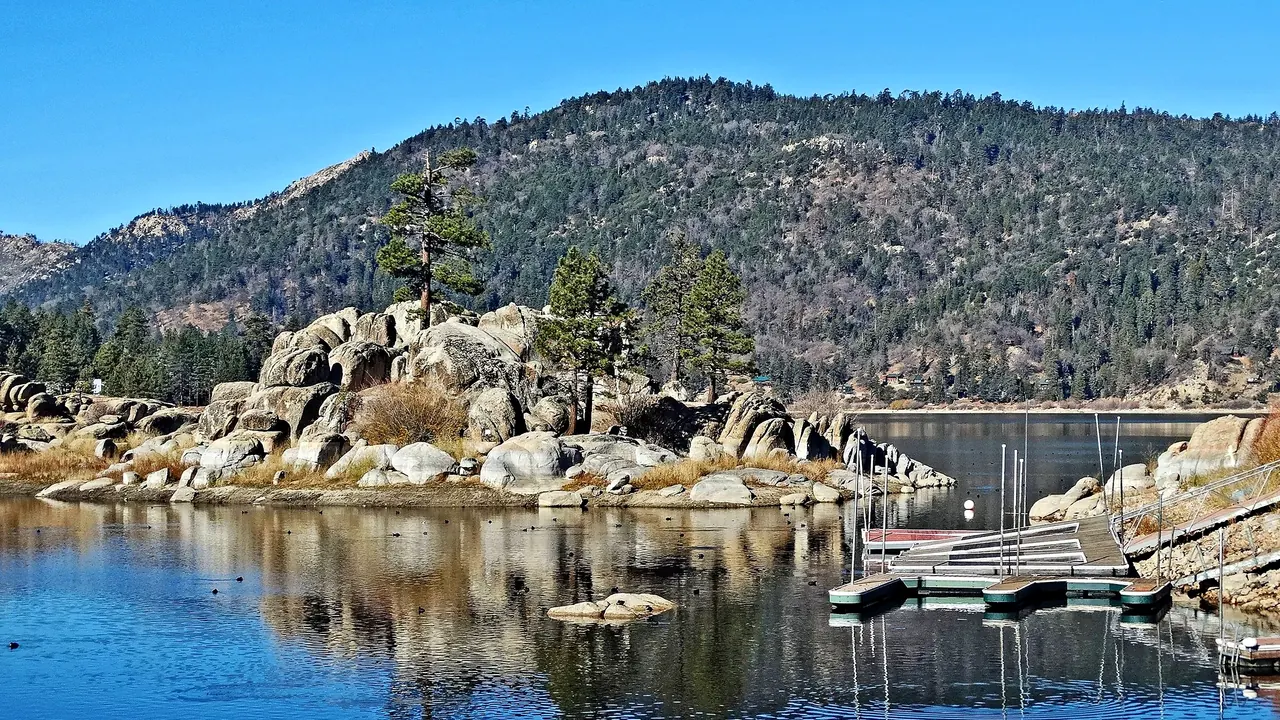
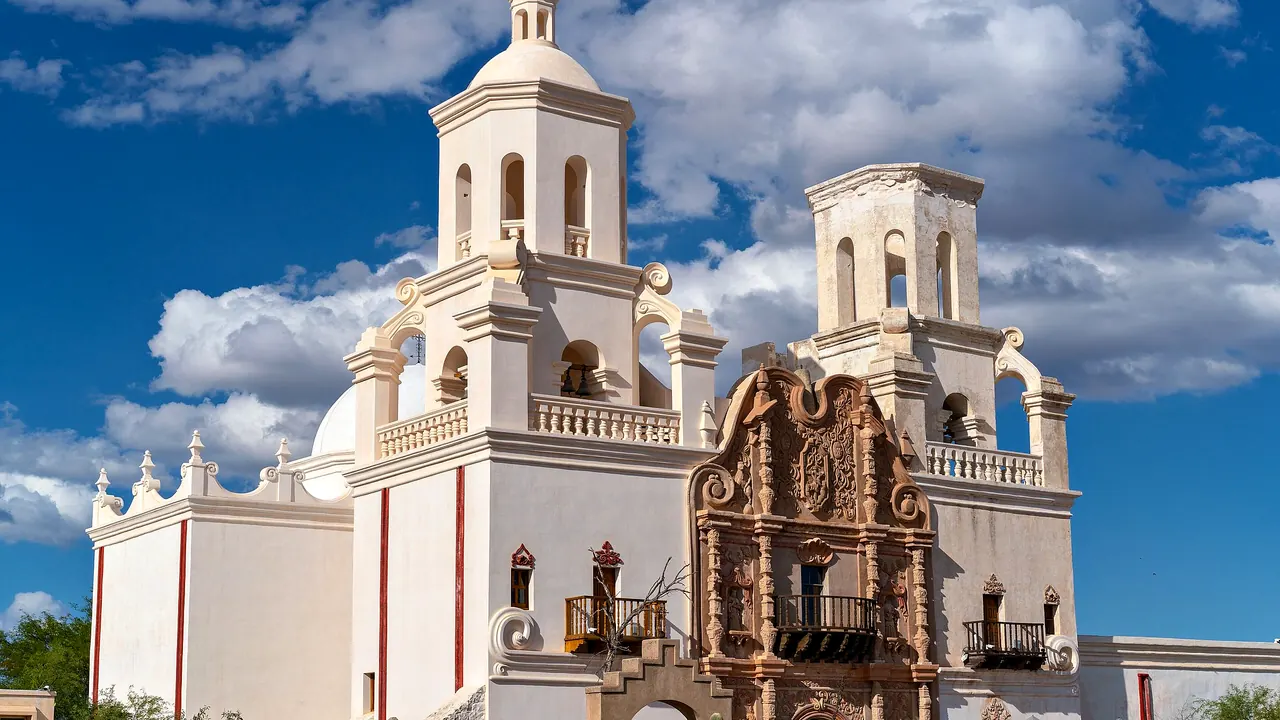
Photos: Big Bear Lake by inkknife_2000, CC BY-SA 2.0, cropped; Tucson by Steve and Kimberly Rader, CC BY-SA 4.0, cropped.
Big Bear Lake or Tucson?
Our verdict in twelve categories, each scored against the same fixed benchmark cities, and the climate month by month, so you can choose for your trip.
Choose Big Bear Lake for
- beaches
- getting around
- nature and the outdoors
Big Bear Lake is the pick for a mountain cabin trip. Winter brings snow, sledding and ski lessons, and once the snow melts there are paddleboards, pine trails and mountain biking. It suits groups and families who are happy to cook in, sit in a hot tub and turn in early, and who are not looking for sights or evenings out.
Choose Tucson for
- food and drink
- culture and sights
- day trips
Tucson gives you much more to do around the outdoors. It has Sonoran Mexican cooking, Mission San Xavier del Bac, a real if small arts season, desert spa resorts and a string of frontier towns within driving distance. That makes it the stronger choice for a varied week, especially from autumn to spring, when the desert is pleasant all day.
Scoreboard
Twelve categories on one fixed scale from 0 to 100. The shaded stretch is the gap between the two.
Your match
Pick a travel style or drag the sliders, and both match scores follow your weighting.
Wins on beaches and getting around with your weighting.
Wins on food and drink and culture and sights with your weighting.
What matters to you?
Category by category
What the scores mean for a trip.
Beaches & swimming
Neither is a beach destination, but Big Bear Lake at least has water to get into. It is a cool summer lake with a supervised swim beach at Meadow Park and rocky shoreline elsewhere, better suited to kayaks and paddleboards than to long swims.
Tucson has no natural swimming worth the name. You swim in your hotel or resort pool, the creek pools in Sabino Canyon come and go with the rains, and the nearest sea is a four-hour drive into Mexico.
Food & drink
Tucson has a cuisine of its own, and Big Bear does not. Sonoran Mexican cooking means mesquite-grilled carne asada, paper-thin flour tortillas and Sonoran hot dogs from south-side stands. There are long-running family kitchens along South 12th Avenue, and desert ingredients such as tepary beans and prickly pear turn up on menus.
Big Bear feeds hungry skiers and hikers with diner breakfasts, burgers, pizza and brewpub pints in the Village, and many visitors simply cook in their cabins. The food keeps you going, but it is not a reason to go.
Culture & sights
The gap here is wide. Tucson has a sight of national standing in the painted and gilded interior of Mission San Xavier del Bac. Add the adobe streets of Barrio Viejo and El Presidio, the Native American collections of the Arizona State Museum and the rows of aircraft at the Pima Air & Space Museum, and you have two or three full days.
Big Bear's history comes down to a small museum, the Discovery Center and a dirt-road drive past the 1860s gold-rush remains in Holcomb Valley. The chalet-style Village is modern.
Nightlife
Tucson has a real night out and Big Bear barely has one. Fourth Avenue's dive bars and patios and the cocktail bars and rooftops of Congress Street are within walking distance of each other. They are lively on weekends during the university term, though modest by big-city standards.
In Big Bear the evening ends with après-ski in a Village pub or a brewpub pint, then the hot tub and an early night. Neither town has clubs worth travelling for.
Nature & outdoors
Both are serious bases for the outdoors, of opposite kinds. Big Bear Lake is alpine, with pine and oak forest around a lake. Winter brings two ski areas with reliable snowmaking and bald eagles on the lake. In summer there are mountain-bike runs, the Pacific Crest Trail and the San Gorgonio Wilderness.
Tucson is desert first, with saguaro forests in the national park on both sides of town, canyon trails at Sabino and Catalina State Park, serious road cycling and birdwatching of world standing. The drive up Mount Lemmon adds pine forest and rock climbing. Its desert trails are best in the cool season, while Big Bear's are at their best in summer.
Day trips
Tucson has far more within reach. Bisbee's Victorian mining streets, Wild West Tombstone, the artists' village of Tubac with the Tumacácori mission ruins, the Sonoita wineries and Biosphere 2 all make easy days out by car.
From Big Bear, winding mountain roads slow everything down. Lake Arrowhead and the Oak Glen orchards are the realistic outings, and Riverside or Palm Springs mean a long day, so most visitors stay on the mountain.
Good for families
Both work well for families, in different ways. Big Bear is about snow for children who rarely see it, with sledding hills and beginner lessons. In summer there are the alpine slide, pedal boats and the small Alpine Zoo, all from a roomy cabin.
Tucson has more day attractions, from the Arizona-Sonora Desert Museum to the planetarium and the giant aircraft. They are spread across the city, though, and hard going in the summer heat. Big Bear's drawbacks are the thin air and roads that crawl on winter weekends.
Getting around
In both places a car is essential, so the difference lies in what you can do without one. Big Bear's Village is compact and walkable, and a local bus and a seasonal trolley run to the ski areas. The mountain roads up can need snow chains and crawl on busy weekends.
In Tucson, the Sun Link streetcar links a walkable core of downtown, Fourth Avenue and the university. The national park, the Desert Museum and Mount Lemmon are all on the edges or well outside, but traffic is light and parking easy.
Shopping & style
Big Bear's shopping fills about an hour. It comes down to a few Village blocks of fudge and candy stores, bear souvenirs and outfitters renting skis and kayaks, and for anything bigger you drive down to the valley.
Tucson's shopping is about the region rather than fashion, and it gives you far more worth taking home. Look for Native American jewellery, Tohono O'odham baskets and Mexican folk art in the old-town galleries and in Tubac, and for vintage finds along Fourth Avenue. Each winter the gem and mineral show fills hotels and tents across the city.
Affordability
Tucson is the easier place to keep costs down. Mid-range hotels cost less than in the larger Southwest cities, taquerías and hot dog stands make eating cheaply simple, and summer brings real bargains, though the winter gem show pushes rates up.
Big Bear can be economical for a group sharing a cabin midweek. On winter weekends, though, the cabin rates, lift tickets and gear hire add up quickly, and eating out costs as much as in the lowlands.
Live music & performing arts
On stage, Big Bear offers a community arts centre with local theatre, free concerts by the lake in summer and the Bavarian bands of its autumn Oktoberfest.
For an evening at a concert or a show, Tucson is well ahead, mostly from autumn to spring. The symphony, the opera and the Arizona Theatre Company give it a small but genuine season. Touring productions play Centennial Hall, the restored Fox Theatre hosts concerts, and the city's deep mariachi tradition comes together at its annual conference.
Wellness & relaxation
In Big Bear, you mostly relax at the cabin, with a wood stove, a deck under the pines and the private hot tub that comes with many rentals. There are also a few day spas in town. It is peaceful midweek, but winter weekends bring crowds.
Tucson goes much further. Big Bear leaves you to unwind on your own, but the desert resorts in the Catalina foothills and out towards Oracle build whole stays around massage, fitness, guided desert walks and meditation, with spa pools looking out at the mountains. Add the winter sun and the quiet, and Tucson is the better choice for a restful break. Neither town has thermal baths or a bathhouse tradition.
When should you go?
Pick your month. The climate figures are measured averages, not a forecast.
Big Bear Lake in July
Tucson in July
Daytime high, °C
Rainfall in the month, mm
Where the figures come from
Big Bear Lake has no rain gauge within 25 km of the centre, so its rainfall comes from a gridded climate dataset read at the city rather than from a gauge further away.
Temperature and rainfall are climate normals, averaged over the years shown. Big Bear Lake: 2014-2025 (rainfall 1991-2020) normals, Big Bear City (5 km from centre). Tucson: 1991-2020 (sunshine 1981-2010) normals, Tucson International Airport (10.1 km from centre).
Big Bear Lake is a place for summer or for snow. From June to August the days reach about 26°C and the air is dry, which is ideal for hiking, biking and time on the lake. From November to March the rain and snow arrive, peaking at around 135mm in February, and this is what the ski areas and sledding hills depend on. Spring is cool and damp, a season in between.
Tucson runs the other way. Winter highs of around 19°C and steady sunshine make December to April the best time for walking the barrios and the desert trails. By June the days reach 39°C and sightseeing shrinks to the early mornings. The July and August monsoon then brings the year's heaviest rain, about 56mm a month, in short storms, before October and November cool down again. In short, go to the mountain in summer or for snow, and to the desert in winter.
Which traveller are you?
For a culture and arts trip, Tucson is the clear choice. Mission San Xavier del Bac, the adobe barrios, the Native American collections and the air and space museum fill several days, and the symphony, opera and theatre add evenings Big Bear cannot match.
On a food and nightlife trip, Tucson again wins easily. Sonoran Mexican cooking on the south side is followed by patios on Fourth Avenue and cocktail bars on Congress Street, while Big Bear offers diners, brewpubs and an early night.
For skiers and snowboarders, Big Bear Lake is the place. It has two ski areas above the lake with reliable snowmaking, sledding hills for the children and a cabin hot tub afterwards. Tucson's small ski area on Mount Lemmon is a sideshow by comparison.
Before you go
| Measure | Big Bear Lake | Tucson |
|---|---|---|
| Currency | US Dollar (USD) | US Dollar (USD) |
| Sockets | AB120 V, 60 Hz | AB120 V, 60 Hz |
| Driving side | Right | Right |
| Time zone | UTC-8, UTC-7 in summer | UTC-7 |
| Emergency number | 911 | 911 |
| Elevation | 2,058 m | 728 m |
| Main airport | Ontario International Airport (ONT)67 km from centre28 non-stop destinations | Tucson International Airport (TUS)12 km from centre18 non-stop destinations |
| Public holidays this year | 13 days | 12 days |
By the numbers
| Measure | Big Bear Lake | Tucson |
|---|---|---|
| City population | 5,046 | 542,629 |
| People per km² | 299 | 923 |
| Museums within 10 km | 1 | 10 |
| UNESCO World Heritage sites within 50 km | 0 | 0 |
Where else could you go?
Every comparison below shares a destination with this one, so you can follow Big Bear Lake or Tucson somewhere new.
- Palm Springsvs Big Bear Lake
- Palm Desertvs Big Bear Lake
- Anaheimvs Big Bear Lake
- Laguna Beachvs Big Bear Lake
- Newport Beachvs Big Bear Lake
- Huntington Beachvs Big Bear Lake