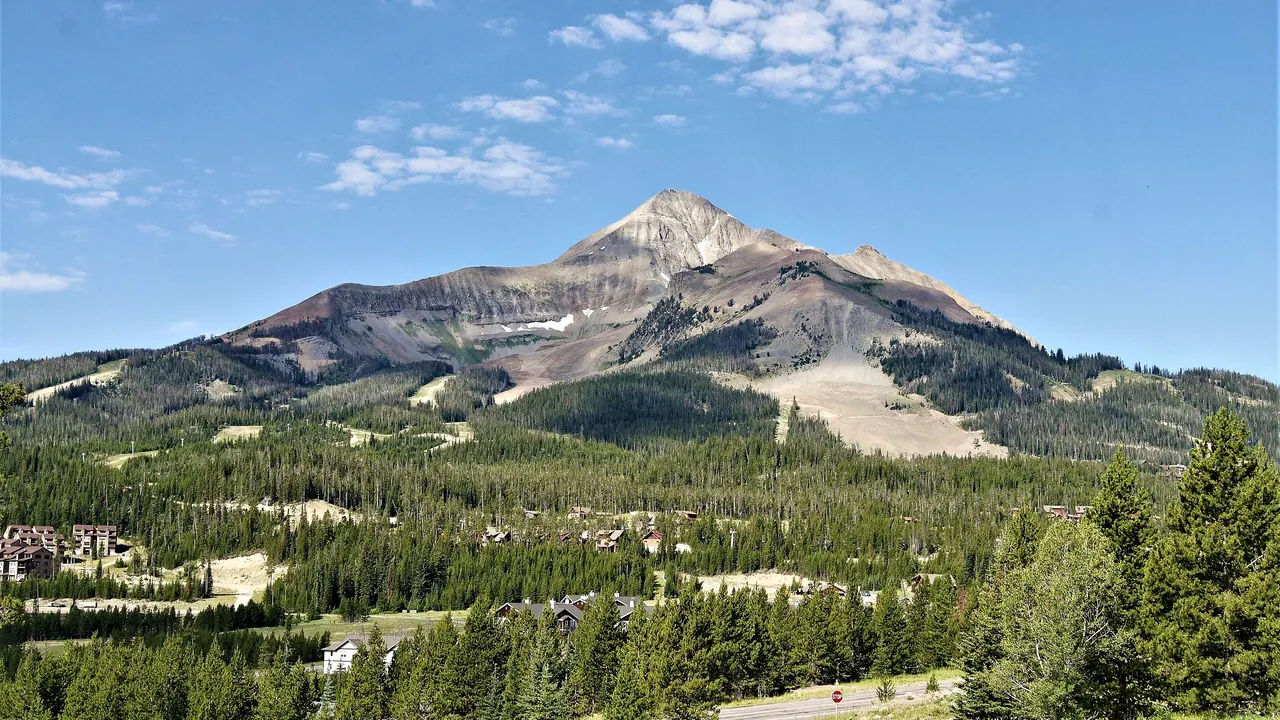
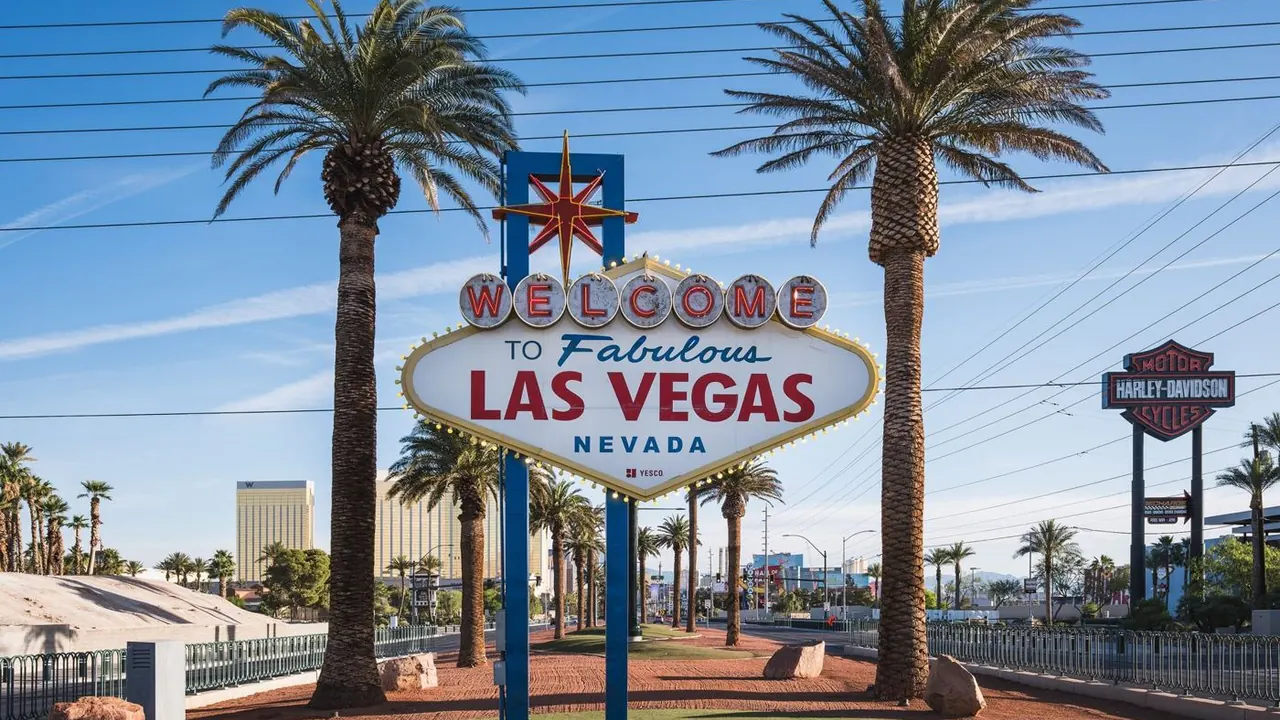
Photos: Big Sky by Greg Gjerdingen, CC BY 2.0, cropped; Las Vegas by Christian David, CC BY-SA 4.0, cropped.
Big Sky or Las Vegas?
Our verdict in twelve categories, each scored against the same fixed benchmark cities, and the climate month by month, so you can choose for your trip.
Choose Big Sky for
- families
- nature and the outdoors
- day trips
Big Sky is for travellers who want to spend their vacation outdoors: a ski week under Lone Peak, or a summer of trails, fly fishing on the Gallatin and a day among Yellowstone's geysers and bison. It also suits families, with a ski school, a summer adventure park and quiet, safe villages. In return you accept a short menu, early nights and a generous budget.
Choose Las Vegas for
- nightlife
- live music and the arts
- shopping
Pick Las Vegas when the evenings matter as much as the days. Headline residencies, big-production shows, clubs that run until dawn and a wide spread of restaurants along the Strip and Spring Mountain Road make it a city for groups, celebrations and anyone who wants to be entertained. Red Rock Canyon is close enough for a morning hike, but the desert is a side trip here, not the reason to come, and young children fit in less easily.
Scoreboard
Twelve categories on one fixed scale from 0 to 100. The shaded stretch is the gap between the two.
Your match
Pick a travel style or drag the sliders, and both match scores follow your weighting.
Wins on families and nature and the outdoors with your weighting.
Wins on nightlife and live music and the arts with your weighting.
What matters to you?
Category by category
What the scores mean for a trip.
Beaches & swimming
Neither city is a place to swim. In Big Sky the water is the cold, rocky Gallatin and a few small ponds good for a quick paddle, so summer swimming means a hotel pool. Las Vegas has warmer options: the Strip's resort pools, some with sand-lined wave pools and lazy rivers, and the gravel shore of Lake Mead's Boulder Beach about 40 minutes away, where the water is warm but there is no shade.
Food & drink
Big Sky feeds hungry skiers: bison, elk, trout, Montana beef and wood-fired pizza in Mountain Village, Town Center and the canyon roadhouses, with a handful of lodge kitchens aiming higher. The choice is narrow, and some kitchens cut their hours between seasons.
Las Vegas has far more range. The Strip resorts have celebrity-chef dining rooms, steakhouses, tasting menus and the famous buffets, and the Chinatown strip along Spring Mountain Road runs for kilometres of Sichuan, Korean, Thai and Vietnamese cooking, much of it open late. Neither city has a cuisine of its own, but only Las Vegas can offer a different style of dinner every night of a week.
Culture & sights
Big Sky has been a ski resort only since the 1970s and is built of lodges and timber condos. Its history comes down to the two log cabins of the Crail Ranch homestead in Meadow Village. Las Vegas gives you more to look at, if not much more to learn: the themed resorts, the fountains and the light canopy over Fremont Street fill an evening, and downtown's Neon Museum and Mob Museum tell the city's short story well.
Nightlife
In Big Sky the evening peaks in the late afternoon, when skiers still in their boots crowd the decks in Mountain Village for local beer. After that it winds down with a few rounds in a Town Center tavern or a game of pool in a canyon saloon, and out of season it is almost silent after dark.
Las Vegas runs the other way. The casino bars never shut, the resort clubs book star DJs, pool parties at the dayclubs fill the hours before dark, and the Strip is still full at three in the morning. For a looser and cheaper night, Fremont Street and the arts district have dive bars, cocktail lounges and craft beer.
Nature & outdoors
This is where Big Sky leads. Lone Peak rises to 3,403m above one of North America's largest ski areas. In summer the lifts take hikers and riders up towards the Spanish Peaks and the Lee Metcalf Wilderness, the Gallatin has fly fishing and rafting, and Yellowstone's wildlife is about an hour away.
Las Vegas has fine desert close at hand, with climbing in Red Rock Canyon, the flame-coloured rock of Valley of Fire and cooler pine forest on Mount Charleston. But these are separate outings by car, not a landscape you stay in, and in summer the heat limits desert hiking to the hour around dawn.
Day trips
Both cities are isolated and have few outings, but the outings differ in kind. From Big Sky you drive to the Western main street of Bozeman and the dinosaur fossils of the Museum of the Rockies, or further to the boardwalks of the gold-rush towns, Virginia City and Nevada City.
From Las Vegas the classic outing is Hoover Dam with Boulder City. Beyond that come long journeys to the Grand Canyon, Zion or Death Valley, which are trips to see landscapes, not towns to walk around.
Good for families
Big Sky is the easier choice with children. Gentle slopes and a ski school in winter, zip lines, ropes courses and gondola rides in summer, and bison in Yellowstone keep them busy in a resort that is quiet and safe. The drawbacks are the altitude of about 2,300m, the winter cold and the lack of museums for a rainy day.
Las Vegas can fill a day or two with the indoor amusement park, the shark aquarium, the fountains and the Discovery Children's Museum. But casino floors lie on the route through almost every resort, and the adult side of the Strip is hard to avoid.
Getting around
Big Sky is strung out along about 15km of road, from the Gallatin Canyon up through Meadow Village and Town Center to Mountain Village, and you cannot walk from one village to the next. A free bus links them, and slopeside lodgings let you ski to the lifts. Bozeman airport is still an hour's drive, Yellowstone needs a car, and the canyon road calls for care in winter.
Las Vegas fits most of what visitors want into the 6km of the Strip, with downtown a short ride north. A monorail, buses running day and night, and plenty of taxis and ride-hailing cars mean you can manage without a car until you head for the desert. The distances still mislead you, though. The resorts are vast, a hotel that looks next door can be twenty minutes away on foot, and in summer the heat makes long walks punishing.
Shopping & style
Big Sky's shops cover what the mountain needs: ski and outdoor gear, a fly rod, Western-style clothing and wildlife art in the galleries. Las Vegas is worth visiting for its shopping, with luxury houses in the Caesars Palace arcade and the Venetian's canal-side shops, department stores at Fashion Show and two big outlet centres, all open late. Neither has markets or local crafts, though Big Sky's galleries come closer to a regional souvenir.
Affordability
Neither city is cheap, but Big Sky costs more. Slopeside lodging, lift passes, ski school and guided fishing all cost a great deal. Staying in summer or sleeping in Bozeman saves money but means more driving.
Las Vegas gives you more ways to cut costs. Midweek rooms on and near the Strip are good value for their comfort, downtown is cheaper still, and you can eat well for less in Chinatown. Weekends, resort fees, shows and club nights quickly undo those savings.
Live music & performing arts
Big Sky's arts life is seasonal. In winter the small arts centre in Meadow Village hosts touring musicians, chamber music and theatre. In summer there are free concerts on the lawn and a short classical festival, and bands play at the après-ski bars, but between seasons there is little.
In Las Vegas the shows are a reason to make the trip. Purpose-built theatres stage acrobatic water spectacles, magicians and comedians, and pop, rock and country stars play long residencies. The Smith Center adds touring Broadway musicals, ballet and the Philharmonic, though there is little serious drama.
Wellness & relaxation
Big Sky's calm comes from the mountain itself. After a day on the slopes there is a hot tub on the deck under a starry sky, the larger lodges have spas with massages for tired ski legs, and the nights are quiet. For natural hot springs you drive about an hour towards Bozeman.
Las Vegas has bigger spas, some of the largest hotel spas in the country, with thermal circuits and salt and ice rooms open to day visitors. They sit inside casinos that never quieten, though, so resting takes some planning. Choose a non-gaming hotel, book the spa for the morning and spend the afternoon by the pool.
When should you go?
Pick your month. The climate figures are measured averages, not a forecast.
Big Sky in July
Las Vegas in July
Daytime high, °C
Rainfall in the month, mm
Where the figures come from
Big Sky has no weather station within reach, so its figures come from a gridded climate model rather than a measured record, and read a broad area rather than the city itself.
Temperature and rainfall are climate normals, averaged over the years shown. Big Sky: 2001-2020 normals, NASA POWER reanalysis grid, no weather station within 90 km. Las Vegas: 1991-2020 (sunshine 1981-2010) normals, McCarran International Airport (8.5 km from centre).
Big Sky is really two destinations. From November to April it is snow country, with midwinter highs around -4°C and the skiing at its best. Spring is the wettest stretch as the snow melts, with May bringing about 83mm. July and August are the summer high point, warm at about 26°C by day, drier and cool at night, which makes them the months for hiking, rafting and Yellowstone.
Las Vegas is almost rainless and sunny all year, and its seasons run the other way. From June to September it is too hot to walk the Strip in comfort or hike the desert except at dawn, with July reaching about 40°C. March, April and October are the pleasant months for both. Winter days of around 15°C are mild enough for sightseeing, at exactly the time Big Sky is deep in snow.
Which traveller are you?
For a food and nightlife trip, Las Vegas is the clear pick. Celebrity-chef dining rooms, late-opening Chinatown kitchens and casino bars that never close leave Big Sky's hearty menus and après-ski decks far behind, and in Big Sky most people are in bed early to make the first lift.
On an outdoors trip, Big Sky offers far more terrain: steep runs off Lone Peak in winter, then hiking, mountain biking, fly fishing and rafting in summer, with Yellowstone's wildlife an hour south. Las Vegas has striking desert, but summer heat rules most of it out.
On a family trip with children, Big Sky is the calmer base, with a ski school, gentle slopes and a summer adventure park in a safe, quiet resort. In Las Vegas the route to almost everything passes casino floors and adult advertising, so it works best as one stop on a road trip.
Before you go
| Measure | Big Sky | Las Vegas |
|---|---|---|
| Currency | US Dollar (USD) | US Dollar (USD) |
| Sockets | AB120 V, 60 Hz | AB120 V, 60 Hz |
| Driving side | Right | Right |
| Time zone | UTC-7, UTC-6 in summer | UTC-8, UTC-7 in summer |
| Emergency number | 911 | 911 |
| Elevation | 2,200 m | 610 m |
| Main airport | Bozeman Yellowstone International Airport (BZN)59 km from centre27 non-stop destinations | Harry Reid International Airport (LAS)4 km from centre160 non-stop destinations |
| Public holidays this year | 12 days | 11 days |
By the numbers
| Measure | Big Sky | Las Vegas |
|---|---|---|
| City population | 3,591 | 641,903 |
| People per km² | 12 | 1,843 |
| Museums within 10 km | 0 | 21 |
| UNESCO World Heritage sites within 50 km | 0 | 0 |
Where else could you go?
Every comparison below shares a destination with this one, so you can follow Big Sky or Las Vegas somewhere new.
- Jackson Holevs Big Sky
- Big Bear Lakevs Las Vegas
- Palm Springsvs Las Vegas
- Palm Desertvs Las Vegas
- Sun Valleyvs Big Sky
- Flagstaffvs Las Vegas