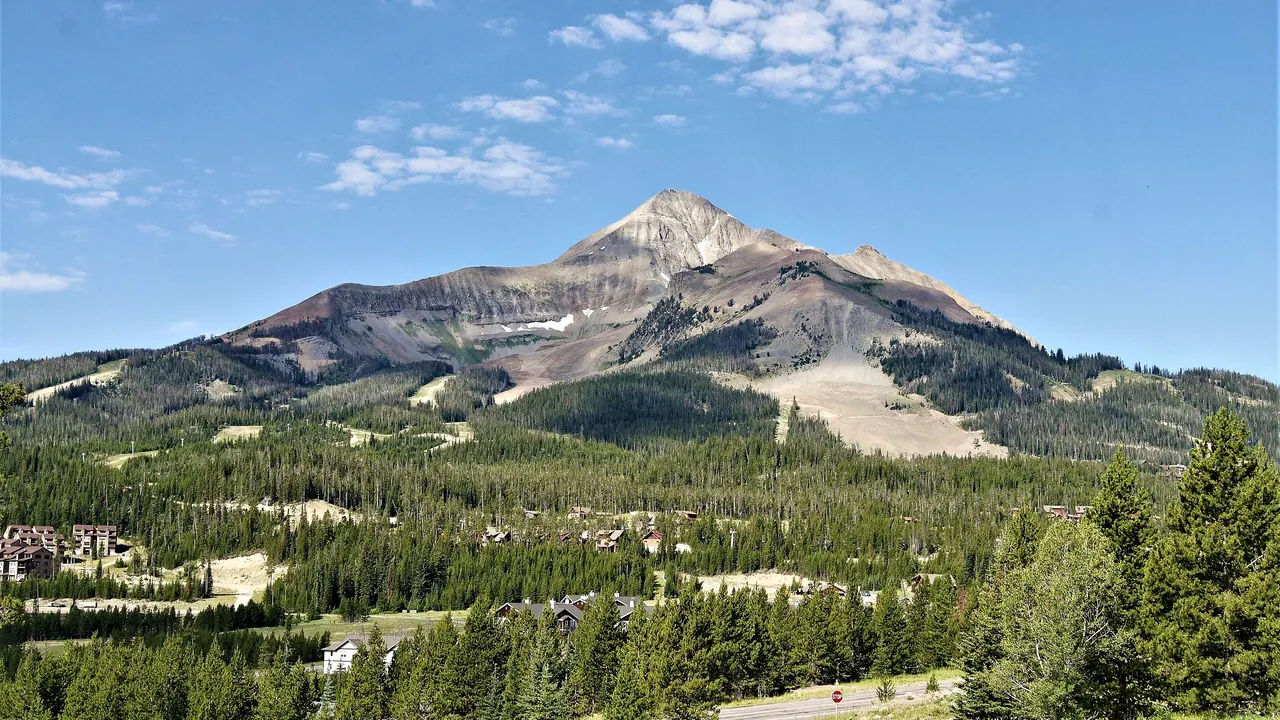
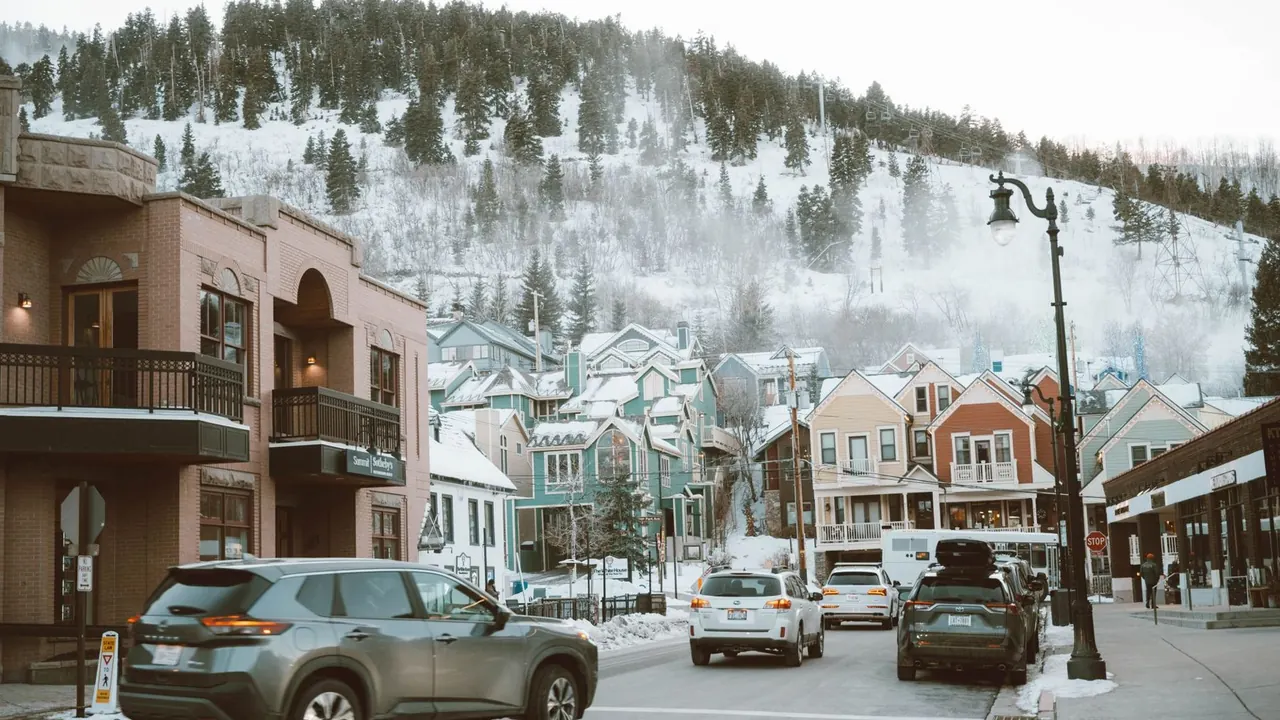
Photos: Big Sky by Greg Gjerdingen, CC BY 2.0, cropped; Park City by Quang Vuong, Pexels License.
Big Sky or Park City?
Our verdict in twelve categories, each scored against the same fixed benchmark cities, and the climate month by month, so you can choose for your trip.
Choose Big Sky for
- nature and the outdoors
Big Sky suits travellers who want the mountain and little else. Lone Peak and the wilderness around it feel more remote, the evenings are quiet and starry, and Yellowstone's geysers and bison are close enough for a day out. It works best for keen skiers, hikers and anglers who are happy to drive and don't need a town to fill their evenings.
Choose Park City for
- getting around
- shopping
- food and drink
Park City gives you mountains of the same calibre with a real town at the bottom. The old silver-mining Main Street brings better restaurants, more bars, a 1920s theatre and easy shopping, free buses mean you can do without a car, and Salt Lake City is close for anything more. It is the easier choice for families, first-timers and anyone who wants some life after the lifts close.
Scoreboard
Twelve categories on one fixed scale from 0 to 100. The shaded stretch is the gap between the two.
Your match
Pick a travel style or drag the sliders, and both match scores follow your weighting.
Wins on nature and the outdoors with your weighting.
Wins on getting around and shopping with your weighting.
What matters to you?
Category by category
What the scores mean for a trip.
Beaches & swimming
Neither town is a place for swimming, but the water they do have is different. At Big Sky the Gallatin River is fast and cold, and swimming mostly means a hotel pool or a dip in a small pond. Park City has Jordanelle Reservoir a short drive away, with sandy swimming areas, paddleboarding and picnic lawns on hot summer days.
Food & drink
Park City eats better. Polished restaurants are grouped along historic Main Street and at the resort bases, so you can walk out to dinner and compare menus, and Salt Lake City's wider choice is about 40 minutes down the canyon.
At Big Sky the food is hearty bison, elk and trout, but the places are split between Mountain Village, Town Center, Meadow Village and the roadhouses in the canyon. Some cut their hours between seasons, and if you want variety you have to drive an hour to Bozeman.
Culture & sights
Neither place is a sightseeing destination, but Park City has clearly more heritage to see. Big Sky is a purpose-built resort that only took shape in the last half century, so there is no old town to wander. Its one link to an earlier Montana is the pair of homesteaders' log cabins at Crail Ranch in Meadow Village, which you can see in well under an hour.
Park City, by contrast, has a real past. The town grew rich on silver, and you can still see it on the steep climb up Main Street past restored wooden shopfronts, with mine headframes and tramway towers still standing on the slopes above. The Park City Museum in the old city hall tells the mining story, down to the jail cells in its basement, and the Utah Olympic Park adds museums about the 2002 Winter Games. Together that fills an afternoon, which is more than Big Sky can offer.
Nightlife
Both towns go to bed early, but Park City has more to do before that. On winter weekends Main Street has a short strip of saloons, cocktail bars and places with DJs or bands, close enough to wander between them.
At Big Sky the evening is mostly après-ski on the decks in Mountain Village, then a few taverns or a canyon saloon with a pool table. There are no clubs, and outside the ski and summer seasons the resort is nearly silent.
Nature & outdoors
Both are first-rate mountain bases, and the difference lies in the kind of country around them. Big Sky feels wilder. Lone Peak rises to 3,403m with steep, high terrain, trails run into the Spanish Peaks and the Lee Metcalf Wilderness, the Gallatin River offers rafting and fly fishing, and Yellowstone is about an hour away.
Park City is more convenient. Two big ski areas rise straight from town, Utah's dry powder falls all winter, and Alta, Snowbird, Brighton and Solitude are an hour over the ridge. In summer hundreds of kilometres of singletrack start from the streets.
Day trips
Park City has more within easy reach. Salt Lake City, with Temple Square, the State Capitol and proper museums, is about 40 minutes away, and the Heber Valley steam railway, Swiss-style Midway and railroad-era Ogden are all close.
From Big Sky the outings are mostly into the landscape. Bozeman and the dinosaur fossils at the Museum of the Rockies are an hour away, and the gold-rush boardwalks of Virginia City take about two hours each way.
Good for families
Big Sky suits families who want to spend the day outdoors. Children can go horse riding, raft the calmer stretches of the Gallatin and ride the gondola. Winter is harder work, though, with deep cold, and almost every outing beyond the resort means a long drive.
Park City makes things simpler. In summer the resort bases have alpine slides, mountain coasters, climbing walls and easy bike trails a short ride from your lodging, and teenagers can try the bobsled at the Olympic Park. The town is clean and compact. Costs add up quickly for a family in ski season, as they do at Big Sky.
Getting around
This is where the two differ most in daily life. In Park City free buses connect Old Town, both ski bases and Kimball Junction, Main Street is walkable if steep, and the airport is about 40 minutes away, so you can manage without a car.
Big Sky stretches over about 15km of road from the canyon up to Mountain Village. A free bus links the villages, but walking between them isn't practical. Bozeman airport is an hour away, and you need a car for Yellowstone and on winter canyon roads.
Shopping & style
Park City's Main Street makes for proper browsing, with galleries, cowboy-boot and Western-wear shops, jewellers and ski fashion, and there are outlets at Kimball Junction. Big Sky has gear shops and a few galleries selling wildlife art. It is fine for new gloves or a fly rod, but for anything more you drive to Bozeman.
Affordability
Both are among the most expensive mountain resorts in the American West, and ski season costs a lot in either. The ways to save differ. At Big Sky you can stay down the canyon or in Bozeman, which means more driving. In Park City the free buses help, and budget visitors stay in Salt Lake City or the Heber Valley. In both, summer and autumn are noticeably cheaper.
Live music & performing arts
Park City has more going on. The 1920s Egyptian Theatre on Main Street puts on plays, comedy and cabaret all year, and in summer the Utah Symphony plays outdoors at Deer Valley.
Big Sky's small arts centre in Meadow Village books touring musicians and theatre in winter, and summer brings free lawn concerts and a short classical festival. Between the seasons there is very little on.
Wellness & relaxation
Park City has the better options for unwinding. Deer Valley and the Canyons base have large spas, and in Midway, about 25 minutes away, you can swim in the Homestead Crater, a geothermal pool at about 35°C inside a limestone dome.
Big Sky offers hot tubs on the deck, lodge spas and quiet, starry nights. The nearest natural hot springs are about an hour away towards Bozeman.
When should you go?
Pick your month. The climate figures are measured averages, not a forecast.
Big Sky in July
Park City in July
Daytime high, °C
Rainfall in the month, mm
Where the figures come from
Big Sky has no weather station within reach, so its figures come from a gridded climate model rather than a measured record, and read a broad area rather than the city itself.
Park City's temperatures are measured 79 km from the centre, at Evanston.
Park City has no rain gauge within 25 km of the centre, so its rainfall comes from a gridded climate dataset read at the city rather than from a gauge further away.
Temperature and rainfall are climate normals, averaged over the years shown. Big Sky: 2001-2020 normals, NASA POWER reanalysis grid, no weather station within 90 km. Park City: 1999-2020 (rainfall 1991-2020) normals, Evanston (78.8 km from centre).
Both are winter resorts first, with snow lying from late autumn into April. Big Sky is the colder of the two, with midwinter highs around -4°C, while Park City sits just below freezing. Spring is where they part most clearly. Big Sky turns wet and unsettled from April to June, with about 83mm in May. Park City is noticeably drier in spring and early summer, and through the winter months it gets a little less than Big Sky.
Summer is short and warm in both, from late June to early September, with cool nights. This is the time for hiking, biking and walking around town in comfort. Big Sky dries out in July and August after its wet spring. Park City is slightly warmer, at about 28°C in July, with only around 21mm of rain that month. September is still mild in both, and October turns cold first at Big Sky.
Which traveller are you?
For a short city break, Park City is the clear pick. The airport is about 40 minutes away, Main Street can be explored on foot, and free buses connect the town with both ski bases. Big Sky is spread out and needs a car.
On a family trip with children, Park City is easier. It has well-run ski schools, the coaster and ziplines at the Olympic Park, and free buses to the slopes, with Salt Lake City's zoo within an hour. Big Sky is higher and has nothing for wet days.
For a vacation built around Yellowstone, Big Sky has the edge. The park's west entrance is about an hour south, so you can see geysers, bison and wolves on a day out and still come back to a wilderness ski or hiking base.
Before you go
| Measure | Big Sky | Park City |
|---|---|---|
| Currency | US Dollar (USD) | US Dollar (USD) |
| Sockets | AB120 V, 60 Hz | AB120 V, 60 Hz |
| Driving side | Right | Right |
| Time zone | UTC-7, UTC-6 in summer | UTC-7, UTC-6 in summer |
| Emergency number | 911 | 911 |
| Elevation | 2,200 m | 2,134 m |
| Main airport | Bozeman Yellowstone International Airport (BZN)59 km from centre27 non-stop destinations | Salt Lake City International Airport (SLC)43 km from centre108 non-stop destinations |
| Public holidays this year | 12 days | 12 days |
By the numbers
| Measure | Big Sky | Park City |
|---|---|---|
| City population | 3,591 | 8,396 |
| People per km² | 12 | 185 |
| Museums within 10 km | 0 | 1 |
| UNESCO World Heritage sites within 50 km | 0 | 0 |
Where else could you go?
Every comparison below shares a destination with this one, so you can follow Big Sky or Park City somewhere new.
- Deer Valleyvs Park City
- Alta, Utahvs Park City
- Snowbirdvs Park City
- Salt Lake Cityvs Park City
- Jackson Holevs Big Sky
- Moabvs Park City