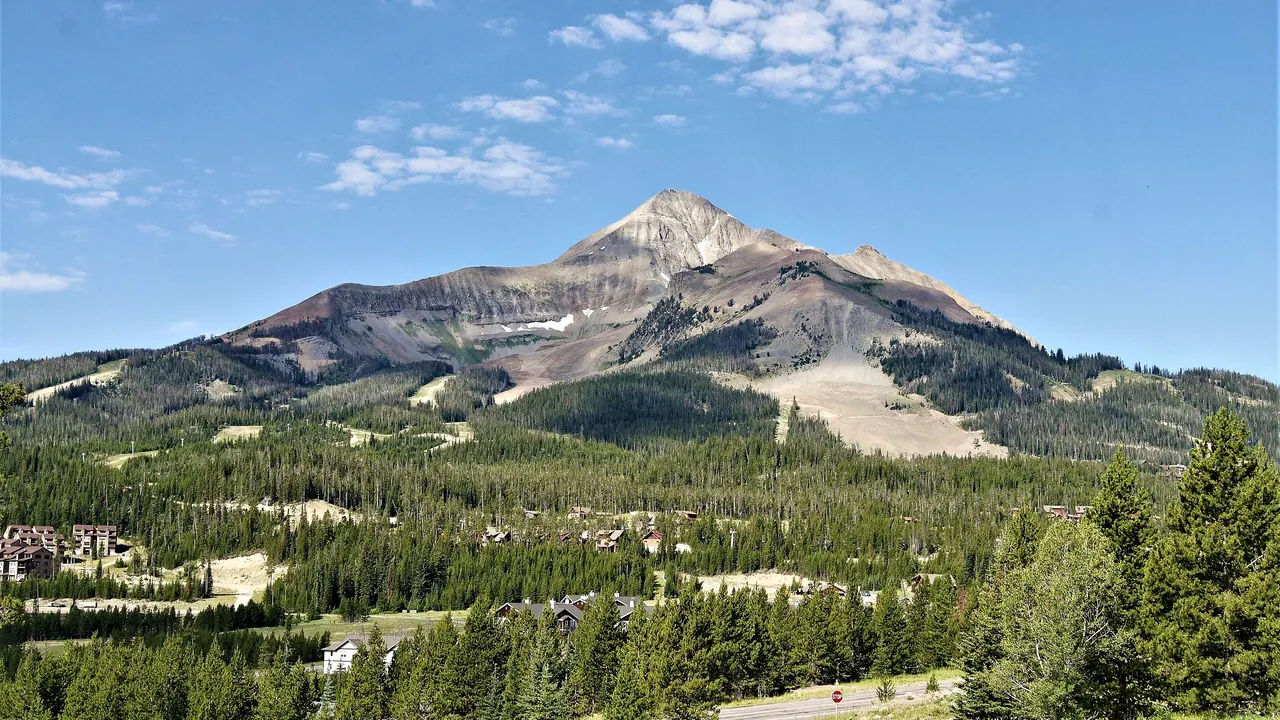
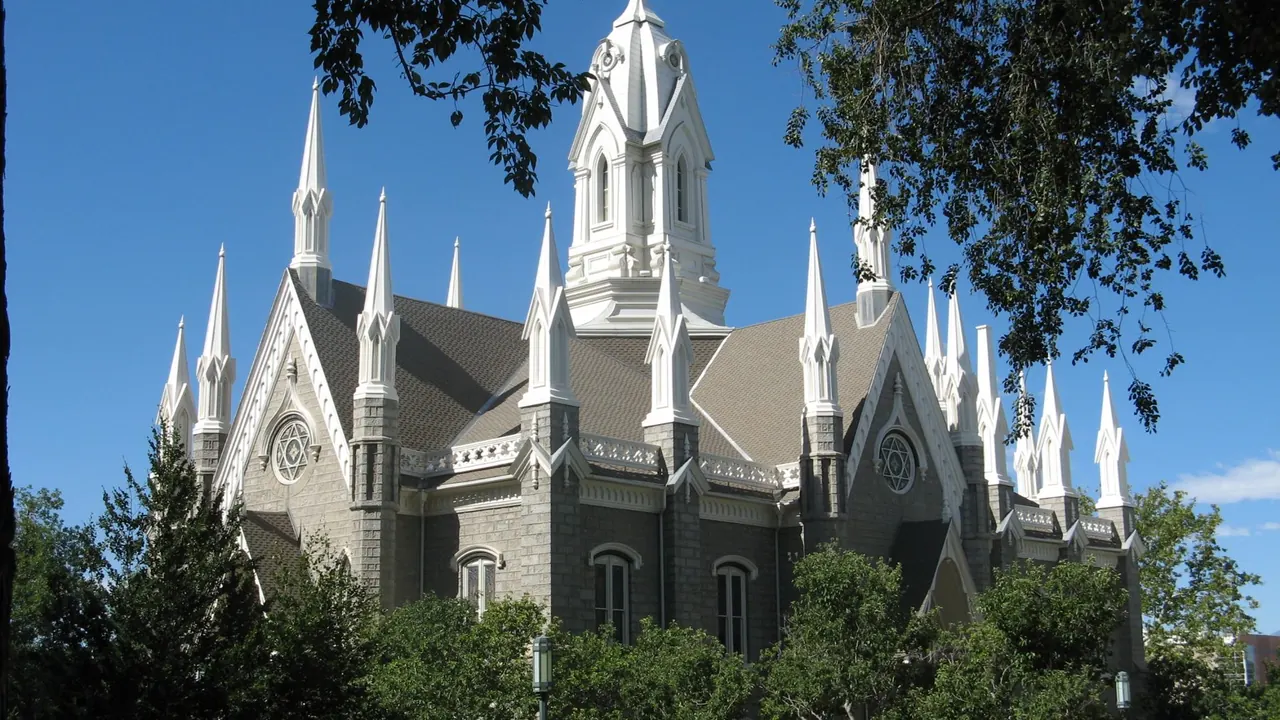
Photos: Big Sky by Greg Gjerdingen, CC BY 2.0, cropped; Salt Lake City by hakkun, CC BY-SA 3.0, cropped.
Big Sky or Salt Lake City?
Our verdict in twelve categories, each scored against the same fixed benchmark cities, and the climate month by month, so you can choose for your trip.
Choose Big Sky for
- nature and the outdoors
- wellness
Big Sky suits travellers who want the mountain and little else. You sleep at the foot of Lone Peak, ski straight to the lifts, and in summer hike into real wilderness with Yellowstone an hour south. It is quiet, remote and expensive, so it works best for skiers and outdoor people with a generous budget who don't mind having no city life.
Choose Salt Lake City for
- culture and sights
- live music and the arts
- prices
Salt Lake City is the better choice if you want mountains as well as a city. The Wasatch canyons and their ski resorts are less than an hour from downtown, and you also get Temple Square, a symphony, an opera and a ballet company, a zoo and an aquarium for children, and noticeably lower costs. It is the easier base for families, for mixed groups and for anyone watching their spending.
Scoreboard
Twelve categories on one fixed scale from 0 to 100. The shaded stretch is the gap between the two.
Your match
Pick a travel style or drag the sliders, and both match scores follow your weighting.
Wins on nature and the outdoors and wellness with your weighting.
Wins on culture and sights and live music and the arts with your weighting.
What matters to you?
Category by category
What the scores mean for a trip.
Beaches & swimming
Neither place is for swimming, but Salt Lake City has a little more to offer. You can float without effort in the Great Salt Lake once for the novelty, and on hot days locals drive to Wasatch reservoirs such as Jordanelle and Pineview, which have paddleboards and patches of sand.
In Big Sky the Gallatin River stays cold and rocky even in July, so summer water time comes down to a hotel pool or a picnic on the riverbank.
Food & drink
Salt Lake City has a wider range of food. Its best meals come from the Mexican, Pacific Islander, Peruvian and Vietnamese kitchens along State Street, and it has its own quirks too: fry sauce, pastrami burgers and drive-through soda shops. Downtown and Sugar House add breweries and a few ambitious modern restaurants.
Big Sky offers hearty resort cooking: bison, elk, trout and big breakfasts before a day on the slopes, with a handful of more refined lodge kitchens. The choice is narrow, some places cut their hours between seasons, and for real variety you drive an hour to Bozeman.
Culture & sights
This is one of the widest gaps between the two. Salt Lake City has a real historic core built around its pioneer faith. Temple Square holds the granite temple and the domed Tabernacle, and the Beehive House, the hilltop Capitol and the painted Cathedral of the Madeleine are close by. Two full days of sightseeing is a fair estimate.
Big Sky was built from scratch as a ski resort and has almost nothing of the past apart from the log cabins of the Crail Ranch homestead. Nobody goes there for sightseeing.
Nightlife
Neither is a place for late nights, but Salt Lake City has more choice after dark. There are bars, breweries and a few dance clubs around Main Street and the Granary District, as well as a long-established gay bar scene and pubs in Sugar House, although Utah's liquor laws keep things restrained.
In Big Sky, going out means après-ski in boots on the decks of Mountain Village and perhaps a game of pool in an old canyon saloon. Most people are in bed early for the first lift, and outside the ski and summer seasons the resort is almost silent at night.
Nature & outdoors
Both are first-rate mountain bases, and the difference is in how you reach the mountains. In Big Sky you are already up there: Lone Peak rises above one of the largest ski areas in North America, the Lee Metcalf Wilderness starts close by, the Gallatin is known for fly fishing and rafting, and Yellowstone's wildlife is an hour away.
Salt Lake City sits at the foot of the Wasatch, where Alta, Snowbird, Brighton and Solitude share famously dry powder less than an hour up the Cottonwood canyons. It also has a contrast Big Sky cannot match: bison on Antelope Island and the white Bonneville Salt Flats to the west.
Day trips
Neither has many day trips, and what is on offer is quite different. From Salt Lake City the outings are short: Park City's Victorian main street is about forty minutes away, Midway and Ogden's 25th Street are close, and the Golden Spike site is there for railway history. Utah's famous national parks are too far for a day.
From Big Sky the drives are longer and lead into ranch country. Bozeman and its dinosaur fossils are an hour away, and the 1860s gold-rush boardwalks of Virginia City and Nevada City are about two hours.
Good for families
Salt Lake City is better set up for children. Hogle Zoo, the aquarium, the Discovery Gateway children's museum and the planetarium cover rainy days, Lagoon's roller coasters are twenty minutes north, and restaurants expect families. The catch is that these places are spread across the valley.
Big Sky suits outdoor families well, with an easy ski school, a summer adventure park with zip lines, and bison in Yellowstone. However, the altitude of around 2,300m tires small children at first, and there is nothing indoors to fall back on.
Getting around
Salt Lake City is easier without a car. TRAX light rail runs from the airport to downtown and the University, FrontRunner trains go north to Ogden and south to Provo, and the numbered grid is simple to follow, even if the long blocks make walking feel slow. For the canyons you still need a car or the winter ski buses.
Big Sky is strung out along about 15km of road. A free bus links its villages, and the slopeside lodges let you ski to the lifts, but the airport is an hour away and Yellowstone needs a car and careful winter driving.
Shopping & style
Salt Lake City has the department stores and familiar brands in an open-air downtown mall, shops in the old streetcar barns of Trolley Square, and independent and vintage shops around 9th and 9th and Sugar House. Its locally run outdoor shops are excellent.
Big Sky has gear shops, a few Western-style boutiques and galleries of wildlife art. It is fine for replacing a pair of gloves, but for anything more people drive to Bozeman.
Affordability
Big Sky asks for a far bigger budget. Winter prices follow the slopeside lodges and luxury resorts, and lift passes, ski school, guided fishing and even an ordinary dinner all add up quickly. Summer and the quieter months between seasons cost less, and you can sleep more cheaply down the canyon or in Bozeman, but then you pay in driving time.
In Salt Lake City you can choose how much the mountains cost you. Lift tickets and lodging in the canyons or Park City are expensive here too, but you can stay in a reasonably priced hotel in town, eat casually for a fair amount and drive up for the day. A summer hiking trip costs far less than a winter ski week, though you will still need a hire car.
Live music & performing arts
Salt Lake City has a proper arts life. The Tabernacle Choir and the daily organ recitals on Temple Square are open to the public, and the Utah Symphony, Utah Opera, Ballet West and touring Broadway shows fill the rest of the year.
Big Sky does well for its size, with a small arts centre in Meadow Village, free summer concerts on the lawn and a short classical festival. Between the seasons there is very little on.
Wellness & relaxation
The two are about even for relaxation, and in both it comes second to the mountains. In Big Sky it is right outside the door: a hot tub on the deck under starry skies, and lodge spas that specialise in tired ski legs. The nearest natural hot springs, though, are an hour away towards Bozeman.
Salt Lake City has the more unusual soak, in warm mineral water inside the beehive-shaped Homestead Crater in Midway, about an hour's drive away. There are smaller hot springs north of the city, and the resort spas in Park City are about forty minutes over the ridge.
When should you go?
Pick your month. The climate figures are measured averages, not a forecast.
Big Sky in July
Salt Lake City in July
Daytime high, °C
Rainfall in the month, mm
Where the figures come from
Big Sky has no weather station within reach, so its figures come from a gridded climate model rather than a measured record, and read a broad area rather than the city itself.
Temperature and rainfall are climate normals, averaged over the years shown. Big Sky: 2001-2020 normals, NASA POWER reanalysis grid, no weather station within 90 km. Salt Lake City: 1991-2020 (sunshine 1981-2010) normals, Salt Lake City International Airport (7.9 km from centre).
Big Sky is a winter place for most of the year. Daytime highs sit around -4°C in December and January, and snow lasts from late autumn into April. Summer is short: July and August are the bright, dry months for hiking and rafting, with highs near 26°C and cool nights. May and June are the wettest stretch, with up to 83mm of rain in May, and they make muddy, unsettled shoulder months.
Salt Lake City is milder in winter, with highs just above freezing, and very hot in high summer. July reaches about 34°C with almost no rain, which is fine for the canyons and the reservoirs but hard work on the city's wide, shadeless streets. May and September are the most comfortable months for sightseeing, warm and very sunny. So the two peak at different times: Big Sky in midsummer and deep winter, Salt Lake City in late spring and early autumn, with skiing up the canyons all winter.
Which traveller are you?
On a culture and arts trip, Salt Lake City is the clear choice. You can hear the Tabernacle Choir and the great organ on Temple Square, see the Utah Symphony and Ballet West, and visit the Capitol and the dinosaur halls. Big Sky has one homestead museum.
For a trip on a tight budget, Salt Lake City stretches the money much further. Downtown hotels are reasonable, light rail is cheap and Temple Square is free. Big Sky is one of the most expensive resorts in the West, and that holds in every season.
On an outdoors trip where you want to be in the wilderness rather than drive to it, Big Sky wins. You step out of the door onto Lone Peak's runs or the trails of the Spanish Peaks, with Yellowstone's geysers and wolves an hour away.
Before you go
| Measure | Big Sky | Salt Lake City |
|---|---|---|
| Currency | US Dollar (USD) | US Dollar (USD) |
| Sockets | AB120 V, 60 Hz | AB120 V, 60 Hz |
| Driving side | Right | Right |
| Time zone | UTC-7, UTC-6 in summer | UTC-7, UTC-6 in summer |
| Emergency number | 911 | 911 |
| Elevation | 2,200 m | 1,288 m |
| Main airport | Bozeman Yellowstone International Airport (BZN)59 km from centre27 non-stop destinations | Salt Lake City International Airport (SLC)9 km from centre108 non-stop destinations |
| Public holidays this year | 12 days | 12 days |
By the numbers
| Measure | Big Sky | Salt Lake City |
|---|---|---|
| City population | 3,591 | 199,723 |
| People per km² | 12 | 690 |
| Museums within 10 km | 0 | 12 |
| UNESCO World Heritage sites within 50 km | 0 | 0 |
Where else could you go?
Every comparison below shares a destination with this one, so you can follow Big Sky or Salt Lake City somewhere new.
- Snowbirdvs Salt Lake City
- Alta, Utahvs Salt Lake City
- Park Cityvs Salt Lake City
- Deer Valleyvs Salt Lake City
- Jackson Holevs Big Sky
- Sun Valleyvs Big Sky