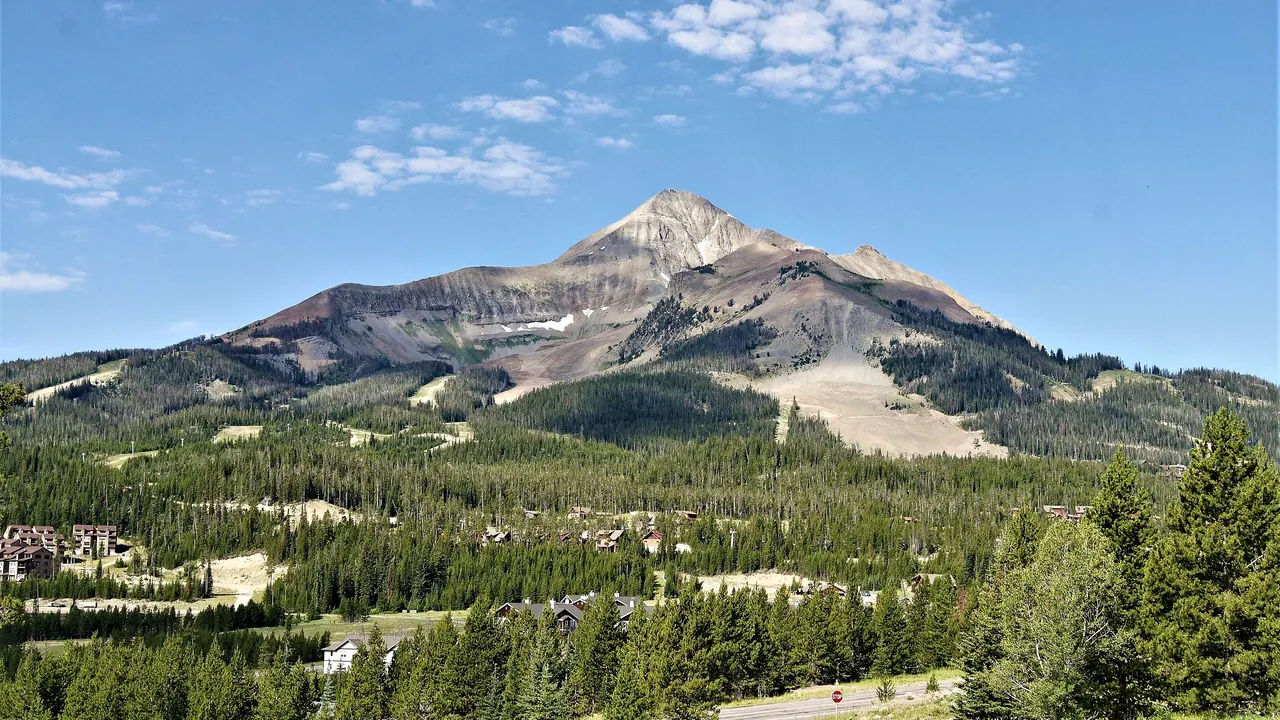
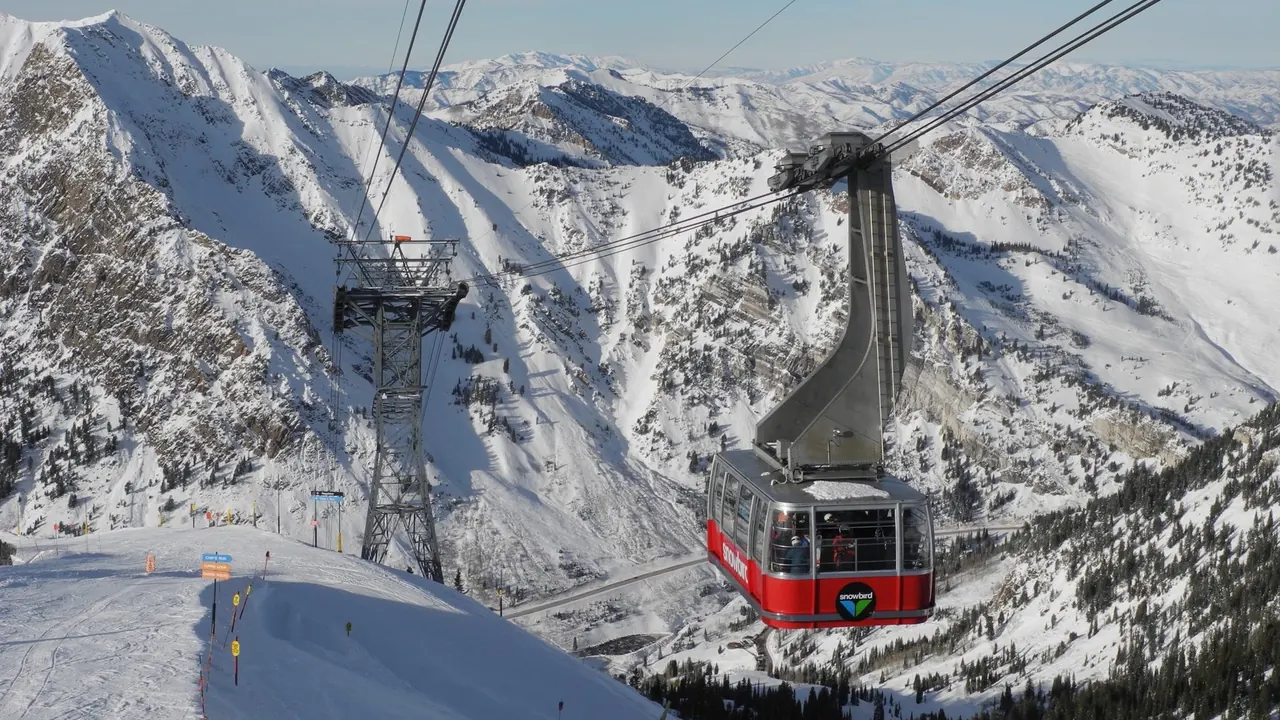
Photos: Big Sky by Greg Gjerdingen, CC BY 2.0, cropped; Snowbird by VeggieGarden, CC BY-SA 4.0, cropped.
Big Sky or Snowbird?
Our verdict in twelve categories, each scored against the same fixed benchmark cities, and the climate month by month, so you can choose for your trip.
Choose Big Sky for
- families
- live music and the arts
- nightlife
Big Sky suits the traveller who wants a mountain vacation with more around it than the slopes. Its gentle beginner terrain and summer adventure park make it the easier choice with younger children, the canyon saloons and Town Center taverns give evenings a little more life, and Yellowstone's geysers and wildlife are close enough for a day out. Expect long drives and spread-out villages.
Choose Snowbird for
- day trips
- getting around
- prices
Skiers who care most about snow and steep ground, and who want a quick, compact trip, will be happier at Snowbird. The base is car-free and the airport is about forty minutes away, so a long weekend works without much planning. Salt Lake City and Park City are both near enough for dinner, shopping or a day of sightseeing. In return you get a mountain that favours confident skiers, and your plans depend on a single canyon road.
Scoreboard
Twelve categories on one fixed scale from 0 to 100. The shaded stretch is the gap between the two.
Your match
Pick a travel style or drag the sliders, and both match scores follow your weighting.
Too close to call, level with your weighting
Wins on families and live music and the arts with your weighting.
Wins on day trips and getting around with your weighting.
What matters to you?
Category by category
What the scores mean for a trip.
Beaches & swimming
Neither resort is anywhere near a sea, and swimming is not why anyone visits either one. At Big Sky, summer swimming means a hotel pool or a cold dip at a pond, since the Gallatin River is too fast and chilly to swim in. Snowbird has heated resort pools, and the Heber Valley reservoirs, about an hour away, have small beaches. The Great Salt Lake nearby is worth seeing as a curiosity but is not a place to swim.
Food & drink
Both resorts offer hearty food at resort prices, and the food is broadly on a par. Big Sky has more of a regional character, with bison, elk, trout and Montana beef, a local brewing scene and roadhouses along the canyon highway. The restaurants are spread across three villages, though, and some cut their hours between seasons.
Snowbird's restaurants are all in the lodges and the base plaza. The highlight is eating at the top of the tram with the range spread out below, but little of the food is local. Utah's liquor laws affect how drinks are served. When the menus get repetitive, Salt Lake City's restaurant districts are about forty minutes away, which is closer than Bozeman is to Big Sky.
Culture & sights
Both are purpose-built resorts from the 1970s, and neither has much history for a visitor to see. Big Sky has one real piece of heritage, the log cabins of the Crail Ranch homestead in Meadow Village. Snowbird's most distinctive buildings are its angular concrete lodges, designed to withstand avalanches. The canyon's silver-mining history and the quarry that supplied Salt Lake City's temple granite have left very little to look at.
Nightlife
Evenings are quiet at both, but Big Sky has a bit more going on after dinner. Its Town Center taverns stay open a while, and the old saloons in the Gallatin Canyon, with pool tables, wooden bars and a ranch-country crowd, are worth a drink.
At Snowbird, the evening is mostly over once après-ski on the base deck ends. Anyone wanting a real night out has to drive the mountain road to Salt Lake City or Park City.
Nature & outdoors
Big Sky gives the wider range of things to do outdoors. Lone Peak towers over one of the largest ski areas in North America, with steep high runs, long groomers and cross-country trails through the meadows below. Summer adds hiking in the Spanish Peaks and the Lee Metcalf Wilderness, plus fly fishing and rafting on the Gallatin. Yellowstone's west entrance is about an hour south, so the park's geysers, bison and elk make a full day out.
Snowbird is the more specialised mountain, and its draw is the snow. Little Cottonwood Canyon gets some of the deepest, driest powder on the continent, and the tram runs straight up to Hidden Peak. Its steep chutes, bowls and tree runs connect across the ridge to Alta, and the season often lasts well into spring. In summer there is hiking, the wildflower meadows of Albion Basin and climbing on the canyon's granite walls.
Day trips
Snowbird has more to offer for days off the mountain. Salt Lake City is about forty minutes away, with Temple Square, the State Capitol and its museums. Park City, about an hour away, has a Victorian Main Street from its silver-mining days. Midway, Sundance and Ogden's 25th Street are pleasant extra outings.
Most of Big Sky's outings are into the landscape rather than to towns. Bozeman and its dinosaur fossils at the Museum of the Rockies are worth the hour's drive. The preserved gold-rush towns of Virginia City and Nevada City take about two hours to reach.
Good for families
Big Sky is easier with younger children. Its beginner slopes are gentle, and in summer the base turns into an adventure park with zip lines, ropes courses and a climbing wall. Horse riding, calm rafting and bison in Yellowstone appeal to all ages.
Snowbird's compact, car-free base is easy to manage with children, and its summer mountain coaster and alpine slide are popular. But the mountain is built around expert skiing, so it suits teenagers better than toddlers. At both resorts the altitude can tire small children for the first few days.
Getting around
Snowbird is easier to get around once you are there. The lodges, tram and lifts are a short walk apart on a car-free base, and the airport is only about forty minutes away. The catch is the single canyon road in and out, which gets jammed on powder mornings and is sometimes closed for avalanche control.
Big Sky is spread along about 15km of road. A free bus links its villages, but you cannot walk between them. The airport is an hour away, and you will need a car for Yellowstone and careful driving through the canyon in winter.
Shopping & style
Neither resort is a place to go shopping, though Big Sky has a little more to browse. As well as ski and fly-fishing gear, it has a few Western-style boutiques and galleries selling wildlife and landscape art. Snowbird's base shops cover goggles, rentals and resort-branded clothing. Its advantage is being close to Park City's boutique main street and the malls of Salt Lake City.
Affordability
Both are costly, but Big Sky is harder on the budget. Its slopeside lodges and luxury resorts set high winter prices, and staying in the canyon or in Bozeman saves money only at the cost of more driving.
Snowbird has more ways to cut costs. Multi-resort season passes reduce the price of lift tickets, and the many hotels in Salt Lake City are an easy drive below the canyon. Summer is the cheaper season at both.
Live music & performing arts
Big Sky has a real arts calendar for a resort of its size. The small performing arts centre in Meadow Village hosts touring musicians, chamber music and theatre in winter, and in summer there are free lawn concerts and a short classical festival in Town Center.
Snowbird has summer plaza concerts and its long-running Oktoberfest with oompah bands, and not much more. However, Salt Lake City's symphony, opera and theatre are only a drive down the canyon.
Wellness & relaxation
At Big Sky, relaxing happens in many small places. There are hot tubs on lodge decks under starry skies, and the larger resorts have full-service spas offering massages for sore ski legs. The nearest natural hot springs are about an hour away towards Bozeman.
Snowbird puts it all in one place, the large spa on top of its main lodge. It has a rooftop pool, hot tubs and steam rooms that look out on the canyon walls as the light fades. For a different kind of soak, the geothermal crater at Homestead in Midway, about an hour away, has warm mineral water inside a limestone dome, which is a stranger setting than Big Sky's hot springs.
When should you go?
Pick your month. The climate figures are measured averages, not a forecast.
Big Sky in July
Snowbird in July
Daytime high, °C
Rainfall in the month, mm
Where the figures come from
Big Sky has no weather station within reach, so its figures come from a gridded climate model rather than a measured record, and read a broad area rather than the city itself.
Snowbird has no weather station within reach, so its figures come from a gridded climate model rather than a measured record, and read a broad area rather than the city itself.
Temperature and rainfall are climate normals, averaged over the years shown. Big Sky: 2001-2020 normals, NASA POWER reanalysis grid, no weather station within 90 km. Snowbird: 1991-2020 normals, TerraClimate 4 km grid at the town, no weather station within 90 km.
Both resorts are at their best from about December to March, when the snow is deep, but Big Sky is the harsher place in midwinter, with daytime highs around -4°C. Snowbird stays nearer freezing. Spring brings a difference: Big Sky gets its wettest weather in May and June, with up to 83mm a month, so the late season and early summer can be grey and slushy. Snowbird's precipitation is much steadier through the year, and its ski season often runs well into late spring.
For hiking and biking, July and August are the months at both. Big Sky warms up more, to about 26°C, which makes for long, bright days with cool nights. Snowbird peaks at around 22°C and is driest in midsummer, with only about 27mm in July, so its trails and wildflower meadows are reliable then. September is still pleasant at both. October and November are dull shoulder months, cold and between seasons.
Which traveller are you?
On a family trip with young children, Big Sky is the better choice. It has gentle beginner slopes and a ski school for small children, zip lines and gondola rides in summer, and bison-spotting in Yellowstone. Snowbird's steep terrain suits teenagers who already ski confidently.
For a short city break, Snowbird works better. The airport is about forty minutes away, and the car-free base means no driving once you arrive. Salt Lake City's museums and restaurants are close enough for an evening. Big Sky involves more driving between villages.
For an outdoors trip, it depends on the season. In summer Big Sky is ahead, with fly fishing, rafting and Yellowstone's wildlife added to the hiking. In winter, Snowbird's deep, dry snow and long ski season make it the stronger pick for powder skiers.
Before you go
| Measure | Big Sky | Snowbird |
|---|---|---|
| Currency | US Dollar (USD) | US Dollar (USD) |
| Sockets | AB120 V, 60 Hz | AB120 V, 60 Hz |
| Driving side | Right | Right |
| Time zone | UTC-7, UTC-6 in summer | UTC-7, UTC-6 in summer |
| Emergency number | 911 | 911 |
| Elevation | 2,200 m | 2,479 m |
| Main airport | Bozeman Yellowstone International Airport (BZN)59 km from centre27 non-stop destinations | Salt Lake City International Airport (SLC)36 km from centre108 non-stop destinations |
| Public holidays this year | 12 days | 12 days |
By the numbers
| Measure | Big Sky | Snowbird |
|---|---|---|
| City population | 3,591 | - |
| People per km² | 12 | - |
| Museums within 10 km | 0 | 0 |
| UNESCO World Heritage sites within 50 km | 0 | 0 |
Where else could you go?
Every comparison below shares a destination with this one, so you can follow Big Sky or Snowbird somewhere new.
- Alta, Utahvs Snowbird
- Deer Valleyvs Snowbird
- Park Cityvs Snowbird
- Salt Lake Cityvs Snowbird
- Jackson Holevs Big Sky
- Moabvs Snowbird