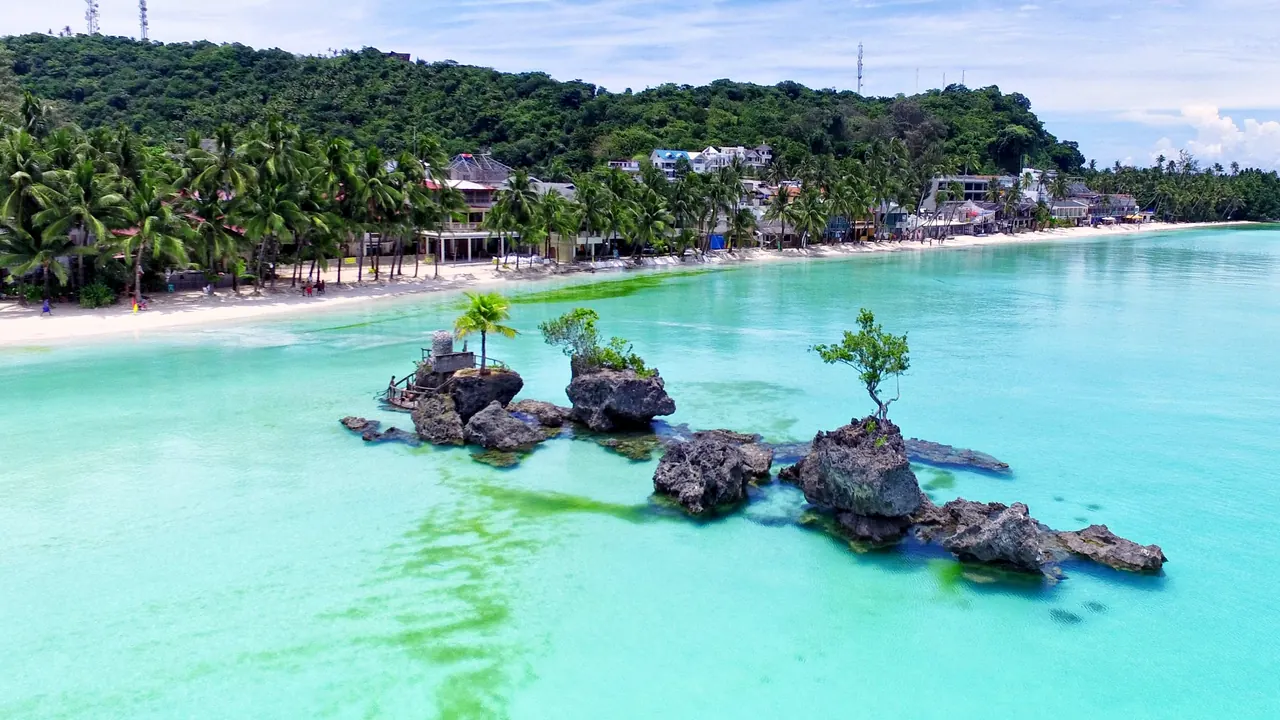
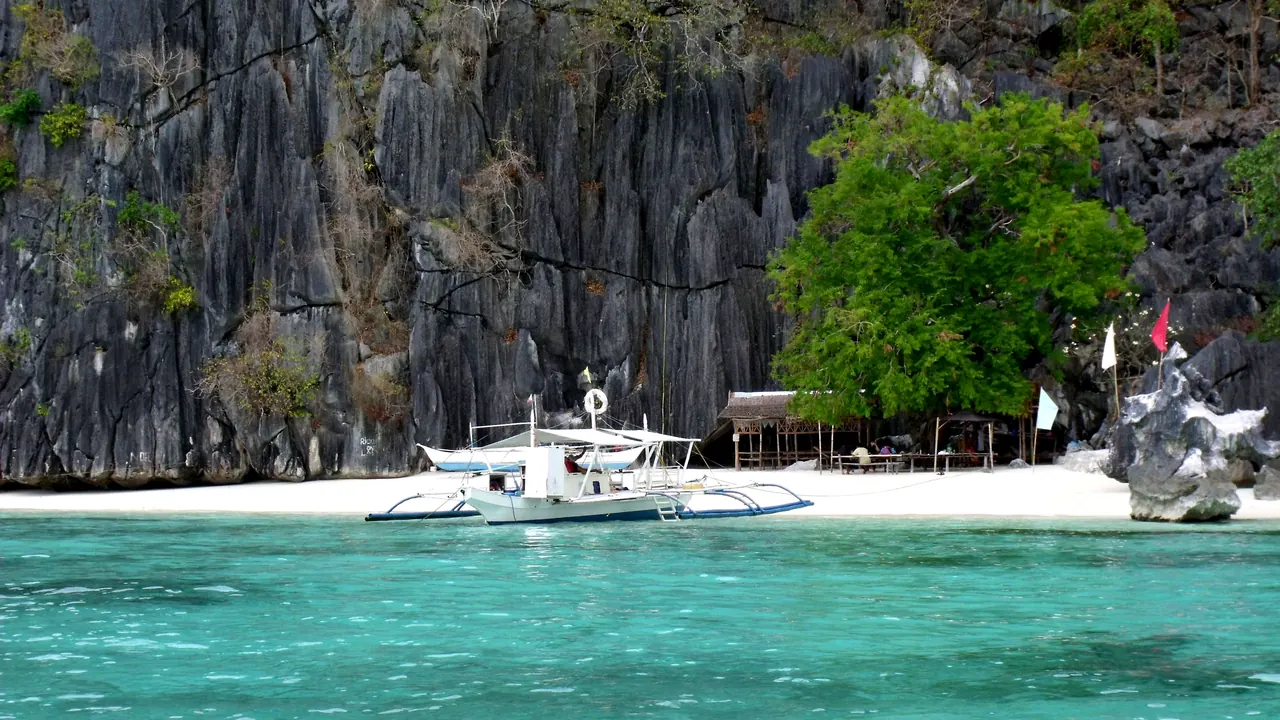
Photos: Boracay by Robert Anton Pimentel Aparente, CC BY-SA 4.0, cropped; Coron by André Héroux, CC BY 3.0, cropped.
Boracay or Coron?
Our verdict in twelve categories, each scored against the same fixed benchmark cities, and the climate month by month, so you can choose for your trip.
Choose Boracay for
- nightlife
- getting around
- families
Boracay suits travellers who want the beach right outside the door. White Beach puts sand, swimming, dinner, massages and a night out along one walkable path, so days need no planning and evenings have some life to them. It is the easier choice for families with small children and for anyone whose idea of a good trip is a long stretch of soft sand and a sunset drink.
Choose Coron for
- nature and the outdoors
- culture and sights
- prices
Coron is the trip for people who want to be out on the water exploring. The limestone cliffs of Coron Island, its hidden lakes and lagoons, and the Second World War wrecks in the bays make it one of the most striking places in the country to snorkel, kayak and dive. The price is a plain town with no beach, quiet evenings and days run around boat departures, and it suits active adults better than anyone after a lazy resort stay.
Scoreboard
Twelve categories on one fixed scale from 0 to 100. The shaded stretch is the gap between the two.
Your match
Pick a travel style or drag the sliders, and both match scores follow your weighting.
Wins on nightlife and getting around with your weighting.
Wins on nature and the outdoors and culture and sights with your weighting.
What matters to you?
Category by category
What the scores mean for a trip.
Beaches & swimming
Boracay has the better beach in the plain sense: about 4km of pale, powdery sand at White Beach, with the water a few steps from most hotels. Station 1 has the widest, softest stretch, and when the monsoon roughens the west side, Puka Beach and the east-coast coves take over.
Coron has no beach in town at all, so every swim starts with a boat. What it has instead are white sandbars such as Malcapuya and Bulog Dos, and swimming that Boracay cannot offer: the brackish water of Kayangan Lake, Twin Lagoon reached through a gap in the rock, and the warm and cool layers of Barracuda Lake.
Food & drink
Neither place is a food destination, but Boracay gives more choice. Its D'Talipapa market lets you pick prawns or lobster and have them cooked next door, and the beach path offers dozens of restaurants serving cuisines from Italian to Korean, even if many are much alike.
Coron is simpler: grilled fish, adobo, sinigang and kinilaw in town, with uneven standards. Its best meal is often the grilled fish and rice served on a beach during an island-hopping trip.
Culture & sights
Neither is a trip for sightseeing, though Coron has a little more past to engage with. Its history is the fleet of Japanese supply ships sunk in 1944, which divers can still visit, and the Tagbanua ancestral lands on Coron Island, along with the climb up Mount Tapyas. Boracay has only a couple of village chapels and no museums, so there is nothing to see beyond the sea.
Nightlife
This is one of the sharpest differences between them. Boracay has a proper night out: beachfront bars around Station 2 turn the music up after sunset, fire dancers perform on the sand, and a few clubs keep going past midnight, with the biggest crowds from December to May. It is mostly chart music, but it is a scene.
Coron has a handful of bars where divers swap stories over beer, and most people are asleep early because the boats leave at dawn. There are no clubs.
Nature & outdoors
Coron is far ahead here. Coron Island's jagged black limestone, with lakes and lagoons hidden inside it, is the landscape people travel for, and the wartime wrecks in the bays are some of the finest wreck dives anywhere, with a few shallow enough for snorkellers. On land there is the Calauit sanctuary, where giraffes and zebras roam, and dugongs feed off northern Busuanga.
Boracay is a pretty, low island with one modest hill. Its strengths are on the water: kitesurfing on Bulabog's lagoon from November to April, sunset sailing on a paraw and reef dives close to shore. None of it comes close to Coron's lakes and wrecks.
Day trips
Both are places you stay in rather than travel out from, but the outings differ. From Coron, Culion is a real destination: a former leper colony with a Spanish-era fort church and a museum on its history. Boracay's options are quieter, mainly the fishing villages of Carabao Island or Kalibo on the mainland, which is only worth the trip during the Ati-Atihan festival in January.
Good for families
Boracay is the easier choice with children, especially young ones. From November to May White Beach slopes gently into shallow, warm water, many resorts have pools and family rooms, and Stations 1 and 3 are calm places to stay.
Coron suits older children who swim confidently and will happily spend long days on boats. With toddlers it is hard work: steep, slippery steps up to Kayangan Lake, strong sun, a town with few pavements and only basic medical care.
Getting around
Reaching either island takes a flight and a road transfer, and Boracay adds a boat crossing, so arrival can take most of a day. Once there, though, Boracay is much easier: the sandy beach path links most hotels, restaurants and bars on foot, and electric tricycles cover the rest.
In Coron, everything worth doing involves a boat arranged through a tour desk or hotel, the town's main road is hot and crowded with tricycles, and the rest of Busuanga means rough roads with a driver or a scooter.
Shopping & style
Boracay at least has somewhere to browse, while Coron has little more than stalls. D'Mall's open-air lanes and the beach path sell beachwear, sarongs and shell jewellery, and a few shops carry woven and pearl goods from elsewhere in the Philippines. In Coron it comes down to souvenir T-shirts, bags of Busuanga cashews and spare snorkel gear. Neither is a reason to leave room in the suitcase.
Affordability
Both can be done on a modest budget, and Coron is slightly kinder to it. Its shared island-hopping tours include lunch and are good value, though every lake and lagoon has its own fee and wreck diving adds up fast. On Boracay, guesthouses a few lanes back and market seafood keep costs down, but beachfront rooms at Station 1 and the high season from Christmas to Easter push prices up more sharply.
Live music & performing arts
Boracay's evenings come with live entertainment of a kind: acoustic and reggae bands in the beach bars, and fire dancers spinning on the sand around Station 2 after dark. In Coron it rarely goes beyond a guitarist in a bar or an occasional show at a resort. Neither island has a theatre or concert hall to plan a night around.
Wellness & relaxation
Boracay makes relaxation easier: therapists work along White Beach, the resorts at the northern end and above Diniwid offer hilot massage with warm oils and banana leaves, and yoga is easy to find. Choosing Station 1 or 3 keeps the noise of Station 2 at a distance.
Coron has something Boracay lacks, the warm saltwater pools of Maquinit hot spring at the edge of the mangroves, lovely after a day on the boats. The town itself is noisy, though, so real rest there means staying on one of the outlying island resorts.
When should you go?
Pick your month. The climate figures are measured averages, not a forecast.
Boracay in July
Coron in July
Daytime high, °C
Rainfall in the month, mm
Where the figures come from
Boracay has no weather station within reach, so its figures come from a gridded climate model rather than a measured record, and read a broad area rather than one spot.
Coron has no weather station within reach, so its figures come from a gridded climate model rather than a measured record, and read a broad area rather than one spot.
Temperature and rainfall are climate normals, averaged over the years shown. Boracay: 2001-2020 normals, NASA POWER reanalysis grid, no weather station within 90 km. Coron: 2001-2020 normals, NASA POWER reanalysis grid, no weather station within 90 km.
Both islands are warm enough to swim in every month, with the sea close to 29°C all year, so the right season depends on rain and wind rather than heat. January to April is the best stretch for either. Coron is the drier of the two then, with almost no rain in March, while Boracay gets light showers. Coron also runs a little hotter, reaching around 32°C in April. That makes the walk along its main road tiring, though out on a boat it hardly matters.
The southwest monsoon sets in during May and lasts until October in both places. It is wettest in July, when Coron gets over 500mm. On Boracay those months bring waves and seaweed to White Beach and send swimmers to the east-coast coves. In Coron rough seas can cancel the boats the whole trip depends on, so a wet-season visit is the bigger gamble there. The two also differ at the end of the year. Coron gets steadily drier through November and December, while Boracay stays fairly wet until the turn of the year, with around 200mm in each of those months.
Which traveller are you?
On a beach and sun trip, Boracay is the clear pick. White Beach is long, soft and right outside the hotel, with calm, shallow water for much of the year, while in Coron every beach day means booking a boat out to a sandbar.
For an outdoors trip, Coron wins easily. Kayaking into Kayangan Lake and Twin Lagoon, snorkelling over the coral gardens and diving the wartime Japanese wrecks give it far more to do than Boracay, where the outdoor side comes down to kitesurfing at Bulabog and snorkelling trips.
On a food and nightlife trip, Boracay offers far more. D'Talipapa market seafood, a long row of beachfront restaurants and bars around Station 2 that keep going after midnight beat Coron's simple fish menus and early nights.
Before you go
| Measure | Boracay | Coron |
|---|---|---|
| Official language | English, Filipino, Taglish | English, Filipino, Taglish |
| Currency | Philippine Peso (PHP) | Philippine Peso (PHP) |
| Sockets | ABC220 V, 60 Hz | ABC220 V, 60 Hz |
| Driving side | Right | Right |
| Time zone | UTC+8 | UTC+8 |
| Emergency number | 911 | 911 |
| Elevation | - | 8 m |
| Main airport | Godofredo P. Ramos Airport (MPH)5 non-stop destinations | Francisco B. Reyes (Busuanga) Airport (USU)18 km from centre3 non-stop destinations |
| Public holidays this year | 18 days | 18 days |
By the numbers
| Measure | Boracay | Coron |
|---|---|---|
| Population | 37,802 | 69,439 |
| People per km² | 3,670 | 101 |
| Museums within 10 km | - | 0 |
| UNESCO World Heritage sites within 50 km | - | 0 |
| Swim season, months above 21 °C | 12 months | 12 months |
Where else could you go?
Every comparison below shares a destination with this one, so you can follow Boracay or Coron somewhere new.
- El Nidovs Coron
- Cebuvs Boracay
- El Nidovs Boracay
- Cebu Islandvs Boracay
- Puerto Princesavs Coron
- Manilavs Coron