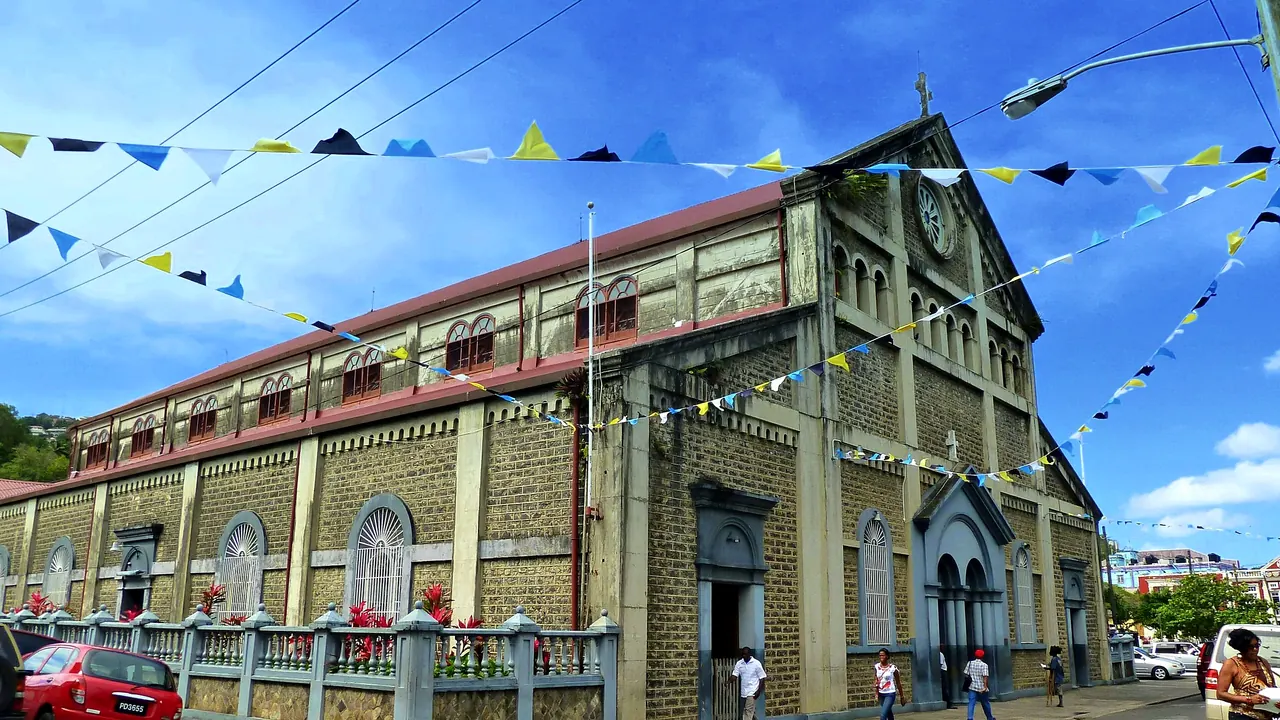
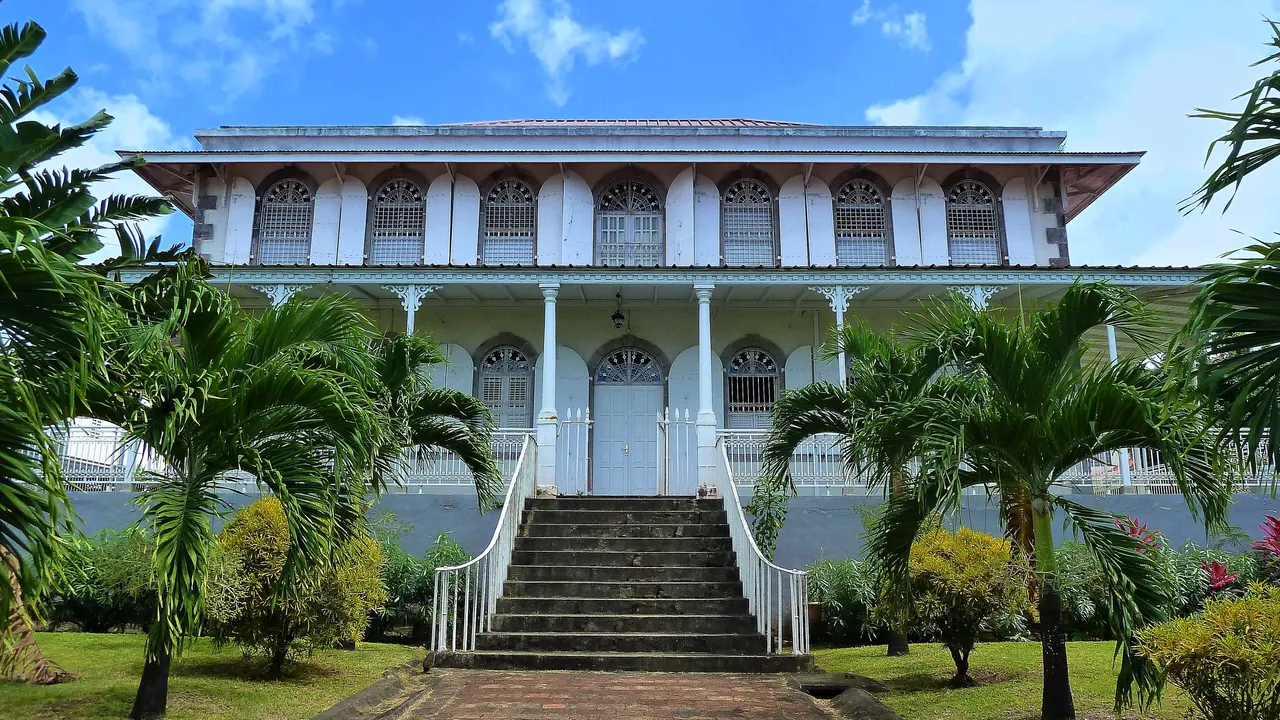
Photos: Castries by Edgar El, CC BY 3.0, cropped; Roseau by Edgar El, CC BY 3.0, cropped.
Castries or Roseau?
Our verdict in twelve categories, each scored against the same fixed benchmark cities, and the climate month by month, so you can choose for your trip.
Choose Castries for
- beaches
- nightlife
- families
Castries makes more sense for a classic Caribbean beach stay. You would base yourself in Rodney Bay on the long sandy curve of Reduit Beach, with Pigeon Island next door, the Friday jump-up in Gros Islet for a night out, and the Pitons within a boat ride for one big day of scenery. There are more restaurants, resorts and kids' clubs, which makes it the easier choice for families and for couples who want comfort around them.
Choose Roseau for
- wellness
- prices
- nature and the outdoors
Roseau rewards travellers who come for the island rather than the shore. The rainforest begins right behind the town, waterfalls, gorges and the Boiling Lake are close by, and soaking in the hot sulphur pools of the Roseau Valley is part of everyday life. Evenings are quiet and the beaches are rocky or dark, but guesthouses cost less and the hiking is the main event.
Scoreboard
Twelve categories on one fixed scale from 0 to 100. The shaded stretch is the gap between the two.
Your match
Pick a travel style or drag the sliders, and both match scores follow your weighting.
Wins on beaches and nightlife with your weighting.
Wins on wellness and prices with your weighting.
What matters to you?
Category by category
What the scores mean for a trip.
Beaches & swimming
Castries wins easily for sand. Reduit Beach in Rodney Bay is a long golden sweep of calm Caribbean water, with Pigeon Island's small beaches beside it and Vigie, Malabar and Choc Bay closer to town, so a beach day needs no planning at all.
Roseau's shore is volcanic: dark sand, pebbles and boulders, with deep water close in. Swimming there means snorkelling off the rocks, among the gas bubbles at Champagne Reef or at Scotts Head, rather than lying on a beach. Mero's grey sand is the nearest real beach, and the pale bays of the north coast are a long drive.
Food & drink
Both kitchens cook the same Creole dishes of callaloo, saltfish and accra, but Castries has more around them. The Friday fish fries at Gros Islet and Anse La Raye turn grilled fish and lobster into a night out, and Rodney Bay has a cluster of restaurants to rotate through over a week.
Roseau is simpler: home cooking, rum shops and hotel dining rooms. Its high points are the Saturday morning market and fresh juices of soursop, sorrel and passion fruit. Food lovers will run short of choice there sooner.
Culture & sights
Neither town fills a day with sights. Castries edges ahead with the Cathedral Basilica on Derek Walcott Square, its interior painted by Dunstan St Omer, the old barracks and graves on Morne Fortune, and the ruins of Fort Rodney on Pigeon Island.
Roseau has kept more of its old wooden streets in the French Quarter, since fire took most of colonial Castries, and the Dominica Museum tells the Kalinago and slavery story well. It is still only a half day, and Fort Shirley and the Kalinago Territory are a drive away.
Nightlife
Castries itself is quiet at night, but Rodney Bay to the north has a strip of bars and a couple of clubs. On Fridays the jump-up in Gros Islet plays soca and dancehall between the fish grills until late.
Roseau has nothing to match it. Friday drinks in rum shops and bayfront bars and the occasional bouyon party are about all there is, and most visitors go to bed early ahead of a hike. Both islands come alive at Carnival, St Lucia's in summer and Mas Domnik before Lent.
Nature & outdoors
Both are steep volcanic islands where the landscape is the draw, but Roseau has it closer and wilder. Morne Trois Pitons National Park, a UNESCO site, starts half an hour up the valley, with Trafalgar Falls, the swim up Titou Gorge and the full-day trek across the Valley of Desolation to the Boiling Lake. Sperm whales live off the west coast all year.
From Castries, the great sight, the Pitons, is an hour and a half south, and the Edmund and Des Cartiers rainforest reserves also need a drive. What St Lucia offers instead is more organised adventure: guided climbs of Gros Piton, zip lines through the canopy and sailing from Rodney Bay.
Day trips
Castries has the better range of outings. The west coast road to Soufrière passes Marigot Bay and the fishing villages before reaching the cocoa estates and the Diamond gardens, and the fast ferry to Martinique makes Fort-de-France an easy French day out.
From Roseau the trips are fewer and slower. Fort Shirley on the Cabrits and the Kalinago Territory are both worth seeing, but the mountain roads stretch every journey, and the ferries to Martinique and Guadeloupe make for a long day rather than a simple outing.
Good for families
Castries is the easier family base. The calm bays north of town at Reduit Beach and Pigeon Island have gentle water, and between the resort kids' clubs, zip lines, dolphin boats and the drive-in volcano, older children have plenty to do.
Roseau suits active families whose children are old enough to swim up Titou Gorge or snorkel at Champagne Reef. There is little sand to play on, and the best hikes are too rough for small legs. Neither island has a zoo, aquarium or theme park, and both involve winding drives.
Getting around
Getting around is hard work on both islands. In each capital the centre is walkable on uneven pavements, and the privately run minibuses are cheap but run less often in the evening.
The difference is where you need to go. On St Lucia the busy north road links Castries to Rodney Bay and the beaches by frequent minibus, and water taxis help along the west coast. On Dominica you are mostly heading to trailheads up steep valleys, so a taxi, a guide or a hire car is close to essential, and the north is well over an hour away.
Shopping & style
Neither is a shopping destination, but Castries has more to browse: duty-free jewellery and liquor at the cruise piers, a mall in Rodney Bay, the Central Market's craft arcade, batik from Morne Fortune and pottery from Choiseul.
Roseau has only small craft stalls and the old market. What they sell is distinctive, though: Kalinago baskets woven from larouma reed, bay rum, local cocoa and small-batch soaps.
Affordability
Roseau costs less. Guesthouses and small hotels in and around town are fairly priced by island standards, while St Lucia leans towards resorts and all-inclusives and has few cheaper beds.
On both islands the big costs are taxis and guided trips: Piton excursions and diving on one, whale watching and guided hikes on the other. Both reward eating at markets and roadside stalls and riding the minibuses, but in Castries those savings have to make up for higher room rates.
Live music & performing arts
Live performance on both islands comes in festival bursts rather than a regular programme, and neither offers much theatre or classical music. Castries has the Saint Lucia Jazz and Arts Festival at Pigeon Island, summer Carnival and steel bands at the Friday party in Gros Islet.
Roseau's strength is its own music. Cadence-lypso and bouyon were born on Dominica, and the World Creole Music Festival fills the town for several nights each autumn around Independence, alongside quadrille and the bélé drum dance.
Wellness & relaxation
Roseau has the hot water on its doorstep. Twenty minutes up the valley at Wotten Waven, sulphur springs feed rustic stone and wooden pools in the rainforest, and locals soak there as a matter of habit. Eco-lodges in the hills add yoga and massage.
St Lucia's equivalent, the mud baths at the Sulphur Springs near Soufrière, is a long drive from Castries. Relaxation there is more polished and resort-based, with hotel spas in Rodney Bay and Marigot Bay using cocoa, coconut and volcanic clay.
When should you go?
Pick your month. The climate figures are measured averages, not a forecast.
Castries in July
Roseau in July
Daytime high, °C
Rainfall in the month, mm
Where the figures come from
Castries's temperatures are measured 29 km from the centre, at Hewanorra International Airport.
Castries has no rain gauge within 25 km of the centre, so its rainfall comes from a gridded climate dataset read at the destination rather than from a gauge further away.
Castries's sunshine is measured 66 km from the centre, at Le Lamentin.
Roseau's temperatures are measured 80 km from the centre, at Caravelle.
Roseau has no rain gauge within 25 km of the centre, so its rainfall comes from a gridded climate dataset read at the destination rather than from a gauge further away.
Roseau's sunshine is measured 88 km from the centre, at Le Lamentin.
Temperature and rainfall are climate normals, averaged over the years shown. Castries: 2005-2020 (sunshine 1991-2020, rainfall 1991-2020) normals, Hewanorra International Airport (29.3 km from centre). Roseau: 1991-2020 normals, Caravelle (80 km from centre).
Both islands are warm enough to swim in every month, and the sea off either town is never far from 28°C, so choosing a season is about rain rather than heat. February to April is the dry, sunny stretch in both, the best time for the beach at Rodney Bay and for the trails behind Roseau alike. Daytime heat barely changes through the year. Roseau runs a degree or so cooler in winter at about 28°C, which is pleasant for walking.
The wet season from June to November hits both hard, but in a different pattern. Castries saves its heaviest rain for October and November, with over 300mm in October. Roseau turns wet earlier, passing 250mm in August and staying high until November. Sunshine follows the same curve in both and dips a little in November. The dry months matter more for hiking on Dominica's muddy trails than for a resort beach stay on St Lucia.
Which traveller are you?
For a beach and sun trip, Castries is the clear pick. Base yourself at Rodney Bay on the calm golden sand of Reduit Beach, with Pigeon Island next door. Roseau's coast is dark pebble and rock, better for snorkelling than for lounging.
On an outdoors trip, Roseau puts you closer to the wild. The rainforest begins behind the town, Trafalgar Falls, Titou Gorge and the Boiling Lake trek are nearby, and whales live offshore all year. Castries has the Pitons, but they are a long drive south.
For a relaxing and wellness trip, Roseau has the edge. The natural hot springs at Wotten Waven are twenty minutes away and part of daily local life. Castries has polished resort spas, but its volcanic mud baths are a long drive away.
Before you go
| Measure | Castries | Roseau |
|---|---|---|
| Official language | English | English |
| Currency | East Caribbean Dollar (XCD) | East Caribbean Dollar (XCD) |
| Sockets | G240 V, 50 Hz | G230 V, 50 Hz |
| Driving side | Left | Left |
| Time zone | UTC-4 | UTC-4 |
| Emergency number | Police 999, ambulance 911, fire 911 | 999 |
| Elevation | 2 m | 43 m |
| Main airport | Hewanorra International Airport (UVF)31 km from centre13 non-stop destinations | Douglas-Charles Airport (DOM)29 km from centre13 non-stop destinations |
| Public holidays this year | 12 days | 12 days |
By the numbers
| Measure | Castries | Roseau |
|---|---|---|
| Population | 20,000 | 16,571 |
| People per km² | 253 | 3,069 |
| Museums within 10 km | 0 | 0 |
| UNESCO World Heritage sites within 50 km | 1 | 1 |
| Swim season, months above 21 °C | 12 months | 12 months |
Where else could you go?
Every comparison below shares a destination with this one, so you can follow Castries or Roseau somewhere new.
- Martiniquevs Roseau
- Kingstownvs Castries
- Guadeloupevs Roseau
- Bridgetownvs Castries
- St. John's, Antiguavs Roseau
- St. George's, Grenadavs Castries