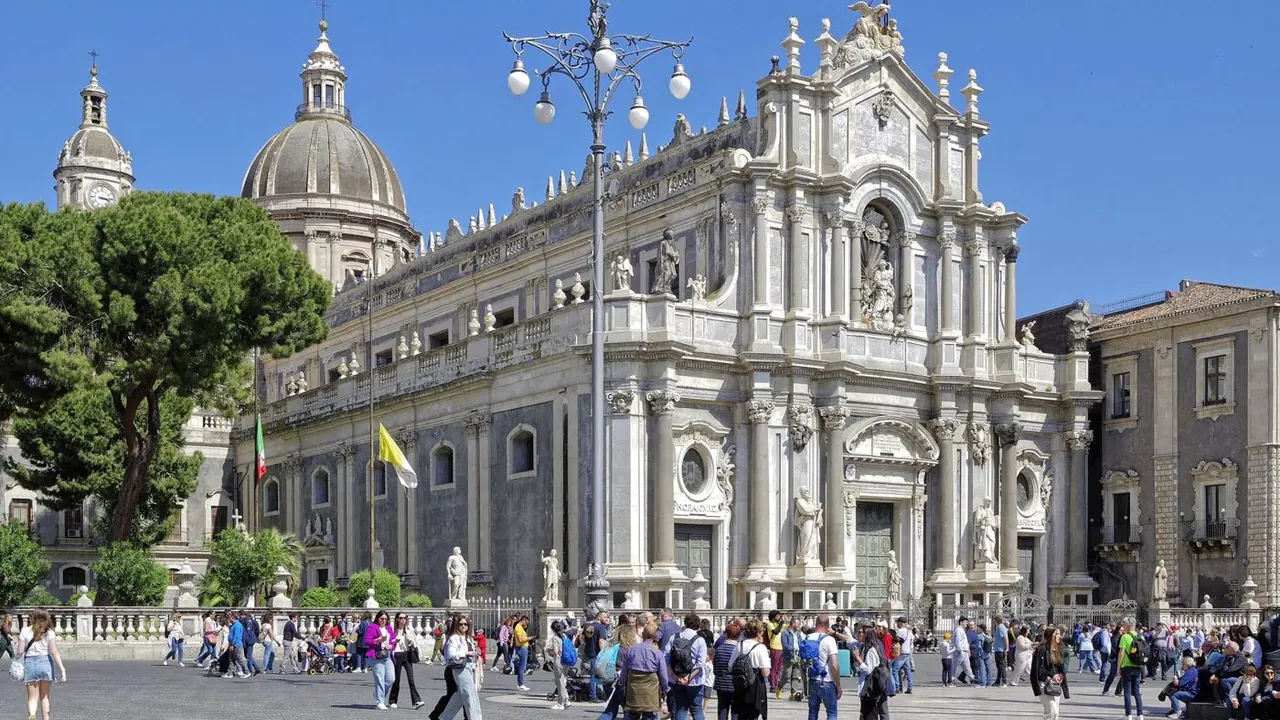
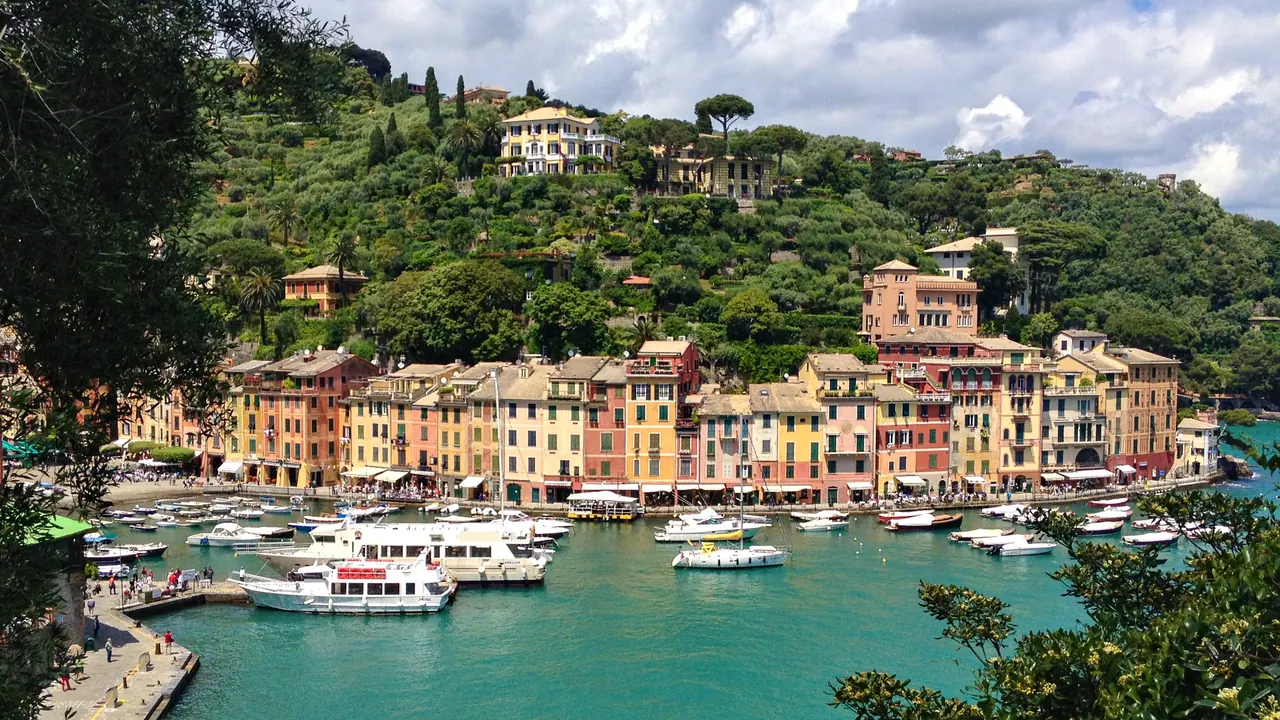
Photos: Catania by Berthold Werner, CC BY-SA 4.0, cropped; Portofino by Michal Osmenda, CC BY 2.0, cropped.
Catania or Portofino?
Our verdict in twelve categories, each scored against the same fixed benchmark cities, and the climate month by month, so you can choose for your trip.
Choose Catania for
- prices
- live music and the arts
- nightlife
Catania suits travellers who want plenty to do and want it to stay affordable. You get a working Sicilian city with serious street food, a late-baroque centre, a real opera house and nights that run long. Etna and the whole of eastern Sicily are within easy reach. It is noisy, hot and sometimes hard work, but you could spend a week there without running out of things to do.
Choose Portofino for
- wellness
- getting around
Portofino is for a short, slow stay where the setting is the point: a painted harbour, a protected headland with cliff paths and some of the clearest diving water on the Riviera. It costs a great deal, the food is ordinary and the evenings end early. If you want quiet mornings, good walks and boat trips along the coast, and the bill doesn't worry you, it's the calmer and more beautiful of the two.
Scoreboard
Twelve categories on one fixed scale from 0 to 100. The shaded stretch is the gap between the two.
Your match
Pick a travel style or drag the sliders, and both match scores follow your weighting.
Wins on prices and live music and the arts with your weighting.
Wins on wellness and getting around with your weighting.
What matters to you?
Category by category
What the scores mean for a trip.
Beaches & swimming
Catania gives you more room to swim. La Playa is a long sandy strip south of the city, broad and easy, if plain. To the north, the lava rocks of the Riviera dei Ciclopi have ladders straight into clear water beside the sea stacks. The sea there is also a touch warmer in late summer.
Portofino has no beach of its own, only rock platforms along the lighthouse path. The nearest sand is at Paraggi, small and mostly given over to paid beach clubs, and the pebble cove at San Fruttuoso is reached by boat or on foot. Both places offer deep, clear water off the rocks, but Portofino's spots are tiny and crowd quickly.
Food & drink
For eating, this is no contest. Catania is one of southern Italy's great street-food cities: ragù-filled arancini, fried crispelle, granita with brioche for breakfast, smoke from the grills along Via Plebiscito, and the market at La Pescheria supplying the trattorias around it. Etna's volcanic wines are a draw of their own.
Portofino offers Ligurian classics such as trofie al pesto and Recco focaccia, but they come from a small set of harbour terraces where you pay for the yachts in front of you. There is no market and no everyday eating to speak of, so keen eaters head to Camogli or the hill trattorie instead.
Culture & sights
Catania has a real city to explore. Its late-baroque centre of black lava stone is UNESCO-listed, along with the Cathedral of Sant'Agata, the churches on Via dei Crociferi and the vast San Nicolò l'Arena monastery. Roman theatres and Castello Ursino add older layers. The museums are modest, but the sights fill two or three days.
Portofino's culture is mostly the view: the coloured houses around the harbour, San Giorgio, Castello Brown and, around the point, the medieval abbey at San Fruttuoso. It takes about a day and appeals more to people who like atmosphere than to those with a list of sights.
Nightlife
Catania goes out late. A big student population fills the lanes around Piazza Bellini and the Teatro Massimo with people drinking outdoors past midnight, and in summer the beach clubs at La Playa turn into dance floors. It's informal rather than a club city, but there's always somewhere to go.
Portofino's evening is a dressed-up aperitivo facing the yachts, then dinner, then bed. It has no clubs and few late bars, so a real night out means a trip to Santa Margherita, Rapallo or Genoa.
Nature & outdoors
Both are fine bases for the outdoors, and Catania has the slight edge thanks to Etna. You can take the cable car from Rifugio Sapienza towards smoking summit craters at about 3,300m, walk over old lava flows, wade the Alcantara Gorge and even ski in winter with a view of the sea.
Portofino's appeal is smaller and closer to the sea. Its protected headland has cliff trails to San Fruttuoso and Punta Chiappa, some of them with chains. The marine reserve offshore has coral walls and the sunken Christ of the Abyss, which makes it the more rewarding of the two for divers.
Day trips
Catania has more places worth reaching. Ortigia in Siracusa and the theatre at Taormina are each about an hour away, and the baroque towns of Noto, Modica and Ragusa Ibla make a longer loop. Add the Roman mosaics at Piazza Armerina and the result is a full week of outings, though a car helps.
Portofino's outings run along one coast and are lovely partly because you go by water. In summer, ferries go to Camogli, the Cinque Terre and Portovenere, and Genoa's palaces and old port are under an hour away. Outside ferry season, you depend on the trains.
Good for families
Neither is ideal with children, but Catania works better. The sand at La Playa shelves gently, the Etnaland water park fills a hot day and older children love walking on Etna's craters. The city streets are the hard part, with traffic, little shade and uneven pavements.
Portofino is safe and calm, but it was built for adults with money. It has no playgrounds, very little free sand and steep steps everywhere, which rules out pushchairs. Most families stay in Santa Margherita or Rapallo and visit Genoa's aquarium.
Getting around
Both have a compact centre you can cover on foot, and in both the difficulty starts at the edges. In Catania it's the city beyond the old centre: one metro line, slow buses and heavy traffic, so many people hire a car for Etna and the baroque towns.
Portofino's problem is getting in and out. A single narrow road leads to Santa Margherita, with crowded buses and almost no parking. From spring to autumn the ferries are the most pleasant way to arrive, and a car is more trouble than it's worth.
Shopping & style
Catania is the better bet, mostly because of its markets and food. La Fiera is a noisy daily market and La Pescheria is pure theatre, while Via Etnea has the usual Italian chains. The things worth taking home are Bronte pistachio cream, Etna wine and Caltagirone ceramics.
Portofino packs a surprising number of luxury fashion and jewellery boutiques into a few lanes, alongside resort wear and some Ligurian lace. You can see the lot in under an hour. For a proper browse, people go to Chiavari's arcades or to Genoa.
Affordability
In Catania, most of what makes a good day costs little: eating where the locals eat, exploring the old centre and riding the bus or metro. The bigger costs are optional and easy to plan for. These are a guided climb to Etna's summit craters, a hire car for the baroque towns, a sunbed at La Playa and higher room rates in July and August.
Portofino is the other way round. The bed is the big expense, since it has only a few hotels and most of them are luxury properties, which in summer charge as much as the grandest addresses in Europe's cities. Any meal or drink on the harbour also comes with a heavy charge for the view. Many people stay in Camogli or Rapallo, come over for the day and spend their time on the headland trails, which cost nothing.
Live music & performing arts
Catania is Bellini's birthplace, and the grand Teatro Massimo Bellini runs an opera and symphonic season that visitors can actually get into. There's also the old Sicilian puppet theatre, the opera dei pupi, and summer concerts in the region's ancient theatres. That's enough for a few good evenings, if not a week.
Portofino has no theatre or regular venue, only the odd summer concert in the piazzetta or at the castle. For opera there, you'd go to the Teatro Carlo Felice in Genoa.
Wellness & relaxation
This is the one area where Portofino comes out ahead. It has no public spas either, but the hillside luxury hotels have pools and treatment rooms. The quiet headland paths and calm early mornings make for real rest, as long as you avoid the midday tour-boat crowds in high summer.
Catania is loud, full of traffic and has no bathing tradition. Rest comes from the pace of the day instead, with long lunches and the evening passeggiata. If calm matters most, the quieter villages on Etna's slopes make a better base.
When should you go?
Pick your month. The climate figures are measured averages, not a forecast.
Catania in July
Portofino in July
Daytime high, °C
Rainfall in the month, mm
Where the figures come from
Catania's sunshine is measured 88 km from the centre, at Messina.
Portofino's temperatures are measured 31 km from the centre, at Genova / Sestri.
Portofino has no rain gauge within 25 km of the centre, so its rainfall comes from a gridded climate dataset read at the city rather than from a gauge further away.
Temperature and rainfall are climate normals, averaged over the years shown. Catania: 1991-2020 normals, Catania / Fontanarossa (5.2 km from centre). Portofino: 1991-2020 normals, Genova / Sestri (31 km from centre).
Catania is the warmer and much drier of the two. From June to August it hardly rains and the days are long and very sunny, with highs around 32°C in July and August. That suits the beach but makes midday walks in the streets punishing. The sea is warm enough to swim from June into October, reaching about 26°C in August. April, May and October are the best months for sightseeing and for walking on Etna. Most of the rain falls between November and January.
Portofino is milder all year, with summer highs peaking around 28°C in August. Swimming runs from June to early October. Its summer is still too hot for comfortable walking on the exposed headland, so walkers should aim for spring or the start of autumn. Later in autumn the two places split sharply. Rain builds from September, and October and November are very wet at over 200mm a month, while Catania stays fairly dry and pleasant through October.
Which traveller are you?
On a trip on a tight budget, Catania is the only sensible choice. You can eat well, sleep centrally and see a good deal of eastern Sicily for a modest sum. In Portofino even a short stay strains a generous budget.
For a relaxing and wellness trip, pick Portofino. It is a small village on a protected headland, where a day can be little more than a swim, a long lunch and a slow walk. Catania is a large, loud city, and resting there takes deliberate effort.
For a food and nightlife trip, Catania is the clear pick. Eating there is cheap, varied and central to daily life, and the university keeps the old centre awake long after dinner. Portofino offers a smart dinner by the water, and after that the evening is largely over.
Before you go
| Measure | Catania | Portofino |
|---|---|---|
| Official language | Italian | Italian |
| Currency | Euro (EUR) | Euro (EUR) |
| Sockets | CFL230 V, 50 Hz | CFL230 V, 50 Hz |
| Driving side | Right | Right |
| Time zone | UTC+1, UTC+2 in summer | UTC+1, UTC+2 in summer |
| Emergency number | 112 | 112 |
| Elevation | 7 m | 20 m |
| Main airport | Catania-Fontanarossa Airport (CTA)4 km from centre96 non-stop destinations | Genoa Cristoforo Colombo Airport (GOA)32 km from centre25 non-stop destinations |
| Public holidays this year | 13 days | 13 days |
By the numbers
| Measure | Catania | Portofino |
|---|---|---|
| City population | 311,584 | 355 |
| People per km² | 1,704 | 142 |
| Museums within 10 km | 25 | 14 |
| UNESCO World Heritage sites within 50 km | 3 | 2 |
| Swim season, months above 21 °C | 5 months | 4 months |
Where else could you go?
Every comparison below shares a destination with this one, so you can follow Catania or Portofino somewhere new.