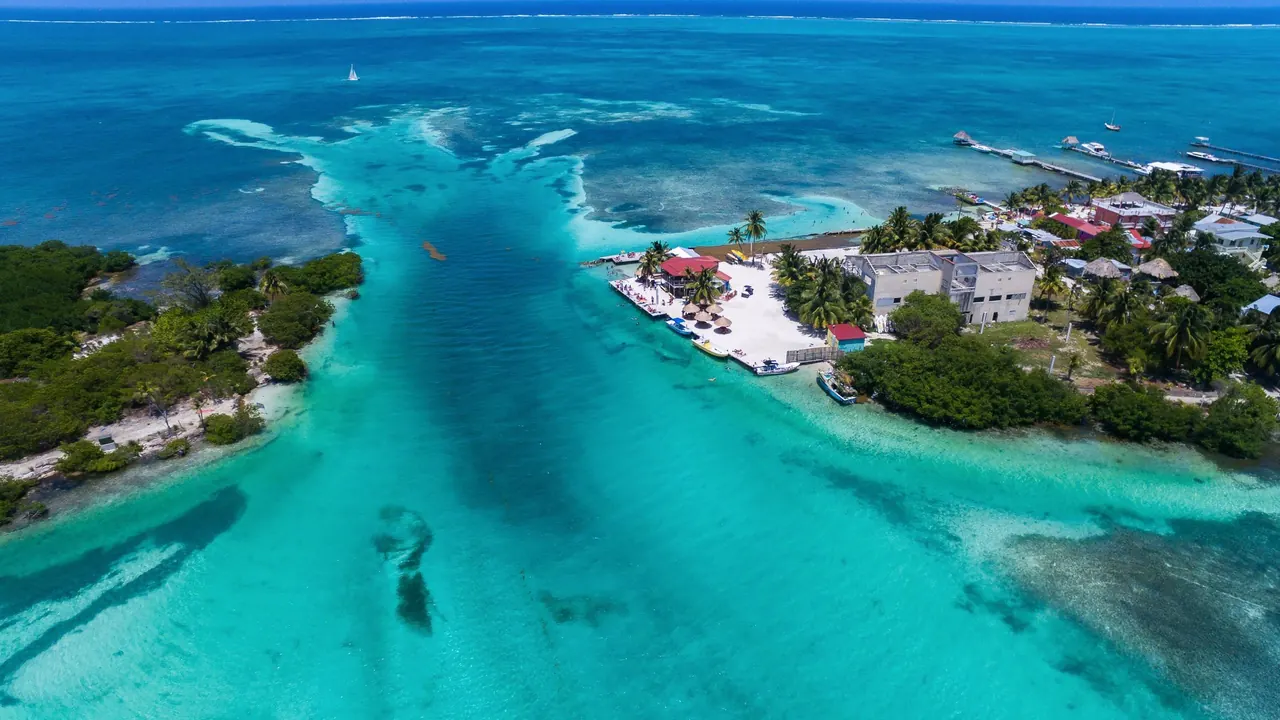
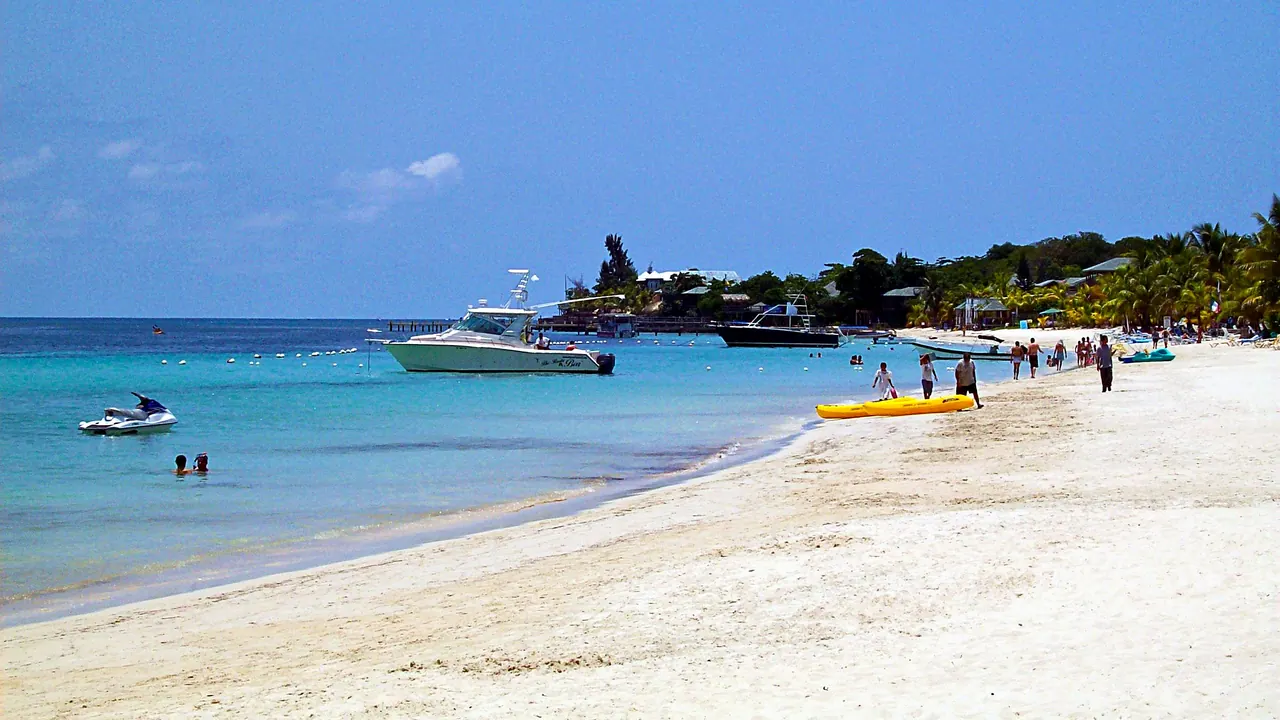
Photos: Caye Caulker by dronepicr, CC BY 2.0, cropped; Roatán by Adalberto Hernandez Vega from Copan Ruinas, Honduras, CC BY 2.0, cropped.
Caye Caulker or Roatán?
Our verdict in twelve categories, each scored against the same fixed benchmark cities, and the climate month by month, so you can choose for your trip.
Choose Caye Caulker for
- getting around
- day trips
Caye Caulker suits travellers who want a small, car-free village where everything is a short walk or bike ride away and the days run between a dock, a hammock and a snorkel boat. It is the sociable, barefoot choice for independent travellers who want to swim with rays and nurse sharks, fly out to the Great Blue Hole or kitesurf on the trade wind, and don't mind that the island has no real beach. It also tends to be drier and sunnier around the turn of the year.
Choose Roatán for
- beaches
- families
- food and drink
Roatán is the better pick if a proper beach matters. West Bay gives you soft sand with coral just off the shore, calm shallow water for children, and dive courses that draw people from across the Caribbean. It is the easier island for families, it stretches a budget a little further, and Garifuna cooking and music give it a touch more local character. The cost is a larger island where reaching anything beyond your own base means a taxi or a hired car.
Scoreboard
Twelve categories on one fixed scale from 0 to 100. The shaded stretch is the gap between the two.
Your match
Pick a travel style or drag the sliders, and both match scores follow your weighting.
Wins on getting around and day trips with your weighting.
Wins on beaches and families with your weighting.
What matters to you?
Category by category
What the scores mean for a trip.
Beaches & swimming
Roatán has the beach Caye Caulker lacks. West Bay is a long curve of pale sand with the reef close enough to snorkel from the shore, and Half Moon Bay in West End is a smaller, sheltered alternative. The drawbacks are crowds on cruise-ship days and sand flies at dawn and dusk.
On Caye Caulker the water is just as clear and warm, but the shore is mostly seagrass and rubble. Most swimming happens off docks or at the Split, the channel cut by a hurricane in 1961. The proper sand is on the uninhabited cayes the snorkel boats stop at.
Food & drink
Both islands eat from the sea, with lobster, snapper and conch, but Roatán gives you a little more to explore. Garifuna cooking on the north coast adds tapado and machuca, roadside baleadas make a cheap breakfast, and there are more restaurants in West End and West Bay to get you through a week.
Caye Caulker's best meal is the lobster cooked on the evening grills along Front Street. Fry jacks, stew chicken and panades fill in around it, but the choice is small and starts to repeat after a few days.
Culture & sights
Neither island is a place for sightseeing, and anyone who wants Maya ruins or colonial towns has to go to the mainland. Roatán has slightly more: Punta Gorda, the oldest Garifuna settlement in Honduras, a small museum on pirates and settlers, and the stilt houses of Oak Ridge along a mangrove waterway.
On Caye Caulker the culture is the village itself, with sand streets, painted houses on stilts and fishing families of Creole and Mestizo heritage. There is no museum or monument to visit.
Nightlife
The two are much the same: sunset rum punch, reggae and beach bars, no real clubs and early nights. On Caye Caulker the evening gathers at the Split and then drifts along Front Street. The village is so small that you soon know the crowd by sight.
On Roatán it depends on where you stay. West End's strip of dock bars is the lively one, full of dive instructors and backpackers. West Bay, the beach base, goes quiet after dinner.
Nature & outdoors
Both islands are about the reef, but you meet it in different ways. On Caye Caulker it is reached by boat: snorkel trips to Hol Chan and Shark Ray Alley, manatees in the seagrass, and long full-day outings to the Great Blue Hole and the outer atolls. Kitesurfing on the trade wind adds a sport Roatán doesn't offer, and the island itself is flat scrub.
Roatán's reef starts at the shore. Its coral walls, swim-throughs and wrecks are a few minutes out by boat, and it is a classic place to learn to dive. On land it also has green hills with short forest walks and mangrove channels on the eastern side.
Day trips
Excursions are limited from both, and they lead to different places. From Caye Caulker, Belize City is close enough to put the Maya ruins of Altun Ha within a day, and San Pedro on Ambergris Caye is a short water-taxi ride for a busier town.
Roatán's outings stay at sea: Utila's wooden harbour village and the protected Cayos Cochinos. The great mainland sites such as Copán are out of reach for a day.
Good for families
Roatán is the easier island with children. West Bay's calm, shallow water lets little ones snorkel among fish just off the sand, and the resorts can arrange dolphin encounters, animal parks and zip-lines. Do bring strong repellent, and remember that medical care is basic.
Caye Caulker's lack of cars makes it relaxed for families, and older children who swim well will love the rays. Younger ones have little sand to play on, though, and the Split has a current.
Getting around
On Caye Caulker you do everything on foot or by bicycle. The village is a few flat sand streets long, there are no cars, and the boats leave from the front. The effort goes into getting there: a water taxi or a small plane from Belize City, and another boat for any outing.
Roatán is larger and hillier. West End and West Bay are each walkable and linked by water taxi, but the eastern villages mean minibuses, taxis with the fare agreed in advance, or a hired car or scooter on winding roads that are unlit at night.
Shopping & style
There is very little to buy on either island, so pack what you need. Roatán has a bit more, with hammocks, carved mahogany, Garifuna crafts and a few galleries in West End and by the cruise piers. On Caye Caulker it comes down to a few stalls and gift shops on Front Street selling sarongs, painted signs and jewellery.
Affordability
Neither island is cheap by the standards of its region, because almost everything comes in by boat. Roatán goes a little further on a budget. West End's dive hostels, food stalls and shared minibuses keep daily costs down, and its dive courses are among the most affordable in the Caribbean.
Caye Caulker's hostels and street grills make a simple stay manageable. Its main draws, though, are snorkel tours, dives and Blue Hole flights, and these quickly add up.
Live music & performing arts
Formal performance is missing from both. Roatán has one thing worth seeking out: Garifuna drumming and the fast punta dance, at shows in Punta Gorda and, more authentically, at village celebrations. On Caye Caulker live music means a reggae band in a beach bar or drumming at the Split, which is nice to stumble on but not something to plan around.
Wellness & relaxation
The two are evenly matched, and on both islands the slow pace does more for you than any treatment. Caye Caulker's whole village lives by "go slow", with sand streets, no traffic, waterfront yoga and a few small massage rooms.
Roatán has proper resort spas around West Bay and quiet hammocks over the eastern mangroves. To keep things peaceful, stay away from the western beaches when cruise ships are in port.
When should you go?
Pick your month. The climate figures are measured averages, not a forecast.
Caye Caulker in July
Roatán in July
Daytime high, °C
Rainfall in the month, mm
Where the figures come from
Caye Caulker's temperatures are measured 38 km from the centre, at Belize / Phillip Goldston Intl. Airport.
Caye Caulker has no rain gauge within 25 km of the centre, so its rainfall comes from a gridded climate dataset read at the destination rather than from a gauge further away.
Roatán's temperatures are measured 69 km from the centre, at La Ceiba Airport.
Roatán has no rain gauge within 25 km of the centre, so its rainfall comes from a gridded climate dataset read at the destination rather than from a gauge further away.
Temperature and rainfall are climate normals, averaged over the years shown. Caye Caulker: 1991-2020 normals, Belize / Phillip Goldston Intl. Airport (37.8 km from centre). Roatán: 1991-2020 normals, La Ceiba Airport (69 km from centre).
Both islands are hot in every month, with highs reaching 32°C from May to September. That makes midday walks sticky, though the water is never far away. The sea stays at 26°C or warmer all year, so swimming is never a question of season. Caye Caulker is at its best from February to April, its driest and sunniest stretch, with around 40mm of rain a month and the brightest skies in April. Roatán's good season starts and ends a month later. February there is still fairly wet and grey after the winter rains, and the island is at its driest and sunniest from March to May, with April and May the pick.
The wet seasons fall differently. Caye Caulker gets wetter from June and peaks in October at about 257mm, then eases through December and January, which keep a fair amount of sun. Roatán's summer is a little drier than Caye Caulker's, but from October to January it turns properly wet, with over 400mm in both October and November and the dullest skies of its year. Around Christmas and New Year, Caye Caulker is the safer bet. In July and August, Roatán has slightly less rain.
Which traveller are you?
On a beach and sun trip, Roatán is the island to book. In West Bay you can spend the whole day on the sand with your hotel right behind you, and a boat out to the quieter cays in the east makes a change of scene. Go in spring for the calmest water.
For a trip on a tight budget, Roatán makes the money go further. Its reef is free to anyone with a mask, straight off the beach. On Caye Caulker almost every encounter with coral, rays or sharks means paying for a seat on a boat.
For an outdoors trip spent on the water, Caye Caulker gives you the more varied week. Every dock is a short walk from your bed, so manatees one day, a paddle through the northern mangroves the next and an afternoon of kiting all happen without a taxi.
Before you go
| Measure | Caye Caulker | Roatán |
|---|---|---|
| Official language | English | Spanish |
| Currency | Belize Dollar (BZD) | Lempira (HNL) |
| Sockets | ABG60 Hz | AB110 V, 60 Hz |
| Driving side | Right | Right |
| Time zone | UTC-6 | UTC-6 |
| Emergency number | 911 | Police 199, ambulance 199, fire 198 |
| Main airport | Philip S. W. Goldson International Airport (BZE)29 non-stop destinations | Juan Manuel Gálvez International Airport (RTB)16 non-stop destinations |
| Public holidays this year | 14 days | 11 days |
By the numbers
| Measure | Caye Caulker | Roatán |
|---|---|---|
| Population | 2,729 | 41,831 |
| People per km² | 700 | 327 |
| Swim season, months above 21 °C | 12 months | 12 months |
Where else could you go?
Every comparison below shares a destination with this one, so you can follow Caye Caulker or Roatán somewhere new.
- Ambergris Cayevs Caye Caulker
- Ambergris Cayevs Roatán
- Cozumelvs Caye Caulker
- Riviera Mayavs Caye Caulker
- Isla Mujeresvs Caye Caulker
- Holboxvs Caye Caulker