Photos: Cebu by xiquinhosilva, CC BY 2.0, cropped; Kota Kinabalu by CEphoto, Uwe Aranas, CC BY-SA 3.0, cropped.
Cebu or Kota Kinabalu?
Our verdict in twelve categories, each scored against the same fixed benchmark cities, and the climate month by month, so you can choose for your trip.
Choose Cebu for
- culture and sights
- nightlife
- live music and the arts
Cebu suits travellers who want some history and evening life alongside the tropical side of the trip. It has the old Spanish downtown with Magellan's Cross and the Santo Niño basilica, late bar strips in IT Park and an easy ferry to Bohol for a day out. It is also the drier of the two in the second half of the year.
Choose Kota Kinabalu for
- nature and the outdoors
- beaches
- families
When the landscape is the point, Kota Kinabalu is the better pick. Mount Kinabalu, cloud forest, river rafting and proboscis monkey cruises give it far more to do outdoors, and its island beaches are a short speedboat hop from the centre rather than a slow drive over the bridges. Families and early risers will find the quieter town easier, though anyone after sights or nightlife will run out of things to do in town quickly.
Scoreboard
Twelve categories on one fixed scale from 0 to 100. The shaded stretch is the gap between the two.
Your match
Pick a travel style or drag the sliders, and both match scores follow your weighting.
Too close to call, 1 point apart
Wins on culture and sights and nightlife with your weighting.
Wins on nature and the outdoors and beaches with your weighting.
What matters to you?
Category by category
What the scores mean for a trip.
Beaches & swimming
Kota Kinabalu makes beach days simpler. The Tunku Abdul Rahman islands, Manukan, Sapi and Mamutik among them, are a short speedboat ride from a jetty in the centre, with white sand and coral near the shore. The beaches are small and busy by late morning, and the resorts at Tanjung Aru and Dalit Bay offer a quieter stay.
From Cebu City you first have to cross to Mactan, often slowly, and most of the sand there sits behind resort day passes. Outrigger trips to Nalusuan, Hilutungan and Pandanon reward you with sandbars and snorkelling, but Cebu's best beaches at Moalboal, Malapascua and Bantayan are three hours or more away.
Food & drink
The two eat at much the same level, cheaply and casually at plastic tables, but the emphasis differs. Cebu is pork country. Lechon is the dish people travel for, with puso, ngohiong and evening skewer grills around it, and the seafood comes mostly from the sutukil places on Mactan.
Kota Kinabalu looks to the sea, with live-tank seafood halls and the charcoal grills of the waterfront night market. It also has a noodle culture of its own in the kopitiams, plus Kadazan dishes such as hinava. Neither city has much fine dining beyond the big hotels.
Culture & sights
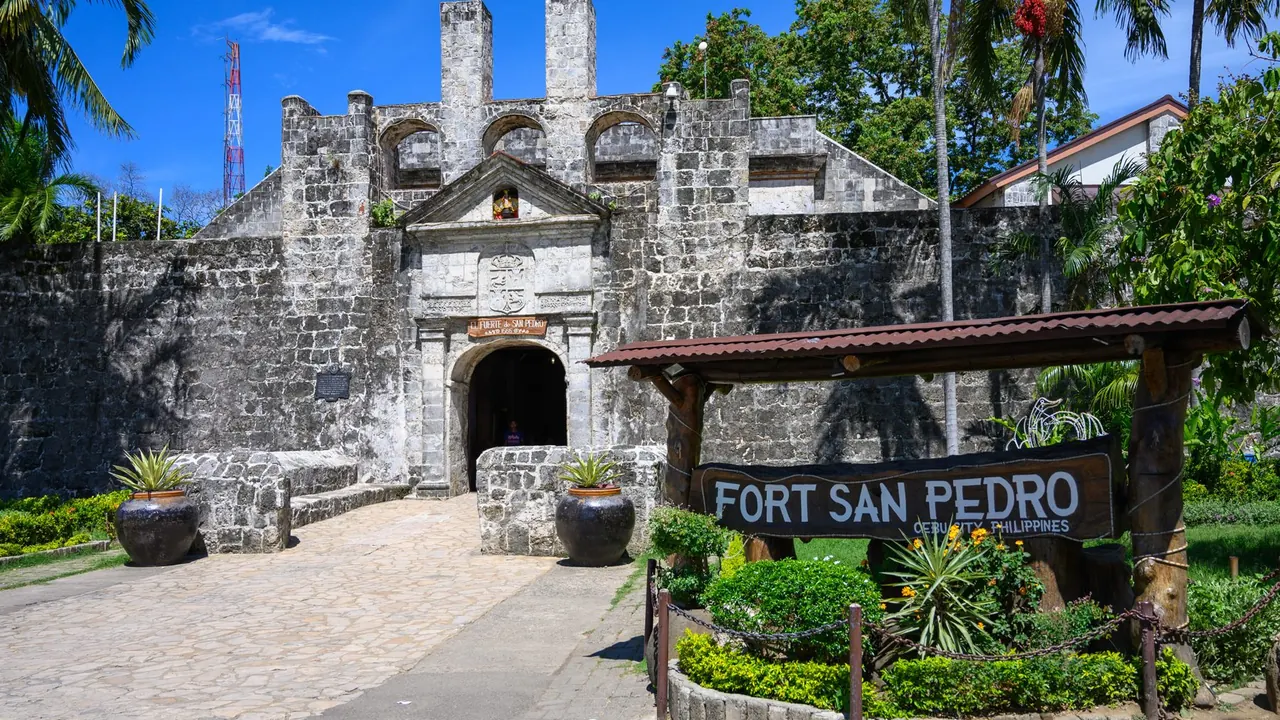
Cebu has more history to show. As the oldest Spanish settlement in the Philippines, it keeps a compact old downtown with Magellan's Cross, the Basilica del Santo Niño, Fort San Pedro and the ancestral houses of Parian, enough for a full day.
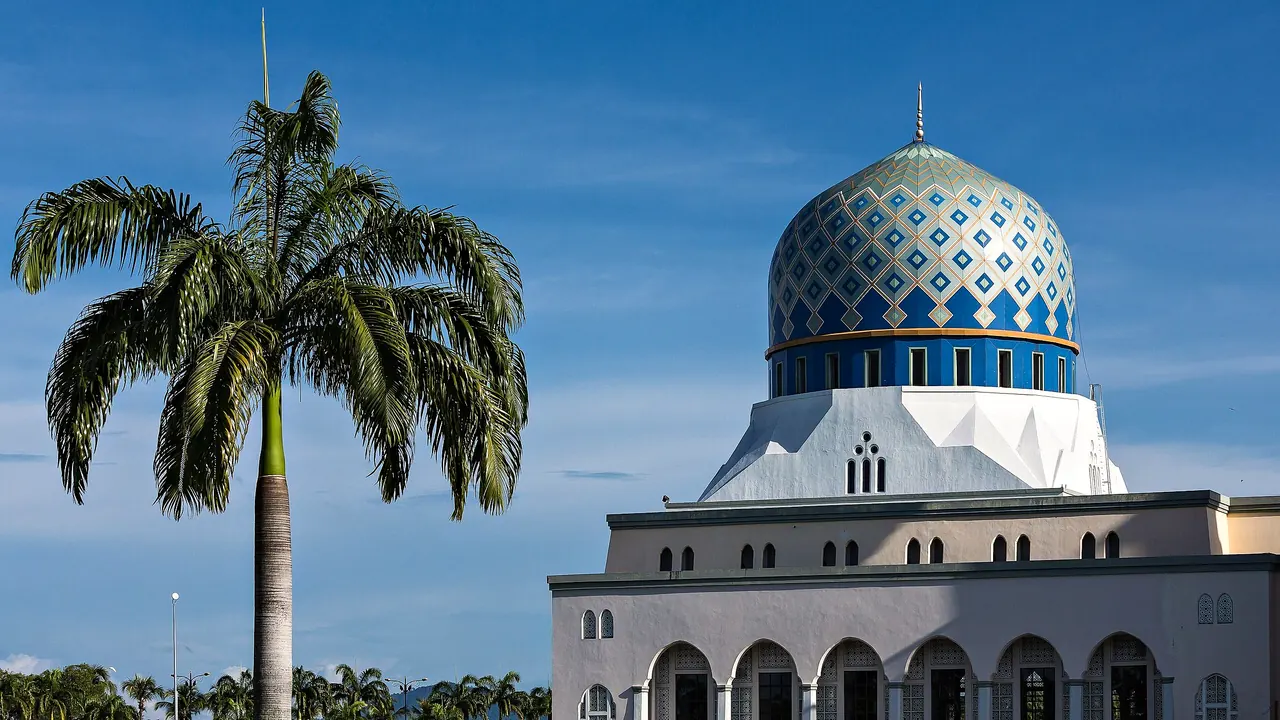
Kota Kinabalu lost most of its old town in 1945. The Sabah Museum, the two mosques and the Atkinson Clock Tower fill half a day, and Borneo's indigenous cultures are better met in the villages outside the city.
Nightlife
Cebu gives you more to do after dinner. IT Park's open-air bars and beer gardens stay busy into the small hours, Mango Avenue has the older clubs, and the Sinulog in January turns the city into a street party. Kota Kinabalu's evenings are shorter: a seafood dinner, a sunset drink on the waterfront and a few live-band bars at weekends, in a town that goes to bed early for its boats and mountain trips.
Nature & outdoors
This is where Kota Kinabalu pulls well ahead. Mount Kinabalu, Borneo's highest peak, is about two hours inland, with a two-day summit climb and one of the richest botanical parks on earth. Closer in there is rafting on the Kiulu and Padas, the Crocker Range, and dusk river cruises to see proboscis monkeys and fireflies.
Cebu's outdoors are good but more scattered. The Busay hills give cool views above the city and Mactan has reef diving, while canyoneering at Kawasan Falls, the sardine shoals off Moalboal and the whale sharks at Oslob are about three hours south and work best with a night away.
Day trips
Cebu has more places to go for the day. The fast ferry to Bohol makes a full outing, and the road south passes the colonial town of Carcar and a string of Spanish-era coral-stone churches. Lapu-Lapu's shrine and Olango are close at hand, though traffic stretches every journey.
From Kota Kinabalu, excursions head mostly into the landscape rather than to other towns. Its best outings are the Sunday market at Kota Belud and the slow colonial railway south to Papar and Beaufort, and the tribal villages near town feel staged.
Good for families
Kota Kinabalu is the easier town with children. The island beaches have shallow water a short boat ride away, Lok Kawi Wildlife Park has orangutans and pygmy elephants, and the city has a relaxed pace, though pavements are poor and the mountain drives are long and winding.
Cebu welcomes children just as warmly but works best from a Mactan resort with a snorkelling boat day. The city itself is hard going, with heavy traffic and few pavements, and Cebu Ocean Park and the malls are the main escapes from the heat.
Getting around
Neither city has a metro, and in both you will rely on cheap taxis and ride-hailing apps. Kota Kinabalu is the easier of the two, because its waterfront core, Gaya Street, the markets and the island jetty are all within walking distance of one another.
Cebu's gridlock is worse, especially on the bridges to Mactan and the airport. Its walkable patches, downtown, IT Park and Ayala, are cut off from each other by stressful roads.
Shopping & style
Shopping in Cebu mostly means vast air-conditioned malls around Ayala Center, SM City and the seafront SM Seaside, but its local side is what puts it ahead. Carbon Market is the city's oldest working market and the Taboan stalls sell dried fish and squid. On Mactan, family workshops build guitars and ukuleles from local wood, which makes a more unusual thing to carry home.
Kota Kinabalu gives you less to fill a day of browsing. Its highlights are the Sunday street market on Gaya Street, with orchids, rattan and batik, and the waterfront handicraft market for pearls, shell work and Borneo beadwork. Neither city has much of a designer or boutique scene.
Affordability
Both are cheap day to day, and in both the money goes on extras rather than meals and taxis. In Cebu the costs jump with Mactan resorts, private boats and trips south. In Kota Kinabalu they come from the Kinabalu climb with its permits, guides and hut, plus diving, rafting and marine park fees, so your bill depends on which of these you book.
Live music & performing arts
Neither city is a place for theatre or concerts, but Cebu has the bigger spectacle: in January the Sinulog fills the streets with costumed dance contingents, and its bar singers are often excellent. In Kota Kinabalu the traditional dances are mostly staged for visitors, and the Kaamatan harvest festival in Penampang is the real chance to hear gong ensembles and bamboo bands played for local people.
Wellness & relaxation
Cebu is the better bet for massage. Hilot and neighbourhood massage houses are part of everyday life, and the Mactan resorts have full spas and quiet pool decks, even if the city itself is loud and tiring.
Kota Kinabalu has a slower pace, cheap foot reflexology and resort spas at Tanjung Aru and Dalit Bay. The open-air sulphur tubs of Poring Hot Springs are its one distinctive soak, but they are a long drive away and best kept for after the climb.
When should you go?
Pick your month. The climate figures are measured averages, not a forecast.
Cebu in July
Kota Kinabalu in July
Daytime high, °C
Rainfall in the month, mm
Temperature and rainfall are climate normals, averaged over the years shown. Cebu: 1991-2020 normals, Mactan (7.1 km from centre). Kota Kinabalu: 1991-2020 (sunshine 1981-2010) normals, Kota Kinabalu (5.3 km from centre).
Both cities are hot all year, with daytime highs never far from 30°C, so the choice comes down to rain rather than temperature, and the sea is warm enough to swim in every month. Cebu has the longer dry spell. February to May is its best stretch, with April the driest at around 50mm, though May is also the hottest month for walking downtown. Rain builds from June, stays heavy through October and returns in December.
Kota Kinabalu's dry window is shorter and earlier, roughly January to April, and March and April also bring its sunniest days. From May the rain climbs steeply and peaks in October at about 381mm, far wetter than anything Cebu gets, so a late-year trip built around boat days and mountain plans is the riskier bet there. If your dates fall between June and December, Cebu is the drier of the two.
Which traveller are you?
On an outdoors trip, Kota Kinabalu is the clear choice. The two-day climb of Mount Kinabalu, cloud-forest trails, whitewater rafting and proboscis monkey cruises are all within a few hours, whereas Cebu's best adventures need a long drive south and a night away.
For a culture and arts trip, Cebu gives you more. Its compact Spanish-era downtown, the basilica's daily devotion, the Parian ancestral houses and the Sinulog dancing outweigh Kota Kinabalu's museum and mosques, which take only half a day after the wartime bombing.
On a beach and sun trip, Kota Kinabalu is easier. Its marine park islands are a short speedboat ride from the centre, with coral close to the sand, while Cebu's swimming starts across traffic-bound bridges and its finest beaches lie three hours away.
Before you go
| Measure | Cebu | Kota Kinabalu |
|---|---|---|
| Official language | English, Filipino, Taglish | Malay |
| Currency | Philippine Peso (PHP) | Malaysian Ringgit (MYR) |
| Sockets | ABC220 V, 60 Hz | G240 V, 50 Hz |
| Driving side | Right | Left |
| Time zone | UTC+8 | UTC+8 |
| Emergency number | 911 | 999 |
| Elevation | 135 m | 5 m |
| Main airport | Mactan Cebu International Airport (CEB)9 km from centre42 non-stop destinations | Kota Kinabalu International Airport (BKI)5 km from centre37 non-stop destinations |
| Public holidays this year | 18 days | - |
By the numbers
| Measure | Cebu | Kota Kinabalu |
|---|---|---|
| City population | 965,332 | 452,058 |
| People per km² | 3,065 | 1,284 |
| Museums within 10 km | 5 | 3 |
| UNESCO World Heritage sites within 50 km | 0 | 0 |
| Swim season, months above 21 °C | 12 months | 12 months |
Where else could you go?
Every comparison below shares a destination with this one, so you can follow Cebu or Kota Kinabalu somewhere new.
- Davaovs Cebu
- El Nidovs Cebu
- Puerto Princesavs Kota Kinabalu
- Puerto Princesavs Cebu
- Manilavs Cebu
- El Nidovs Kota Kinabalu