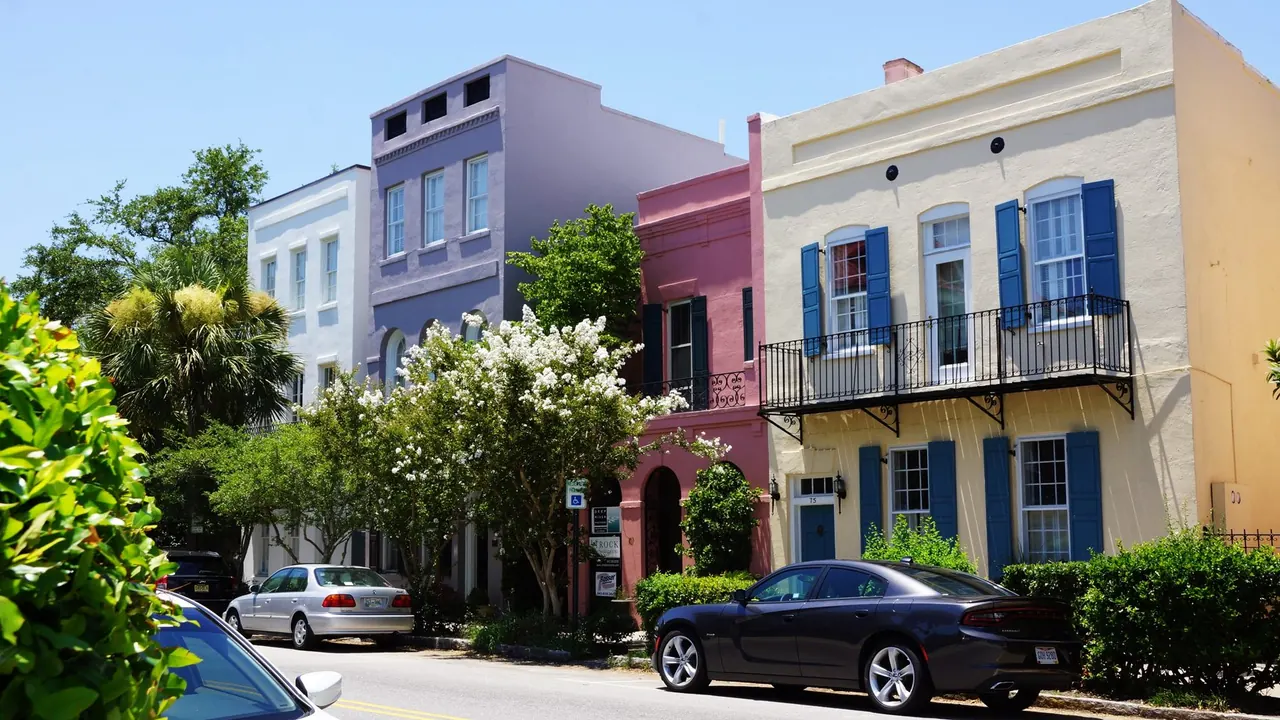
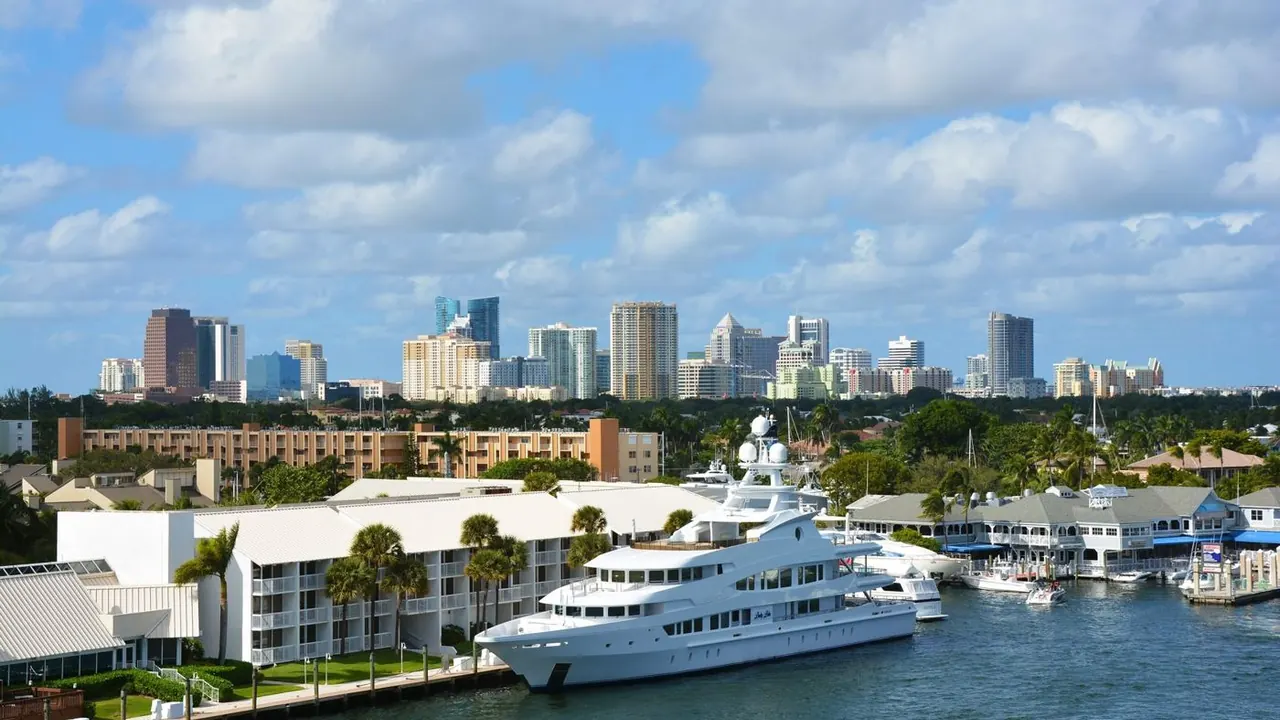
Photos: Charleston by NealVickers, CC BY-SA 4.0, cropped; Fort Lauderdale by KeanoManu, CC BY-SA 4.0, cropped.
Charleston or Fort Lauderdale?
Our verdict in twelve categories, each scored against the same fixed benchmark cities, and the climate month by month, so you can choose for your trip.
Choose Charleston for
- culture and sights
- food and drink
- getting around
Charleston suits travellers who want the trip to be about a place. You can walk the old peninsula south of Broad Street and tour house museums and plantations that face the city's role in the slave trade. You can also eat Lowcountry cooking at a level few towns its size reach. The beaches are close enough for an afternoon, but the town is the reason to come, and it is at its best in spring and autumn.
Choose Fort Lauderdale for
- beaches
- nightlife
- nature and the outdoors
Fort Lauderdale is the better pick when the sea comes first. It has a long, lifeguarded beach in town and water warm enough to swim in during midwinter, which makes it the easier base for a beach or family trip. Canals, reef diving and the Everglades add variety, and Miami is close for a big night or a serious meal. Expect few sights of its own, and you'll need a car for most things beyond the beachfront.
Scoreboard
Twelve categories on one fixed scale from 0 to 100. The shaded stretch is the gap between the two.
Your match
Pick a travel style or drag the sliders, and both match scores follow your weighting.
Wins on culture and sights and food and drink with your weighting.
Wins on beaches and nightlife with your weighting.
What matters to you?
Category by category
What the scores mean for a trip.
Beaches & swimming
Both cities have Atlantic barrier-island beaches, but they work very differently. In Charleston, Folly Beach, Sullivan's Island and Isle of Palms are a drive or a ride out of town. The water is greenish and churned by the tides, and swimming runs from late spring to October.
Fort Lauderdale's wide, pale beach runs right along the town on A1A, with lifeguard towers, often clear water and a sea you can swim in through the winter. Lauderdale-by-the-Sea adds a reef close enough to snorkel from the shore, which Charleston has no answer to.
Food & drink
Charleston is the place for food. Its Lowcountry cooking, rooted in Gullah Geechee and West African traditions, is reason enough to come: shrimp and grits, she-crab soup and oysters roasted in winter. The kitchens along King Street and in the French Quarter take it seriously, though the best tables need booking well ahead.
Fort Lauderdale eats well on grouper, mahi and stone crab at dockside shacks on the Intracoastal, and the Jamaican, Haitian and Cuban kitchens inland are worth seeking out. It has no cooking of its own, though, and visitors who care about food tend to head to Miami for a night.
Culture & sights
The gap here is wide. In Charleston the whole historic peninsula is the sight, from Rainbow Row and the Battery to the Nathaniel Russell and Aiken-Rhett houses. Add Fort Sumter in the harbour and museums that deal directly with the slave trade, and it fills two or three days.
Fort Lauderdale is a much younger city. It offers the Bonnet House, the pioneer Stranahan House and the NSU Art Museum, which most visitors see in one day before going back to the water.
Nightlife
Neither town is built for clubbing. Charleston's evenings centre on upper King Street: rooftop bars, cocktail rooms and oyster bars, packed with students and weekend groups. There are quieter taverns in the French Quarter, and most places close by about 2am.
Fort Lauderdale gives you more of a night out. The beach bars on A1A fill from late afternoon and Himmarshee Street runs late for a young crowd. Wilton Manors, one of the country's best-known gay neighbourhoods, has a row of bars and drag shows along Wilton Drive, and Miami is close for anything bigger.
Nature & outdoors
Both are flat coastal country where the best of the outdoors is on the water. Charleston's is Lowcountry marsh. You can kayak tidal creeks where dolphins often appear, walk under live oaks in the Francis Marion National Forest and see alligators in the ACE Basin, ideally in spring or autumn before the mosquitoes.
Fort Lauderdale has rather more to do. Its canals and the Intracoastal suit paddling, the reefs and sunk wrecks offshore give proper scuba diving close to shore, and sport fishing is taken seriously. The Everglades, with airboats and sawgrass marsh, are less than an hour west.
Day trips
The two are about even here, but the outings differ in kind. Charleston's are about history and all need a car: the Ashley River plantations such as Middleton Place and Drayton Hall, McLeod Plantation, Beaufort and the Gullah sea islands, and Savannah about two hours away.
Fort Lauderdale's best day out is a city. Miami is reachable by fast train, Palm Beach's Flagler Museum and Worth Avenue lie to the north, and Key Largo is a long but possible day. Old heritage towns are scarce.
Good for families
Charleston works well with school-age children. The South Carolina Aquarium, the aircraft carrier at Patriots Point and the boat to Fort Sumter all appeal to them. The drawbacks are that house tours bore younger children and the beaches are a drive away.
Fort Lauderdale is slightly easier, mostly because the warm, gentle, lifeguarded water is right in town. The Museum of Discovery and Science and an airboat ride among Everglades alligators round it out. In both cities, summer afternoons are hard on small children.
Getting around
Charleston is the easier place to manage without a car, at least in the centre. The historic peninsula is flat and compact, with most of what visitors want within about 3km on foot, and pedicabs and a free shuttle fill the gaps. The beaches and plantations still mean driving.
Fort Lauderdale's walkable triangle of beach, Las Olas and the New River is linked by water taxis and trolleys. Beyond it, the city spreads out along hot, wide roads. Its one advantage is the rail link to Miami and the Palm Beaches.
Shopping & style
Charleston's King Street is the more rewarding street to walk, because it changes as you go: antiques dealers and galleries at the lower end, national fashion brands in the middle and independent boutiques and design shops at the top. The City Market is mostly souvenirs, but it is also where Gullah artisans weave and sell sweetgrass baskets, the city's own craft.
Fort Lauderdale's Las Olas is shallower, a palm-shaded run of swimwear, resort fashion and galleries for an unhurried afternoon. Its real pull is the huge outlet mall out west in Sunrise, a draw for bargain hunters that Charleston lacks. Real luxury shopping is missing in both, and from Fort Lauderdale it means a trip to Palm Beach or Miami.
Affordability
Charleston is at its dearest on spring and autumn weekends, when the inns on the historic peninsula push their rates even higher, and its well-known restaurants charge big-city prices all year. Staying across the bridge in Mount Pleasant cuts the room bill but adds a daily drive, and taxis, parking and paid house and plantation tours add up.
Fort Lauderdale peaks in winter, when visitors from the cold north fill the beachfront hotels, and the hot, stormy summer is when room rates fall well back. Self-catering apartments and older motels a few blocks back from the sand keep costs down in any season. Overall the two cost about the same, and in each the beach and the walking are free.
Live music & performing arts
The two are evenly matched but work to different calendars. Charleston's high point is Spoleto Festival USA and Piccolo Spoleto every late spring, with opera, chamber music and dance across the town. The rest of the year relies on the historic Dock Street Theatre, the symphony at the Gaillard Center, and Gullah storytelling and song.
Fort Lauderdale is steadier through the year, with touring Broadway shows, ballet and concerts at the Broward Center on the New River. It has no resident company of note, though, and classical audiences go to Miami.
Wellness & relaxation
Neither has a bathing tradition, and in both, spa time means resort and hotel spas: out on Kiawah near Charleston, along the beachfront and Las Olas in Fort Lauderdale. What differs is the kind of calm. Charleston offers shaded gardens, church courtyards and evenings at White Point Garden, while Fort Lauderdale offers sunrise yoga on the sand and slow winter mornings on the promenade.
When should you go?
Pick your month. The climate figures are measured averages, not a forecast.
Charleston in July
Fort Lauderdale in July
Daytime high, °C
Rainfall in the month, mm
Temperature and rainfall are climate normals, averaged over the years shown. Charleston: 1991-2020 normals, Charleston Airport (16.1 km from centre). Fort Lauderdale: 1991-2020 normals, Fort Lauderdale (7.1 km from centre).
Charleston has four clear seasons. Winter days are cool, around 16°C in January, and for most swimmers the sea stays too cold until May. From June to September it is hot and humid, with the Atlantic near 28°C but heavy rain and sticky heat that make midday walking hard work. April, May, October and early November are the best months: warm enough for the streets, and at either end of that stretch, warm enough for the beach too.
Fort Lauderdale is never cold. Winter highs sit in the mid-twenties, the sea stays above 25°C, and December to April is also the dry season. From May to October the rain comes in heavy bursts, peaking at about 219mm in June, and the heat is steady through the summer. For a beach trip between late autumn and spring it is clearly the better choice. For walking an old town in mild weather, Charleston in spring or autumn wins.
Which traveller are you?
On a beach and sun trip, Fort Lauderdale wins easily. The sand is on the doorstep rather than a drive away, the water is warm and often clear all year, and the reef at Lauderdale-by-the-Sea offers snorkelling from shore that Charleston's tidal water cannot match.
For a culture and arts trip, Charleston is much the stronger choice. Its Georgian and antebellum streets, house museums, Fort Sumter and the International African American Museum fill several days, and Spoleto adds a festival season. Fort Lauderdale's sights take a single day.
For a short city break, Charleston again makes more sense. The historic peninsula is compact and flat, so you can cover the sights, the King Street shops and some fine Lowcountry tables on foot in a weekend, without the car Fort Lauderdale mostly needs.
Before you go
| Measure | Charleston | Fort Lauderdale |
|---|---|---|
| Currency | US Dollar (USD) | US Dollar (USD) |
| Sockets | AB120 V, 60 Hz | AB120 V, 60 Hz |
| Driving side | Right | Right |
| Time zone | UTC-5, UTC-4 in summer | UTC-5, UTC-4 in summer |
| Emergency number | 911 | 911 |
| Elevation | 6 m | 11 m |
| Main airport | Charleston International Airport (CHS)16 km from centre56 non-stop destinations | Fort Lauderdale Hollywood International Airport (FLL)7 km from centre136 non-stop destinations |
| Public holidays this year | 12 days | 11 days |
By the numbers
| Measure | Charleston | Fort Lauderdale |
|---|---|---|
| City population | 150,227 | 182,760 |
| People per km² | 532 | 1,829 |
| Museums within 10 km | 19 | 6 |
| UNESCO World Heritage sites within 50 km | 0 | 0 |
| Swim season, months above 21 °C | 6 months | 12 months |
Where else could you go?
Every comparison below shares a destination with this one, so you can follow Charleston or Fort Lauderdale somewhere new.