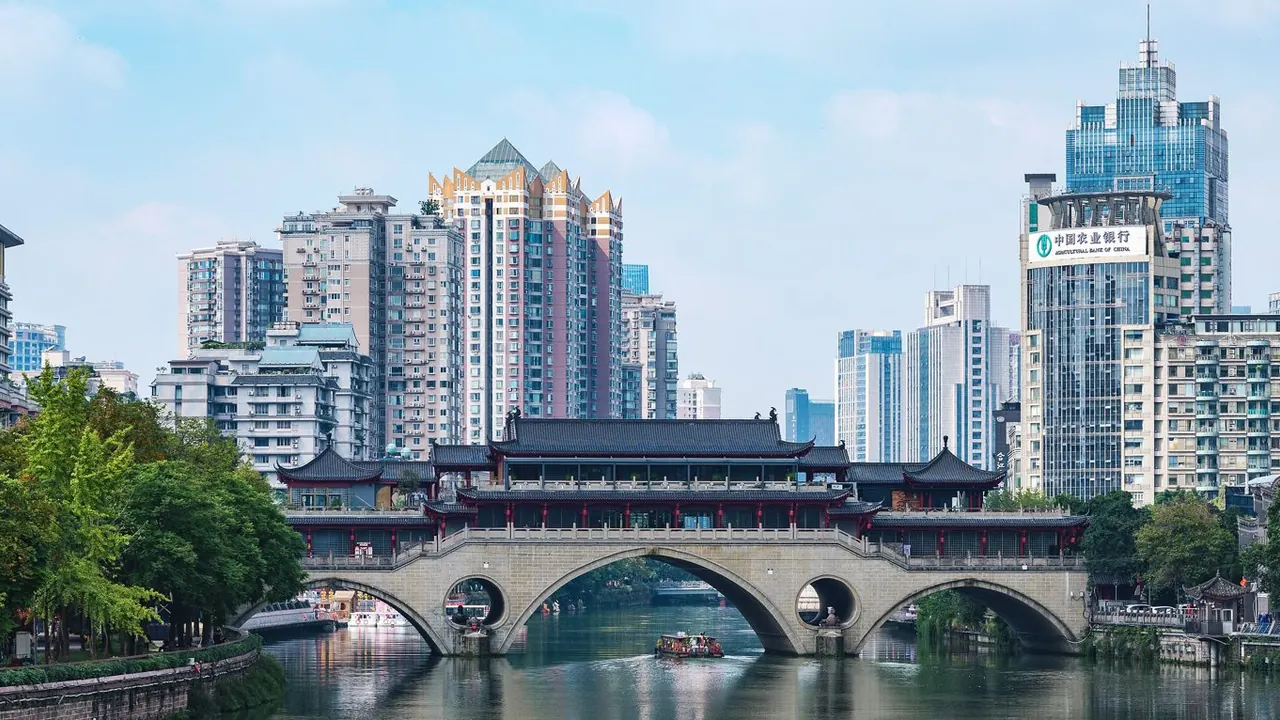
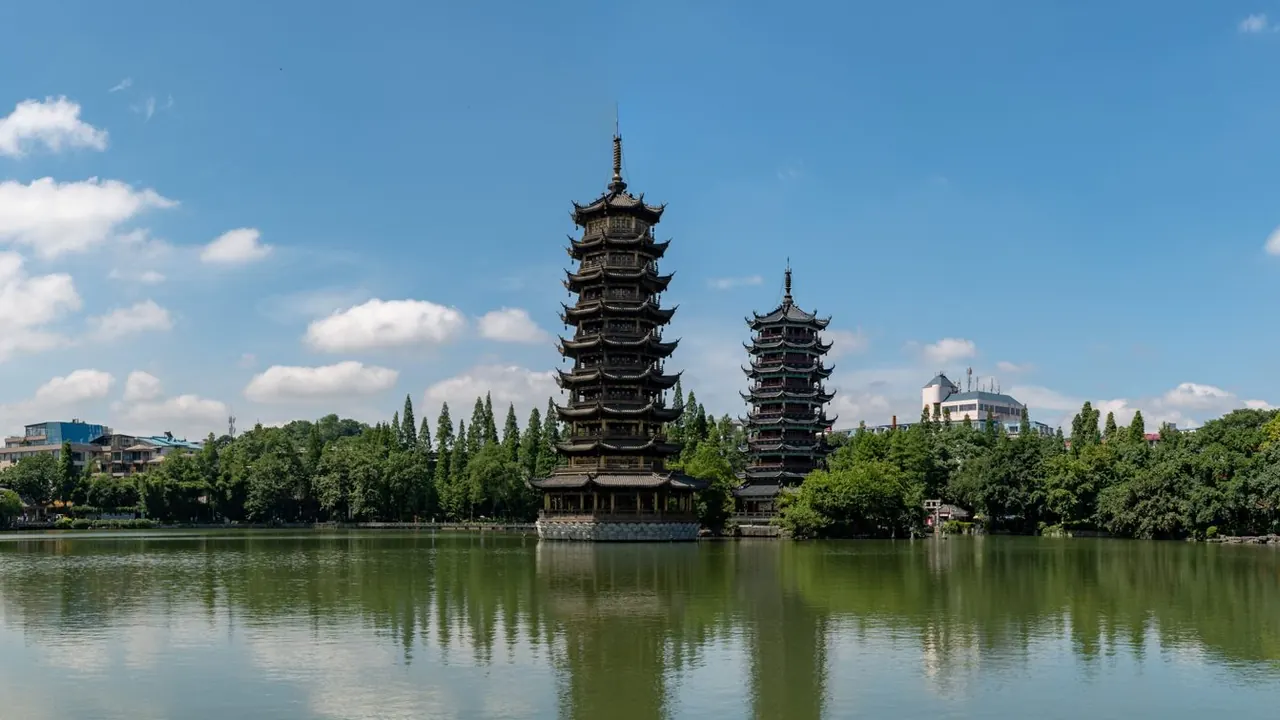
Photos: Chengdu by TurnOnTheNight, CC BY-SA 4.0, cropped; Guilin by xiquinhosilva, CC BY 2.0, cropped.
Chengdu or Guilin?
Our verdict in twelve categories, each scored against the same fixed benchmark cities, and the climate month by month, so you can choose for your trip.
Choose Chengdu for
- food and drink
- nightlife
- shopping
Chengdu is the better pick for a trip built around eating and evenings out. Sichuan cooking is reason enough to go, nights run late over hotpot and skewers, the metro makes a huge city manageable, and the Leshan Giant Buddha, Sanxingdui and the Qingcheng trails are all within a day's reach. Families also get the panda base.
Choose Guilin for
- nature and the outdoors
- beaches
Guilin suits travellers who come for the landscape rather than the city. The karst peaks along the Li River, the rafts on the Yulong, the cycling lanes around Yangshuo and the Longji terraces give it scenery Chengdu cannot match, but its food, sights and nightlife are thin. Treat it as a slow, outdoor trip, ideally with some nights in the countryside outside Yangshuo.
Scoreboard
Twelve categories on one fixed scale from 0 to 100. The shaded stretch is the gap between the two.
Your match
Pick a travel style or drag the sliders, and both match scores follow your weighting.
Wins on food and drink and nightlife with your weighting.
Wins on nature and the outdoors and beaches with your weighting.
What matters to you?
Category by category
What the scores mean for a trip.
Beaches & swimming
Neither city has a coast, so neither suits a beach trip, and the small difference is in how you cool off. In Chengdu that means hotel pools and leisure water parks in the summer heat. Around Yangshuo you can wade into the Yulong and Li rivers or slip off a bamboo raft where the water is calm. In both cases, sea and sand need a separate leg of the journey.
Food & drink
This is the widest gap between the two cities. Chengdu is the home of one of China's great regional cuisines. You can eat beef-tallow hotpot, dan dan noodles and cold dishes in red oil, but also milder smoky and sweet-and-sour dishes, with family counters in every lane and tea in the park teahouses.
Guilin has a few good things to eat. The main ones are mifen rice noodles at breakfast, river snails in chilli and Yangshuo's beer fish. After a couple of days the choice runs out, and many restaurants near the sights cater to tour groups.
Culture & sights
Neither is a great historic city, but Chengdu has more to see. Its sights include the Wuhou Shrine, the Du Fu Thatched Cottage, the working Wenshu Monastery and Qingyang Palace, and the Jinsha gold and jade, enough for three or four days.
Most of Guilin's sights are landscape turned into parks, such as Elephant Trunk Hill and the brightly lit Reed Flute Cave. Its real history is the walled Ming palace around Solitary Beauty Peak and the calligraphy carved into the cliffs at Longyin Cave, and a day or two covers it all.
Nightlife
Chengdu is the clear choice for a night out. A long dinner leads on to the neon-lit bars and clubs at Jiuyanqiao, quieter cocktail and craft-beer spots in Yulin, and snack streets open well past midnight. The mood is sociable rather than edgy.
An evening in Guilin means a walk by the lit-up lakes, then skewers and a beer near Zhengyang Street. West Street in Yangshuo is louder, but it is a strip for tourists rather than a real nightlife scene.
Nature & outdoors
This is where Guilin pulls well ahead, because the scenery is the point of going. Karst peaks rise straight from the plain along the Li River. The river cruise, rafting on the Yulong, flat cycling lanes and some of Asia's best-known sport climbing all happen among them, and the Longji terraces are two hours north.
Chengdu itself sits on the flat, hazy floor of a basin, and its good walking is out of town, on Qingcheng Mountain's forested trails and the long climb up Emeishan. Those make fine days, but you travel to them rather than seeing them from your window.
Day trips
Chengdu is the better base for a run of different days out. The Leshan Giant Buddha is about an hour away by fast train, Dujiangyan's ancient irrigation works pair well with Qingcheng Mountain, and Sanxingdui's bronze masks lie to the north. The old market towns like Pingle and the hillside city of Chongqing add more variety.
Guilin's outings mostly share one theme, river villages and scenery. They take in Yangshuo, the stone lanes of Xingping, old Daxu, the ancient Lingqu Canal and the Zhuang and Yao villages among the terraces. They are lovely but less varied.
Good for families
Chengdu has the bigger draw for children in its panda base, best visited early in the morning. It also has a zoo, an aquarium park and amusement parks, and the metro takes the strain out of the distances. Food that is spicy by default and the muggy summers are the main difficulties.
In Guilin, children enjoy the coloured caves and especially bamboo rafting, and older ones can cycle around Yangshuo. Little else is designed for families, though, English is scarce, and a hired driver is often the easiest way to manage.
Getting around
Chengdu has an extensive metro with English signs that reaches the panda base, the airports and the rail stations. That matters in a city where the sights sit far apart. Guilin has no metro, but its centre around the rivers and lakes is compact enough to walk, and cheap taxis cover the rest.
Getting out of Guilin is the harder part. Yangshuo takes a train plus a transfer or a river cruise, and the terraces are a long drive on winding roads. In both cities, set up Chinese payment and ride-hailing apps before you arrive.
Shopping & style
Chengdu is a real shopping city. The malls on Chunxi Road are among the busiest in western China, and there is a quarter of traditional-style buildings by the Daci Temple. For gifts, look for Shu brocade, Sichuan pepper and mountain green teas.
Guilin is for small souvenirs: jars of chilli sauce, osmanthus tea and sweets, Sanhua rice liquor, and Zhuang and Yao embroidery from the villages.
Affordability
Both cities are very cheap compared with Western destinations, and the difference is in where the money goes. In Chengdu, hotels and neighbourhood meals cost little, and many temples and museums are free or cheap. Your spending rises on hotpot, cocktails and train fares to the day-trip sights.
Guilin's noodles, taxis and countryside guesthouses are just as easy on the wallet, but more of its sights charge entry. Over a full itinerary, the river cruise, the caves and the hill parks add up.
Live music & performing arts
Chengdu has the wider range of performances. Sichuan opera variety shows with face-changing and fire-spitting run every night, and the livehouses host indie bands, folk and the city's Sichuan-dialect hip-hop. The formal concert scene is modest.
Guilin's performances are big shows made for visitors. The best known is Impression Liu Sanjie, staged in the open air on the Li River at Yangshuo with the peaks lit up behind it, and there are also acrobatics and occasional Gui opera. Beyond that, there is little live music.
Wellness & relaxation
In Chengdu, relaxing is part of daily life even in the middle of the city. People spend long afternoons in bamboo chairs at the teahouses in People's Park, and ear cleaning and cheap massage are on almost every street. There are hot springs in the hills towards Qingcheng.
Guilin has the same cheap massage and the Longsheng hot springs near the terraces, but the city is noisy and full of tour groups in season. To relax there you have to leave town and stay among the rice fields outside Yangshuo.
When should you go?
Pick your month. The climate figures are measured averages, not a forecast.
Chengdu in July
Guilin in July
Daytime high, °C
Rainfall in the month, mm
Temperature and rainfall are climate normals, averaged over the years shown. Chengdu: 1991-2020 normals, Chengdu (4.5 km from centre). Guilin: 1991-2020 normals, Guilin (7.6 km from centre).
Chengdu is best for walking in spring and autumn, from April to May and again from late September through October, when days are warm without the summer weight. July and August reach 31°C and are humid, with the heaviest rain in August at about 211mm. Winter is cool and almost dry, though grey. Sunshine is scarce all year and lowest in December and January.
Guilin runs a few degrees warmer and is far wetter. Its rains come early, building from March to a peak of 442mm in June, so late spring is the soggiest time to be on the river. July and August are hotter than in Chengdu, at 33°C. October and November are the best months, drier and still warm, which suits the cruise, cycling and the terraces. Neither city has beach weather in any useful sense, although Guilin's summer heat makes a river dip around Yangshuo welcome.
Which traveller are you?
For a food and nightlife trip, pick Chengdu. Dinner there is the night out, and skewers simmered in broth, spicy rabbit head and sweet tangyuan keep coming well past midnight. Guilin's kitchen is a short repertoire, and its evenings wind down early.
On an outdoors trip, Chengdu's best walking means a full day out and, on Emeishan, real stamina, so Guilin is the better pick. Most of its scenery sits at river level or on the flat, so walkers of every ability can spend each day among the peaks.
On a family trip with children, Chengdu is easier because it has fallbacks. On a wet or tiring day you can switch to the aquarium park or a big park full of local families. Almost everything Guilin offers is outdoors, and its early summer is very wet.
Before you go
| Measure | Chengdu | Guilin |
|---|---|---|
| Official language | Putonghua | Putonghua |
| Currency | Yuan Renminbi (CNY) | Yuan Renminbi (CNY) |
| Sockets | ACI220 V, 50 Hz | ACI220 V, 50 Hz |
| Driving side | Right | Right |
| Time zone | UTC+8 | UTC+8 |
| Emergency number | Police 110, ambulance 120, fire 119 | Police 110, ambulance 120, fire 119 |
| Elevation | 500 m | 153 m |
| Main airport | Chengdu Shuangliu International Airport (CTU)16 km from centre77 non-stop destinations | Guilin Liangjiang International Airport (KWL)25 km from centre43 non-stop destinations |
| Public holidays this year | 6 days | 6 days |
By the numbers
| Measure | Chengdu | Guilin |
|---|---|---|
| City population | 20,937,757 | 4,931,137 |
| People per km² | 1,456 | - |
| Museums within 10 km | 10 | 1 |
| UNESCO World Heritage sites within 50 km | 0 | 1 |
Where else could you go?
Every comparison below shares a destination with this one, so you can follow Chengdu or Guilin somewhere new.