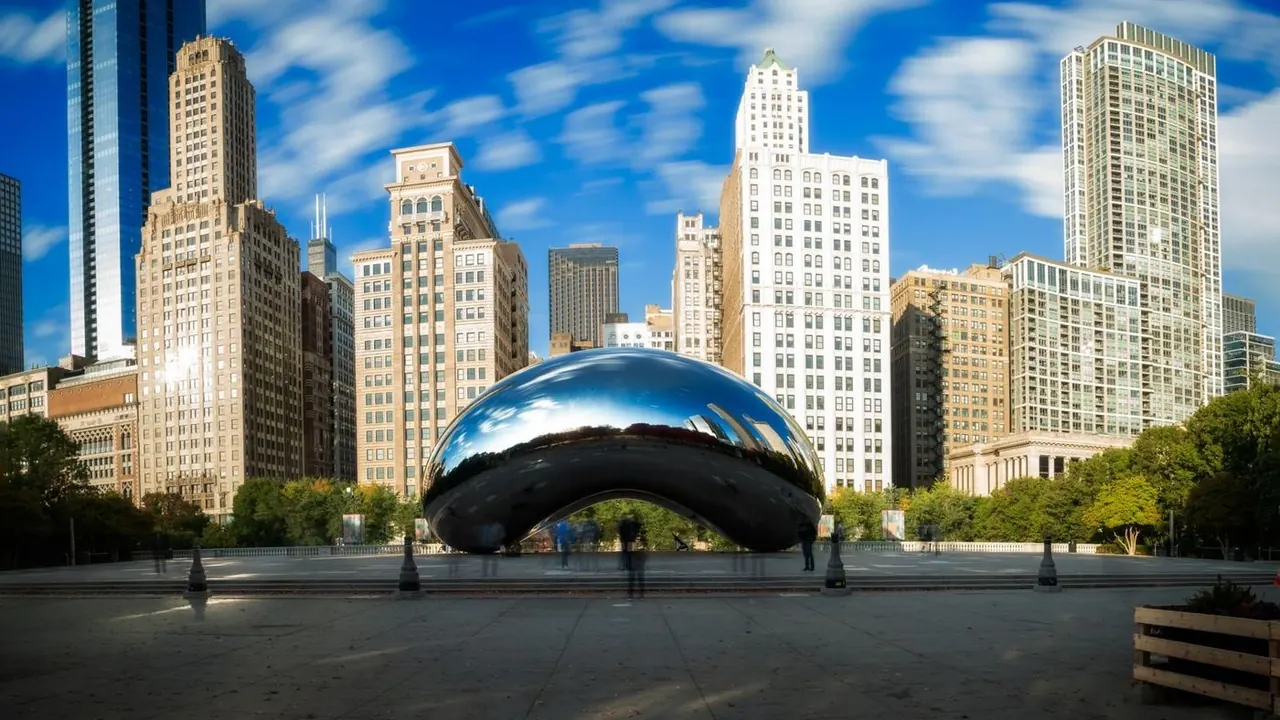
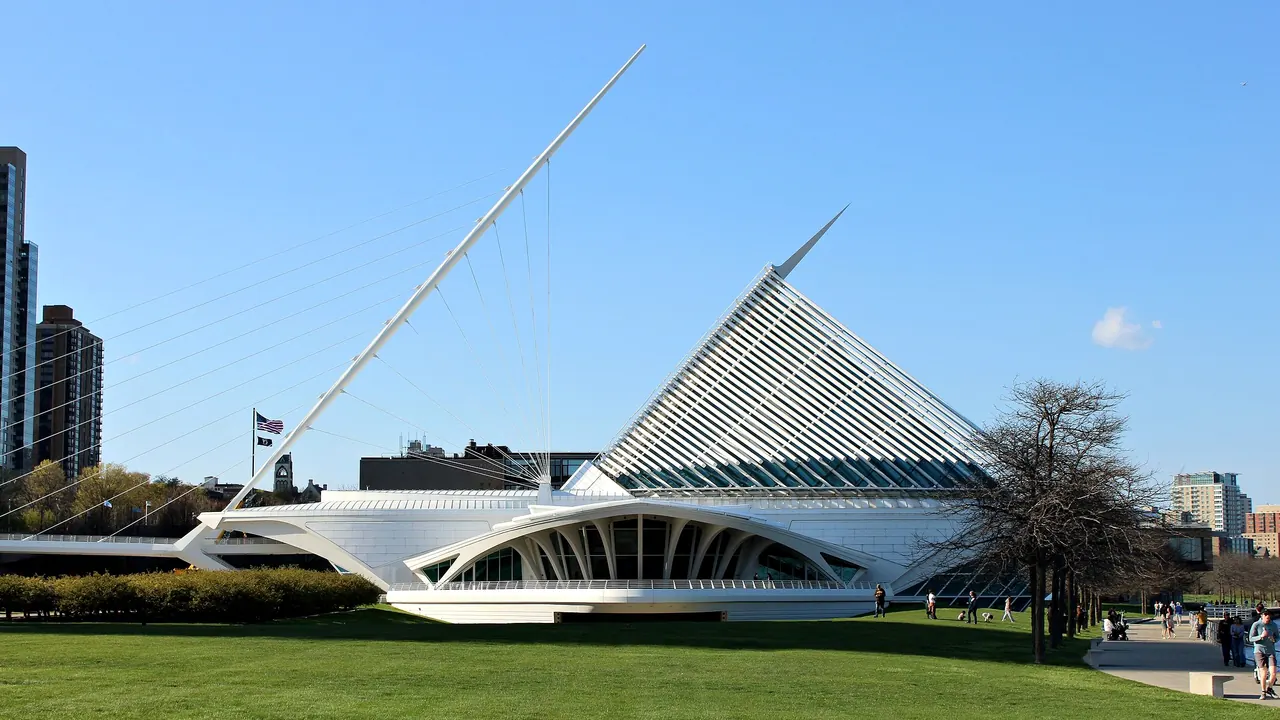
Photos: Chicago by Jesus Toledo, Pexels License; Milwaukee by Michael Barera, CC BY-SA 4.0, cropped.
Chicago or Milwaukee?
Our verdict in twelve categories, each scored against the same fixed benchmark cities, and the climate month by month, so you can choose for your trip.
Choose Chicago for
- shopping
- getting around
- culture and sights
Chicago is the stronger choice for most city vacations. It has great museums, architecture worth days of looking up, a serious restaurant and theatre scene and bars that stay open late. The trains mean you never need a car, and families have the Museum Campus and the Museum of Science and Industry. The main drawback is the bill, which runs high.
Choose Milwaukee for
- day trips
- prices
- nature and the outdoors
Milwaukee suits a slower and cheaper trip built around corner taverns, the Friday fish fry, the lakefront and summer festivals, Summerfest above all. It is also the better base for short outings to places like Cedarburg, Kohler and Madison. Chicago is a short train ride away, so you can see the bigger city for a day without paying to sleep there. Plan on a car for anything beyond the centre.
Scoreboard
Twelve categories on one fixed scale from 0 to 100. The shaded stretch is the gap between the two.
Your match
Pick a travel style or drag the sliders, and both match scores follow your weighting.
Wins on shopping and getting around with your weighting.
Wins on day trips and prices with your weighting.
What matters to you?
Category by category
What the scores mean for a trip.
Beaches & swimming
Both cities sit on the same freshwater lake and have the same short swimming season, from late June to early September. Chicago simply has much more shoreline to use: over twenty city beaches, from Oak Street's sand beneath the Gold Coast towers to the volleyball strand at North Avenue and quieter Montrose.
Milwaukee's beach life is mostly Bradford Beach below the East Side bluffs, with cabanas and a weekend crowd, plus smaller stretches at McKinley and South Shore. Its water also runs a little colder. In neither city is the beach the reason to go, but Chicago gives you more choice on a hot afternoon.
Food & drink
Chicago eats at a level Milwaukee does not try to match. It has its own street canon of deep-dish, tavern-cut pizza and Italian beef, a fine-dining tier on Randolph Street in the West Loop, and whole neighbourhoods built around one cuisine, from Pilsen's Mexican kitchens to Devon Avenue and Argyle Street.
Milwaukee's strength is a narrower regional tradition: the Friday fish fry, the wood-panelled supper club, frozen custard, bratwurst and cheese curds, all washed down with local beer. It is a good place to eat for a couple of days and a chance to taste the Upper Midwest, but there are far fewer serious restaurants.
Culture & sights
Chicago is a major architecture city. The Loop is where the skyscraper grew up, Frank Lloyd Wright's houses are in Hyde Park and Oak Park, and the Art Institute and the Museum Campus would fill a week on their own.
Milwaukee's best sight is the Calatrava pavilion of its art museum on the lakefront, with its wing-like sunscreen. The Harley-Davidson Museum and the brewing-era sights add to it, such as the Pabst Mansion, St Josaphat's dome and the cream-brick Third Ward. That makes two or three good days, compared with Chicago's much longer list.
Nightlife
The biggest difference is how late things run. Chicago's late licences keep bars open until 4am, against Milwaukee's 2am. Chicago also has a real club scene in River North, built on the city's history as a birthplace of house music, plus cocktail bars in Wicker Park and Logan Square and the gay district in Northalsted.
Milwaukee's night out is the corner tavern, with old brewery signs, a pool table and regulars at the bar, along with the student and sports crowd on Water Street and taprooms in Walker's Point. There is little clubbing, but the tavern culture is more distinctive than anything of its kind in Chicago.
Nature & outdoors
The two are broadly level, and in both the lake is the landscape. The difference is in its character. Chicago's lakefront is an urban shore with the skyline behind it: a path of about 29km for walking, cycling or skating, with birding in Lincoln and Jackson Parks.
Milwaukee's lakefront has more natural shape, with Olmsted's Lake Park running along bluffs and ravines and the Oak Leaf Trail looping out for long rides. For a day outside town, Milwaukee's Kettle Moraine glacial hills are about an hour away. Chicago's escapes are the Indiana Dunes and the canyons of Starved Rock.
Day trips
Milwaukee is the better base for outings, partly because its best day trip is Chicago itself, a train ride of about an hour and a half. Closer in, it has Cedarburg's stone mills, the Frank Lloyd Wright buildings at Racine, the garden village of Kohler and Madison on its isthmus.
From Chicago, the easiest outing is the same train in reverse, to Milwaukee. Beyond that you need a car for Lake Geneva or the harbour towns of southwest Michigan, since everything else sits out on flat prairie.
Good for families
Chicago has more to fill a family week. The Museum of Science and Industry, with its coal mine and U-boat, can take a whole day, and the Museum Campus puts dinosaurs, beluga whales and a planetarium side by side. Add the free Lincoln Park Zoo and Navy Pier's Ferris wheel.
Milwaukee is the easier, calmer option on a smaller scale. It has a well-regarded county zoo, Discovery World's freshwater aquariums and the Mitchell Park Domes for cold days, and parking is simple. Winters in both cities are long and cold, so plan the trip around the weather.
Getting around
Chicago works without a car. The L runs from both airports into the Loop, and the main downtown sights are a walk apart, although getting between outer neighbourhoods often means a long bus ride.
Milwaukee's core is pleasant on foot, with the Riverwalk and The Hop streetcar linking downtown and the Third Ward. Past that there is no rail, so the zoo, the Harley-Davidson Museum and anything farther out usually mean driving or ride-hailing.
Shopping & style
The gap between the two comes down to scale. Chicago has a proper shopping street in the Magnificent Mile, with its flagships, vertical malls and department stores, and the luxury labels are just round the corner on Oak Street. The old Marshall Field's building on State Street is worth a visit for its Tiffany mosaic ceiling alone. For independent fashion, records and vintage, go to Wicker Park, Bucktown and Andersonville.
Milwaukee has nothing on that level. The best place to browse is the Third Ward, where boutiques and galleries fill old warehouses, and Brady Street has vintage and record shops. Most visitors take home Wisconsin cheese and sausage from the Public Market, local beer or Harley-Davidson gear. Residents drive out to the suburban malls for big brands.
Affordability
Milwaukee is the cheaper of the two. Hotel rooms, tavern beer and fish fries all cost less, and the lakefront and many festivals are free, although summer festival weekends push room rates up and a hire car adds to the bill.
Chicago's downtown hotels, high taxes and sit-down restaurants make it expensive. It still has some savings: taquerias and hot dog stands are cheap, the L is good value, and the beaches, Millennium Park and Lincoln Park Zoo cost nothing.
Live music & performing arts
Chicago is one of the best cities in the country for live performance. The Chicago Symphony and the Lyric Opera play at the top level, Steppenwolf, the Goodman and dozens of storefront companies stage theatre, and Second City runs improv every night. Electric blues and late jazz sets give the city its own sound.
Milwaukee has a complete set of companies for its size, and the ornate 1895 Pabst Theater is a lovely room for a touring band. Its big draw is Summerfest, weeks of acts on the lakefront grounds, which is worth timing a summer visit around. The rest of the year the programme is local in scale.
Wellness & relaxation
Neither city is a place to come for rest, but Chicago has slightly more to offer. Its old Russian-and-Turkish bathhouse in Wicker Park has steam rooms and cold plunges, there is a Korean-style jjimjilbang in the suburbs, and the Garfield Park and Lincoln Park conservatories are warm in winter.
Milwaukee has no bathing culture of its own, so a proper spa day means driving an hour north to Kohler. Its calmer pace and quiet lakefront walks make up for some of that.
When should you go?
Pick your month. The climate figures are measured averages, not a forecast.
Chicago in July
Milwaukee in July
Daytime high, °C
Rainfall in the month, mm
Temperature and rainfall are climate normals, averaged over the years shown. Chicago: 1991-2020 (sunshine 1961-1990) normals, Chicago Midway Airport (14.5 km from centre). Milwaukee: 1991-2020 (sunshine 1981-2010) normals, Gen Mitchell International Airport (11.2 km from centre).
Both cities have the same hard continental year. From December to February daytime highs stay around freezing, so walking the streets becomes a chore, and the lake is only for looking at. Spring warms slowly and turns wet, with Chicago's heaviest rain in May at about 121mm, and Milwaukee's in June.
July and August are the beach months. Chicago's afternoons reach about 29°C and its lake about 23°C in August. Milwaukee is a couple of degrees cooler on land and in the water, which peaks at around 21°C, and both get more than 300 hours of sunshine in midsummer. September is the best all-round month in both, still warm and less rainy than early summer. October is crisp, comfortable walking weather before the cold returns in November.
Which traveller are you?
For a culture and arts trip, Chicago is the clear pick. You get the Art Institute, the skyscrapers of the Loop seen from a river cruise, and a stage calendar that runs from the Chicago Symphony to Steppenwolf and nightly improv. Milwaukee's museums and resident companies are good but much smaller.
On a food and nightlife trip, Chicago wins on depth. There are tasting menus in the West Loop, Mexican cooking in Pilsen and South Asian food on Devon Avenue, and bars that keep pouring until 4am. Milwaukee's fish fries and taverns are fun for a night or two.
On a tight budget, Milwaukee makes your money go further. Hotel rooms and neighbourhood beer cost noticeably less, a fish fry is good value, and the lakefront parks and many festivals are free. Stay near the walkable centre and you can skip the cost of a hire car.
Before you go
| Measure | Chicago | Milwaukee |
|---|---|---|
| Currency | US Dollar (USD) | US Dollar (USD) |
| Sockets | AB120 V, 60 Hz | AB120 V, 60 Hz |
| Driving side | Right | Right |
| Time zone | UTC-6, UTC-5 in summer | UTC-6, UTC-5 in summer |
| Emergency number | 911 | 911 |
| Elevation | 179 m | 188 m |
| Main airport | Chicago O'Hare International Airport (ORD)25 km from centre275 non-stop destinations | General Mitchell International Airport (MKE)12 km from centre34 non-stop destinations |
| Public holidays this year | 13 days | 12 days |
By the numbers
| Measure | Chicago | Milwaukee |
|---|---|---|
| City population | 2,746,388 | 577,222 |
| People per km² | 4,529 | 2,302 |
| Museums within 10 km | 44 | 14 |
| UNESCO World Heritage sites within 50 km | 1 | 0 |
| Swim season, months above 21 °C | 1 month | 1 month |
Where else could you go?
Every comparison below shares a destination with this one, so you can follow Chicago or Milwaukee somewhere new.
- Wisconsin Dellsvs Milwaukee
- Wisconsin Dellsvs Chicago
- Detroitvs Chicago
- Detroitvs Milwaukee
- St. Louisvs Chicago
- Louisvillevs Chicago