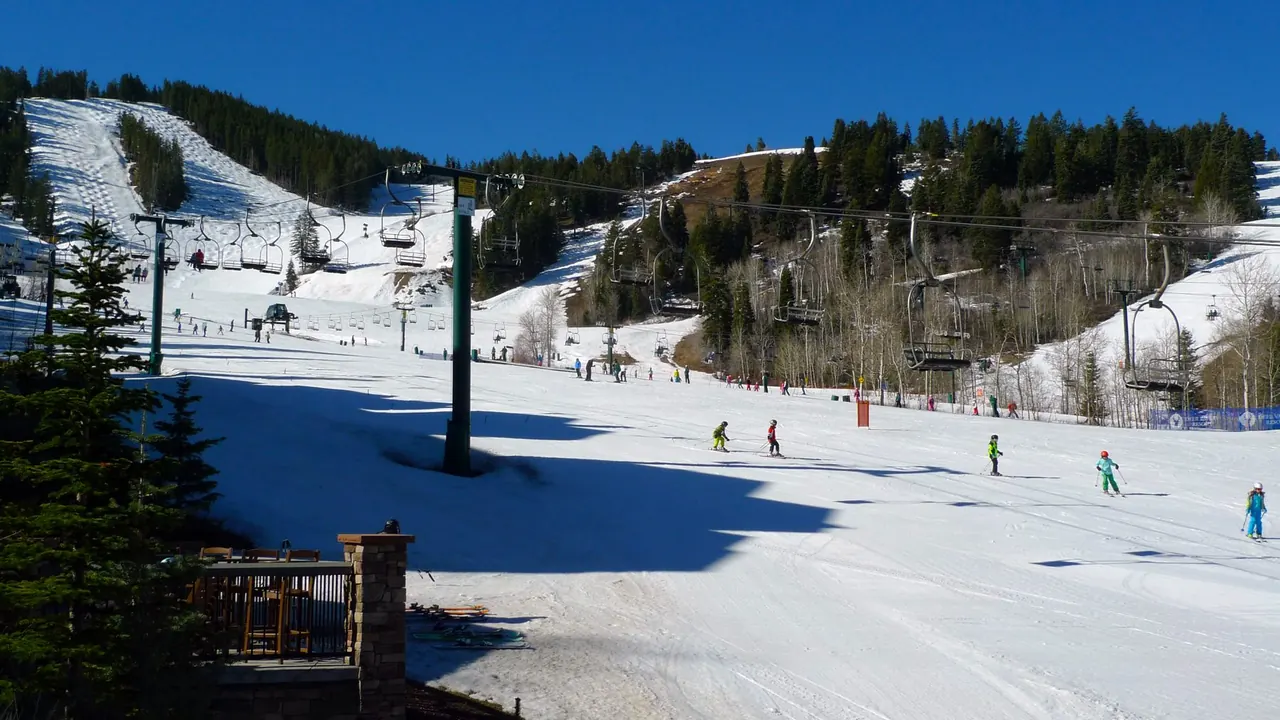
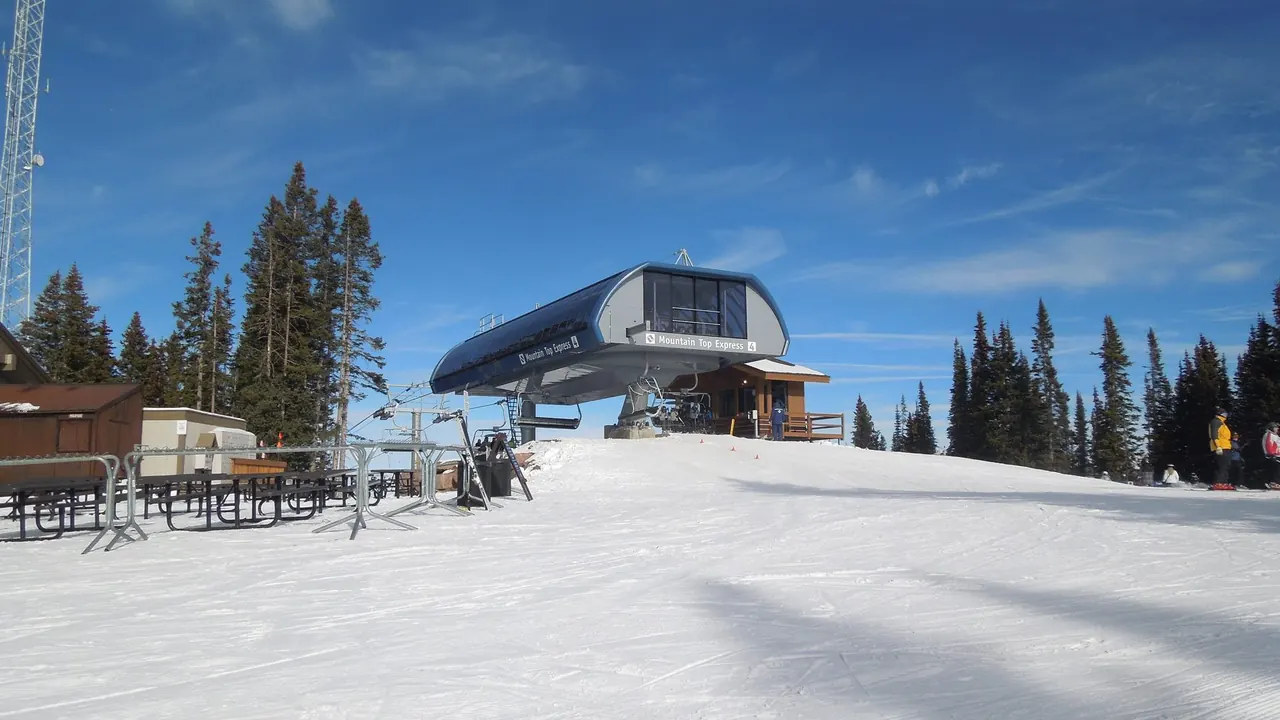
Photos: Deer Valley by Don Ramey Logan, CC BY 4.0, cropped; Vail by DReifGalaxyM31, CC BY 3.0, cropped.
Deer Valley or Vail?
Our verdict in twelve categories, each scored against the same fixed benchmark cities, and the climate month by month, so you can choose for your trip.
Choose Deer Valley for
- beaches
- culture and sights
- families
Deer Valley suits skiers who care most about the quality of the day on the slopes: immaculate grooming, no snowboarders, ski-to-the-door lodging and an easy run for families with children in ski school. Its other strength is position. Salt Lake City's airport, museums and children's attractions are close, the Cottonwood Canyons' powder is within an hour, and Park City gives the stay a real mining-town Main Street rather than a purpose-built one.
Choose Vail for
- getting around
- live music and the arts
- shopping
Vail is the better pick for a summer trip built around music and dance, when orchestras in residence and ballet stars fill the open-air amphitheatre. It also makes car-free living easier, with gondolas leaving straight from a pedestrian village, offers more boutique browsing, and has a wider ring of mountain towns and hot springs to drive out to. In winter its Back Bowls give expert skiers vast open terrain.
Scoreboard
Twelve categories on one fixed scale from 0 to 100. The shaded stretch is the gap between the two.
Your match
Pick a travel style or drag the sliders, and both match scores follow your weighting.
Wins on beaches and culture and sights with your weighting.
Wins on getting around and live music and the arts with your weighting.
What matters to you?
Category by category
What the scores mean for a trip.
Beaches & swimming
There is no sea at either, and swimming at both mostly means a hotel pool. If anything, Deer Valley does slightly better, because Jordanelle Reservoir's state park has a sandy shore and water warm enough on a hot July or August afternoon, while the small lakes around Vail stay cold even in midsummer.
Food & drink
The two are much alike: upscale resort dining with no cuisine of their own and no cheap end. Deer Valley's choice is really Park City's, a cluster of steakhouses, sushi and modern bistros along Main Street, along with the base-area turkey chili that skiers treat as a ritual. Drinks come mainly with dinner or from local distilleries, with Utah's licensing in the background.
Vail leans Alpine and Western, with fondue rooms beside dishes of Colorado lamb, elk and trout, and hotel dining rooms with long wine lists. Be aware that many Vail kitchens close in the quiet spring and autumn weeks.
Culture & sights
Neither is a place for sightseeing, but what each has is different in kind. Next door to Deer Valley, Park City is a genuine silver-mining town of the late 1800s, with old headframes on the slopes and a museum in the former city hall. The ski jumps left from the Winter Olympics at the Utah Olympic Park make a second short visit.
Vail's chalets and covered bridges are a 1960s imitation of a Tyrolean village. Its sights are the Colorado Snowsports Museum, which tells the story of the Tenth Mountain Division's wartime ski troops, and the Betty Ford Alpine Gardens in summer.
Nightlife
Both offer small-town après-ski rather than real nightlife, and Vail stays out a little later. In Deer Valley the lodges go quiet when the lifts close, and the action moves down to Park City's saloons and cocktail bars on Main Street, which close early under Utah's liquor rules.
Vail's terraces in the Village and Lionshead fill as the lifts stop, and on winter weekends a small club keeps going past midnight. Outside the ski season both towns go quiet, Vail almost empty after dinner in spring and autumn.
Nature & outdoors
Both are first-rate mountain bases, and the difference is in the kind of skiing. Deer Valley is about perfect grooming and a skiers-only mountain. Park City Mountain is next door and the deep powder of Alta and Snowbird is about an hour away, so you can sample several resorts in one trip.
Vail is one huge mountain, with the open Back Bowls and Blue Sky Basin behind its front-side runs. In summer the Gore Range and Holy Cross wilderness offer harder hiking among peaks above 4,000m, plus rafting on the Colorado. Vail sits higher, at around 2,500m, so expect the altitude to hit harder there.
Day trips
Vail has more varied outings. Breckenridge's Victorian main street, Leadville's brick silver-boom streets and opera house, and the hot springs of Glenwood Springs give several distinct days out, with Aspen further on. Almost all of them need a car.
Deer Valley's best excursion is a real city, Salt Lake City, about forty minutes away, with Temple Square and the State Capitol. Apart from that there is only a shorter list of small places: Swiss-styled Midway, the Heber Valley steam railway and the arts village at Sundance.
Good for families
For skiing families the two are closely matched, with Deer Valley slightly ahead. There are no snowboarders on its wide beginner runs, slopeside lodging makes the mornings simple, and the Olympic Park adds tubing, ziplines and an alpine coaster. On days off the slopes, Salt Lake City has a zoo, a planetarium and a children's museum, and the Lagoon amusement park is also within reach.
Vail's large ski schools and car-free village are just as reassuring, and in summer the top of the gondola has ropes courses and a coaster. Off the mountain, though, there is nothing comparable for children. The winter cold and long days in ski gear make Vail demanding with toddlers, and its higher altitude takes more getting used to.
Getting around
Deer Valley's free buses link its base areas with Main Street, Park City Mountain and Kimball Junction, and much of the lodging is on the slopes, so the car can often stay parked. The resort is spread over steep hillsides that are hard to walk between, though, and trips to the Cottonwood Canyons or the Heber Valley realistically mean driving. Salt Lake City's large hub airport is within easy reach by shuttle.
Vail is the easier of the two without a car. Vail Village and Lionshead are pedestrian, the gondolas leave straight from town, and a free bus runs the length of the valley, so a week with no car is normal. The weak point is getting in and out. There is no passenger rail, and the interstate over Vail Pass can close in heavy snow.
Shopping & style
Vail offers more to browse, with lanes of jewellery, fur and leather, ski fashion and mountain-landscape galleries made for strolling between lunch and après-ski. It is almost entirely luxury, though.
Deer Valley's shopping is Park City's Main Street, where Western boots, outdoor gear and galleries fill the mining-era storefronts. The Kimball Junction outlet centre gives it a bargain end that Vail lacks. For anything wider, Deer Valley visitors drive to Salt Lake City and Vail visitors to Denver.
Affordability
There is nothing to choose between them on cost: both rank among the most expensive ski destinations anywhere, from lodging and lift access to ski school and dinner. Summer and the off-seasons ease the bill in both. The usual way to save is also similar, staying further away and driving in, either from the Heber Valley or Salt Lake City for Deer Valley or from down the valley for Vail.
Live music & performing arts
Vail has the stronger summer arts season. Bravo! Vail brings major orchestras in residence to the open-air Ford Amphitheater for weeks, the Vail Dance Festival draws leading ballet dancers, and a jazz festival follows, though winter offers little beyond après-ski bands.
Deer Valley's summer picnic concerts with the Utah Symphony at Snow Park are on a smaller scale. Park City's restored 1920s Egyptian Theatre has plays, comedy and concerts all year, which gives winter evenings something Vail cannot match.
Wellness & relaxation
Both offer the same polished resort comfort, with hotel spas, massages after skiing and hot tubs looking out over the snow, and neither has a public bathing tradition. The difference is the natural soak nearby. Deer Valley has Midway's Homestead Crater, a warm spring hidden inside a limestone dome, about half an hour away.
Vail's equivalent is Glenwood Springs, an hour away, with large mineral pools and vapour caves in use since the 1800s. Vail's thinner air also makes the first days slower going.
When should you go?
Pick your month. The climate figures are measured averages, not a forecast.
Deer Valley in July
Vail in July
Daytime high, °C
Rainfall in the month, mm
Where the figures come from
Deer Valley's temperatures are measured 82 km from the centre, at Evanston.
Deer Valley's station stands 297 m below the city centre, so the centre is likely a little cooler than the figures say.
Deer Valley has no rain gauge within 25 km of the centre, so its rainfall comes from a gridded climate dataset read at the city rather than from a gauge further away.
Vail's temperatures are measured 47 km from the centre, at Kremmling.
Vail's station stands 186 m below the city centre, so the centre is likely a little cooler than the figures say.
Vail has no rain gauge within 25 km of the centre, so its rainfall comes from a gridded climate dataset read at the city rather than from a gauge further away.
Temperature and rainfall are climate normals, averaged over the years shown. Deer Valley: 1999-2020 (rainfall 1991-2020) normals, Evanston (81.9 km from centre). Vail: 2006-2025 (rainfall 1991-2020) normals, Kremmling (46.5 km from centre).
Both are ski towns first. Deer Valley stays below freezing by day from December to February, while Vail is at its coldest in January, around -4°C, and edges just above freezing in February. Deer Valley's wettest months are in midwinter, around 42mm each, and that falls as snow on the slopes. Spring comes slightly sooner in Vail, which warms faster through April and May, while Deer Valley's March and April stay closer to winter.
Summer is pleasant in both, with July highs of 28°C in Deer Valley and 29°C in Vail, comfortable for hiking, biking and outdoor concerts. Deer Valley is driest in June and July, while August is Vail's wettest month. Vail also holds its warmth longer into September and October, which makes it the better choice for an autumn visit.
Which traveller are you?
On a culture and arts trip, Vail is the stronger choice in summer. The Bravo! Vail festival brings major orchestras for weeks, and dance and jazz festivals follow. Deer Valley's Utah Symphony picnic concerts are lovely, but the programme is smaller.
On a family trip with children who ski, Deer Valley has the edge. Its beginner runs are skiers-only, lodging often lets you ski to the door, and Salt Lake City's zoo and museums give rest days something to do that Vail cannot offer.
For a shopping trip, Vail does better. Its pedestrian lanes of jewellery, leather, ski fashion and galleries are made for an afternoon's stroll. Deer Valley sends you down to Park City's Main Street, which has a narrower range, plus an outlet centre at the edge of town.
Before you go
| Measure | Deer Valley | Vail |
|---|---|---|
| Currency | US Dollar (USD) | US Dollar (USD) |
| Sockets | AB120 V, 60 Hz | AB120 V, 60 Hz |
| Driving side | Right | Right |
| Time zone | UTC-7, UTC-6 in summer | UTC-7, UTC-6 in summer |
| Emergency number | 911 | 911 |
| Elevation | 2,474 m | 2,445 m |
| Main airport | Salt Lake City International Airport (SLC)45 km from centre108 non-stop destinations | Eagle County Regional Airport (EGE)48 km from centre16 non-stop destinations |
| Public holidays this year | 12 days | 12 days |
By the numbers
| Measure | Deer Valley | Vail |
|---|---|---|
| City population | - | 4,835 |
| People per km² | - | 400 |
| Museums within 10 km | 0 | 1 |
| UNESCO World Heritage sites within 50 km | 0 | 0 |
Where else could you go?
Every comparison below shares a destination with this one, so you can follow Deer Valley or Vail somewhere new.