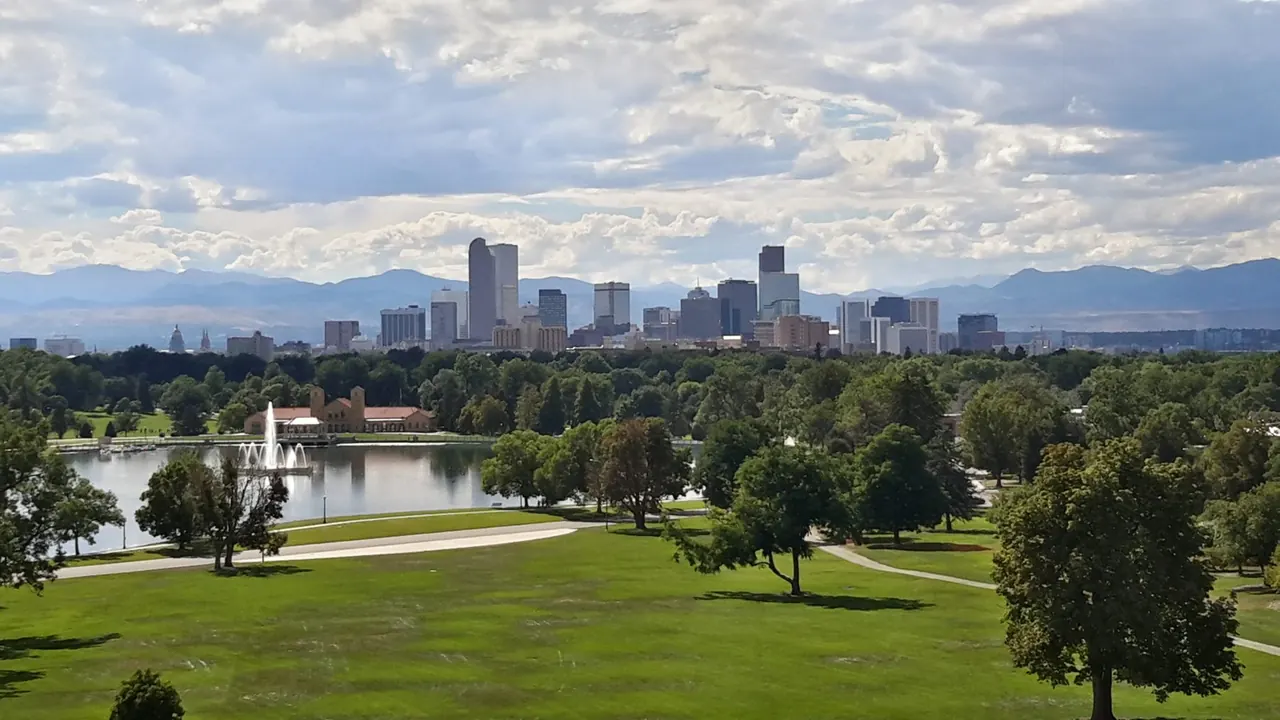
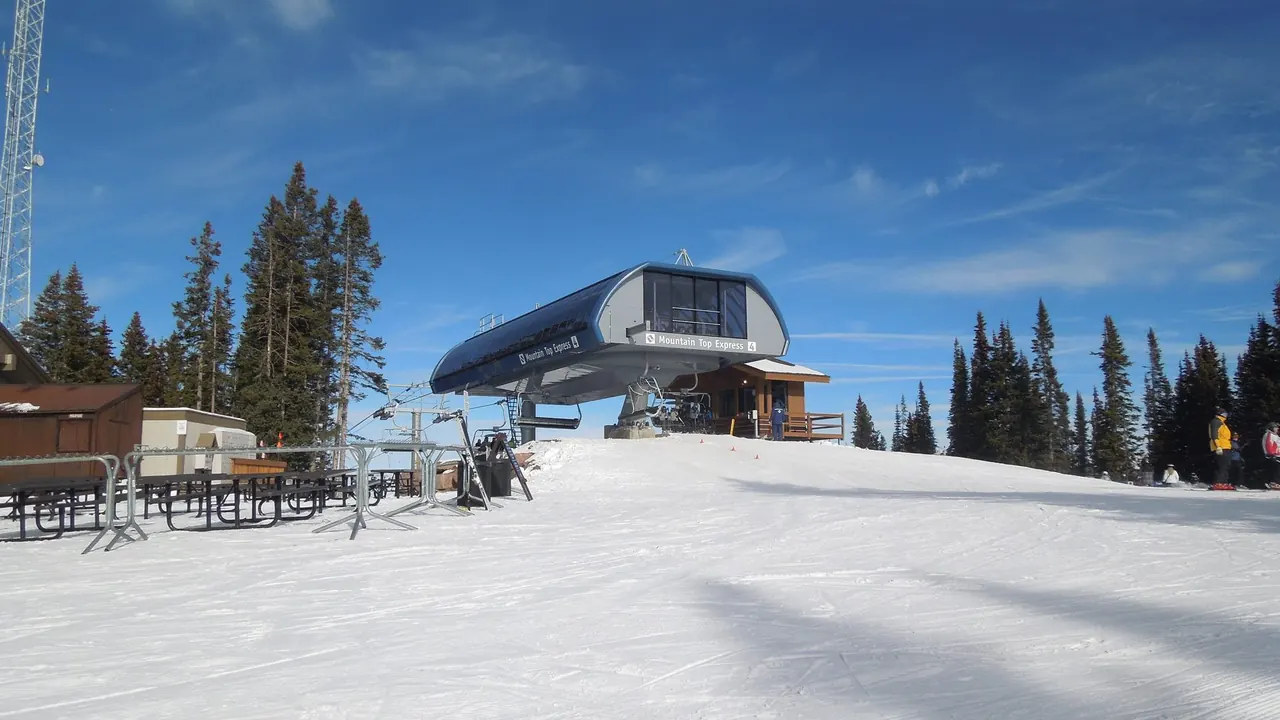
Photos: Denver by Zenhaus, CC BY-SA 4.0, cropped; Vail by DReifGalaxyM31, CC BY 3.0, cropped.
Denver or Vail?
Our verdict in twelve categories, each scored against the same fixed benchmark cities, and the climate month by month, so you can choose for your trip.
Choose Denver for
- culture and sights
- prices
- live music and the arts
Denver is for travellers who want a real city with the mountains on the horizon. You get museums around Civic Center Park, taprooms in RiNo, a summer show at Red Rocks, and a zoo and science museum for the children. It costs much less than Vail, gives you far more to do on a day off the trails, and is a good base for drives to Boulder, Golden and the old mining towns, provided you hire a car.
Choose Vail for
- getting around
- nature and the outdoors
- wellness
Pick Vail when the mountain itself is the reason for the trip. The lifts leave from the village, the Back Bowls and Blue Sky Basin give a long winter of powder, and in summer the gondolas take you up to high trails, with Bravo! Vail concerts in the evening. You can go a week without a car, but everything costs a lot, and away from the slopes there is little to see and not much to do at night.
Scoreboard
Twelve categories on one fixed scale from 0 to 100. The shaded stretch is the gap between the two.
Your match
Pick a travel style or drag the sliders, and both match scores follow your weighting.
Wins on culture and sights and prices with your weighting.
Wins on getting around and nature and the outdoors with your weighting.
What matters to you?
Category by category
What the scores mean for a trip.
Beaches & swimming
Neither city has any sea, so swimming is a sideshow in both. What differs is what takes its place. Denver's hot summers make the sandy reservoir beaches at Cherry Creek and Chatfield and the outdoor public pools genuinely useful. Vail has small, cold mountain lakes, and most swimming there happens in a hotel pool or an outdoor hot tub.
Food & drink
Denver eats better and more cheaply. It has a real brewing culture in RiNo's warehouse taprooms, green chile smothered over burritos, and long stretches of Vietnamese and Mexican cooking along Federal Boulevard, with chef-run places in Highland and LoHi on top.
Vail's restaurants are polished and expensive: steak and game, fondue rooms, sushi and long wine lists in Vail Village and Lionshead, plus lodge lunches on the mountain. There is little street food or casual eating, and in the off-season many kitchens close, so a food-minded visitor will miss Denver's range.
Culture & sights
Neither city is old, but Denver at least has two or three good days of sights. There is the gold-domed Capitol, the Denver Art Museum with its Native American collection, the Clyfford Still Museum, and the brick warehouses of LoDo around the restored Union Station.
Vail was built in the 1960s, and its Tyrolean-style village is a stage set rather than a historic town. The Colorado Snowsports Museum and its story of the Tenth Mountain Division make one good hour, and the Betty Ford Alpine Gardens another in summer, but that is about all.
Nightlife
Denver gives you more nights out, and they work all year: game-night crowds in LoDo, cocktail bars and taprooms in RiNo, dive bars along East Colfax. It is bars rather than clubs, and most people head home at closing time.
Vail's evenings follow the ski lifts. Après-ski fills the slopeside terraces at closing time, and on winter weekends a few places stay open past midnight. In summer it is quieter, and in the off-seasons the town is close to empty after dinner.
Nature & outdoors
This is where Vail comes out ahead. It sits at about 2,500m in the Gore Creek valley with a huge ski area above the rooftops. In summer the gondolas take hikers and mountain bikers up, the Gore Range and Holy Cross wilderness lie close by, and there is fly fishing on Gore Creek and the Eagle River.
Denver looks at the same Rockies from the plains. Red Rocks and the Golden foothills are half an hour away, Rocky Mountain National Park is two hours, and the ski resorts are a drive along I-70. It is superb country to reach, but from Denver you go out to it in a car, while in Vail you walk out of the door into it.
Day trips
Denver has more places within an easy drive, and more varied ones. Boulder under the Flatirons is about 40 minutes away, Golden is closer still, Georgetown has its narrow-gauge railway, and Colorado Springs and Manitou Springs are about an hour south. Estes Park and Fort Collins add a national park gateway and a college town.
From Vail, most outings lead to other mountain resorts: Beaver Creek, Breckenridge over the pass, and silver-era Leadville. Glenwood Springs, an hour down the canyon, is the best day out. Both need a car, but from Vail the choice runs out sooner.
Good for families
A rainy afternoon shows the difference. In Denver, City Park has the zoo and the Museum of Nature & Science with its dinosaurs and planetarium, and the Children's Museum, aquarium and amusement park are grouped together by the South Platte, so a wet day is easy to fill at any time of year.
Vail is excellent for families who come to ski, with large ski schools, children's terrain and a car-free village. In summer the top of the gondola adds a coaster, ropes courses and tubing. Away from the mountain there is little aimed at children, and the cold and altitude are hard on toddlers.
Getting around
Vail is the easier place to be without a car once you arrive. Vail Village and Lionshead are pedestrian, the lifts start in town, and a free bus runs the length of the valley. The hard part is getting there, with no passenger rail and a pass that can close in snow.
Denver is the reverse. A train from the airport reaches Union Station, and the downtown core is flat and walkable, but the city spreads out beyond it. Red Rocks, the mountains and nearly every day trip really need a hired car.
Shopping & style
Denver has a broader range: Cherry Creek's mall and the boutiques around it, vintage and record shops along South Broadway, and large flagship stores for outdoor gear and Western wear. Vail's pedestrian lanes are narrower and more expensive, with ski clothing, furs, jewellery and gallery landscapes. They suit someone buying a luxury souvenir, and serious shoppers there end up driving to Denver.
Affordability
Neither is a bargain, but the gap is wide. Denver costs what a large American city costs, and taquerias, brewery meals, lodging along the light rail and free trails help keep spending down.
Vail charges resort prices for everything: slopeside rooms, lift tickets, ski school, equipment hire and dinner. Staying down the valley or coming in summer helps only a little, so on a limited budget Denver is the sensible choice.
Live music & performing arts
Denver has a stage all year. Red Rocks Amphitheatre between its sandstone monoliths is the draw in summer, and the Denver Center for the Performing Arts runs theatre, touring musicals, the symphony, opera and ballet through the seasons. Five Points adds jazz rooms.
Vail's arts life is short but of high quality: Bravo! Vail orchestras and the Vail Dance Festival at the open-air Gerald R. Ford Amphitheater, then a jazz festival in late summer. In winter there is little beyond après-ski bands, so plan any music trip to Vail for July and August.
Wellness & relaxation
Vail is the better place to switch off. Its resort spas pair a massage with an outdoor hot tub under the peaks, and the town is slow and quiet outside the peak weekends. Glenwood Springs' historic mineral pools and vapour caves are about an hour away.
In Denver, relaxing means day spas, yoga studios and long afternoons in the parks. The nearest natural soak is in the historic pools at Idaho Springs, under an hour west.
When should you go?
Pick your month. The climate figures are measured averages, not a forecast.
Denver in July
Vail in July
Daytime high, °C
Rainfall in the month, mm
Where the figures come from
Vail's temperatures are measured 47 km from the centre, at Kremmling.
Vail's station stands 186 m below the city centre, so the centre is likely a little cooler than the figures say.
Vail has no rain gauge within 25 km of the centre, so its rainfall comes from a gridded climate dataset read at the city rather than from a gauge further away.
Temperature and rainfall are climate normals, averaged over the years shown. Denver: 1991-2020 normals, Denver / Stapleton International, Co. (11.2 km from centre). Vail: 2006-2025 (rainfall 1991-2020) normals, Kremmling (46.5 km from centre).
Denver is at its easiest in late spring and early autumn. Winter is dry and January days reach about 8°C, so walking between the museums and LoDo is comfortable in a coat. Rain builds through spring, and May is the wettest month. July climbs to around 32°C, too hot for a long afternoon on foot but good weather for the reservoir beaches and evenings at Red Rocks. June, September and early October suit a mix of city streets and foothill trails best.
Vail runs on a different calendar. January highs sit near -4°C, and through the winter the steady precipitation falls as snow, so December to March is the heart of the ski season, and early April still has spring skiing on softer snow. Summer warms up quickly. July reaches about 29°C, close to Denver's heat, so a midday hike up high needs water and a hat. June is the driest month, at around 23mm, and September turns the aspens gold. Late April and May, and again late October into early November, fall between snow and summer and suit neither skiing nor high hiking.
Which traveller are you?
On a culture and arts trip, Denver is clearly the better choice. It has the Denver Art Museum, the Clyfford Still Museum, the Denver Center's theatre and symphony, and Red Rocks, while Vail's arts are a summer festival season around a ski village with few sights.
On a trip with a tight budget, choose Denver. It is still a typical American city on price, but taquerias, breweries, lodging along the light rail and free trails keep costs down. Vail is among the dearest places to vacation on the continent, with no cheap end to it.
For skiers, Vail is the one to book. The vast front-side runs, the Back Bowls and Blue Sky Basin start right above a car-free village. From Denver the big resorts are around two hours away along I-70, and its weekend traffic is notorious.
Before you go
| Measure | Denver | Vail |
|---|---|---|
| Currency | US Dollar (USD) | US Dollar (USD) |
| Sockets | AB120 V, 60 Hz | AB120 V, 60 Hz |
| Driving side | Right | Right |
| Time zone | UTC-7, UTC-6 in summer | UTC-7, UTC-6 in summer |
| Emergency number | 911 | 911 |
| Elevation | 1,609 m | 2,445 m |
| Main airport | Denver International Airport (DEN)30 km from centre231 non-stop destinations | Eagle County Regional Airport (EGE)48 km from centre16 non-stop destinations |
| Public holidays this year | 12 days | 12 days |
By the numbers
| Measure | Denver | Vail |
|---|---|---|
| City population | 715,522 | 4,835 |
| People per km² | 1,783 | 400 |
| Museums within 10 km | 26 | 1 |
| UNESCO World Heritage sites within 50 km | 0 | 0 |
Where else could you go?
Every comparison below shares a destination with this one, so you can follow Denver or Vail somewhere new.