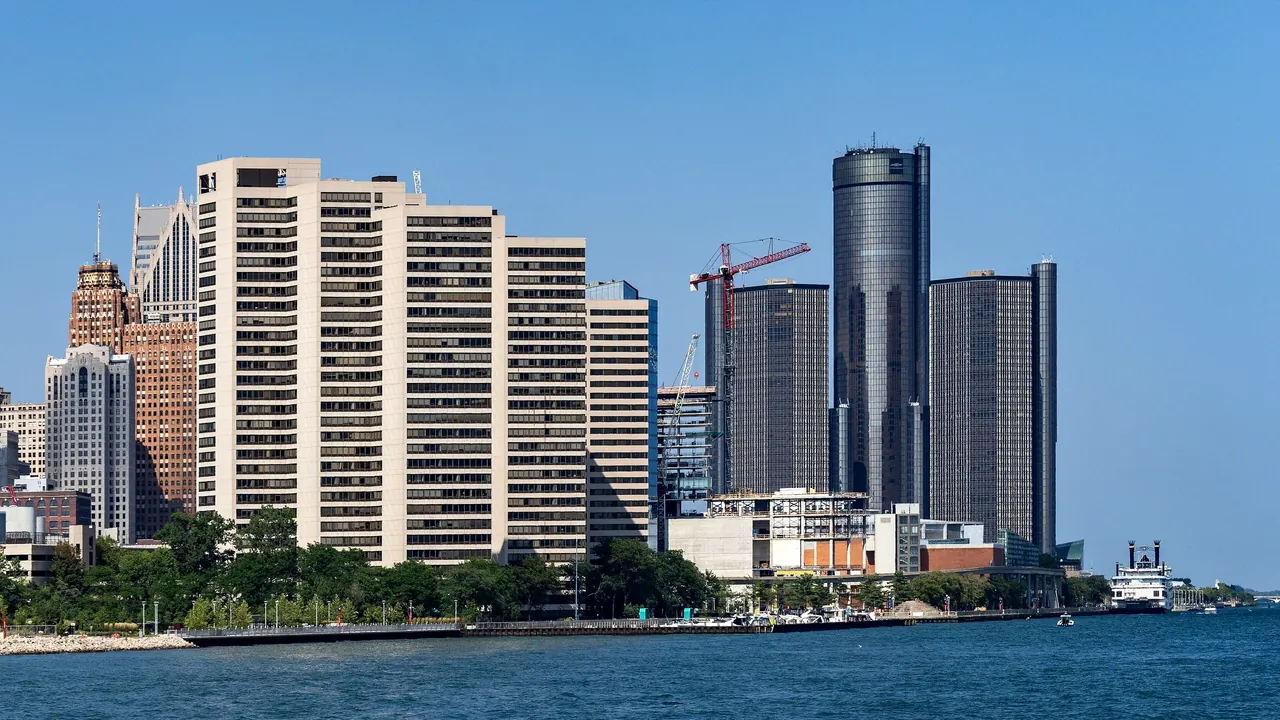
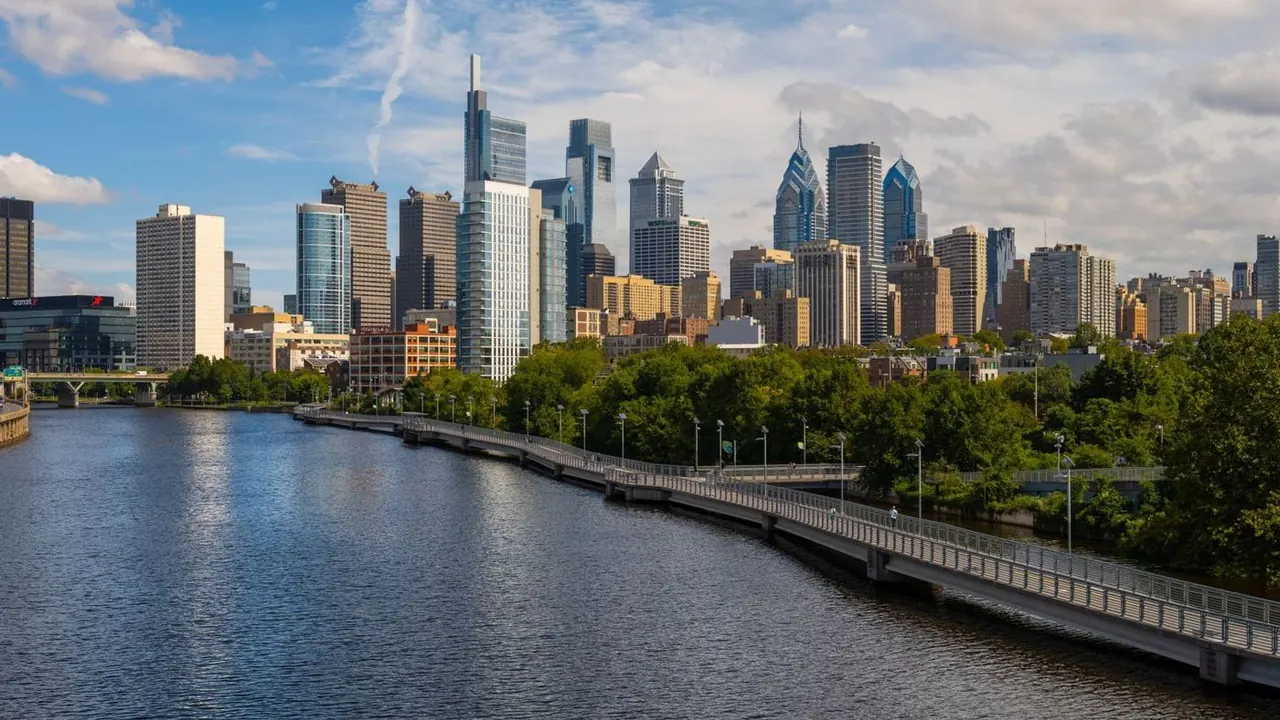
Photos: Detroit by Chris Woodrich, CC BY-SA 4.0, cropped; Philadelphia by Trev W. Adams, Pexels License.
Detroit or Philadelphia?
Our verdict in twelve categories, each scored against the same fixed benchmark cities, and the climate month by month, so you can choose for your trip.
Choose Detroit for
- prices
Detroit suits a traveller who comes for sound and for food with roots: techno nights, the Motown house, the jazz clubs, Coney counters and the Lebanese and Yemeni bakeries of Dearborn. It is easier on the wallet, and the Detroit Institute of Arts and the Henry Ford sites in Dearborn reward a focused visit. Plan on hiring a car, though, because most of what matters lies beyond the streetcar line.
Choose Philadelphia for
- day trips
- getting around
- shopping
Philadelphia is the better pick for almost everything else, especially on a first visit to the American East. The founding sights of Old City, the Barnes and the art museum on the Parkway all sit within a flat grid you can walk, the orchestra and the Academy of Music are a short stroll away, and fast trains make New York, Baltimore and Washington easy day trips. Families and anyone without a car will find it much simpler.
Scoreboard
Twelve categories on one fixed scale from 0 to 100. The shaded stretch is the gap between the two.
Your match
Pick a travel style or drag the sliders, and both match scores follow your weighting.
Wins on prices with your weighting.
Wins on day trips and getting around with your weighting.
What matters to you?
Category by category
What the scores mean for a trip.
Beaches & swimming
Neither is a beach city, but Philadelphia offers more for a day at the sea. The Jersey Shore, from Atlantic City and Wildwood to Victorian Cape May, has wide Atlantic sand an hour or two away, with proper summer swimming and the weekend traffic that comes with it.
Detroit's water is closer but smaller in scale: the little beach on Belle Isle and the calm, shallow lake at Lake St. Clair Metropark, warm enough to swim only in high summer. It makes a pleasant afternoon, not a reason to choose the city.
Food & drink
The two cities are evenly matched for food, and both eat around sandwiches, markets and immigrant neighbourhoods. Detroit's strengths are spread out: Coney Islands, square pizza, Eastern Market on Saturdays and, above all, the Arab American kitchens of Dearborn, with Mexicantown and the Polish bakeries of Hamtramck as well. Many of these are a drive away.
Philadelphia keeps its food closer together. Cheesesteaks, roast pork with broccoli rabe and hoagies come from corner delis, Reading Terminal and the Italian Market are an easy walk from the centre, and the bring-your-own-wine dining rooms of East Passyunk and Fishtown are a local habit Detroit has no match for.
Culture & sights
Philadelphia has more to see here. Independence Hall and the Liberty Bell, the Georgian streets of Society Hill, the Barnes, the art museum on the Parkway, the Penn Museum and Eastern State Penitentiary add up to several full days, most of them close together.
Detroit has one museum of that rank, the Detroit Institute of Arts with Rivera's murals, as well as the Motown Museum, the Wright Museum and a fine run of Art Deco towers. The Henry Ford and Greenfield Village make a strong day out in Dearborn, but the gaps between the sights are long.
Nightlife
The two are about even for going out, but the nights feel very different. Detroit is the home of techno, and its best nights happen at warehouse parties and small, serious clubs, at their peak around the electronic music festival on Memorial Day weekend. Otherwise it is cocktail bars, taprooms and casino bars, with taxis between them.
Philadelphia is a city of pubs and bars. Fishtown's warehouse bars, the cocktail crowd around Rittenhouse, the corner taverns of East Passyunk and the long-established Gayborhood make for easy evenings full of students, but there are few dance floors and last call is at 2am.
Nature & outdoors
Philadelphia has better green escapes without leaving town. The Wissahickon gorge in Fairmount Park offers real woodland walking inside the city limits, and the Schuylkill River Trail runs past Boathouse Row towards Valley Forge, with the Pine Barrens and the Poconos further out.
Detroit's outdoors are flatter and built around water: Olmsted's Belle Isle, the RiverWalk, kayaking and sailing on Lake St. Clair, and a ring of metroparks with wetlands and fine autumn colour. It is pleasant, but there are no hills and less variety.
Day trips
This is the widest gap between the two cities. From Philadelphia, fast trains reach New York, Baltimore and Washington, each a full day on its own, and Lancaster County's Amish country, Princeton, Valley Forge, Longwood Gardens and Gettysburg add to the list.
Detroit's outings are gentler, and nearly all of them need a car: the university town of Ann Arbor, Bavarian-styled Frankenmuth, the Toledo art museum and the roller coasters of Cedar Point. Windsor, just across the river, does give you a quick hop into Canada.
Good for families
Philadelphia makes family days easier. The Franklin Institute with its giant walk-through heart, the Please Touch Museum for under-eights and the dinosaur hall at the Academy of Natural Sciences sit close together, and the costumed guides of Old City bring history to life for older children.
Detroit has strong single attractions: the large zoo in Royal Oak with its polar bear tunnel, the aquarium on Belle Isle and the steam trains of Greenfield Village. Nearly every one means a car journey, though, and winter cuts out most of the outdoor options.
Getting around
Philadelphia is far easier without a car. Penn's flat grid puts Old City, Society Hill, Rittenhouse Square and the Parkway museums within walking distance. The subway, trolleys, regional rail and the airport train cover the rest, if a little roughly.
In Detroit, the People Mover and the QLine streetcar cover downtown, Midtown and New Center, but beyond them the city spreads out along wide avenues with slow buses. Dearborn, the zoo and most day trips mean ride-hailing or a hire car.
Shopping & style
Philadelphia gives a shopper more to work with. There are brands and boutiques on Walnut Street around Rittenhouse Square, the old diamond dealers of Jewelers' Row, independent shops in Old City and Fishtown, and the huge King of Prussia mall half an hour out. Pennsylvania charges no sales tax on clothing.
Detroit's offer is smaller and more local: Detroit-made watches, leather and prints in the shops of Midtown and Corktown, crafts at Eastern Market, and specialist groceries in Dearborn and Mexicantown. For big brands you drive to a suburban mall.
Affordability
Detroit is the cheaper of the two. Hotel rooms cost less than in most large American cities outside event weekends, and everyday food is good value, though a hire car and parking eat into the savings.
Philadelphia is cheaper than the bigger East Coast cities, but Center City hotels and sit-down meals cost the full American rate. It wins some of that back with free founding sights, filling sandwiches, bring-your-own-wine dinners and no need for a car.
Live music & performing arts
Both are real music cities, with Philadelphia a little ahead on range. It has the Philadelphia Orchestra on the Avenue of the Arts, the 1857 Academy of Music for opera and ballet, recitals by Curtis Institute students and the Walnut Street Theatre, the oldest working theatre in the country, which together give it the stronger classical and stage programme.
Detroit has its own sound: the Symphony in Orchestra Hall, the restored opera house, the Fox Theatre, and live jazz, soul and rock most nights. The high point is the free Detroit Jazz Festival over Labor Day weekend, though local theatre is thinner.
Wellness & relaxation
Neither city is built for rest, and in both, relaxing mostly means a hotel or day spa. Philadelphia has a little more: Korean-style bathhouses in the suburbs, the shaded squares of Penn's grid and quiet walks in the Wissahickon gorge. In Detroit, calm comes mainly from a slow walk on the RiverWalk or an afternoon on Belle Isle.
When should you go?
Pick your month. The climate figures are measured averages, not a forecast.
Detroit in July
Philadelphia in July
Daytime high, °C
Rainfall in the month, mm
Temperature and rainfall are climate normals, averaged over the years shown. Detroit: 1991-2020 (sunshine 1981-2010) normals, Detroit / Hamtramck (9.2 km from centre). Philadelphia: 1991-2020 normals, Philadelphia International Airport (11.3 km from centre).
Both cities have real winters and hot, humid summers, but Detroit's cold goes deeper. January highs sit just below freezing at -1°C, against about 5°C in Philadelphia, and from November to March you need a heavy coat to walk the streets of either. Spring and autumn are the comfortable seasons for sightseeing in both, May and late September into October above all, when afternoons are mild.
Summer is Detroit's best season. It is the sunnier of the two cities, and by August the lake water at Belle Isle and Lake St. Clair warms to about 23°C, so July to early September is the time to swim. Philadelphia runs a few degrees hotter, up to around 31°C in July, which makes long days on foot in Old City hard going. Its rain is heaviest from June to September, at over 100mm a month, while Detroit's is spread fairly evenly across the year.
Which traveller are you?
On a trip on a tight budget, Detroit stretches further. Spend your days on what it does well for little: a Saturday grazing Eastern Market, a ride along the RiverWalk to Belle Isle, soul or jazz in a small club, then one hire-car day for Dearborn's bakeries.
For a short city break, Philadelphia is the clear choice. Independence Hall, the Barnes, Reading Terminal Market and an evening concert all fit inside a Center City you can walk, so you lose no time driving between scattered neighbourhoods as you would in Detroit.
On a family trip with children, Philadelphia is easier to manage. Its science and children's museums sit close together in a flat, compact centre, and older children get history they can see and touch. In Detroit, most family outings start with a drive across the metro area.
Before you go
| Measure | Detroit | Philadelphia |
|---|---|---|
| Currency | US Dollar (USD) | US Dollar (USD) |
| Sockets | AB120 V, 60 Hz | AB120 V, 60 Hz |
| Driving side | Right | Right |
| Time zone | UTC-5, UTC-4 in summer | UTC-5, UTC-4 in summer |
| Emergency number | 911 | 911 |
| Elevation | 183 m | 12 m |
| Main airport | Detroit Metropolitan Wayne County Airport (DTW)28 km from centre129 non-stop destinations | Philadelphia International Airport (PHL)11 km from centre130 non-stop destinations |
| Public holidays this year | 13 days | 12 days |
By the numbers
| Measure | Detroit | Philadelphia |
|---|---|---|
| City population | 639,111 | 1,603,797 |
| People per km² | 1,727 | 4,339 |
| Museums within 10 km | 18 | 55 |
| UNESCO World Heritage sites within 50 km | 0 | 1 |
| Swim season, months above 21 °C | 2 months | - |
Where else could you go?
Every comparison below shares a destination with this one, so you can follow Detroit or Philadelphia somewhere new.
- Atlantic Cityvs Philadelphia
- Cape Mayvs Philadelphia
- New Yorkvs Philadelphia
- Rehoboth Beachvs Philadelphia
- Baltimorevs Philadelphia
- Bethany Beachvs Philadelphia