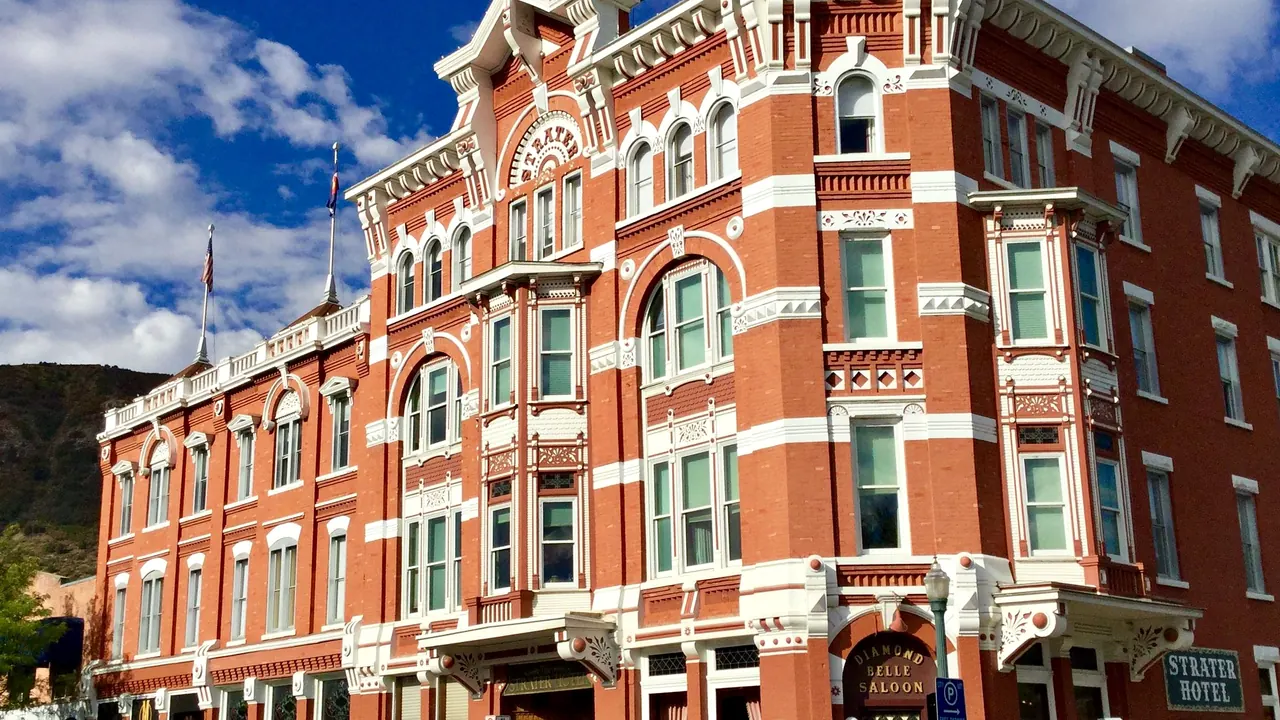
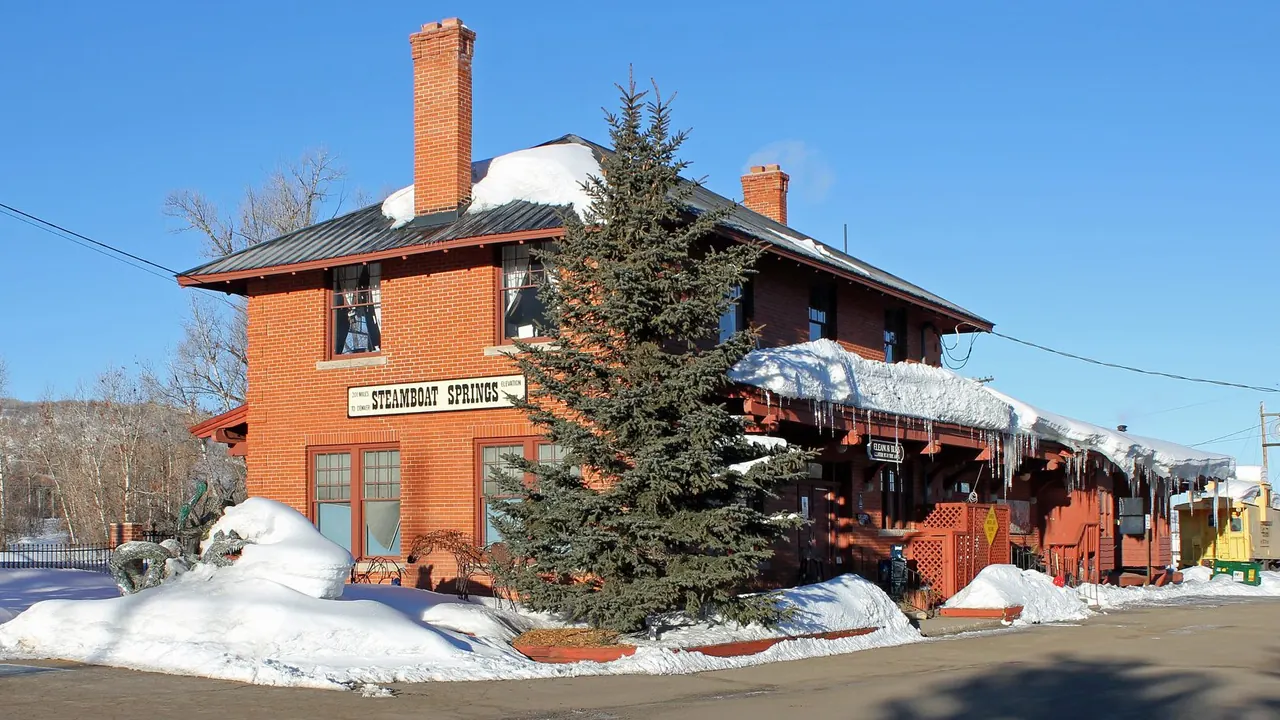
Photos: Durango, Colorado by Adeledstarr, CC BY-SA 4.0, cropped; Steamboat Springs by Jeffrey Beall, CC BY-SA 3.0, cropped.
Durango, Colorado or Steamboat Springs?
Our verdict in twelve categories, each scored against the same fixed benchmark cities, and the climate month by month, so you can choose for your trip.
Choose Durango, Colorado for
- day trips
- prices
- culture and sights
Durango suits travellers who want mountains with history attached. Mesa Verde's cliff dwellings, the steam train up the canyon to Silverton and the Puebloan ruins at Aztec are all within a day's drive. The Victorian centre gives evenings some character, and the food and beer are a step up. It is also the cheaper of the two, which counts on a longer trip with a hire car.
Choose Steamboat Springs for
- wellness
- getting around
- families
If you want to settle into one valley and stay there, Steamboat Springs is the better pick. You can ski the powder on the mountain above town or ride its trails in summer, then soak in a rock pool by a creek in the evening. The hot springs give you more reason to slow down, the town bus makes the main corridor easier without a car, and children learning to ski are well looked after. There is little to visit beyond the hills and it costs more, so it works best for a focused, active stay.
Scoreboard
Twelve categories on one fixed scale from 0 to 100. The shaded stretch is the gap between the two.
Your match
Pick a travel style or drag the sliders, and both match scores follow your weighting.
Wins on day trips and prices with your weighting.
Wins on wellness and getting around with your weighting.
What matters to you?
Category by category
What the scores mean for a trip.
Beaches & swimming
Neither town is a place for a beach. Durango has a little more to offer in summer: a roped swimming area at Lake Nighthorse just outside town and a few sandy edges at Vallecito Lake. Steamboat's reservoirs at Steamboat Lake and Stagecoach are used by fewer swimmers. In both towns the real summer water ritual is floating through town on an inner tube, the Animas in Durango and the Yampa in Steamboat, and Durango's warmer afternoons make that cold water easier to enjoy.
Food & drink
Durango eats better. Along Main Avenue the green-chile Southwestern plates give the food a regional flavour, a few kitchens cook seriously with local lamb, trout and farm produce, and the town's many breweries are where cyclists and rafters end the day.
Steamboat's dining is resort food from Lincoln Avenue and the ski base: steakhouses, Mexican, pizza and hearty ranch-country plates. It has fewer breweries and no market to browse, so meals are fuel after a day outdoors rather than part of the reason to come.
Culture & sights
Neither town is a museum stop, but Durango has more to look at in its own streets. Its centre was built on mining-boom money, and the ornate hotels and old saloons from that era are still in use, so you see the period from a hotel lobby or a bar stool rather than through glass. Add the locomotives in the roundhouse and a small county museum in an old schoolhouse, and a curious visitor can spend a couple of hours there.
Steamboat's past is ranching and skiing. Its museum tells the story of the homesteaders and of the Norwegian jumper who brought skiing to the valley. Howelsen Hill is not a relic but a ski area people still use, and it has turned out a long line of Olympians. The western storefronts on Lincoln Avenue make a short stroll, but there is no older or grander layer underneath them.
Nightlife
Both towns are quiet at night, and the difference lies in the rhythm. Durango's evenings centre on taprooms, patios and Victorian saloons with a piano player, and weekend students keep a few bars lively throughout the year. Steamboat's nights follow the ski season: après-ski at the gondola base as the lifts close, then saloons and brewpubs downtown that stay busy later in winter. In the off-season the town goes quiet early.
Nature & outdoors
Both towns are superb for the outdoors, but they lean different ways. Durango is a summer town for riders and walkers. Singletrack leaves from the edge of town, the Colorado Trail starts just north, the Weminuche Wilderness rises above 4,000m, and rafters run the Animas through the centre. Its ski resort is half an hour away.
Steamboat is built around skiing. The light, dry snow falls on a mountain right beside town, there are aspen glades for tree skiing, and Howelsen Hill offers night skiing in town. Summer brings Emerald Mountain's trails, Fish Creek Falls, the lakes of the Mount Zirkel Wilderness and frequent sightings of elk and moose.
Day trips
This is the biggest gap between the two. From Durango you can drive to the cliff dwellings of Mesa Verde, ride the narrow-gauge train up to the mining town of Silverton, carry on to Ouray, or head south to the ruins at Aztec and east past Chimney Rock to Pagosa Springs. Almost all of this needs a car.
Steamboat is remote. The nearby towns are small ranching places, and Vail is about two hours away over the mountains, so outings from Steamboat mean going into the hills rather than visiting other towns.
Good for families
Steamboat is better set up for children. Its strong ski school and gentle slopes, plus Howelsen Hill in town for first turns, make it a natural place for a first ski trip. The Old Town Hot Springs, with its slides and climbing wall, fills an afternoon in any weather, and summer adds the gondola, waterfall walks and the rodeo.
Durango's highlights for children are bigger outings: the steam train, the ladders at Mesa Verde, the alpine coaster at the ski area. Reaching them means long drives. Neither town has a zoo or a science museum, and the altitude in both can tire young children at first.
Getting around
Steamboat is easier without a car for most of a stay. The town bus links the flat downtown with the ski base through the day, and many slopeside lodgings let you walk to the gondola.
Durango's centre is compact, with a short walk from the depot to the top of Main Avenue, a trolley along the main corridor and a riverside trail for bikes. But its best sights, from Mesa Verde to the trailheads, are scattered along mountain highways, so a car matters more here. In Steamboat the car is needed mainly for the hot springs, falls and passes, and winter driving on those roads needs good tyres.
Shopping & style
Durango's Main Avenue has a little more worth carrying home. Navajo and Pueblo silver, turquoise jewellery and rugs sit alongside outdoor shops selling bikes and fishing kit. Steamboat's Lincoln Avenue leans more towards cowboy dress, with boots, hats, saddle-blanket goods and a long-established family outfitter, plus ski shops at the base. In both towns a stroll of an hour or two is enough.
Affordability
Durango is noticeably easier on the wallet. It costs less than Colorado's famous ski towns, though rooms are scarce in peak season and eating out comes at full American prices.
Steamboat is one of those famous ski towns, and in winter lodging, lift access, equipment hire and meals all cost resort prices, peaking around Christmas, New Year and the spring school breaks. Summer is gentler there, and self-catering condos help. In both towns spring and late autumn are cheapest, although some places in Steamboat close during those months.
Live music & performing arts
The two towns are about level, and both are at their best in summer. Where they differ is in the kind of evening on offer. Durango has several different kinds of show: a chamber and orchestral festival, a Victorian melodrama where the audience boos the villain, cowboy music with a chuckwagon supper outside town, and a college concert hall that brings in touring musicians and dance.
Steamboat puts most of its music into one event, the Strings Music Festival, whose pavilion programme runs from chamber music through jazz to bluegrass. Free outdoor concerts play downtown and at the mountain base, and Perry-Mansfield, a performing-arts school founded in 1913, adds student theatre and dance. Out of season there is little on in either town, and Steamboat falls back on bar bands and a small community orchestra.
Wellness & relaxation
Steamboat is the better place to unwind. The town is named after a spring, its pools in town are part of daily local life, and Strawberry Park, about 11km up a mountain road, has rock-lined pools in a wooded creek valley that are at their best on a snowy evening.
Durango's mineral pools a few minutes north are a good soak after a ride. The more scenic springs at Pagosa and Ouray are each an hour or more away, so in Durango a soak is usually a separate outing.
When should you go?
Pick your month. The climate figures are measured averages, not a forecast.
Durango, Colorado in July
Steamboat Springs in July
Daytime high, °C
Rainfall in the month, mm
Where the figures come from
Durango, Colorado has no weather station within reach, so its figures come from a gridded climate model rather than a measured record, and read a broad area rather than the city itself.
Steamboat Springs has no rain gauge within 25 km of the centre, so its rainfall comes from a gridded climate dataset read at the city rather than from a gauge further away.
Temperature and rainfall are climate normals, averaged over the years shown. Durango, Colorado: 1991-2020 normals, TerraClimate 4 km grid at the town, no weather station within 90 km. Steamboat Springs: 2011-2025 (rainfall 1991-2020) normals, Steamboat Springs / Steamboat Ii (5.5 km from centre).
Durango is the warmer of the two all year. Its best spell for hiking and riding runs from May into June, when days are warm and June is almost dry at 12mm. High summer reaches about 30°C, and thunderstorms bring rain back in late summer, peaking at 48mm in August. September and October are mild and good for walking. Winter days are cold but usually above freezing, which suits skiers who also want to walk around town in comfort.
Steamboat is colder at both ends of the year. Winter highs stay below freezing, around -3°C in January, and the wettest months fall in winter and spring, which suits the ski mountain. Summer is shorter and gentler, peaking near 28°C in July. In both towns only July and August are warm enough for a dip in a lake or river.
Which traveller are you?
On a culture and arts trip, Durango is the clear choice. It has its railway heritage, a Victorian downtown and a college collection of Native American material, and Mesa Verde and Aztec put ancestral Puebloan history within reach. Steamboat's history fills about an hour.
For a relaxing and wellness trip, Steamboat Springs wins. The town grew up around its mineral springs, its pools in town are used all year, and the wooded pools at Strawberry Park, especially on a snowy evening, are hard to match from Durango.
On a tight budget, Durango is easier to manage. It is still a US mountain resort with full restaurant prices, but rooms and meals cost less than in Steamboat. In ski season Steamboat charges resort prices for nearly everything.
Before you go
| Measure | Durango, Colorado | Steamboat Springs |
|---|---|---|
| Currency | US Dollar (USD) | US Dollar (USD) |
| Sockets | AB120 V, 60 Hz | AB120 V, 60 Hz |
| Driving side | Right | Right |
| Time zone | UTC-7, UTC-6 in summer | UTC-7, UTC-6 in summer |
| Emergency number | 911 | 911 |
| Elevation | 1,988 m | 2,052 m |
| Main airport | Durango La Plata County Airport (DRO)18 km from centre4 non-stop destinations | Yampa Valley Airport (HDN)33 km from centre17 non-stop destinations |
| Public holidays this year | 12 days | 12 days |
By the numbers
| Measure | Durango, Colorado | Steamboat Springs |
|---|---|---|
| City population | 19,071 | 13,224 |
| People per km² | 739 | 503 |
| Museums within 10 km | 2 | 0 |
| UNESCO World Heritage sites within 50 km | 1 | 0 |
Where else could you go?
Every comparison below shares a destination with this one, so you can follow Durango, Colorado or Steamboat Springs somewhere new.
- Telluridevs Durango, Colorado
- Beaver Creekvs Steamboat Springs
- Vailvs Steamboat Springs
- Winter Park, Coloradovs Steamboat Springs
- Estes Parkvs Steamboat Springs
- Keystonevs Steamboat Springs