
Photos: El Nido by nennnn, CC BY 2.0, cropped; Manila by Kenneth Surillo, Pexels License.
El Nido or Manila?
Our verdict in twelve categories, each scored against the same fixed benchmark cities, and the climate month by month, so you can choose for your trip.
Choose El Nido for
- beaches
- nature and the outdoors
- wellness
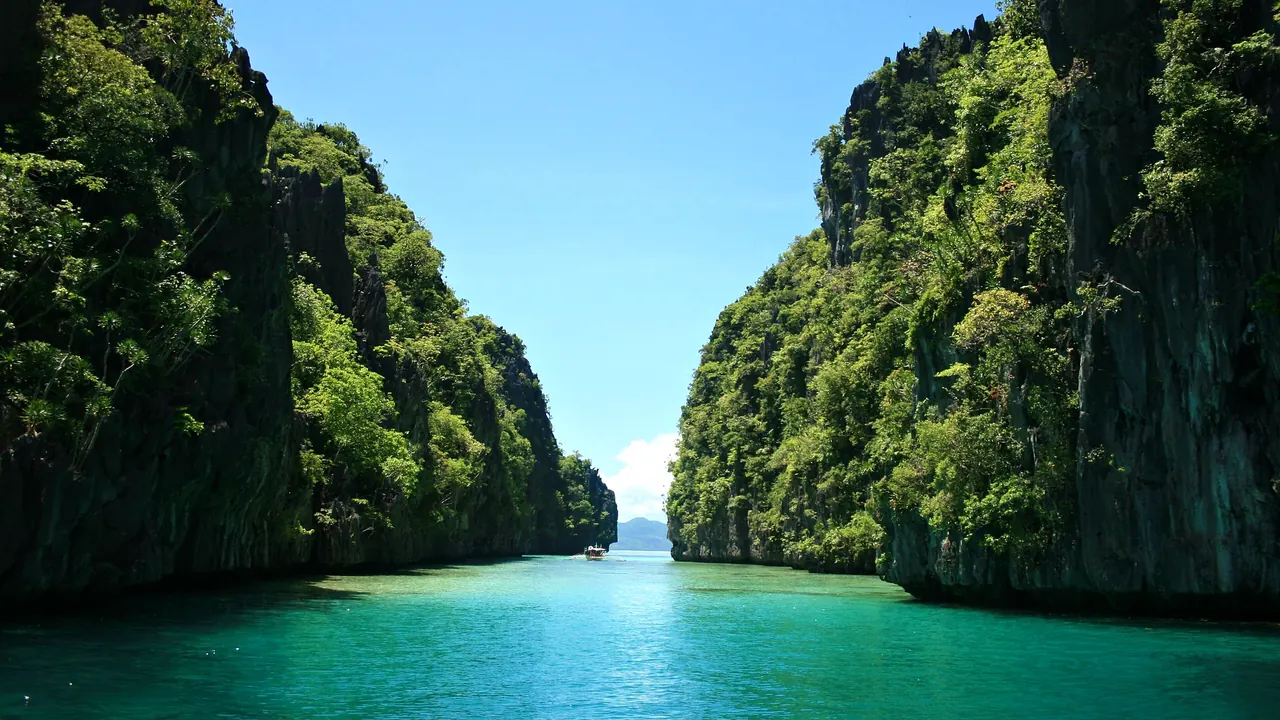
El Nido is the choice for a trip built around the water: days on bangkas in Bacuit Bay, kayaking into lagoons hidden inside the limestone, snorkelling over coral and evenings on the long sands of Nacpan or Las Cabanas. Come for the sea and the scenery and expect little else. There are no sights to tour, the food is simple and the nightlife is a few streets of backpacker bars.
Choose Manila for
- shopping
- culture and sights
- live music and the arts
Manila suits the traveller who wants a city: the Spanish walls of Intramuros, the National Museum, the food streets of Binondo, late bars in Poblacion and malls on an enormous scale, with lower everyday costs too. You can't swim there, and traffic shapes every day, so it works best as a few days of culture and eating before or after a flight on to the islands.
Scoreboard
Twelve categories on one fixed scale from 0 to 100. The shaded stretch is the gap between the two.
Your match
Pick a travel style or drag the sliders, and both match scores follow your weighting.
Wins on beaches and nature and the outdoors with your weighting.
Wins on shopping and culture and sights with your weighting.
What matters to you?
Category by category
What the scores mean for a trip.
Beaches & swimming
This is where the two differ most. In El Nido the day revolves around sand and sea: soft beaches at Las Cabanas and Marimegmeg, the near-empty 4km arc of Nacpan, and small white coves between cliffs out in the bay, best reached early before the tour boats crowd in.
Manila has a bayfront but no beach. Roxas Boulevard is for watching the sunset, the water is too polluted to swim in, and the sands of Batangas or Bataan are two to three hours away, better as an overnight stay than a day out. Many travellers simply fly from Manila to Palawan, which is where El Nido is.
Food & drink
Manila eats far better. Its Filipino cooking runs from lechon and kare-kare to halo-halo, Binondo packs dumpling houses and hopia bakeries into a few walkable streets, and Makati, Poblacion and BGC add chef-led and international kitchens.
El Nido has the same dishes, adobo, sinigang and kinilaw, but its lanes lean towards pizza and smoothie bowls for backpackers. Its best meal is the grilled seafood lunch the boat crews cook on an island beach, a fine experience but not a reason to choose it for eating.
Culture & sights
Manila has real history to explore, and El Nido has almost none. Intramuros, with Fort Santiago and the UNESCO-listed San Agustin Church, sits beside the National Museum and Luna's Spoliarium. Binondo, Quiapo and Escolta add more, although the destruction of 1945 left the city mostly modern.
In El Nido the landmark is a limestone cliff, with a modest parish church and a few old wooden houses below it.
Nightlife
Manila goes out much harder. Poblacion's tight grid of cocktail bars and rooftops, the large clubs of BGC and Malate's older haunts give real range, and karaoke is taken seriously. Because of the traffic, it is best to pick one district per night.
El Nido's evenings start with sunset drinks at Las Cabanas and move on to reggae bars, fire dancers and a couple of late spots on the main lanes. There are no clubs, and guests at the outlying beach resorts may never notice the scene.
Nature & outdoors
El Nido's setting is in another league. Bacuit Bay's black limestone islands hide lagoons you paddle into on Miniloc, and coral gardens, walls and turtle sites come with every boat day. On land there is the climb up the Taraw cliff and the Nagkalit-kalit waterfalls.
Manila's green spaces lie outside the sprawl: Taal, a volcano sitting in a lake, the Masungi georeserve and early hikes on Batulao or Pico de Loro. Anilao offers excellent diving. Each of these needs an early start to beat the traffic.
Day trips
Manila is the better base for excursions. The ferry to Corregidor's wartime fortress, the cool ridge at Tagaytay, the old towns and hot springs of Laguna and the basilica town of Taal can each fill a day, traffic permitting.
From El Nido, the small Spanish fort at Taytay is about the only outing by land. Port Barton is a long road trip away, so days here are spent on boats in the bay instead.
Good for families
Neither is easy with small children, and both share the Filipino warmth towards them. The difference is in what the days look like. El Nido suits older children who love snorkelling and boat trips in warm, shallow coves, but nothing is built for children, the boat ladders are steep and medical care is basic.
Manila's family days happen mostly indoors, in malls with ice rinks, at Manila Ocean Park and in the natural history museum. The streets outside are hot, with broken pavements, and hard going with a pram.
Getting around
Both are awkward, in opposite ways. El Nido is small: you walk the town lanes, which have no pavements, and take tricycles, scooters or boats everywhere else, as there is no public transport.
Manila is huge. Its rail lines miss much of what visitors want to see and the roads jam for hours, so most people rely on ride-hailing cars and keep to one district a day. Makati, BGC and Intramuros are each pleasant on foot.
Shopping & style
Manila is a serious shopping city, while El Nido barely has any shopping. Manila's giant malls, the Ayala Center and the open-air streets of BGC cover fashion and luxury, and Divisoria, Greenhills and the stalls under Quiapo's bridge sell bargains, pearls and handicrafts such as piña weaving.
El Nido offers sarongs, dry bags, woven bags and shell jewellery from small shops, enough for beach gear and a souvenir.
Affordability
Manila stretches a budget further. Carinderias, street food, trains and jeepneys cost little, the National Museum is free and mid-range hotels are good value. Costs only climb noticeably in Makati and BGC.
El Nido's guesthouses, canteens and tricycles are still inexpensive, but its remoteness pushes up the price of almost everything. Boat tours are a daily cost, and the private-island resorts in the bay are as expensive as anywhere in Asia.
Live music & performing arts
Manila is far ahead here, and for a night of music or theatre El Nido barely competes. In El Nido, performance is something that happens while you drink: a guitarist playing reggae covers in a beach bar, and fire dancers spinning flames on the sand after dark. There is no stage and nothing to buy a ticket for.
Manila has a real programme. The Cultural Center of the Philippines, a modernist complex on reclaimed land along the bayfront a short way south of Intramuros, is home to the Philippine Philharmonic Orchestra and Ballet Philippines, and the national folk companies dance the tinikling between clapping bamboo poles. English-language musicals have strong local casts, and Filipino bands in the bars of Makati and Quezon City sing with real polish. The calendar is not deep, but it can give a trip several good evenings out, which El Nido cannot.
Wellness & relaxation
El Nido is a little more restful, mostly because of its slower pace. Beachfront massage huts, yoga classes and the very quiet private-island resorts make it easy to unwind, as long as you stay at Corong-Corong, Las Cabanas or the northern beaches rather than in the noisy town.
In Manila, the way to unwind is a long, affordable hilot or shiatsu after a day in traffic, or a full hotel spa. The hot springs of Los Baños and the cool air of Tagaytay are a couple of hours away.
When should you go?
Pick your month. The climate figures are measured averages, not a forecast.
El Nido in July
Manila in July
Daytime high, °C
Rainfall in the month, mm
Where the figures come from
El Nido has no weather station within reach, so its figures come from a gridded climate model rather than a measured record, and read a broad area rather than the city itself.
Temperature and rainfall are climate normals, averaged over the years shown. El Nido: 2001-2020 normals, NASA POWER reanalysis grid, no weather station within 90 km. Manila: 1991-2020 normals, Science Garden (6 km from centre).
Both cities follow the same tropical calendar, so the choice of when to go comes down to rain rather than warmth. El Nido is at its best from January to April, when rain is light, the sea is around 28°C and boat trips run reliably. The monsoon arrives in May and peaks in July at 368mm, when swell often cancels island-hopping. November and December are a showery in-between season that gets drier as it goes on.
Manila is as dry as El Nido early in the year but noticeably hotter, reaching 35°C in April, which makes long walks around Intramuros hard work by midday. Its wet season is far heavier than El Nido's, with August the worst month. The drier, slightly cooler stretch from December to February is the most comfortable time for exploring on foot.
Which traveller are you?
On a beach and sun trip, El Nido wins outright. The coves of Bacuit Bay, the almost empty sweep of Nacpan and the warm, clear water from November to May are the whole point. Manila's bay is too polluted for swimming, and its nearest beaches are hours away.
For a culture and arts trip, Manila is the only real option. Intramuros, San Agustin Church, the National Museum and folk dance at the Cultural Center can fill several days. El Nido has a parish church and a cliff.
On a food and nightlife trip, Manila offers far more: lechon and sisig, the dumpling houses of Binondo, then cocktail bars and karaoke in Poblacion until late. El Nido has grilled fish, reggae bars and fire dancers, which is sociable but only a few streets long.
Before you go
| Measure | El Nido | Manila |
|---|---|---|
| Official language | English, Filipino, Taglish | English, Filipino, Taglish |
| Currency | Philippine Peso (PHP) | Philippine Peso (PHP) |
| Sockets | ABC220 V, 60 Hz | ABC220 V, 60 Hz |
| Driving side | Right | Right |
| Time zone | UTC+8 | UTC+8 |
| Emergency number | 911 | 911 |
| Elevation | 35 m | 9 m |
| Main airport | El Nido Airport (ENI)4 km from centre5 non-stop destinations | Ninoy Aquino International Airport (MNL)11 km from centre90 non-stop destinations |
| Public holidays this year | 18 days | 18 days |
By the numbers
| Measure | El Nido | Manila |
|---|---|---|
| City population | 51,367 | 1,902,590 |
| People per km² | 56 | 76,104 |
| Museums within 10 km | 0 | 27 |
| UNESCO World Heritage sites within 50 km | 0 | 1 |
| Swim season, months above 21 °C | 12 months | 12 months |
Where else could you go?
Every comparison below shares a destination with this one, so you can follow El Nido or Manila somewhere new.