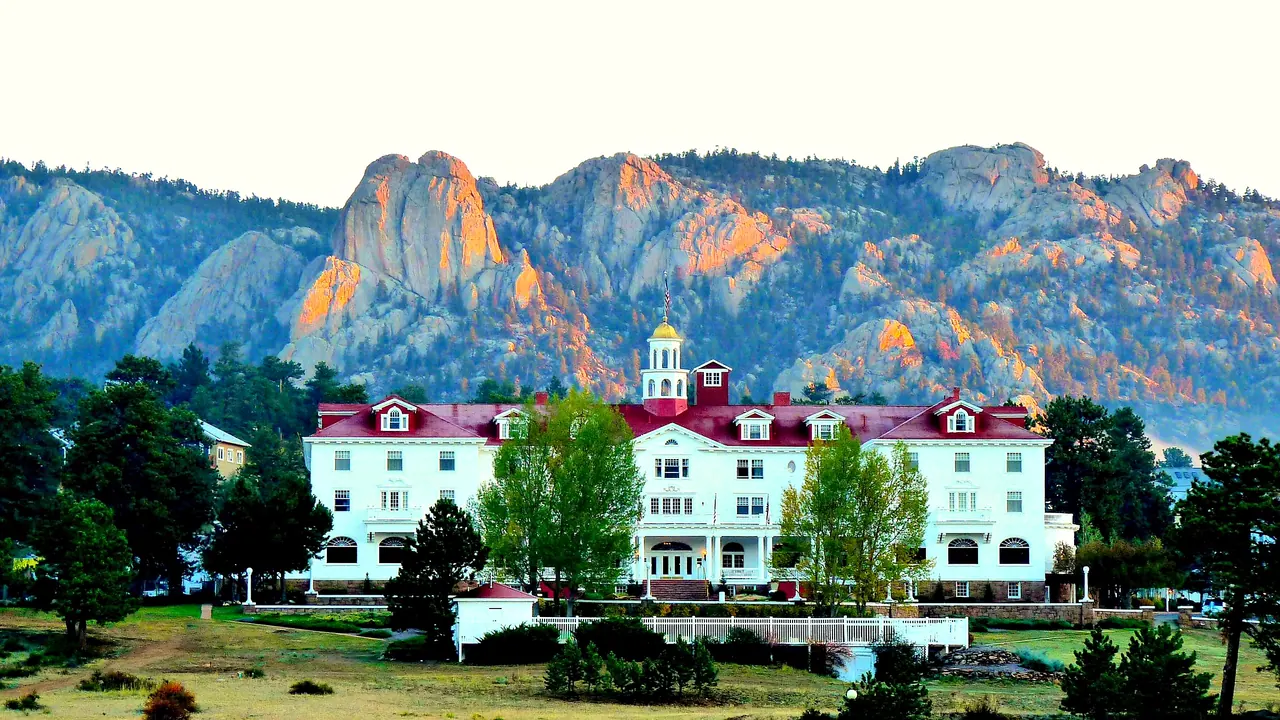
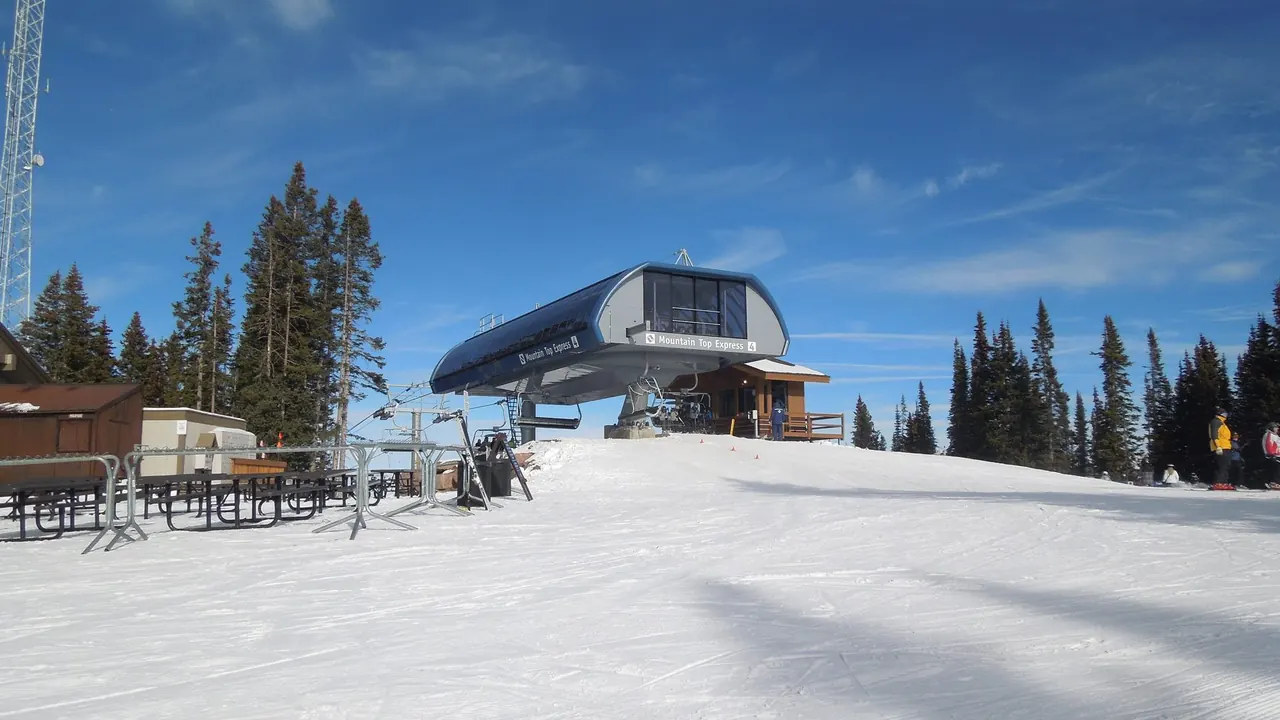
Photos: Estes Park by 1progressivedem1, CC BY-SA 4.0, cropped; Vail by DReifGalaxyM31, CC BY 3.0, cropped.
Estes Park or Vail?
Our verdict in twelve categories, each scored against the same fixed benchmark cities, and the climate month by month, so you can choose for your trip.
Choose Estes Park for
- prices
- culture and sights
- families
Estes Park suits travellers who want a national park on the doorstep and wildlife in the streets. Rocky Mountain National Park starts a few minutes from town, elk graze on the golf course, and the days revolve around lake walks, Trail Ridge Road and early starts. Evenings are simple and dining is plain. It also costs a good deal less than Vail, especially outside summer, which makes it the easier pick for families and anyone watching their spending.
Choose Vail for
- live music and the arts
- getting around
- nightlife
Vail is the choice for skiers first, and then for visitors who want a resort to look after them. The Back Bowls, the ski schools and lifts that start in the village make it a winter base Estes Park cannot match. In summer it adds a serious music and dance festival, polished spas and après-ski terraces that become summer dining. It also has a car-free village with free buses. All of this comes at a much higher price.
Scoreboard
Twelve categories on one fixed scale from 0 to 100. The shaded stretch is the gap between the two.
Your match
Pick a travel style or drag the sliders, and both match scores follow your weighting.
Wins on prices and culture and sights with your weighting.
Wins on live music and the arts and getting around with your weighting.
What matters to you?
Category by category
What the scores mean for a trip.
Beaches & swimming
Neither town works for a beach vacation, and in both the mountain water stays cold through summer. In Estes Park the snowmelt lakes, Lake Estes among them, are for paddling, fishing and shoreline walks, and the town's indoor aquatic centre is there for a swim. Vail has small lakes and reservoirs where locals sunbathe in July, but for a swim you will use a hotel pool.
Food & drink
Vail eats better, though neither town is a reason to travel for food. Its restaurants in Vail Village and Lionshead are polished and cater to wealthy visitors. Expect steak and game, Alpine fondue, sushi and hotel dining rooms with serious wine lists, plus mountain lodges for lunch on the slopes.
Estes Park keeps to mountain gateway food: burgers, barbecue, elk and bison, big trail breakfasts, local breweries and the taffy shops on Elkhorn Avenue. Quality along the main strip is uneven. Both towns cut back outside their busy seasons, and diners in both drive down to Denver for real variety.
Culture & sights
Estes Park has a little more history to show. The Stanley Hotel is a real landmark, with its Georgian Revival rooms, its link to The Shining and its ghost tours. The homesteading museum and the working MacGregor Ranch add some local story.
Vail's chalets and covered bridges are a 1960s copy of a Tyrolean town, not a historic one. Its best visit is the Colorado Snowsports Museum and its story of the Tenth Mountain Division, with the Betty Ford Alpine Gardens for a summer stroll. In either town the sights fill an afternoon, not a trip.
Nightlife
Vail has the clearly livelier evenings, at least in winter. When the lifts close, the terraces and slopeside bars in Vail Village and Lionshead fill for après-ski, and on weekends a few bars and a small club keep going past midnight. It feels more like a party than a wild night out, and in the off-seasons the town empties after dinner.
Estes Park keeps hikers' hours. A brewery taproom or a saloon on Elkhorn Avenue after the trail is about as far as it goes, and most visitors are in bed early for dawn wildlife watching.
Nature & outdoors
Both are outstanding mountain bases, and the difference is what you do there. Estes Park is the gateway to Rocky Mountain National Park. Its highlights are wildlife, alpine tundra along Trail Ridge Road, lake hikes to Bear, Dream and Emerald, and Longs Peak. In autumn the elk rut fills the meadows with bugling at dusk. It has no ski resort nearby, so winter means snowshoeing in a quiet park.
Vail centres on skiing, with a huge lift-served mountain and dry powder through a long winter. In summer the gondolas carry hikers and mountain bikers up high, the Gore Range and Holy Cross wilderness areas offer demanding hikes, and rafting is within reach. Choose Estes Park for elk and a national park, and Vail for skis and lifts.
Day trips
Day trips from both are pleasant rather than outstanding, and both need a car, but the outings feel quite different. From Estes Park you head down the canyons to the cities of the plains: Boulder with Pearl Street and the Flatirons, Fort Collins' Old Town, and Denver's museums. In summer you can also cross Trail Ridge Road to Grand Lake.
From Vail you stay in the mountains. Beaver Creek and Breckenridge are close, Leadville has its silver-boom streets, and Aspen is further off. The best day out is Glenwood Springs and its hot springs in the Colorado River canyon.
Good for families
Both suit outdoor families, with a slight edge to Estes Park, and the attractions differ. In Estes Park children see elk wander through town, earn junior ranger badges and manage the flat walks around Sprague and Bear lakes. Mini golf, go-karts and the Prospect Mountain tramway fill the gaps, and the town is cheaper for a family.
Vail is built around children learning to ski, with large ski schools, a safe car-free village and, in summer, a mountain coaster and ropes courses at the top of the gondola. Neither has a zoo or a big museum for a wet day, and both sit high enough that small children need a day to adjust to the altitude.
Getting around
Vail is far easier to manage without a car. Its centre is pedestrian, the lifts leave from town, and a free bus runs the length of the valley, so many visitors manage the whole week on foot and by bus. The weak point is arrival, since there is no train and Vail Pass can close in heavy snow.
Estes Park has a walkable downtown and free summer shuttles to the Bear Lake trailheads. Beyond that a car is close to essential for reaching Trail Ridge Road, most trailheads and the towns on the plains. In summer, weekend traffic and parking in town can be a trial.
Shopping & style
Neither town is worth a trip for shopping, but Vail has more worth buying. Its pedestrian lanes sell upmarket ski clothing, fur and leather, jewellery and mountain landscape paintings, which suits anyone kitting out for the slopes or after a luxury souvenir. Elkhorn Avenue in Estes Park is an hour's browse through T-shirts, taffy, western wear and a few wildlife galleries. Serious shoppers from either town head to Denver.
Affordability
Estes Park is much easier on the wallet. It is pricey in summer and early autumn, but winter and spring rooms cost far less, cabins with kitchens let you cook, and the park's trails and wildlife are free beyond the entrance fee.
Vail is one of the most expensive places for a vacation in North America. Lodging, lift tickets, ski school, equipment hire and meals all cost far above normal levels, and peak winter weeks cost more again. Staying further down the valley helps a little, but no part of a Vail trip is cheap.
Live music & performing arts
Vail is far ahead here, though in both towns the season is summer only. Bravo! Vail brings major orchestras to the open-air Gerald R. Ford Amphitheater, where you can picnic on the lawn with the peaks behind the stage. The Vail Dance Festival and a long-running jazz festival add to it, so music lovers should aim for July and August.
Estes Park offers free concerts at its riverside performance park, the odd evening at the Stanley Hotel and the Scottish-Irish Highland Festival with its pipe bands each September.
Wellness & relaxation
Vail is the better place to be pampered. Its big hotels run polished spas with massage after skiing, saunas, steam rooms and outdoor hot tubs under the peaks. The mineral pools and vapour caves of Glenwood Springs are about an hour away.
Estes Park has only a few lodge spas and massage studios. What it offers instead is quiet: a riverside cabin, elk at dusk and evenings with nothing to do. Its winter and spring months suit visitors who want to switch off rather than be looked after.
When should you go?
Pick your month. The climate figures are measured averages, not a forecast.
Estes Park in July
Vail in July
Daytime high, °C
Rainfall in the month, mm
Where the figures come from
Estes Park's temperatures are measured 80 km from the centre, at Kremmling.
Estes Park has no rain gauge within 25 km of the centre, so its rainfall comes from a gridded climate dataset read at the city rather than from a gauge further away.
Vail's temperatures are measured 47 km from the centre, at Kremmling.
Vail's station stands 186 m below the city centre, so the centre is likely a little cooler than the figures say.
Vail has no rain gauge within 25 km of the centre, so its rainfall comes from a gridded climate dataset read at the city rather than from a gauge further away.
Temperature and rainfall are climate normals, averaged over the years shown. Estes Park: 2006-2025 (rainfall 1991-2020) normals, Kremmling (80.4 km from centre). Vail: 2006-2025 (rainfall 1991-2020) normals, Kremmling (46.5 km from centre).
The two towns follow the same temperature curve. Daytime highs stay below freezing in December and January, climb through a mild spring and peak at about 29°C in July. June to September is the comfortable stretch for hiking and walking around town, and September at about 24°C brings the golden aspens to both. Neither gets warm enough for lake swimming at any point in the year.
Where they differ is the precipitation. Estes Park is dry in winter, with around 20mm a month, and gets its wettest weather in summer, with July reaching 50mm, mostly in afternoon thunderstorms. That makes early starts on the trails worthwhile. Vail's precipitation is spread evenly through the year. Its winter months are noticeably wetter than Estes Park's, and at those temperatures it falls as snow on the ski slopes. June is Vail's driest month at 23mm, which makes early summer a settled time for its high trails.
Which traveller are you?
On a trip on a tight budget, Estes Park is clearly the better choice. Cabins with kitchens and much cheaper rooms in winter and spring help, and once you are inside the national park the wildlife and trails cost nothing. In Vail, lodging, lift tickets and meals are expensive almost everywhere.
For a food and nightlife trip, Vail gives you more to work with. It has steak and fondue rooms, long wine lists and lively après-ski terraces, and on winter weekends a few bars stay open past midnight. Estes Park offers diners, barbecue and taprooms that go quiet by ten.
On a ski trip the choice is simple: Vail. Its huge ski area runs from the groomed front side to the Back Bowls and Blue Sky Basin, and the lifts leave from the village. Estes Park has no ski resort nearby, and winter there means snowshoeing.
Before you go
| Measure | Estes Park | Vail |
|---|---|---|
| Currency | US Dollar (USD) | US Dollar (USD) |
| Sockets | AB120 V, 60 Hz | AB120 V, 60 Hz |
| Driving side | Right | Right |
| Time zone | UTC-7, UTC-6 in summer | UTC-7, UTC-6 in summer |
| Emergency number | 911 | 911 |
| Elevation | 2,293 m | 2,445 m |
| Main airport | Denver International Airport (DEN)92 km from centre231 non-stop destinations | Eagle County Regional Airport (EGE)48 km from centre16 non-stop destinations |
| Public holidays this year | 12 days | 12 days |
By the numbers
| Measure | Estes Park | Vail |
|---|---|---|
| City population | 5,904 | 4,835 |
| People per km² | 335 | 400 |
| Museums within 10 km | 4 | 1 |
| UNESCO World Heritage sites within 50 km | 0 | 0 |
Where else could you go?
Every comparison below shares a destination with this one, so you can follow Estes Park or Vail somewhere new.
- Beaver Creekvs Vail
- Copper Mountainvs Vail
- Keystonevs Vail
- Breckenridgevs Vail
- Bouldervs Estes Park
- Winter Park, Coloradovs Estes Park