Photos: Flores by Wayan Yatika, CC BY-SA 4.0, cropped; Gili Islands by Magul, CC BY-SA 4.0, cropped.
Flores or Gili Islands?
Our verdict in twelve categories, each scored against the same fixed benchmark cities, and the climate month by month, so you can choose for your trip.
Choose Flores for
- nature and the outdoors
- culture and sights
- shopping
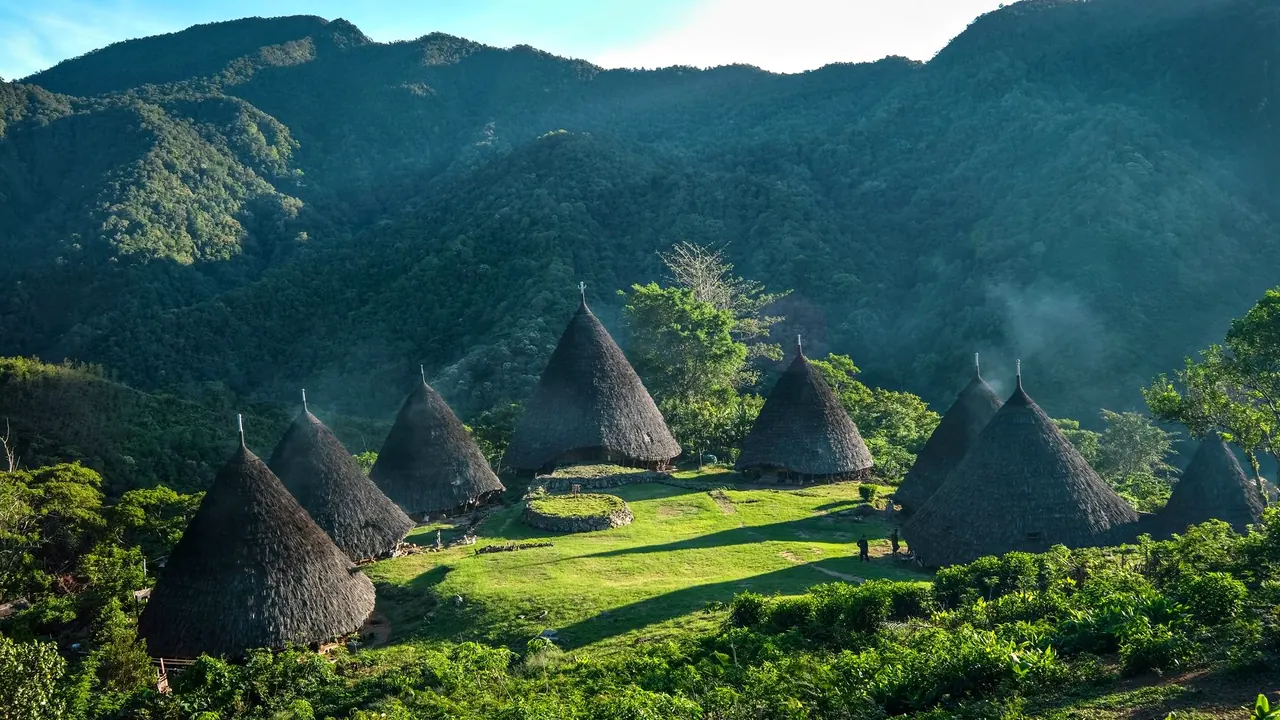
Flores is for travellers who want an expedition rather than a stay. Its pull is the wild end of Indonesia: Komodo dragons on the savannah of Rinca, manta cleaning stations and some of the richest reefs anywhere, Padar's ridges, the coloured crater lakes of Kelimutu and highland villages such as Wae Rebo and Bena where heritage is still lived in. In return you put up with long mountain drives, early boat starts, plain food and quiet evenings.
Choose Gili Islands for
- nightlife
- getting around
- wellness
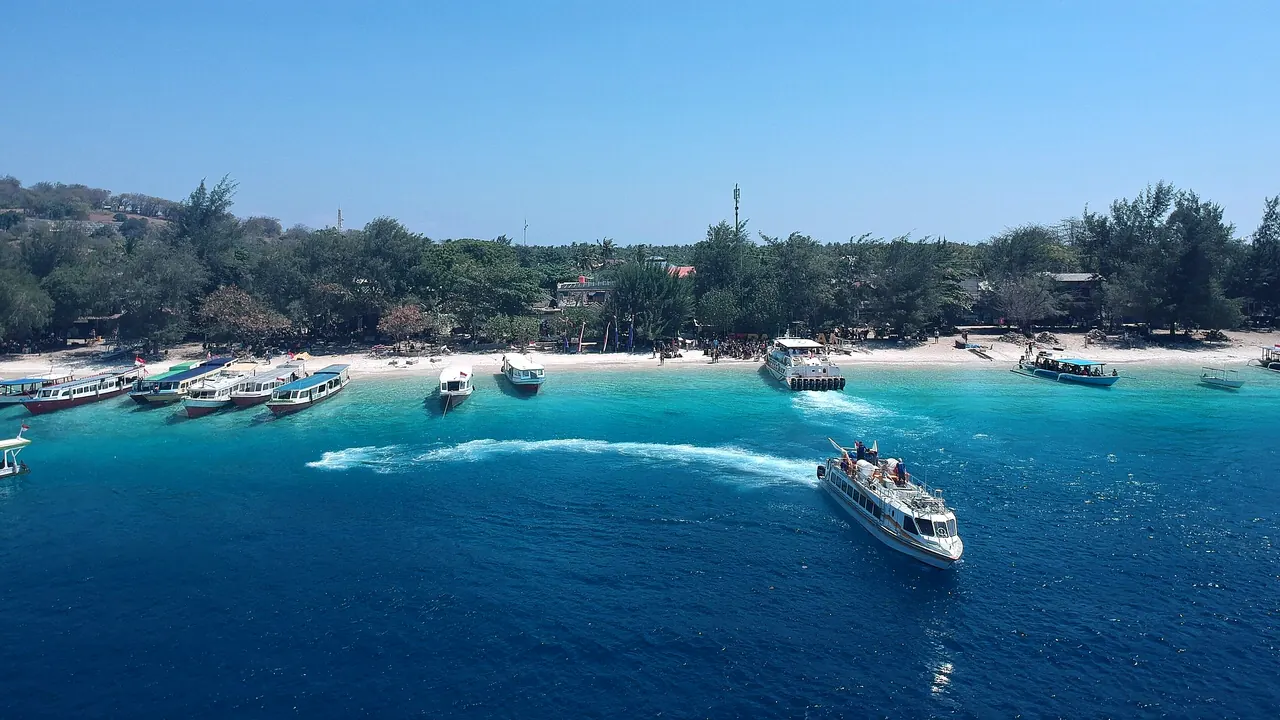
The Gili Islands suit people who want to arrive and then stop moving. The sand is a short walk from every bed, there are no engines, turtles feed off the beach, and massage and yoga fill the gaps between swims. Gili Trawangan adds loud nights if you want them, while Meno and Air stay calm. What you give up is the big landscape and any real heritage, since for temples or Sasak villages you have to cross to Lombok.
Scoreboard
Twelve categories on one fixed scale from 0 to 100. The shaded stretch is the gap between the two.
Your match
Pick a travel style or drag the sliders, and both match scores follow your weighting.
Wins on nature and the outdoors and culture and sights with your weighting.
Wins on nightlife and getting around with your weighting.
What matters to you?
Category by category
What the scores mean for a trip.
Beaches & swimming
The Gilis win because the beach is the trip itself. Every island is ringed with white or golden sand a short walk from your room, Gili Meno has the widest and quietest stretches, and turtles often feed right off the shore. The catch is that much of the shoreline shelves over coral and seagrass, awkward at low tide, so it pays to choose your swimming spot.
On Flores the beach is a boat day. Pink Beach, Kanawa and little Kelor in the Komodo area are lovely and the snorkelling off the sand is excellent, but Labuan Bajo's own waterfront is a working harbour, so you plan each swim instead of strolling down to it. Riung's islets are the quieter option further east.
Food & drink
Neither is a place to travel for its cooking, but the Gilis eat a little better. Gili Trawangan's evening market grills fish to order beside satay and noodle stalls, Gili Air has a good spread of relaxed cafés, and the warung set back from the beach serve Lombok dishes such as ayam taliwang.
Flores offers less choice once you leave Labuan Bajo's harbourfront night market and seafood restaurants, with inland meals coming down to rice, fish and sambal. Its real treat is coffee: highland arabica roasted over wood fires in the villages around Bajawa and Ruteng.
Culture & sights
Flores is far ahead here. The Ngada villages around Bena keep stone megaliths and high-roofed ancestral houses below the Inerie volcano, Wae Rebo is a night with a highland community, and there is Liang Bua cave, where Homo floresiensis was found, Sukarno's house of exile in Ende and the Portuguese-rooted Holy Week in Larantuka. None of it is in a museum, and the sites are spread across the island.
The Gilis have the texture of Sasak and Bugis fishing villages, small mosques and the call to prayer, plus a Second World War Japanese lookout on Trawangan's hill. That is roughly the whole list.
Nightlife
The Gilis lead clearly, though almost entirely because of Gili Trawangan. Its east-coast strip has beach bars filling from sunset and a party night that moves between venues through the week, so you can find DJs and a young backpacker crowd any evening. Gili Air offers bonfires and gentler bars for anyone who wants less.
Flores goes out in Labuan Bajo alone, with sunset drinks over the bay and the odd late party. Most people there have a boat before dawn, so nights end early, and the inland towns are silent after dinner.
Nature & outdoors
Flores is in another league. Komodo National Park combines dragons on dry savannah, Padar's ridge above three bays, and reefs and manta stations fed by strong currents, and inland the island rises into volcanoes, terraced Manggarai hills and the three crater lakes of Kelimutu.
The Gilis' outdoors is mostly underwater, and it is gentler: turtles, reef sharks and good coral close to shore, with many dive schools that make it one of the easiest places in Indonesia to learn. On land the islands are flat loops of sand, with views of Agung and Rinjani rather than anything to climb.
Day trips
The Gilis have the slight edge because they make a fixed base work. The other two islands are a short boat hop away, and from Bangsal a driver can take you along the coast road to Senggigi, into Mataram or to Sasak weaving villages, with Sade in the south a long day.
Flores barely works as a base. Labuan Bajo's outings are by sea, the towns sit hours apart, and only from Bajawa are there easy half days to Bena and the Soa plain, so most people travel the island in stages instead of coming back each night.
Good for families
The Gilis are easier with children, provided you stay on Gili Meno or Gili Air. With no cars or motorbikes, children can walk and cycle freely, Meno has a small turtle hatchery, and snorkelling with turtles from the beach thrills older children. Clinics are small, though, and the coral rubble in the shallows needs reef shoes.
Flores asks more of a family: long twisting roads, early and sometimes choppy boat trips and basic hospitals away from the larger towns. It rewards adventurous older children with dragons on a ranger walk, and is best kept to Labuan Bajo and short park outings.
Getting around
Once you are on a Gili, getting about is simple: you walk, cycle or take a cidomo horse cart, and the effort lies only in sandy lanes and the boat to get there, a crossing of about two hours from Bali or a drive and short hop from Lombok. Changing islands needs some planning around a few boats a day.
Flores is the opposite. The Trans-Flores Highway winds through the mountains, the run from Labuan Bajo to Kelimutu usually takes three or four days with a hired car and driver, and many travellers fly into the west and out of Maumere or Ende to save doubling back.
Shopping & style
Flores has the one thing worth buying: hand-dyed ikat, bought direct from the women who weave it, with the indigo and rust of Sikka, the earthy tones of Ende and the bold Ngada motifs each recognisably their own. Highland coffee makes a good second purchase.
The Gilis offer beachwear, sarongs, resort boutiques on Trawangan's strip and pearls of very uneven quality. For real craft you are pointed back to Lombok's villages.
Affordability
Both are cheap for basic travel, but the costs fall in different places. On Flores, guesthouses, warung meals and village homestays cost little, while the money goes on Komodo boat trips, park fees for foreign visitors, liveaboard diving and the car and driver for the overland journey.
On the Gilis, bungalows, massages and bicycle hire are inexpensive, though everything arrives by boat, so prices run above mainland Lombok. Dive courses, pool villas and the fast boat from Bali are what push a budget up, and rooms are scarcest in July and August.
Live music & performing arts
Neither has a stage, so what you will hear differs in kind. Flores has living ritual: the caci whip-and-shield duel of Manggarai, often performed for visitors, the ja'i circle dance at Ngada ceremonies, and strong church choirs, although seeing a genuine ceremony is down to luck. On the Gilis it comes down to reggae and cover bands in Trawangan and Air beach bars.
Wellness & relaxation
The Gilis are the place to unwind. Gili Meno and Gili Air are engine-free and slow, massage is offered from beach shelters to resort spas, and yoga is well established, with daily classes and longer retreats, some combined with freediving. Only Trawangan's party strip breaks the calm.
Flores has something the Gilis lack, natural hot water: Malanage, where a warm stream meets a cold river near Bajawa, and the simple Soa springs. Labuan Bajo's resort spas and a few quiet island hideaways help too, but the overland route makes most trips tiring rather than restful.
When should you go?
Pick your month. The climate figures are measured averages, not a forecast.
Flores in July
Gili Islands in July
Daytime high, °C
Rainfall in the month, mm
Where the figures come from
Flores has no weather station within reach, so its figures come from a gridded climate model rather than a measured record, and read a broad area rather than one spot.
Temperature and rainfall are climate normals, averaged over the years shown. Flores: 2001-2020 normals, NASA POWER reanalysis grid, no weather station within 90 km. Gili Islands: 1991-2020 normals, Ampenan / Selaparang (20.5 km from centre).
Both follow the same rhythm: a wet season from about November to March and a dry season peaking from June to September, with the sea warm enough to swim all year at 28°C to 29°C. On Flores the rains are heavier. Around Labuan Bajo on the west coast, where most visitors stay, December brings about 356mm while August drops to roughly 25mm, and the calm, dry months from May to October are the ones for boat days, diving in the park and the overland drive. The highlands around Ruteng and Bajawa are cooler than the coastal figures suggest, which makes walking easier there.
The Gilis are a little hotter, with daytime highs around 32°C for most of the year, which makes midday cycling on the sandy lanes sticky work. Their wet season is lighter than Flores's but still real, and from May the sunshine climbs to its longest days in August and September, the clearest and calmest time to be on the water.
Which traveller are you?
On an outdoors trip, Flores wins easily. Komodo dragons, liveaboard diving among mantas and reefs, the climb up Inerie and sunrise over Kelimutu's crater lakes give it a range of landscape that three small, flat islands cannot match.
For a relaxing and wellness trip, the Gili Islands are the better choice. Gili Meno and Gili Air have no engines, massage is everywhere, yoga studios run daily classes, and the sea is a short walk away, while Flores keeps you moving with early starts and long drives.
On a culture and arts trip, Flores is the only real option of the two. Megaliths at Bena, overnight stays in Wae Rebo's conical houses, the Liang Bua cave and Larantuka's Catholic traditions give it substance, whereas the Gilis send anyone curious about heritage over to Lombok.
Before you go
| Measure | Flores | Gili Islands |
|---|---|---|
| Official language | Indonesian | Indonesian |
| Currency | Rupiah (IDR) | Rupiah (IDR) |
| Sockets | CF50 Hz | CF50 Hz |
| Driving side | Left | Left |
| Time zone | UTC+8 | UTC+8 |
| Emergency number | 112 | 112 |
| Main airport | Komodo Airport (LBJ)8 non-stop destinations | Lombok International Airport (LOP)10 non-stop destinations |
By the numbers
| Measure | Flores | Gili Islands |
|---|---|---|
| Population | 1,831,000 | - |
| People per km² | 135 | - |
| Swim season, months above 21 °C | 12 months | 12 months |
Where else could you go?
Every comparison below shares a destination with this one, so you can follow Flores or Gili Islands somewhere new.
- Lombokvs Gili Islands
- Nusa Penidavs Gili Islands
- Nusa Lembonganvs Gili Islands
- Balivs Gili Islands
- Lombokvs Flores
- Nusa Penidavs Flores