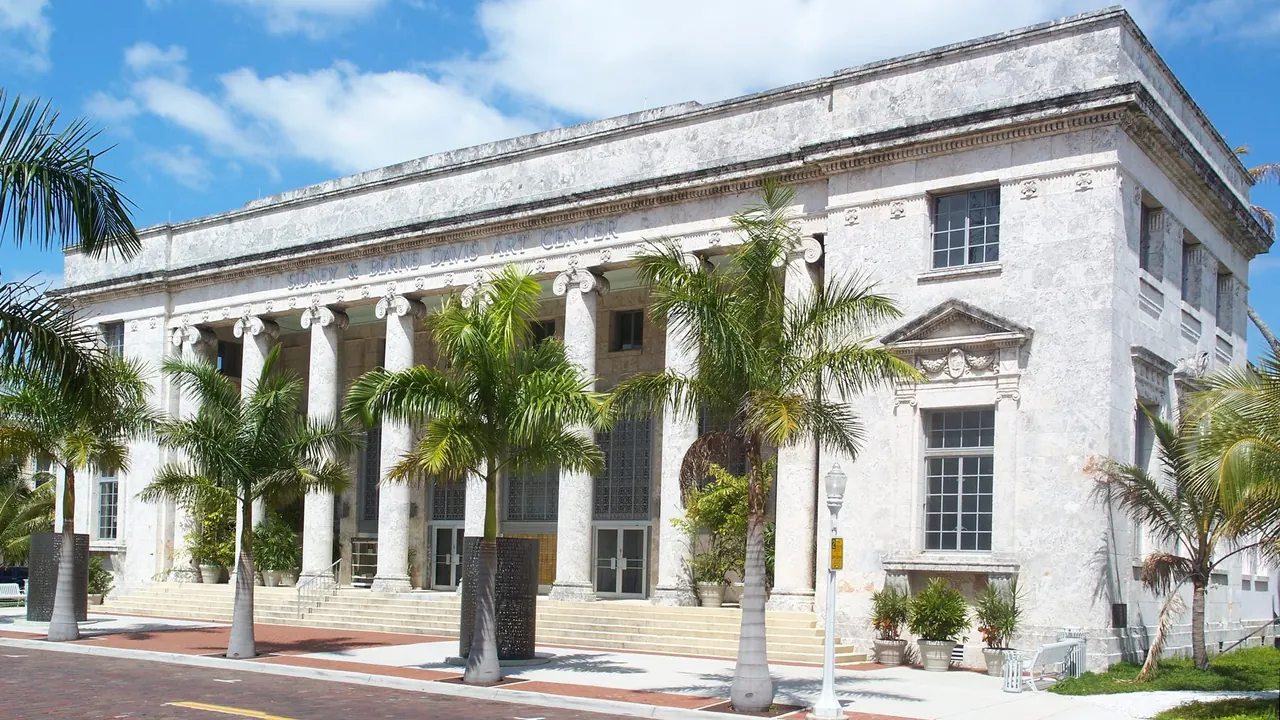
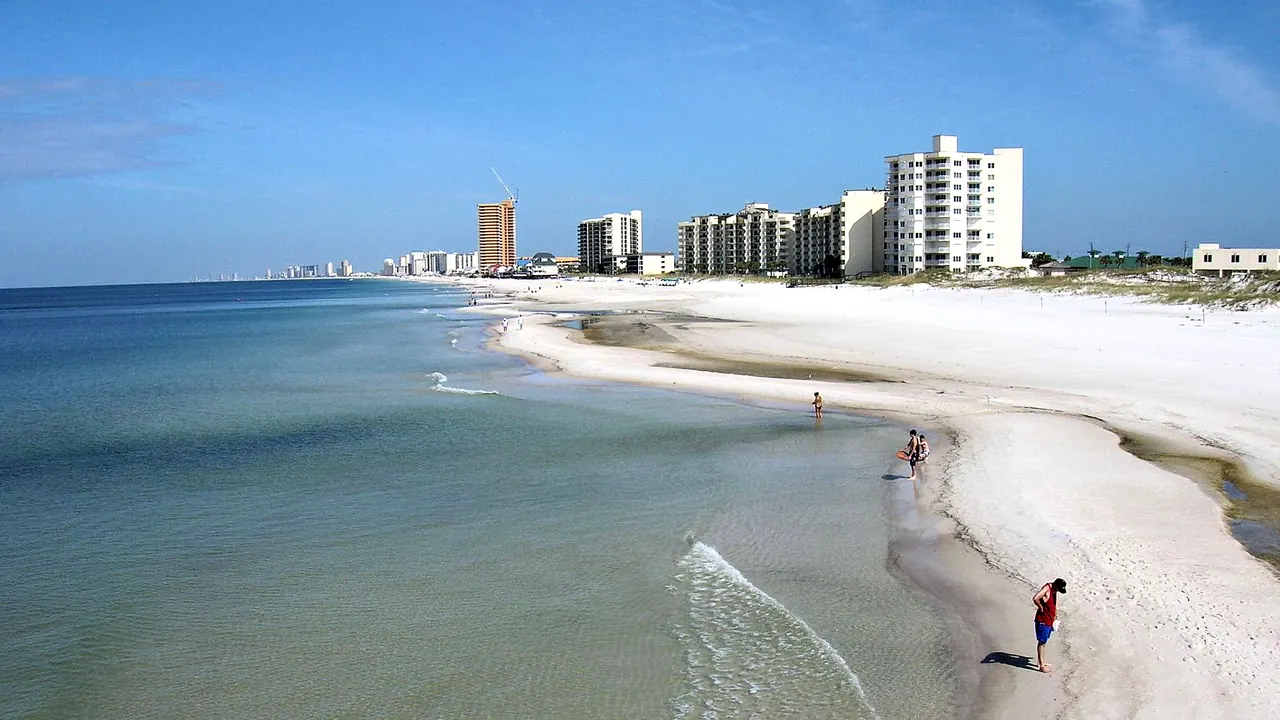
Photos: Fort Myers by Ebyabe, CC BY-SA 3.0, cropped; Panama City Beach by j.s. clark/ "Image by jsclark.net.", CC BY-SA 2.0, cropped.
Fort Myers or Panama City Beach?
Our verdict in twelve categories, each scored against the same fixed benchmark cities, and the climate month by month, so you can choose for your trip.
Choose Fort Myers for
- culture and sights
- live music and the arts
- nature and the outdoors
Fort Myers suits a winter escape for travellers who want warmth plus a bit more than the beach. While the northern Gulf is cool, it stays mild. The wildlife refuges and mangrove paddling are stronger, and there is a modest run of history, theatre and concerts in season. Couples, older travellers and anyone who would rather watch spoonbills than ride go-karts will feel more at home here.
Choose Panama City Beach for
- beaches
- families
- prices
Panama City Beach is the better choice for a summer beach week built around the sand itself. Its long white beach and clear green water outdo anything near Fort Myers, there is far more laid on for children, and a self-catering condo tends to cost a little less. Go for the shore and the attractions, because there is very little else in town.
Scoreboard
Twelve categories on one fixed scale from 0 to 100. The shaded stretch is the gap between the two.
Your match
Pick a travel style or drag the sliders, and both match scores follow your weighting.
Wins on culture and sights and live music and the arts with your weighting.
Wins on beaches and families with your weighting.
What matters to you?
Category by category
What the scores mean for a trip.
Beaches & swimming
Panama City Beach has the finer beach. Its powder-white quartz sand runs unbroken for about 43km right in front of the hotels, and the water turns a clear green on calm days. Fort Myers has no beach of its own, so you drive half an hour or more to Estero Island, Lovers Key or Sanibel. The sand there is pale and fine, but it is better known for shells than for sheer whiteness.
The water also behaves differently. The southern Gulf off Fort Myers is calm and gentle, though algae sometimes spoils it. The Panhandle surf brings real rip currents, so the flag system matters, and St. Andrews' lagoon is the safe spot for weak swimmers.
Food & drink
Neither is a place to travel for food, but Fort Myers gives you a bit more choice. Its downtown River District has independent kitchens and craft breweries, and better cooking can be found towards Sanibel and Naples. Panama City Beach serves much the same casual Gulf seafood, with its own oysters from the nearby bays, but chains and big themed restaurants dominate Front Beach Road.
Culture & sights
Fort Myers has a real half-day sight in the Edison and Ford Winter Estates, with its laboratory and riverside gardens. The palm-lined McGregor Boulevard and the early twentieth-century brick streets downtown are worth a look too.
Panama City Beach has almost nothing comparable. Its strip was built for tourism after the mid-twentieth century, and the small Man in the Sea Museum is its one cultural stop. The older St. Andrews district across the bay helps a little.
Nightlife
Evenings are quiet in both, but the setting differs. Fort Myers splits its nights between the River District's rooftop and cocktail bars, with a monthly art walk, and the beach bars by the pier on Estero Island. In winter the crowd there skews older.
Panama City Beach is all beach bars, tiki huts and sports bars, with cover bands and some dancing on summer weekends. Spring break makes both towns rowdier in March, but the effect is much louder on Front Beach Road.
Nature & outdoors
Fort Myers is the stronger choice for wildlife. Ding Darling refuge on Sanibel is a top spot for roseate spoonbills and herons. Corkscrew Swamp's old-growth cypress and the winter manatees on the Orange River add a lot, and the mangrove creeks of the Great Calusa Blueway are made for kayaking.
Panama City Beach's outdoors is more about the sea and dunes. St. Andrews has tall white dunes, Camp Helen has a rare coastal dune lake, and offshore wrecks and artificial reefs draw divers and anglers. Fort Myers has nothing to match those.
Day trips
The wider choice of outings lies around Fort Myers. Naples, under an hour south, and the island villages of Sanibel and Captiva make easy days out. About an hour and a half north, Sarasota's Ringling art museum and the Venetian Gothic Ca' d'Zan mansion give a proper cultural day, and Everglades City, a similar drive to the south-east, opens up the Ten Thousand Islands.
From Panama City Beach, the classic outing runs west along Scenic Highway 30A to the planned pastel towns of Seaside and Rosemary Beach. The old cotton and oyster port of Apalachicola is about an hour and a half east, and Pensacola's historic district and naval aviation museum are close to two hours away. From either base, every one of these trips means driving.
Good for families
Families are the core market in Panama City Beach, and it shows. There is a large water park, a marine park, a small zoo, an upside-down science attraction and go-kart tracks all along the strip, and a condo with a pool and kitchen is the standard stay.
Fort Myers works well for younger children who are happy with gentle water, shell hunting, dolphin trips and a science centre. It has no big park of its own, though, and Orlando is about three hours away.
Getting around
Both are car-only places, so book a rental either way. Fort Myers spreads across a wide county, with its beaches and reserves well away from town, and in winter the bridges to Sanibel and Estero Island clog up. Panama City Beach is one long 43km strip with a slow trolley-bus, and Front Beach Road crawls in summer. Once parked, Fort Myers has a walkable downtown, while Panama City Beach offers walks along the sand.
Shopping & style
Fort Myers has more worth browsing. There are the outlet mall towards Estero, independent stores in the River District, and the galleries and shell shops on Sanibel's Periwinkle Way and Captiva. Panama City Beach offers a chain-store centre by the pier and giant souvenir warehouses with shark-mouth entrances, so anything individual means a drive to the 30A towns.
Affordability
Panama City Beach usually costs a little less. Condos with kitchens are plentiful, and long winter stays are especially cheap. Peak summer weeks on the beachfront are still pricey.
Fort Myers is at its dearest exactly when it is most pleasant, from January to April, and Sanibel in particular books up early and costs more. Staying in town and driving to the beach saves a good deal. You also pay causeway and beach parking fees.
Live music & performing arts
For a night at the theatre, Fort Myers is far better placed, at least in winter. Touring Broadway musicals play the Barbara B. Mann Performing Arts Hall, a repertory company performs in a restored 1908 theatre downtown, and a regional symphony gives concerts through the season. In summer, though, the programme largely stops.
Panama City Beach offers mostly cover bands and acoustic sets on beach-bar decks, plus some outdoor concerts at the shopping centre in summer. The closest it gets to an arts season is the modest run of touring shows and local productions at the restored historic theatre across the bay in Panama City.
Wellness & relaxation
Neither has a spa culture, so in both places relaxing means resort massages and walks by the water. Fort Myers has the gentler setting, especially Sanibel and Captiva with their low buildings, bike paths and early nights, and its busy season is also the pleasant one. Panama City Beach only gets quiet from autumn to spring, when the cooler beach empties for sunset walks, and it is loud in summer and at spring break.
When should you go?
Pick your month. The climate figures are measured averages, not a forecast.
Fort Myers in July
Panama City Beach in July
Daytime high, °C
Rainfall in the month, mm
Where the figures come from
Fort Myers has no rain gauge within 25 km of the centre, so its rainfall comes from a gridded climate dataset read at the city rather than from a gauge further away.
Panama City Beach has no rain gauge within 25 km of the centre, so its rainfall comes from a gridded climate dataset read at the city rather than from a gauge further away.
Temperature and rainfall are climate normals, averaged over the years shown. Fort Myers: 1991-2020 normals, Fort Myers / Page Park (4.5 km from centre). Panama City Beach: 1971-2000 (rainfall 1991-2020) normals, Tyndall Air Force Base (24.6 km from centre).
The two cities have opposite seasons. Fort Myers is at its best from November to April, with daytime highs in the mid-20s and little rain. The Gulf is around 20°C in January, cool but swimmable on sunny days. From June to September it turns hot and very wet, with afternoon storms that push monthly rainfall past 200mm, and walking about at midday becomes hard work.
Panama City Beach sits much further north and has a real winter. January highs are only about 16°C, the sea drops to around 17°C, and it rains steadily all winter. The beach comes into its own from late May to October, when the water warms to 28-30°C. Summer is stormy here as well, though a little less wet than in Fort Myers. May and late September to October give warm water with fewer downpours.
Which traveller are you?
On a family trip with young children, Panama City Beach is the easier pick. It has a water park, a marine park with dolphin shows, mini-golf and go-karts, and the sheltered lagoon at St. Andrews makes a safe first snorkel. Fort Myers offers shelling and manatees but no comparable attractions.
For a culture and arts trip, Fort Myers is clearly the better choice. The Edison and Ford Winter Estates, the old brick River District and a winter season of Broadway tours, repertory theatre and symphony concerts give it substance that Panama City Beach simply lacks.
On an outdoors trip, Fort Myers wins on wildlife. Ding Darling's wading birds, the cypress boardwalk at Corkscrew Swamp and the mangrove tunnels of the Great Calusa Blueway beat the Panhandle's dunes, although Panama City Beach is better for wreck diving and deep-sea fishing.
Before you go
| Measure | Fort Myers | Panama City Beach |
|---|---|---|
| Currency | US Dollar (USD) | US Dollar (USD) |
| Sockets | AB120 V, 60 Hz | AB120 V, 60 Hz |
| Driving side | Right | Right |
| Time zone | UTC-5, UTC-4 in summer | UTC-6, UTC-5 in summer |
| Emergency number | 911 | 911 |
| Elevation | 3 m | 3 m |
| Main airport | Southwest Florida International Airport (RSW)12 km from centre79 non-stop destinations | Northwest Florida Beaches International Airport (ECP)20 km from centre19 non-stop destinations |
| Public holidays this year | 11 days | 11 days |
By the numbers
| Measure | Fort Myers | Panama City Beach |
|---|---|---|
| City population | 86,395 | 18,094 |
| People per km² | 681 | 375 |
| Museums within 10 km | 3 | 0 |
| UNESCO World Heritage sites within 50 km | 0 | 0 |
| Swim season, months above 21 °C | 10 months | 7 months |
Where else could you go?
Every comparison below shares a destination with this one, so you can follow Fort Myers or Panama City Beach somewhere new.
- Naples, Floridavs Fort Myers
- Destinvs Panama City Beach
- Sarasotavs Fort Myers
- Pensacolavs Panama City Beach
- St. Petersburg, Floridavs Fort Myers
- St. Pete Beachvs Fort Myers