France
Serre Chevalier
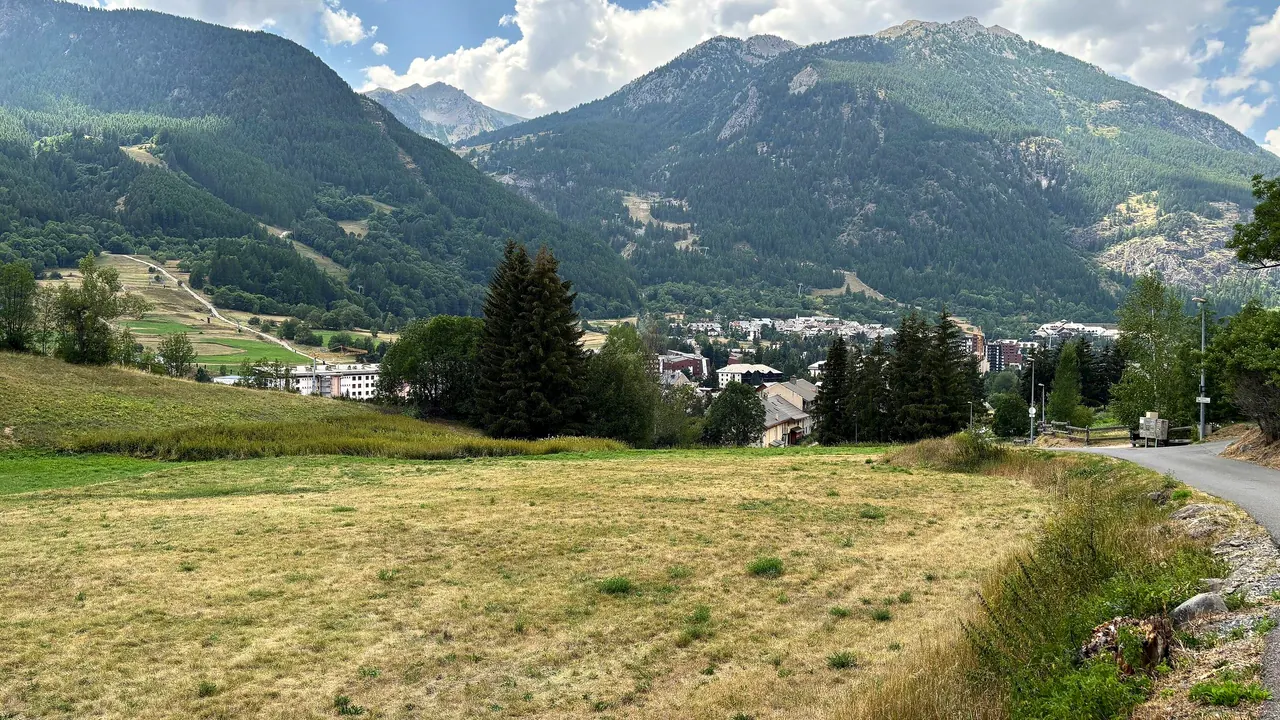
La Salle-les-Alpes in summer
- Nature & outdoors91
- Families62
- Wellness & relaxation62
Photo: Mathieu Brossais, CC BY 4.0, cropped
Serre Chevalier lies in French Alps, which has its own page.
Match
39
Every category weighted equally
- Beach & sun40
- Culture & arts36
- Food & nightlife31
- Family trip44
- Outdoors48
- Relax & unwind43
- Shopping & style34
- On a budget39
Serre Chevalier in twelve categories
Our verdict on each, scored 0 to 100 against the same fixed benchmark cities, so a score means the same thing on every page.
Beaches & swimming. Scores 14 out of 100.
Food & drink. Scores 30 out of 100.
Culture & sights. Scores 38 out of 100.
Nightlife. Scores 28 out of 100.
Nature & outdoors. Scores 91 out of 100.
Day trips. Scores 45 out of 100.
Good for families. Scores 62 out of 100.
Getting around. Scores 42 out of 100.
Shopping & style. Scores 12 out of 100.
Affordability. Scores 35 out of 100.
Live music & performing arts. Scores 12 out of 100.
Wellness & relaxation. Scores 62 out of 100.
Serre Chevalier category by category
Beaches & swimming
14This is a high mountain valley, and swimming is not part of the stay. In summer the nearest real bathing is at the Lac de Serre-Ponçon, a big reservoir about an hour south, where the water reaches about 22°C in July and August and there are small shingle beaches and lake bases. Closer to home, the valley's outdoor pools and the open-air thermal pools at Le Monêtier-les-Bains are where most visitors get into the water. Anyone who wants the sea is better off on the coast.
Food & drink
30Eating here is mountain food. Slope-side restaurants serve tartiflette, fondue and raclette, and most villages have a few traditional dining rooms. The Hautes-Alpes have dishes of their own worth looking for: oreilles d'âne, a gratin of wild spinach and pasta, tourtons filled with potato, and the region's lamb, cheeses and génépi liqueur. Briançon has the widest choice and a weekly market. Overall the range is narrow, and much of it is cooked for skiers who want something hot and filling, so it is fine but not a reason to come.
Culture & sights
38The heritage sits at the bottom of the valley, in Briançon, which is the lowest base of the ski area. Its walled upper town, built by Vauban on a rocky spur, is part of a UNESCO listing of his fortifications: steep lanes with a stream running down the main street, a twin-towered collegiate church, and forts such as the Fort des Têtes on the slopes opposite, linked by the arched Pont d'Asfeld.
Up the Guisane valley, Chantemerle, Villeneuve and Le Monêtier-les-Bains keep old stone churches and painted sundials on their walls, typical of the Briançonnais. Beyond that there is little: a few small museums and no major collections. A day covers it.
Nightlife
28Evenings revolve around après-ski. In winter the bars at the foot of the slopes in Chantemerle and Villeneuve fill up when the lifts close, and there are a couple of late bars and a small club that keep going into the night during the French school vacation weeks. It is a resort known for its skiing and its family atmosphere, not its parties, and Le Monêtier is quieter still. In spring, summer and autumn the valley goes to bed early.
Nature & outdoors
91This is a place built entirely around mountains. In winter the ski area covers the slopes of the Guisane valley from Briançon to Le Monêtier, with long runs through larch forest that keep visibility good when the weather turns, and the southern Alps get a lot of sunshine. Off-piste, ski touring and ice climbing are close by.
In summer the valley opens onto the Écrins national park, with glaciers, high lakes and marmots, and onto famous road passes: the Col du Lautaret with its alpine garden, the Galibier and the Izoard, which draw road cyclists from everywhere. There is mountain biking off the lifts, via ferrata, rafting on the Guisane and Durance, and gentle valley walking in the Clarée valley near Névache.
Day trips
45Briançon's old walled town is the first outing for anyone staying higher up the valley. Further down the Durance, the star-shaped fortified village of Mont-Dauphin, another Vauban site, and the old cathedral town of Embrun make a good half day each, about 40 minutes to an hour away. Névache, in the Clarée valley, is a small village of old wooden houses and chapels.
Italy is close. Over the Montgenèvre pass, the Susa valley has the Roman town of Susa, the hilltop abbey of the Sacra di San Michele and the fort at Exilles, while the huge fortress of Fenestrelle lies in the neighbouring Chisone valley, reached over Sestriere. Turin is about two hours away for a full day. The list is short, and mountain roads make everything slower than the map suggests.
Good for families
62Families make up much of the resort's winter crowd. Each village has a ski school and beginner areas, there are tree-lined blue runs that build confidence, and toboggan runs and snow parks fill the gaps. The open-air thermal pools at Le Monêtier are a natural treat after a day on the slopes. In summer children can try mountain biking, gentle walks to lakes, rafting and summer luges.
The villages are small, safe and calm. What it lacks are the big attractions of a city: no zoo, aquarium or theme park, and with toddlers the cold, the altitude and the logistics of ski gear take patience.
Getting around
42The resort is a chain of villages strung along about 15km of the valley road, from Briançon up to Le Monêtier-les-Bains. In winter shuttle buses link them and the lift bases, and the lifts themselves join the villages up on the mountain. Briançon has a railway station at the end of a long line from Paris, including an overnight train, and there are buses from Grenoble and Turin. Each village is easy on foot, but out of season buses thin out, and for passes, lakes or Italy a car makes life much simpler.
Shopping & style
12Shopping means ski hire and outdoor gear, plus a few shops selling local cheeses, charcuterie and génépi. Briançon's old town adds some small craft and food shops along its steep main street, and there are weekly markets. Anyone who wants to shop should not plan on doing it here.
Affordability
35In winter it is a ski resort, with lift passes, equipment hire and ski lessons adding up quickly, and the French school vacation weeks pushing up the price of apartments and chalets. Even so, it costs less than the big-name resorts in the northern Alps, and staying in Briançon, at the bottom of the lifts, or self-catering in an apartment cuts costs sharply. Summer is noticeably cheaper, and walking, cycling and the national park cost nothing.
Live music & performing arts
12Live culture is thin. Briançon has a small municipal theatre and cultural programme, there are summer music events in the valley's churches and occasional concerts or bands in the resort, but there is no regular programme a visitor could plan a trip around.
Wellness & relaxation
62Le Monêtier-les-Bains, at the top of the valley, has hot springs used since Roman times, and its large thermal complex is one of the resort's most loved features. Outdoor pools fed by the springs sit at around 1,500m, with views up to snowy peaks, along with steam rooms, a grotto and treatment rooms. Floating in warm water after a day of skiing is the classic way to end the day here.
Away from the baths the pace is slow by nature: small villages, quiet evenings and clean mountain air. Beyond the thermal complex there are mostly hotel spas and massages, so the wellness centres on one place, but it is a very good one.
When should you go?
Pick a month to see what it is like. The climate figures are measured averages, not a forecast.
Serre Chevalier in July
Daytime high, °C
Rainfall in the month, mm
The whole year
Shaded against this destination’s own year: the deepest cell is its best month for that figure and the palest its weakest.
Where the figures come from
Serre Chevalier has no weather station within reach, so its figures come from a gridded climate model rather than a measured record, and read a broad area rather than one spot.
Temperature and rainfall are climate normals, averaged over the years shown. Serre Chevalier: 1991-2020 normals, TerraClimate 4 km grid at the town, no weather station within 90 km.
Before you go
| Measure | Serre Chevalier |
|---|---|
| Official language | French |
| Currency | Euro (EUR) |
| Sockets | CE230 V, 50 Hz |
| Driving side | Right |
| Time zone | UTC+1, UTC+2 in summer |
| Emergency number | 112 |
| Elevation | 2,491 m |
| Main airport | Turin Airport (TRN)90 km from centre65 non-stop destinations |
| Public holidays this year | 11 days |
By the numbers
| Measure | Serre Chevalier |
|---|---|
| Museums within 10 km | 1 |
| UNESCO World Heritage sites within 50 km | 1 |
Compare Serre Chevalier with
Every comparison with a written verdict behind it.
- Adelboden
- Alpe d'Huez
- Andermatt
- Arosa
- Avoriaz
- Chamonix
- Châtel
- Courchevel
- Crans-Montana
- Davos
- Engelberg
- Flaine
- Grindelwald
- Gstaad
- Klosters
- La Clusaz
- La Plagne
- La Rosière
- Laax
- Le Grand-Bornand
- Lenzerheide
- Les Arcs
- Les Deux Alpes
- Les Gets
- Les Menuires
- Leukerbad
- Megève
- Méribel
- Montgenèvre
- Morzine
- Mürren
- Saas-Fee
- Saint-Gervais-les-Bains
- Samnaun
- Samoëns
- St. Moritz
- Tignes
- Val Cenis
- Val d'Isère
- Val Thorens
- Verbier
- Wengen
- Zermatt