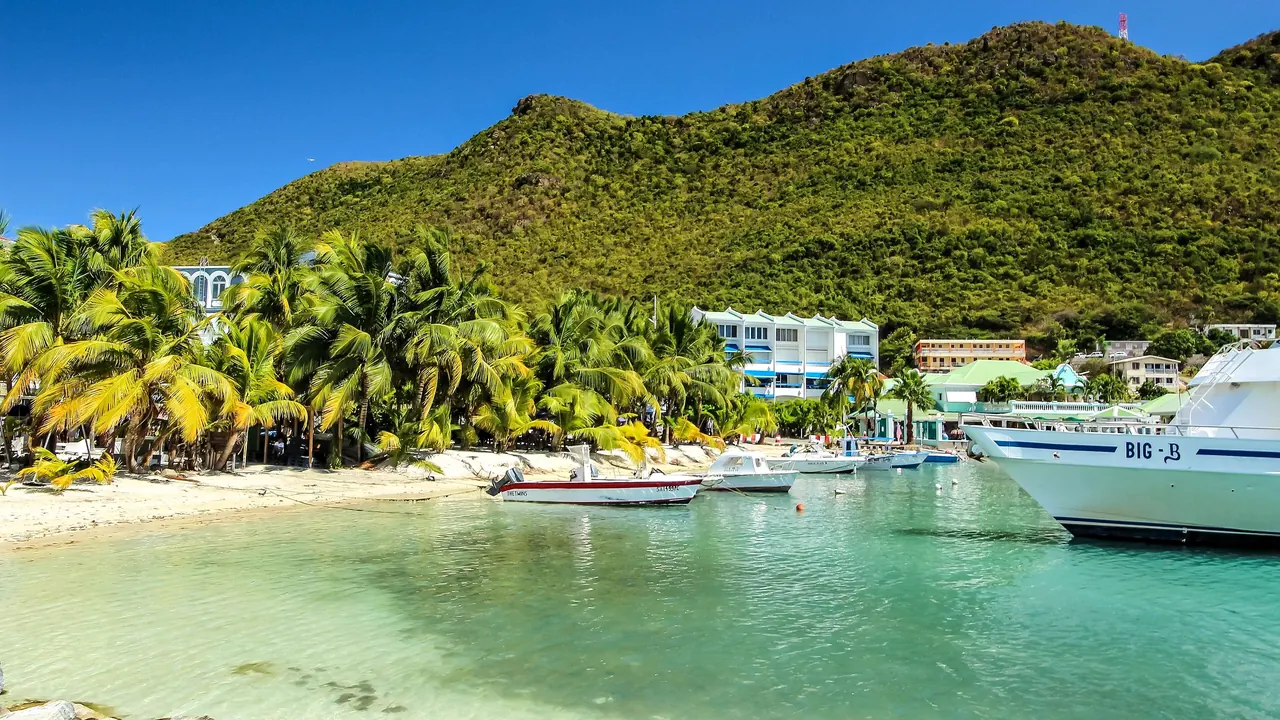
Photos: Sint Maarten by Dr. Thomas Liptak, CC BY-SA 4.0, cropped.
Guadeloupe or Sint Maarten?
Our verdict in twelve categories, each scored against the same fixed benchmark cities, and the climate month by month, so you can choose for your trip.
Choose Guadeloupe for
- nature and the outdoors
- culture and sights
- live music and the arts
For a trip that mixes the beach with real exploring, Guadeloupe is the stronger island. Basse-Terre's rainforest, the steaming volcano, waterfalls and hot springs fill the days away from the sand, while the Mémorial ACTe and the drumming nights give the island some depth. The knee-deep lagoons on the south coast of Grande-Terre suit small children. It is also somewhat kinder on the budget, especially for a family or group sharing a villa kitchen, though you will be driving on most days.
Choose Sint Maarten for
- nightlife
- shopping
- beaches
Sint Maarten makes more sense when sun and evenings out come first. It gets more sunshine, the beaches of its Dutch and French halves lie close together, and the bars and casinos around Simpson Bay stay open late. Diving, kitesurfing and catamaran trips fill the days on the water, and duty-free Front Street and the ferries to St Barths, Anguilla and Saba add variety. What it lacks is heritage and any forest walking on land worth the name, and nearly everything costs more.
Scoreboard
Twelve categories on one fixed scale from 0 to 100. The shaded stretch is the gap between the two.
Your match
Pick a travel style or drag the sliders, and both match scores follow your weighting.
Wins on nature and the outdoors and culture and sights with your weighting.
Wins on nightlife and shopping with your weighting.
What matters to you?
Category by category
What the scores mean for a trip.
Beaches & swimming
Both islands have excellent beaches and warm water, but they offer different kinds of beach. Guadeloupe gives you two very different coasts: white sand and reef-sheltered lagoons from Le Gosier to Saint-François, and darker, wilder beaches on Basse-Terre, where Malendure has snorkelling right off the sand. The empty beaches of Marie-Galante and the bays of Les Saintes add even more, which helps when sargassum lands on one shore.
Sint Maarten offers more variety in less space. Mullet Bay, Orient Bay, Pinel Island and Baie Rouge are all within half an hour, across two countries. The trade-off is crowds on cruise days at Great Bay and Maho, where jets land low over the swimmers.
Food & drink
At the table the two islands come out about even, but they feed you in different ways. Guadeloupe's strength is Creole home cooking found all over the island: salt-cod accras, colombo curry and fish court-bouillon at simple beach shacks and modest places in the market towns. Rum is tasted where it is distilled, above all on Marie-Galante. Step outside that local repertoire, though, and there is little in the way of a smart dinner or a different cuisine.
On Sint Maarten the good eating is gathered in one place. Grand Case, on the French side, has French and Creole restaurants and smoky lolo grills along a single seafront. Around Simpson Bay on the Dutch side, the long restaurant row mostly serves steaks and grilled fish to visitors. So Guadeloupe rewards driving about and eating simply, while on Sint Maarten one evening out in Grand Case gives you the best of the island, with nearly everything on the plate shipped in.
Culture & sights
Guadeloupe has noticeably more to see, mainly because of the Mémorial ACTe, a serious museum of slavery and Caribbean history on Pointe-à-Pitre's old sugar wharf. Around the island are forts, Amerindian rock carvings at Trois-Rivières, Hindu temples and the windmills and sugar estates of Marie-Galante, enough for several good half-days.
On Sint Maarten, a single morning covers the 1793 Courthouse on Front Street, a small museum and the forts above Great Bay and Marigot.
Nightlife
Sint Maarten is the island for going out. Simpson Bay and the Maho area have beach bars from sunset, late casinos and a few clubs that run into the small hours, and the French side offers slower evenings in Grand Case.
Outside carnival season, evenings on Guadeloupe mostly mean sundowners and long dinners. Le Gosier has the only real cluster of bars and clubs, and with everything spread out and reachable only by car, a night out needs planning.
Nature & outdoors
This is where the two islands differ most. Guadeloupe's western wing is a volcanic rainforest protected as a national park, with the climb up La Soufrière, the Carbet falls and the Route de la Traversée under giant trees. Add mangroves to kayak in the Grand Cul-de-Sac Marin and diving with turtles in the Cousteau Reserve.
Sint Maarten is dry and hilly, and its outdoor life is mostly on the water: snorkelling at Creole Rock and Tintamarre, kitesurfing in Orient Bay and catamaran sailing. On land, Pic Paradis and Sentry Hill offer short walks rather than real expeditions.
Day trips
Guadeloupe's ferries go to its own outer islands, while Sint Maarten's go to separate neighbouring islands. From Guadeloupe you can reach Terre-de-Haut, with its painted village and bay, and Marie-Galante, a slow sugar-cane island that is better done with a night's stay. La Désirade is the quietest of the three, and a longer crossing reaches Dominica.
From Sint Maarten, short hops take you to entirely different places: chic Gustavia on St Barths, the quiet beaches of Anguilla and the steep white villages of Saba, with Sint Eustatius a short flight away. Rough seas can make any of these crossings uncomfortable.
Good for families
Guadeloupe is the easier island with young children. The lagoons at places such as Sainte-Anne stay knee-deep a long way out, there is an aquarium at Le Gosier, a zoo in Parc des Mamelles and a botanical garden at Deshaies, and French healthcare is reassuring. Expect a lot of time in the car.
Sint Maarten makes up for that with resorts that have pools and kids' clubs, calm water at Simpson Bay and Pinel Island, and zip lines on Sentry Hill. Beyond that, it has little to offer children on a rainy day.
Getting around
Both islands really need a hire car, and Guadeloupe is the easier of the two to drive. Its French-style roads are good, and ferries and scooters make the small islands simple. The catch is distance and the slow bridges between the two wings, so many visitors stay on one side.
Sint Maarten is tiny, but its narrow, hilly roads clog around Simpson Bay, the causeway and Philipsburg on cruise days. Its minibuses run without real timetables.
Shopping & style
Sint Maarten has more to shop for, because it is a duty-free port. Front Street in Philipsburg is lined with jewellers and watch, electronics and liquor sellers, and Marigot adds a few French perfume and fashion boutiques. It is worth it if you are after one particular watch or bottle.
On Guadeloupe, the main buys are spices, vanilla and madras cloth from the Pointe-à-Pitre market and rum straight from the distillery.
Affordability
Neither island is cheap, but Guadeloupe costs less. Prices are similar to mainland France, and staying in villas and guesthouses with kitchens, buying from bokit vans and markets, and eating at lolos keeps costs down.
Sint Maarten is expensive in winter: beachfront resorts charge high rates, restaurant bills reflect imported produce, and taxis add up. Apartments around Simpson Bay and the summer and autumn rates soften it a little.
Live music & performing arts
Music is part of everyday life on Guadeloupe. Gwoka drumming, recognised by UNESCO, fills léwòz evenings, zouk plays everywhere, L'Artchipel in Basse-Terre stages theatre and dance, and Marie-Galante holds the Terre de Blues festival around Pentecost.
Sint Maarten's high point is its spring Carnival, with calypso, soca and steel pan. Guadeloupe's carnival runs from January to Ash Wednesday. For most of Sint Maarten's year, live music means a band or DJ in a beach bar.
Wellness & relaxation
Guadeloupe has something Sint Maarten simply lacks: hot springs warmed by the volcano. There are forest pools at the Bains Jaunes, warm rock pools on the shore near Bouillante and a small spa at Ravine Chaude, and Les Saintes and Marie-Galante are made for doing very little.
On Sint Maarten, relaxing means a resort spa and yoga by the beach. For real quiet you need to stay near Dawn Beach or on the French side, away from the cruise crowds.
When should you go?
Pick your month. The climate figures are measured averages, not a forecast.
Guadeloupe in July
Sint Maarten in July
Daytime high, °C
Rainfall in the month, mm
Temperature and rainfall are climate normals, averaged over the years shown. Guadeloupe: 1991-2020 normals, Le Raizet, Guadeloupe (7.3 km from centre). Sint Maarten: 1991-2020 normals, Juliana Airport, Saint Maarten (8 km from centre).
Both islands are hot and good for swimming all year. Daytime highs range only from 29°C in winter to 32°C in late summer, and the sea stays between 26°C and 29°C. February and March are the driest months on both islands, and the winter warmth is easiest for walking a town or climbing a hill. From May the rain builds and peaks in autumn. High summer is sticky for anything more active than a swim.
The real difference is how wet and how sunny each island is. Guadeloupe gets much more rain, reaching about 211mm in October. The mountainous, rainforested Basse-Terre side is wetter than the flatter Grande-Terre, so keep the climb up La Soufrière for the drier months from December to May. Sint Maarten is drier and clearly sunnier in every month. Even in its wettest spell, in October and November, it gets about 164mm, which makes it the safer choice for a beach trip late in the year.
Which traveller are you?
On an outdoors trip, Guadeloupe is the obvious choice. Basse-Terre's national park offers rainforest trails, the Carbet falls and the climb up La Soufrière, and the Cousteau Reserve has turtles and coral. Sint Maarten's hills and marine park are pleasant but small.
For a food and nightlife trip, Sint Maarten comes out ahead. Both islands eat well, with lolos and Creole cooking, but Simpson Bay and Maho have bars, casinos and clubs open late. Outside carnival, most of Guadeloupe goes quiet after dinner.
On a relaxing and wellness trip, Guadeloupe is the better fit. It has a real bathing tradition that Sint Maarten lacks, with volcanic hot springs at the Bains Jaunes, Bouillante and Ravine Chaude. Deshaies, Les Saintes and Marie-Galante are also far slower than the Dutch side on a cruise day.
Before you go
| Measure | Guadeloupe | Sint Maarten |
|---|---|---|
| Official language | - | English, Dutch |
| Currency | Euro (EUR) | Caribbean Guilder (XCG) |
| Sockets | CE230 V, 50 Hz | - |
| Driving side | Right | Right |
| Time zone | UTC-4 | UTC-4 |
| Emergency number | 112 | - |
| Main airport | Maryse Condé International Airport (PTP)21 non-stop destinations | Princess Juliana International Airport (SXM)44 non-stop destinations |
| Public holidays this year | 12 days | 14 days |
By the numbers
| Measure | Guadeloupe | Sint Maarten |
|---|---|---|
| Population | 384,160 | 43,847 |
| People per km² | 236 | 1,290 |
| Swim season, months above 21 °C | 12 months | 12 months |
Where else could you go?
Every comparison below shares a destination with this one, so you can follow Guadeloupe or Sint Maarten somewhere new.
- Saint-Martinvs Sint Maarten
- Anguillavs Sint Maarten
- St Bartsvs Sint Maarten
- British Virgin Islandsvs Sint Maarten
- St Croixvs Sint Maarten
- St Johnvs Sint Maarten