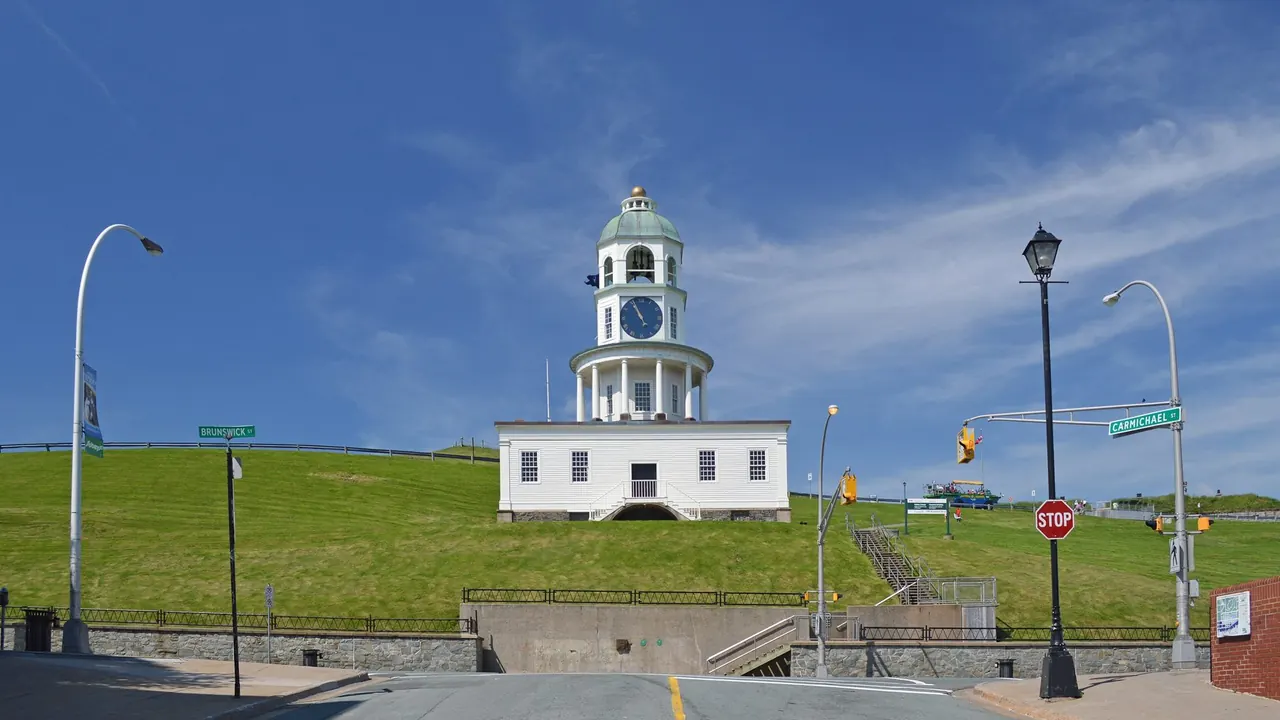
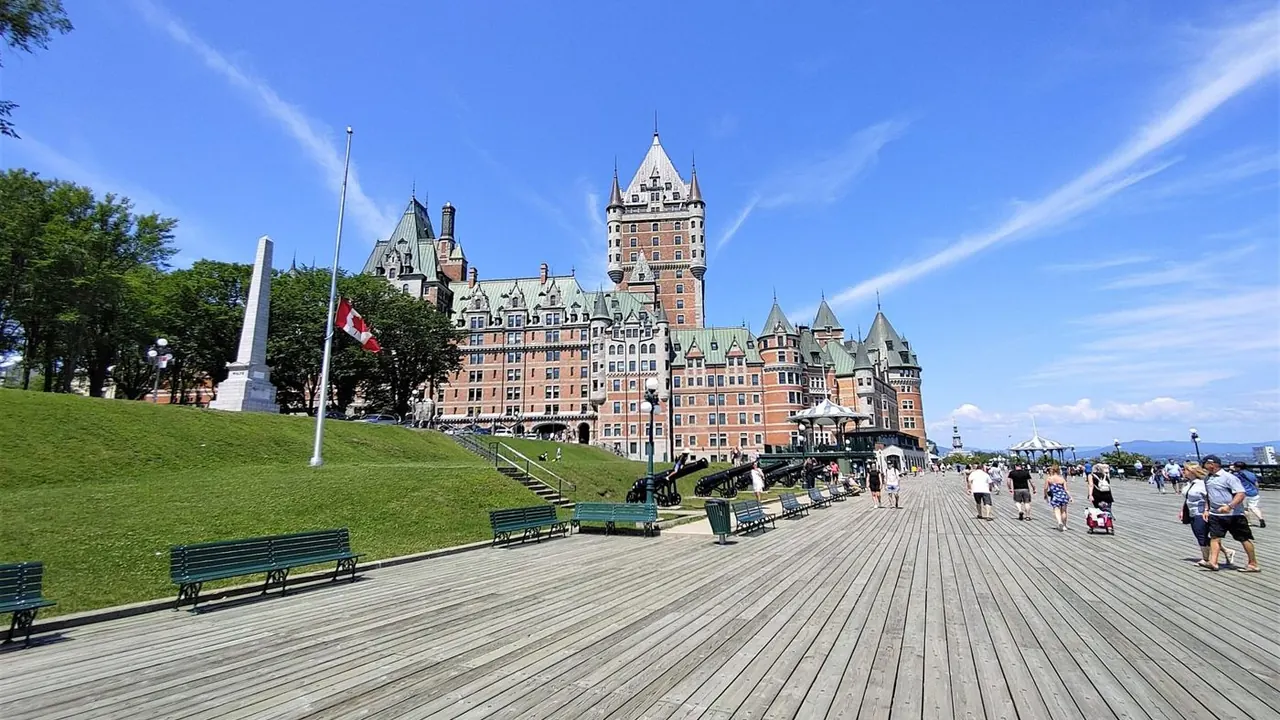
Photos: Halifax by Danieljmacdonald, CC BY-SA 3.0, cropped; Quebec City by Jeangagnon, CC BY-SA 4.0, cropped.
Halifax or Quebec City?
Our verdict in twelve categories, each scored against the same fixed benchmark cities, and the climate month by month, so you can choose for your trip.
Choose Halifax for
- beaches
- day trips
- nightlife
Halifax suits travellers who want the Atlantic close at hand: lobster and oysters at waterfront counters, granite coast at Peggy's Cove, fiddle music in downtown pubs and a drive down the South Shore to Lunenburg. It is a modest, easy-going port with a strong sense of maritime history, best treated as a base for exploring Nova Scotia's coast rather than a city to linger in for its own sake.
Choose Quebec City for
- culture and sights
- wellness
- nature and the outdoors
For history, heritage and a sense of somewhere quite different, Quebec City is the stronger pick. Its walled old town, French-speaking street life and Québécois cooking give it a character Halifax cannot match, and it does far more with the seasons, from Nordic spas steaming in the snow to skiing, waterfalls and forest parks within an hour. Families and anyone wanting a winter trip will find much more to do here.
Scoreboard
Twelve categories on one fixed scale from 0 to 100. The shaded stretch is the gap between the two.
Your match
Pick a travel style or drag the sliders, and both match scores follow your weighting.
Wins on beaches and day trips with your weighting.
Wins on culture and sights and wellness with your weighting.
What matters to you?
Category by category
What the scores mean for a trip.
Beaches & swimming
Neither city is a beach destination, but Halifax has genuine ocean beaches: the pale sand of Crystal Crescent and the long sweep of Martinique Beach are both within an hour, and Lawrencetown draws surfers. The Atlantic stays bracing even in late summer, so many people swim in Chocolate Lake or Lake Banook inside the city instead.
Quebec City's St Lawrence is cold, tidal and fast. The beach at Baie de Beauport is for sunbathing and volleyball, and a real swim means driving out to Lac-Beauport or Lac Saint-Joseph.
Food & drink
Halifax is a seafood town above all, with lobster rolls, Digby scallops, Nova Scotia oysters and the city's own late-night donair. Away from the sea, though, its choice of restaurants is limited.
Quebec City has the more rounded food scene. Hearty Québécois dishes such as tourtière, pea soup and poutine sit alongside bistros in Saint-Roch and Saint-Jean-Baptiste cooking duck, cheese and game from the Île d'Orléans and Charlevoix. Come in early spring and the sugar shacks serve maple-season feasts. The set menus inside the walls are hit and miss, so it pays to eat outside them.
Culture & sights
Both cities have a star-shaped citadel on a hill, but the similarity stops there. Halifax's sights fill a satisfying weekend and tell the story of a naval port and an arrival point: the immigration museum in the harbour shed where newcomers first landed in Canada, the Maritime Museum's Titanic and harbour explosion displays, and Maud Lewis's tiny painted house at the Art Gallery of Nova Scotia.
In Quebec City, the whole old town is the attraction. It has the only city walls still standing north of Mexico, the Château Frontenac above the Dufferin Terrace and the colonial stone houses of Place Royale. On the Plains of Abraham, the battle that ended New France was fought. Together they make a much richer visit with far more atmosphere.
Nightlife
The two are much alike: friendly, student-fuelled, busy on summer weekends and quiet on winter weeknights, with little in the way of clubbing. Halifax's evenings are pub nights around Argyle Street and the waterfront, often with a fiddler in the corner, while the North End has smaller bars.
Quebec City feels more continental. The terraces of the Grande Allée fill with party crowds outside the walls, Rue Saint-Jean has taprooms and student pubs, and locals drift down to the cocktail and wine bars of Saint-Roch.
Nature & outdoors
Halifax's outdoors is the sea's edge: wooded Point Pleasant Park, the old forts on McNabs Island, the bare granite at Peggy's Cove, and sea kayaking or surfing along a heavily indented shore. There are no real hills, though.
Quebec City has wilder and more varied country. Montmorency Falls, taller than Niagara, is a quarter of an hour from the centre. The glacial valley of Jacques-Cartier national park and the ski slopes of Mont-Sainte-Anne and Le Massif are within an hour. Winter adds cross-country skiing, snowshoeing and ice canoeing, which turns the cold months into a season of their own.
Day trips
Both offer a short list of good outings that mostly need a car, but the outings differ. From Halifax they run along the sea: painted Lunenburg, the three waterside churches of Mahone Bay and the lighthouse at Peggy's Cove, with Wolfville's wineries and Acadian Grand Pré inland.
Quebec City's best trip is much closer and more rural: the farm parishes, orchards and cideries of the Île d'Orléans, twenty minutes across a bridge. The pilgrimage church at Sainte-Anne-de-Beaupré, the Huron-Wendat community at Wendake and the gallery village of Baie-Saint-Paul complete the list.
Good for families
Halifax keeps children happy for a few days with the Dartmouth ferry, the noon gun at the Citadel and the hands-on Discovery Centre. There is no aquarium or theme park, though, so families usually head out along the coast before long.
Quebec City has more to fill a longer stay. The aquarium has polar bears and walruses, Montmorency Falls has a cable car and zip lines, and a forest water park has slides in summer and tube runs in winter. Winter brings tobogganing on the Dufferin Terrace and the carnival. Pushchairs struggle on the old town's stairways, and deep cold needs proper kit.
Getting around
Getting around is much the same in both: compact, walkable centres, buses rather than rail, and a hire car for anything further out. The climbs differ. Halifax's streets rise steeply from the harbour, and the old Dartmouth ferry makes a pleasant ride across it.
In Quebec City a cliff separates the upper and lower towns, crossed by the Breakneck Stairs or the funicular, and it turns icy in winter. Express buses run along the main roads, and you can at least reach Montmorency Falls without a car.
Shopping & style
Halifax shopping means a few crafts. Pewter, tartan and woollens come from the market and galleries, and there are independent shops in the Hydrostone and the North End.
Quebec City offers more to browse. The narrow lanes of Petit-Champlain hold craft workshops, milliners and jewellers. Rue Saint-Paul is lined with antiques shops, and Rue Saint-Joseph is where locals buy fashion and design. Galleries sell Inuit and First Nations art, and ice cider makes a good thing to take home.
Affordability
Neither city is cheap, and both add sales tax and a tip to every meal. Halifax is the more expensive of the two. It has little budget accommodation, and the car you need to see the coast adds a lot to the bill.
Quebec City is somewhat kinder to the wallet. Many of its best experiences are free: walking the walls, the Plains of Abraham and the Dufferin Terrace. Staying in Saint-Roch rather than inside the walls also brings room rates down.
Live music & performing arts
The cities differ in kind. Halifax wins for informal music: Celtic and East Coast songs in downtown pubs most nights, a local songwriting scene and a summer jazz festival. Its formal stage is small, with Symphony Nova Scotia and Neptune Theatre but no opera.
Quebec City has the deeper formal programme. The Grand Théâtre houses Canada's oldest symphony orchestra and an opera company, Robert Lepage's Le Diamant stages experimental work, and the Festival d'été brings international bands to the Plains of Abraham in July. Most of its theatre is in French.
Wellness & relaxation
Halifax has no spa culture to speak of. Relaxing there means a quiet morning on the waterfront, the Public Gardens and a cold swim.
Quebec City has a real tradition in its Nordic spas, outdoor circuits of hot pools, saunas and cold plunges, several within half an hour around Lac-Beauport and one in the old port itself. They are at their best in deep winter, with steam rising into the snow. Café afternoons in Saint-Jean-Baptiste make an easy follow-on.
When should you go?
Pick your month. The climate figures are measured averages, not a forecast.
Halifax in July
Quebec City in July
Daytime high, °C
Rainfall in the month, mm
Temperature and rainfall are climate normals, averaged over the years shown. Halifax: 1991-2020 normals, Shearwater Airport (6 km from centre). Quebec City: 1991-2020 normals, Beauport (3.2 km from centre).
Both cities are summer destinations first. July and August are the warm months, with Quebec City reaching about 25°C and Halifax a little cooler at around 23°C, kept fresh by the ocean. Halifax is the only one with sea swimming, and even then the Atlantic peaks at about 17°C in August, so the lakes are kinder. September is still pleasant in both and good for walking, and early autumn brings the leaf colour.
Winter is where they part. Quebec City is properly cold, with daytime highs around -6°C in January, but dry snow suits skiing, skating and the spas. Halifax stays near freezing and is much wetter and greyer from October to March, with up to 144mm of rain a month, which makes it a poor choice out of season. Rain falls fairly evenly through the year in Quebec City, so no month is reliably dry.
Which traveller are you?
For a culture and arts trip, Quebec City is the clear choice. The walled upper and lower towns, the Plains of Abraham and the city's symphony and opera give it far more depth than Halifax's naval museums and Citadel.
On a relaxing and wellness trip, Quebec City wins again. Its Nordic spas, with outdoor hot pools and saunas in the forest around Lac-Beauport, are a real local tradition, while Halifax offers little beyond hotel spas and quiet harbour walks.
On a beach and sun trip, neither city is ideal, but Halifax comes out ahead. It has proper ocean beaches such as Crystal Crescent and Martinique within an hour, plus warm city lakes, whereas Quebec City's river is not for swimming.
Before you go
| Measure | Halifax | Quebec City |
|---|---|---|
| Official language | French, English | French, English |
| Currency | Canadian Dollar (CAD) | Canadian Dollar (CAD) |
| Sockets | AB120 V, 60 Hz | AB120 V, 60 Hz |
| Driving side | Right | Right |
| Time zone | UTC-4, UTC-3 in summer | UTC-5, UTC-4 in summer |
| Emergency number | 911 | 911 |
| Elevation | 28 m | 98 m |
| Main airport | Halifax / Stanfield International Airport (YHZ)26 km from centre40 non-stop destinations | Quebec Jean Lesage International Airport (YQB)13 km from centre34 non-stop destinations |
| Public holidays this year | 12 days | 10 days |
By the numbers
| Measure | Halifax | Quebec City |
|---|---|---|
| City population | 440,072 | 574,482 |
| People per km² | 80 | 1,184 |
| Museums within 10 km | 15 | 16 |
| UNESCO World Heritage sites within 50 km | 0 | 1 |
| Swim season, months above 21 °C | None | - |
Where else could you go?
Every comparison below shares a destination with this one, so you can follow Halifax or Quebec City somewhere new.