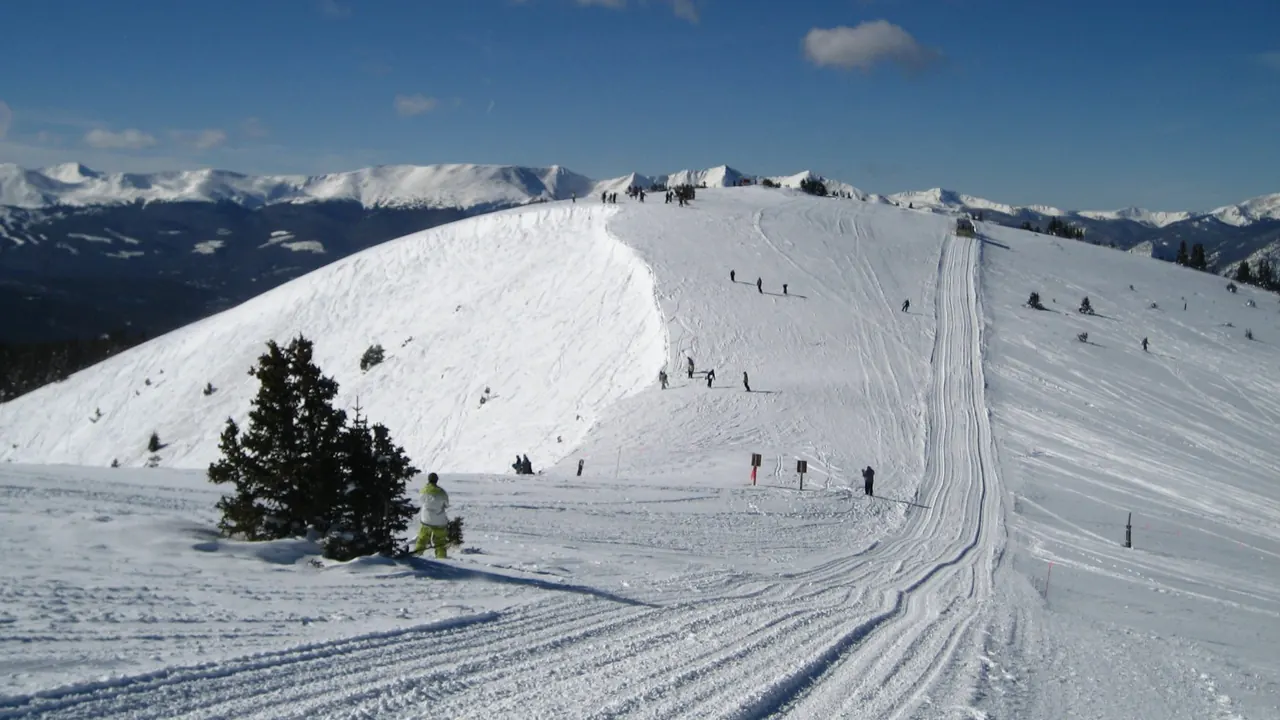
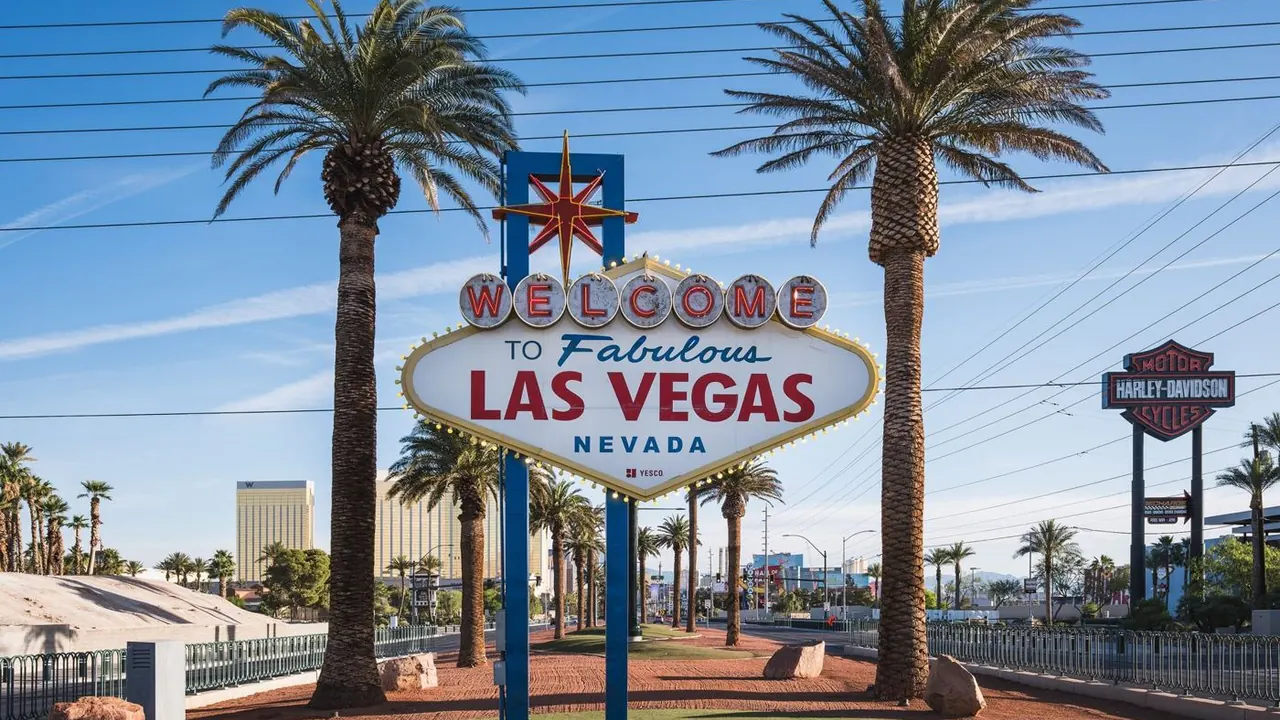
Photos: Keystone by Rudi Riet, CC BY-SA 2.0, cropped; Las Vegas by Christian David, CC BY-SA 4.0, cropped.
Keystone or Las Vegas?
Our verdict in twelve categories, each scored against the same fixed benchmark cities, and the climate month by month, so you can choose for your trip.
Choose Keystone for
- families
- day trips
- nature and the outdoors
Keystone is the choice for a trip built around the mountains. In winter that means long groomed runs, high bowls and Arapahoe Basin just up the road. In summer it means alpine trails, lift-served biking and sailing on Dillon Reservoir. It also suits families far better, with a big ski school, gentle slopes and condos near the lifts. In return you accept high costs, early nights and little to eat or see beyond the resort.
Choose Las Vegas for
- nightlife
- live music and the arts
- shopping
For shows, late nights and big-name dining, Las Vegas wins easily. Resident headliners, acrobatic spectacles, round-the-clock bars and the long Chinatown strip on Spring Mountain Road make it a city for groups, couples and celebrations. If you stay midweek, it is also the cheaper of the two. Red Rock and Valley of Fire give it real desert scenery, but it is a poor fit for young children.
Scoreboard
Twelve categories on one fixed scale from 0 to 100. The shaded stretch is the gap between the two.
Your match
Pick a travel style or drag the sliders, and both match scores follow your weighting.
Wins on families and day trips with your weighting.
Wins on nightlife and live music and the arts with your weighting.
What matters to you?
Category by category
What the scores mean for a trip.
Beaches & swimming
Neither city is a beach destination, and what differs is the kind of water you get. At Keystone, Dillon Reservoir is for sailing and views, too cold and mostly closed for swimming, so in practice you get into a hotel pool or a hot tub in the snow.
Las Vegas at least has warm water. Lake Mead's Boulder Beach is about 40 minutes away, with a gravel shore and no shade, and the Strip resorts have wave pools and lazy rivers for a hot afternoon.
Food & drink
Keystone serves resort food. There are slopeside grills, pizza and burgers at the bases, elk, lamb and trout on the better menus, Colorado craft beer, and a summit dining room reached by gondola. It is fine after a day outside, but for more choice people cook in their condo or drive to Frisco or Breckenridge.
Las Vegas eats on another scale. The Strip gathers famous chefs' steakhouses, French dining rooms and tasting menus. The long Chinatown on Spring Mountain Road adds Sichuan, Korean, Thai and Vietnamese kitchens that stay open late. The city has no cuisine of its own, but there is far more worth eating.
Culture & sights
Keystone has almost nothing to sightsee. River Run is a modern base built for skiers, and the history lies outside the resort, in the mining ruins above Montezuma and the Victorian towns nearby.
Las Vegas offers more, though of a particular kind. The themed resorts, fountains and Fremont Street light show are spectacle rather than heritage. The Neon Museum and the Mob Museum in the old federal courthouse tell the city's short story well. Together they fill an evening and a morning, not a week.
Nightlife
Keystone goes to bed early. Après-ski on the River Run decks is the main event, the crowd is mostly families and skiers up for first chair, and a real night out means a trip to Breckenridge's Main Street.
Las Vegas is the opposite extreme. It stays open all night, with casino bars, DJ residencies in the resort clubs and dayclub pool parties at weekends. Downtown's Fremont Street and the arts district offer a cheaper, more local alternative to the dress codes and table service of the Strip.
Nature & outdoors
Keystone is mountain country through and through. Its three peaks reach bowls above 3,600m, and Arapahoe Basin, Breckenridge, Copper Mountain and Vail are all close. In summer you have Grays and Torreys Peaks, the alpine tundra around Loveland Pass and paddleboarding on Dillon Reservoir.
Las Vegas has dramatic desert within an hour. There are Red Rock's sandstone climbing walls, Valley of Fire's flame-coloured rock and petroglyphs, and the pine forest of Mount Charleston. The summer heat rules out daytime hiking from June to September, though, and every outing needs a car.
Day trips
Keystone has the better spread of outings. Breckenridge's Victorian centre is half an hour away, and over the Divide are Georgetown and Silver Plume, linked by their loop railway. Leadville keeps its mining-boom streets and opera house, and Denver's museums are within reach when the traffic allows.
From Las Vegas, the one dependable choice is Hoover Dam combined with Boulder City. The Grand Canyon, Zion and Death Valley are famous, but they mean long days of driving to landscapes, and few towns nearby are worth the trip.
Good for families
Keystone is made for children in a way Las Vegas is not. The ski school, gentle lower runs, tubing, the snow fort and the skating rink at Lakeside fill a winter week, and condos near the lifts plus free shuttles keep things simple. Altitude and cold are the things to plan for.
Las Vegas can fill a day or two with an indoor amusement park, a shark aquarium and the Discovery Children's Museum. But casino floors stand between you and almost everything, and summer heat makes the Strip hard going with small children.
Getting around
Once you have arrived, Keystone is the easier place to get about. Free shuttles link its bases, free county buses reach Breckenridge, Frisco and Silverthorne, and each base is walkable. The hard part is getting there: there is no train, and the I-70 drive from Denver can be slow and snowy.
Las Vegas looks compact but is not. The resorts are huge, walks run through casinos and over footbridges, and summer heat makes them punishing. Most people use taxis, ride-hailing, the monorail or the all-night buses, and hire a car for the desert.
Shopping & style
Keystone sells ski gear and rentals and has a few gift shops at River Run. Its one real draw is the outlet centre in Silverthorne, ten minutes away.
Las Vegas is a serious shopping stop. The Roman-themed arcade at Caesars Palace, the Venetian's canal-side shops, the luxury mall mid-Strip and Fashion Show hold most of the big fashion and jewellery names, open late, and there are two outlet centres as well. Neither city has markets or much local craft.
Affordability
Both are expensive, but Keystone more so. Lift access, rentals, ski school, slopeside lodging and resort meals add up fast, above all over Christmas and spring break. Summer, condo kitchens and the free buses soften the cost.
Las Vegas can be reasonable if you plan around it. Midweek rooms are good value for their comfort, downtown is cheaper still, and meals in Chinatown keep food costs down. Weekends, resort fees, shows and clubs push the bill back up.
Live music & performing arts
Keystone's live performance is mostly summer and outdoors. There are festivals on the village stages, concerts at Dillon's amphitheatre by the reservoir and Breckenridge's classical festival at the Riverwalk Center. For the rest of the year, Silverthorne's professional theatre company stages plays and musicals.
Las Vegas is a destination for shows in itself. Dozens play every night, from water-based acrobatics and magicians to stars on long residencies who rarely tour. The Smith Center adds touring Broadway musicals, the Philharmonic and ballet.
Wellness & relaxation
Wellness in Keystone means recovering after skiing: resort spas, and an outdoor hot tub at nearly every lodge, best with snow falling. The resort is calm outside the peak weeks, but natural hot springs mean a drive to Idaho Springs or Glenwood Springs.
Las Vegas has the bigger facilities, with huge resort spas offering thermal circuits, saunas and salt and ice rooms, open to day visitors. The noise and light of the casinos work against them, so it pays to choose a non-gaming hotel and book spa time in the morning.
When should you go?
Pick your month. The climate figures are measured averages, not a forecast.
Keystone in July
Las Vegas in July
Daytime high, °C
Rainfall in the month, mm
Where the figures come from
Keystone's temperatures are measured 51 km from the centre, at Leadville / Stringtown.
Keystone's station stands 232 m above the city centre, so the centre is likely a little warmer than the figures say.
Keystone has no rain gauge within 25 km of the centre, so its rainfall comes from a gridded climate dataset read at the city rather than from a gauge further away.
Temperature and rainfall are climate normals, averaged over the years shown. Keystone: 2006-2020 (rainfall 1991-2020) normals, Leadville / Stringtown (50.8 km from centre). Las Vegas: 1991-2020 normals, McCarran International Airport (8.5 km from centre).
Keystone has two good seasons. Through the winter, daytime highs sit around freezing, with -2°C in the coldest months, and that cold keeps the snow dry for skiing from late autumn into spring. June to September is the summer window, with highs near 21°C in July, which is right for hiking and biking. Rainfall peaks then, with August the wettest month at 42mm. May and October are the in-between months, when the trails at height are still cold and the slopes are not yet, or no longer, the draw.
Las Vegas runs the other way. Its desert is dry all year and mild in winter, around 15°C in January, which is pleasant for walking and desert hikes. March, April and October are the best months, warm without being punishing, and by May the heat is building. From June to September highs reach 40°C, which is fine for pool days but too hot for walking the Strip or hiking in daylight. Put simply, go to Keystone in deep winter or high summer, and to Las Vegas in the months either side of its summer.
Which traveller are you?
For an outdoors trip, Keystone is the clear pick. Its three peaks, Arapahoe Basin and Breckenridge give a full ski season, and in summer there are Grays and Torreys Peaks, alpine tundra and mountain biking. Las Vegas has striking desert, but the heat shuts it for months.
On a food and nightlife trip, Las Vegas is in another league. It has celebrity-chef dining rooms, Sichuan and Korean kitchens open late off the Strip, resort clubs with famous DJs and bars that never close. Keystone's evenings end with après-ski and an early dinner.
On a family trip with young children, Keystone works much better. A large ski school, gentle lower slopes, tubing, a lakeside skating rink and condos near the lifts make it easy going. In Las Vegas, casino floors, adult advertising and summer heat make every day harder work.
Before you go
| Measure | Keystone | Las Vegas |
|---|---|---|
| Currency | US Dollar (USD) | US Dollar (USD) |
| Sockets | AB120 V, 60 Hz | AB120 V, 60 Hz |
| Driving side | Right | Right |
| Time zone | UTC-7, UTC-6 in summer | UTC-8, UTC-7 in summer |
| Emergency number | 911 | 911 |
| Elevation | 2,796 m | 610 m |
| Main airport | Denver International Airport (DEN)116 km from centre231 non-stop destinations | Harry Reid International Airport (LAS)4 km from centre159 non-stop destinations |
| Public holidays this year | 12 days | 11 days |
By the numbers
| Measure | Keystone | Las Vegas |
|---|---|---|
| City population | 1,369 | 641,903 |
| People per km² | 13 | 1,843 |
| Museums within 10 km | 0 | 21 |
| UNESCO World Heritage sites within 50 km | 0 | 0 |
Where else could you go?
Every comparison below shares a destination with this one, so you can follow Keystone or Las Vegas somewhere new.