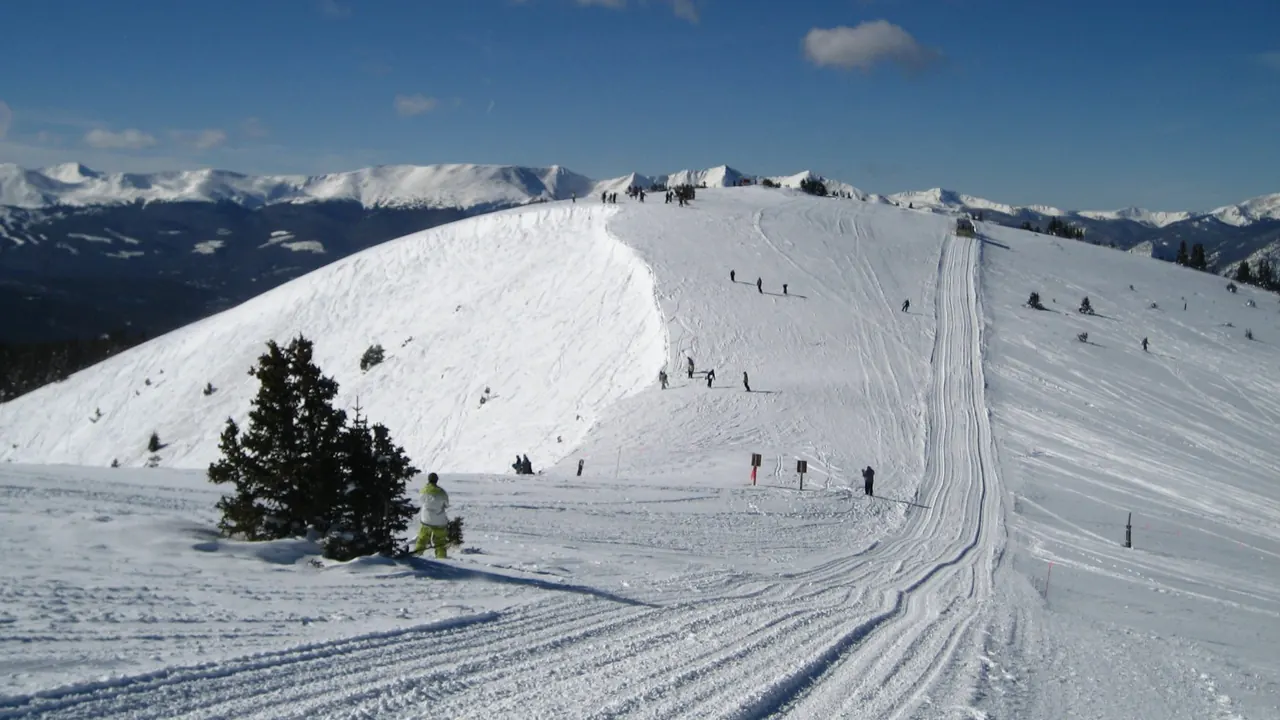
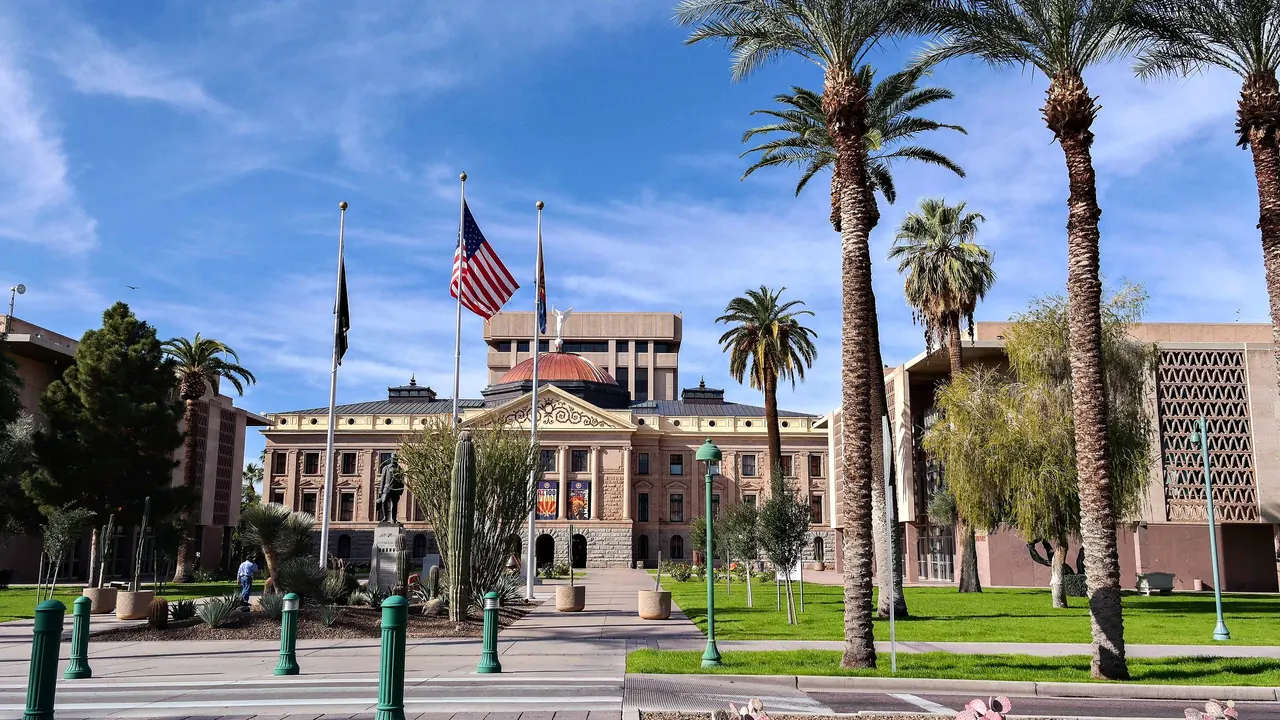
Photos: Keystone by Rudi Riet, CC BY-SA 2.0, cropped; Phoenix by Visitor7, CC BY-SA 3.0, cropped.
Keystone or Phoenix?
Our verdict in twelve categories, each scored against the same fixed benchmark cities, and the climate month by month, so you can choose for your trip.
Choose Keystone for
- getting around
- nature and the outdoors
- families
Keystone is for a trip built around the mountains. In winter that means long groomed runs, high bowls and Arapahoe Basin a few minutes up the road. In summer it means hikes onto alpine tundra, lift-served biking and sailing on Dillon Reservoir. It also suits families who want a ski school, lifts within walking distance and free shuttles, as long as they are happy with early, quiet evenings and very little to see off the slopes.
Choose Phoenix for
- culture and sights
- nightlife
- prices
Phoenix is the better pick if you want winter warmth and a proper city around the scenery. The Heard Museum and Taliesin West, Sonoran Mexican cooking, nights out in Old Town Scottsdale or on Mill Avenue, and long resort days by a desert pool give it a range Keystone cannot match. It is also kinder on the wallet. The price is a rental car and staying away in high summer.
Scoreboard
Twelve categories on one fixed scale from 0 to 100. The shaded stretch is the gap between the two.
Your match
Pick a travel style or drag the sliders, and both match scores follow your weighting.
Wins on getting around and nature and the outdoors with your weighting.
Wins on culture and sights and nightlife with your weighting.
What matters to you?
Category by category
What the scores mean for a trip.
Beaches & swimming
Neither place offers a beach vacation, and they are about equal here. Keystone's Dillon Reservoir is snowmelt-cold and mostly closed to swimming, so getting into the water means a lodge hot tub or a hotel pool.
Phoenix gives you a little more to do in the water. You can tube down the lower Salt River in summer or spend a day at the small beaches of Saguaro Lake and Canyon Lake, surrounded by desert cliffs. Most of the time, though, swimming means a resort pool with a lazy river.
Food & drink
Phoenix has much better food, and food it can call its own. Sonoran borderland cooking gives you carne asada, paper-thin flour tortillas and bacon-wrapped hot dogs from evening carts. Central Phoenix and Roosevelt Row have the more interesting independent places, and Scottsdale does polished steakhouses. You will usually need to drive between them.
Keystone serves resort food: slopeside grills, après-ski burgers and pizza, and a few ambitious dining rooms. Elk, trout and Colorado craft beer give the menus some local character. Many visitors cook in their condo or head to Frisco or Breckenridge for more choice.
Culture & sights
There is a wide gap here. Keystone was built for skiing in the 1970s, and its history is the old mining cabins and ruins up the Snake River valley and the Victorian towns nearby. River Run Village is handy, not something to sightsee.
Phoenix has no old centre either, but its museums are a reason to visit. The Heard Museum's Native American collections and the Musical Instrument Museum are the highlights, and Frank Lloyd Wright's Taliesin West is a major piece of architecture. The Hohokam canals at Pueblo Grande add a much older layer, though each sight means a separate drive.
Nightlife
Nights in Keystone start with après-ski on the River Run decks and are usually over soon after dinner, since most guests want to be up for first chair. Anyone wanting more takes the bus to Breckenridge's Main Street.
Phoenix gives you real choices. Old Town Scottsdale has clubs and rooftop bars that fill up at weekends, Mill Avenue in Tempe is cheap and full of students, and downtown has cocktail lounges and a more local crowd. In summer the drinking moves to patios with misters and resort pool parties.
Nature & outdoors
Both have impressive landscapes, but Keystone is the bigger draw. In winter there is skiing above 3,600m on its own peaks and at Arapahoe Basin. In summer you can climb Grays and Torreys Peaks, two of Colorado's 14,000ft summits, cross the tundra on Loveland Pass and paddle Dillon Reservoir. The altitude takes a day or two to get used to.
Phoenix's appeal is desert mountains rising right out of the suburbs: Camelback scrambles, South Mountain's huge park, and the saguaro forest of the McDowell Sonoran Preserve, with Sedona's red rock about two hours north. It is excellent in winter, but summer heat cuts hiking short.
Day trips
Both offer a similar amount, with different themes. From Keystone the trips are about mining history: Breckenridge's Victorian centre, the loop railway between Georgetown and Silver Plume, Leadville's opera house, and Vail's Tyrolean-style village. Denver is the city option, if I-70 traffic allows.
From Phoenix the distances are longer and the trips are about desert history. You can visit the hillside town of Jerome, the cliff dwelling at Montezuma Castle, Sedona's red rock, and Tucson with its adobe barrios and Mission San Xavier del Bac. All of them need a car.
Good for families
Keystone is slightly easier with children, at least in ski season. There is a large ski school, gentle runs on the lower slopes, a snow fort on the mountain and a huge skating rink on the frozen lake at Lakeside Village, all within walking distance or a free shuttle ride. Away from the snow there is less to do, and the altitude can affect young children at first.
Phoenix has more attractions overall: a zoo, an aquarium, a science centre, water parks and spring training baseball in March. They are spread across the metro area, though, so expect long drives, and summer heat limits outdoor play.
Getting around
Once you have arrived, Keystone is easier to manage without a car. Free shuttles connect River Run, Mountain House and Lakeside, and free county buses go to Frisco, Dillon and Breckenridge. The hard part is getting there: there is no train, so it is a shuttle or a drive over I-70 from Denver, with snow and chain rules in winter.
Phoenix is built for driving. Its one light rail line is useful only between the airport, downtown and Tempe. The places you are likely to want, Scottsdale, the trailheads and the resorts, are far apart, so most visitors rent a car.
Shopping & style
Phoenix is the better place to shop, mainly for one thing you can only really buy in this region. Navajo and Zuni silver and turquoise, Hopi katsina carvings and pottery are best bought from museum shops and reputable galleries. Scottsdale's malls and Old Town galleries cover international brands and Western wear.
Shopping in Keystone mostly means ski gear and rental shops in River Run. The main reason to go shopping is the large outlet centre in Silverthorne, ten minutes away, for outdoor clothing and brand names.
Affordability
Phoenix is the cheaper of the two, though not cheap. Rooms are expensive in the winter high season but drop sharply in summer, chain hotels along the freeways are good value, Sonoran Mexican food costs little and hiking is mostly free. The extra cost is the rental car.
Keystone is never a budget destination. Lift access, slopeside lodging, ski school and resort meals all add up, especially over Christmas and spring break. Free buses and condo kitchens help, and summer is gentler.
Live music & performing arts
Phoenix has the full set of big-city arts companies: the Phoenix Symphony, Arizona Opera, Ballet Arizona and touring Broadway shows in Wright's round ASU Gammage auditorium. It also has an intimate concert hall at the Musical Instrument Museum. The season runs mainly from autumn to spring.
Keystone's offering is mostly in summer, when it puts on open-air concerts by Dillon Reservoir and Breckenridge holds its classical festival at the Riverwalk Center. In winter, Silverthorne's professional theatre company is the main thing to see.
Wellness & relaxation
Neither has historic baths, but Phoenix is the better place for a restful stay. Its large desert resorts below Camelback Mountain and in north Scottsdale combine full spas, several pools and treatments based on clay, sage and agave, and winter's dry warmth makes a week by the pool easy.
In Keystone, wellness is about recovering from a day on the slopes. That means a massage at a resort spa and a steaming outdoor hot tub while the snow falls. For natural hot springs you have to drive over the pass to Idaho Springs.
When should you go?
Pick your month. The climate figures are measured averages, not a forecast.
Keystone in July
Phoenix in July
Daytime high, °C
Rainfall in the month, mm
Where the figures come from
Keystone's temperatures are measured 51 km from the centre, at Leadville / Stringtown.
Keystone's station stands 232 m above the city centre, so the centre is likely a little warmer than the figures say.
Keystone has no rain gauge within 25 km of the centre, so its rainfall comes from a gridded climate dataset read at the city rather than from a gauge further away.
Temperature and rainfall are climate normals, averaged over the years shown. Keystone: 2006-2020 (rainfall 1991-2020) normals, Leadville / Stringtown (50.8 km from centre). Phoenix: 1991-2020 normals, Phoenix Sky Harbor Airport (2.8 km from centre).
These two places peak at opposite ends of the year. Keystone's daytime highs stay below freezing from December to February, which is what keeps the snow dry for skiing from late autumn into spring. Its summer is short and mild, peaking around 21°C in July, and those months are the time for hiking, biking and the reservoir. Rain is light and spread fairly evenly through the year, at its wettest in late summer with about 42mm in August.
Phoenix is the reverse. Winter days of about 20°C and very little rain make November to April ideal for desert trails and sitting by the pool. From June to September highs reach 41°C, which is too hot for walking or hiking after mid-morning, so the year splits neatly: Phoenix for winter sun, Keystone for winter snow or a cool summer escape. Neither has a beach season to plan around.
Which traveller are you?
For skiers and snowboarders, the answer is Keystone. Its three peaks, tree runs and high bowls come with Arapahoe Basin, Breckenridge, Copper Mountain and Vail all within an hour, on dry and reliable snow. Phoenix has nothing comparable.
On a culture and arts trip, Phoenix wins easily. It has the Heard Museum's Native American collections, the Musical Instrument Museum, Taliesin West, a symphony, an opera and Broadway tours at ASU Gammage. Keystone is a modern ski resort with almost nothing to sightsee.
For a relaxing and wellness trip, Phoenix is the better bet, at least from autumn to spring. Large desert resorts at the foot of Camelback Mountain offer full spas, treatments made with sage and agave, and dry, sunny days by the pool. In Keystone, relaxation mostly means a hot tub after skiing.
Before you go
| Measure | Keystone | Phoenix |
|---|---|---|
| Currency | US Dollar (USD) | US Dollar (USD) |
| Sockets | AB120 V, 60 Hz | AB120 V, 60 Hz |
| Driving side | Right | Right |
| Time zone | UTC-7, UTC-6 in summer | UTC-7 |
| Emergency number | 911 | 911 |
| Elevation | 2,796 m | 331 m |
| Main airport | Denver International Airport (DEN)116 km from centre231 non-stop destinations | Phoenix Sky Harbor International Airport (PHX)6 km from centre149 non-stop destinations |
| Public holidays this year | 12 days | 12 days |
By the numbers
| Measure | Keystone | Phoenix |
|---|---|---|
| City population | 1,369 | 1,608,139 |
| People per km² | 13 | 1,199 |
| Museums within 10 km | 0 | 10 |
| UNESCO World Heritage sites within 50 km | 0 | 1 |
Where else could you go?
Every comparison below shares a destination with this one, so you can follow Keystone or Phoenix somewhere new.