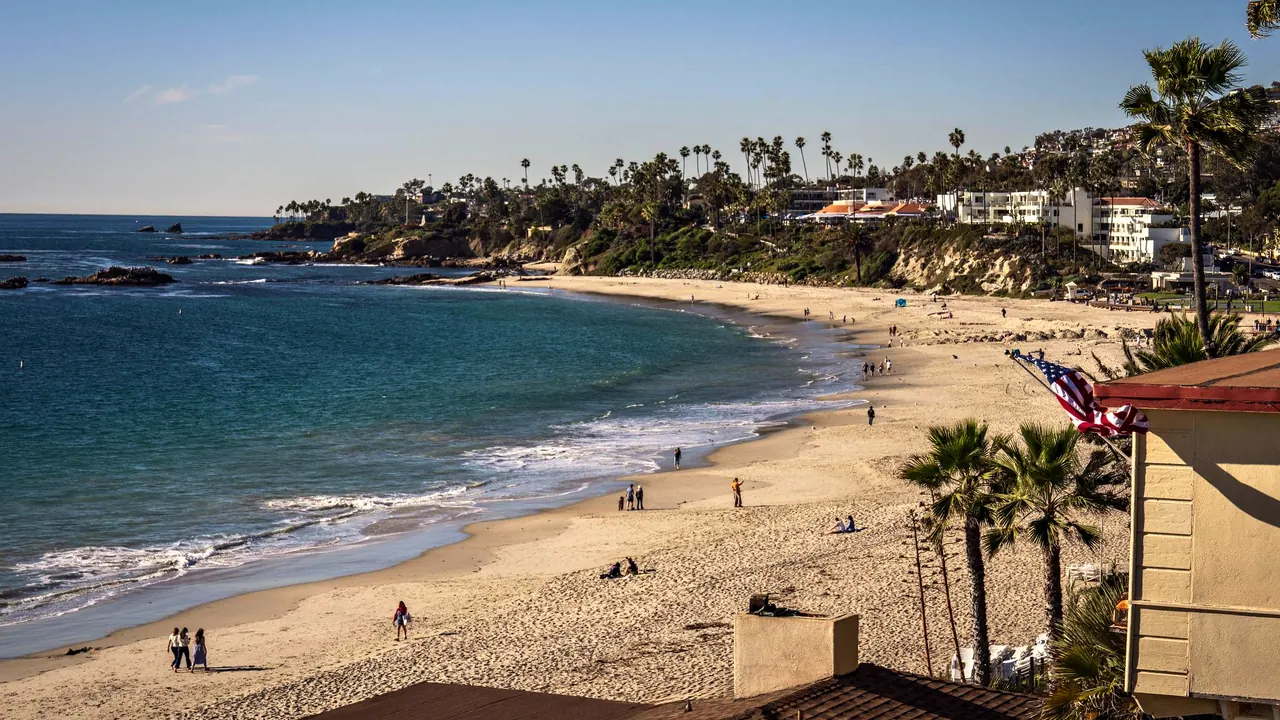

Photos: Laguna Beach by Mark Stebnicki, Pexels License; Tijuana by Exprimidor, CC BY-SA 4.0, cropped.
Laguna Beach or Tijuana?
Our verdict in twelve categories, each scored against the same fixed benchmark cities, and the climate month by month, so you can choose for your trip.
Choose Laguna Beach for
- beaches
- families
- nature and the outdoors
Laguna Beach suits a slower coastal trip built around the shore: snorkelling in clear coves, tide pools with the children, canyon trails behind town and long sunsets over the Pacific. It is the better pick for families, outdoor lovers and anyone after calm. You have to accept steep prices and a town where you need a car and where the evenings end early.
Choose Tijuana for
- prices
- nightlife
- food and drink
Choose Tijuana if eating and going out matter more than the beach. Its taco stands, seafood carts and Baja Med kitchens outclass anything in Laguna, nights run late around Calle Sexta, and your money goes much further. It suits adults who are happy in a sprawling, loud border city, and it makes a good base for Rosarito, Ensenada and the wineries of the Valle de Guadalupe.
Scoreboard
Twelve categories on one fixed scale from 0 to 100. The shaded stretch is the gap between the two.
Your match
Pick a travel style or drag the sliders, and both match scores follow your weighting.
Wins on beaches and families with your weighting.
Wins on prices and nightlife with your weighting.
What matters to you?
Category by category
What the scores mean for a trip.
Beaches & swimming
Laguna Beach is by far the better beach destination. Its coast is a string of coves, from Main Beach and Crescent Bay to Thousand Steps and Aliso, with clear water, reefs for snorkelling and lifeguards on the main beaches.
Playas de Tijuana is a long sandy strip that is better for a walk on the promenade and a seafood lunch than for a swim, because runoff often fouls the water. Most visitors who want a real beach day go half an hour south to Rosarito. The sea is no warmer there than in Laguna.
Food & drink
Here the order reverses. Tijuana is a city people cross a border to eat in: adobada carved off the spit, birria with its broth, and seafood carts piled with clams and octopus. A step up from the street are the Baja Med restaurants of Zona Río and Chapultepec, with local craft beer and Valle de Guadalupe wine to go with them.
Laguna Beach offers fish tacos, poke, breakfast cafés for surfers and a handful of good seafood kitchens. Much of what you pay for there is the clifftop view, though, and for real variety you have to drive inland into Orange County.
Culture & sights
Neither town is a culture destination, and each can be covered in a day or less, but what you see is different. Laguna's heritage is its plein air art colony, which you see in the Laguna Art Museum and the galleries along Coast Highway and Forest Avenue.
Tijuana offers history and the border itself. There is the Museo de las Californias inside the domed Centro Cultural, the Prohibition-era stretch of Avenida Revolución with its Moorish jai alai palace, and the mural-painted fence that runs into the sea at Playas de Tijuana.
Nightlife
Tijuana has a real night out and Laguna Beach does not. Avenida Revolución has served drinkers from the north since Prohibition. A block away, the cantinas and small dance spots of Calle Sexta draw a young local crowd until late, and there are cocktail bars and taprooms in Zona Río and Colonia Cacho. Stick to these areas and use ride-hailing after dark.
In Laguna, an evening out means a drink in a beach bar, wine bar or hotel lounge on an ocean terrace, and the village is quiet before midnight.
Nature & outdoors
Laguna Beach is much the better choice for the outdoors, because protected land and sea surround the town. The canyon trails of Laguna Coast Wilderness Park and Aliso and Wood Canyons start at the edge of town. The whole shoreline is a marine reserve, good for tide pooling, kayaking and shore diving over kelp.
Tijuana's own hills are dry and built over, with little green space. Its outdoors lies further out: the surf breaks near Rosarito, the cliff road to Ensenada and the vineyard valleys inland, and you need to drive to all of them.
Day trips
Both make good bases, but Laguna Beach has more within easy reach. Mission San Juan Capistrano is twenty minutes away and Catalina Island is a ferry ride from Dana Point. San Diego, Los Angeles and the Temecula wine country are each within about an hour and a half by car.
Tijuana's appeal is that you can reach two countries. Rosarito, Puerto Nuevo, Ensenada and the Valle de Guadalupe lie to the south, and San Diego lies to the north. The drawback is the border, where crossing back into the United States can take hours.
Good for families
Children are far better served on the Laguna side. The Main Beach playground sits right by the sand, the free trolley saves small legs between the northern and southern coves, and Knott's Berry Farm is about forty minutes away, with Legoland and the San Diego Zoo a longer drive south. The catch is practical: many coves are reached by long, steep stairways, summer parking is scarce and family rooms cost a lot, so families planning several theme-park days often sleep near Anaheim and come to Laguna for the beach.
Tijuana offers El Trompo, an interactive science museum, the IMAX dome at the cultural centre and the small animal collection in Parque Morelos, and its restaurants are warm towards children. Beyond that, distances need a car, pavements are patchy, and the zoos and theme parks lie back across a crossing that can take hours.
Getting around
Getting around is hard in both without your own transport, but in different ways. Laguna Beach has a walkable village and a free trolley along Coast Highway, but no rail and only slow buses, and parking is scarce in summer. A car is essential there, and it is still a chore.
Tijuana's walkable core is right next to the San Ysidro crossing. Beyond it, plentiful ride-hailing and yellow taxis mean you can manage without driving. That helps, given the border queues and the Mexican car insurance you need if you drive.
Shopping & style
Laguna Beach has the better shopping for most visitors, and art is at its heart. The galleries of Coast Highway and North Laguna sell plein air paintings and glass, Forest Avenue has boutiques, and the summer festivals sell handmade crafts. The luxury malls of Newport Beach and Costa Mesa are half an hour away.
In Tijuana, shopping means bargaining for pottery, silver and leather on Avenida Revolución, buying chillies and vanilla at Mercado Hidalgo and browsing the arcades of Pasaje Rodríguez. Zona Río has big malls, but there is little fashion.
Affordability
The gap is enormous. Laguna Beach is one of California's most expensive beach towns, from the clifftop resorts and summer motel rates to paid parking. The free beaches, trails and trolley soften the cost only a little, and many travellers on a budget sleep inland and come for the day.
Tijuana is cheap, especially in the neighbourhood taquerías, markets and cantinas away from the tourist strip. Only the bars on Revolución and the better Baja Med restaurants and winery tasting rooms charge something close to international rates.
Live music & performing arts
Laguna Beach has the edge, mostly because of one unusual tradition: the Pageant of the Masters. On summer evenings in a canyon amphitheatre, live performers recreate famous works of art as staged scenes. The long-running Laguna Playhouse puts on plays all year, and Costa Mesa's large performing arts centre is within reach.
Tijuana has more variety but less of note. The state orchestra and touring dance companies perform at the Centro Cultural, and there is a local open-air opera tradition. Otherwise there are informal norteño, banda and mariachi bands, and the Nortec sound grew up in the small music venues around Calle Sexta.
Wellness & relaxation
If you want rest, Laguna Beach is the obvious choice. The pace is slow, the days start with clifftop walks and end with sunsets, and the resorts on the bluffs have spas with ocean views. There are no thermal baths, though, and the spas are expensive.
Tijuana is loud, full of traffic and shaped by the border, and its health trade is medical and dental rather than relaxing. There are hotel spas and massage studios, but for real calm visitors go to stay in the quiet wine valleys.
When should you go?
Pick your month. The climate figures are measured averages, not a forecast.
Laguna Beach in July
Tijuana in July
Daytime high, °C
Rainfall in the month, mm
Where the figures come from
Tijuana has no rain gauge within 25 km of the centre, so its rainfall comes from a gridded climate dataset read at the city rather than from a gauge further away.
Temperature and rainfall are climate normals, averaged over the years shown. Laguna Beach: 1981-2010 normals, Irvine (15.5 km from centre). Tijuana: 2006-2020 (rainfall 1991-2020) normals, San Diego / Bandini (6.7 km from centre).
Both towns share a mild, dry Pacific climate, and the sea is effectively the same in both: cool through spring and warmest at about 21°C in August and September, which are the best beach months on either side of the border. Laguna Beach runs warmer in summer, with afternoons near 29°C, while Tijuana stays a little milder at around 26°C. Neither gets too hot for walking, and from May to October both are almost rainless.
The real difference comes in winter. Laguna Beach gets roughly twice Tijuana's rain, with up to 92mm in February against 54mm, so its trails can be muddy from January to March, although this is also when its hills turn green. Midwinter days in both are in the high teens. That is comfortable for eating and exploring in Tijuana, but too cool for swimming in either.
Which traveller are you?
On a family trip with children, Laguna Beach is the clear choice. Lifeguarded beaches, tide pools and easy snorkelling fill the days, and Disneyland is within driving reach. Tijuana's car-bound sprawl and adult-oriented nightlife offer children little.
For a food and nightlife trip, Tijuana wins easily. Adobada and birria tacos, sea urchin tostadas, Baja Med cooking and craft taprooms beat Laguna's view-priced menus, and the Calle Sexta cantinas keep going long after Laguna's few bars have closed.
On a trip with a tight budget, Tijuana makes far more sense. Street tacos, good-value hotels in Zona Río and cheap ride-hailing stretch your money a long way. Laguna is among California's priciest beach towns, where even simple motels and parking cost a lot.
Before you go
| Measure | Laguna Beach | Tijuana |
|---|---|---|
| Official language | - | Spanish, Nahuatl, Yucatec Maya |
| Currency | US Dollar (USD) | Mexican Peso (MXN) |
| Sockets | AB120 V, 60 Hz | AB127 V, 60 Hz |
| Driving side | Right | Right |
| Time zone | UTC-8, UTC-7 in summer | UTC-8, UTC-7 in summer |
| Emergency number | 911 | 911 |
| Elevation | 6 m | 20 m |
| Main airport | John Wayne Orange County International Airport (SNA)18 km from centre53 non-stop destinations | General Abelardo L. Rodriguez International Airport (TIJ)6 km from centre38 non-stop destinations |
| Public holidays this year | 13 days | 9 days |
By the numbers
| Measure | Laguna Beach | Tijuana |
|---|---|---|
| City population | 23,032 | 1,810,645 |
| People per km² | 907 | 2,842 |
| Museums within 10 km | 2 | 3 |
| UNESCO World Heritage sites within 50 km | 0 | 0 |
| Swim season, months above 21 °C | None | 1 month |
Where else could you go?
Every comparison below shares a destination with this one, so you can follow Laguna Beach or Tijuana somewhere new.