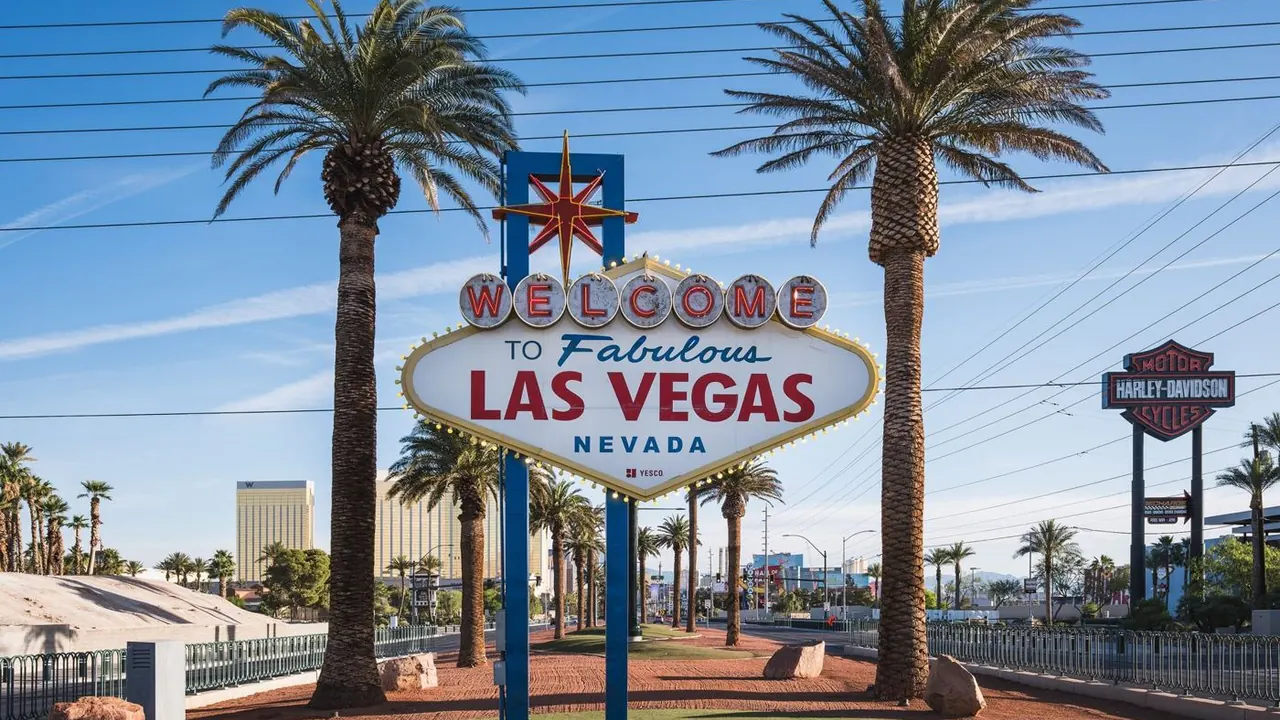
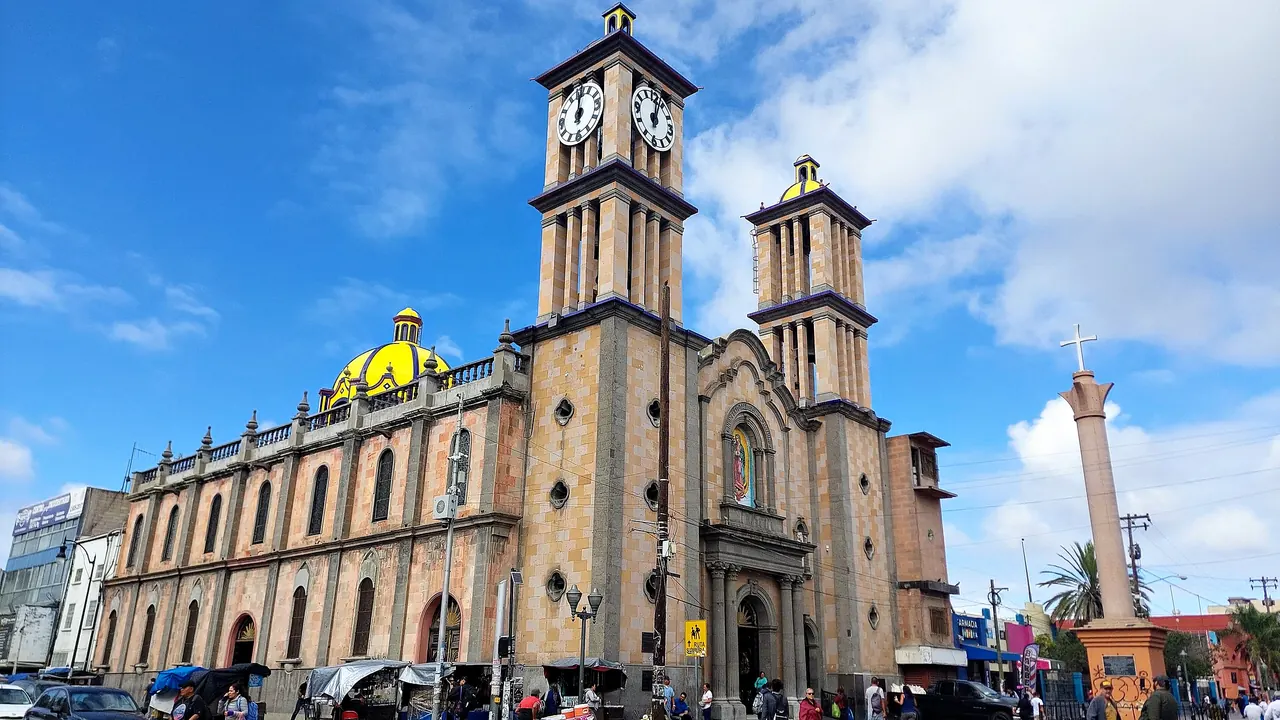
Photos: Las Vegas by Christian David, CC BY-SA 4.0, cropped; Tijuana by Exprimidor, CC BY-SA 4.0, cropped.
Las Vegas or Tijuana?
Our verdict in twelve categories, each scored against the same fixed benchmark cities, and the climate month by month, so you can choose for your trip.
Choose Las Vegas for
- live music and the arts
- nature and the outdoors
- nightlife
Las Vegas is the choice for a trip built around evenings: big productions and star residencies, nightclubs and casino bars that never close, and spa days and luxury malls in between. It also has the stronger outdoors, with Red Rock Canyon, Valley of Fire and Mount Charleston all within a short drive. It suits groups, celebrations and anyone happy to spend freely for polish and scale.
Choose Tijuana for
- prices
- day trips
- beaches
Tijuana is better for travellers who put eating first and want their money to go further. Tacos from the street stands, Baja Med restaurants and craft taprooms cost far less than anything on the Strip. Its position on the border also opens up a wide spread of outings, from Rosarito and Ensenada to the Valle de Guadalupe wineries and San Diego. It is rougher round the edges and has little for anyone wanting calm, but it feels like a real city rather than a resort.
Scoreboard
Twelve categories on one fixed scale from 0 to 100. The shaded stretch is the gap between the two.
Your match
Pick a travel style or drag the sliders, and both match scores follow your weighting.
Wins on live music and the arts and nature and the outdoors with your weighting.
Wins on prices and day trips with your weighting.
What matters to you?
Category by category
What the scores mean for a trip.
Beaches & swimming
Neither city is a beach destination, but only Tijuana is on the sea at all. Playas de Tijuana gives you real Pacific sand, a promenade and a seafood lunch beside the border fence, and Rosarito, half an hour south, has wide beaches and beach bars. The water is cool, though, and near the city it is often too polluted to swim in.
Las Vegas has no coast, only resort pools with wave machines and lazy rivers, and the gravel shore of Lake Mead in a shadeless desert basin. In summer the pools are warmer and easier to enjoy, but they are a hotel amenity rather than a day at the beach.
Food & drink
Tijuana has the better food, and it is its own: adobada and birria tacos, ceviche and sea urchin tostadas from the carts, Baja Med cooking in Zona Río and Chapultepec, and local craft beer and Valle de Guadalupe wine to go with it. This is also the city where the Caesar salad was invented.
Las Vegas eats well on borrowed talent. Famous chefs' outposts, steakhouses and tasting menus fill the Strip, and the long Spring Mountain Road Chinatown offers a range of Asian cooking that Tijuana cannot match. What it lacks is a local cuisine, and most meals come at resort prices.
Culture & sights
Both are young cities that are thin on heritage, but Tijuana gives slightly more sense of place. The Museo de las Californias tells the story of the peninsula, Avenida Revolución keeps its Prohibition-era look, and the mural-covered border fence at the beach makes the frontier real in a way no museum could.
Las Vegas is better as a spectacle: themed resorts, the fountains and the light canopy over Fremont Street. For actual history there is little beyond the Neon Museum's sign yard and the Mob Museum in the old courthouse.
Nightlife
Las Vegas is in another league for going out. Casino bars never shut, the resort nightclubs bring in headline DJs, and dayclub pool parties run before them, so the Strip is still busy at three in the morning. Expect dress codes, queues and table service. Downtown's Fremont Street and the arts district are looser and cheaper.
Tijuana's nights are smaller and more local. Calle Sexta's cantinas and dance spots draw young Tijuanenses, Zona Río and Colonia Cacho have taprooms and cocktail bars, and Revolución does loud, cheap drinking for visitors. Stick to these areas and take a ride-hail home.
Nature & outdoors
Las Vegas has much more on its doorstep. Red Rock Canyon is half an hour away with trails and top-class climbing, Valley of Fire has flame-coloured rock and petroglyphs, and Mount Charleston offers cool forest in summer and a little skiing in winter. You need a car, and summer heat restricts desert hiking to dawn.
Tijuana itself is dry hills and scrubby canyons. Its outdoors lies along the coast: the cliff road to Ensenada, surf breaks near Rosarito, winter whale-watching and gentle walks in the vineyards. Proper mountains are too far for a day.
Day trips
Tijuana is the better base, with options in two countries. Rosarito and the lobster village of Puerto Nuevo are close, Ensenada and the Valle de Guadalupe wineries make full days out, and San Diego's Balboa Park and La Jolla are just across the border. Remember that coming back into the United States can take hours.
Las Vegas has Hoover Dam and Boulder City for a solid half day. After that, the Grand Canyon, Zion and Death Valley are long drives to great landscapes, not a choice of towns.
Good for families
Neither city is built around children, but they fall short in different ways. Las Vegas has more ready-made entertainment, including an indoor amusement park, a shark aquarium, the Discovery Children's Museum and thrill rides on the tower. To reach almost any of it you walk through casino floors and past adult advertising.
In Tijuana the content is lighter: El Trompo science museum, the IMAX dome and a day on the sand at Rosarito. Restaurants welcome children warmly, but you need a car for the distances and the pavements are patchy.
Getting around
Las Vegas is a little easier, because nearly everything a visitor wants lies along the Strip, with downtown's Fremont Street a few kilometres north. Buses run the length of the Strip day and night and carry on downtown, and a monorail runs behind the resorts on the east side of the Strip. The catch is scale. The resorts are so big that a neighbour can be twenty minutes away on foot, by footbridges and through casinos, and in summer the heat makes those walks punishing.
Tijuana has a walkable core next to the San Ysidro crossing. Beyond it the city sprawls over the hills with no metro and bus routes that are hard for a visitor to read, so most people use ride-hailing and yellow taxis. Traffic near the border is heavy, and in both cities a car is the practical way to reach the countryside.
Shopping & style
Las Vegas is a far bigger shopping destination, in a polished indoor way. The Caesars Palace arcade, the luxury mall at the centre of the Strip and the Venetian's canal shops hold the major fashion houses, and two outlet centres draw bargain hunters. There is almost nothing local.
Tijuana offers the opposite: curio markets for silver, leather and pottery, spices and vanilla at Mercado Hidalgo, and galleries and record shops in Pasaje Rodríguez. Many visitors from the north come for the pharmacies, but you won't find much fashion.
Affordability
Tijuana is much cheaper. Street food costs very little, mid-range hotels are good value and taxis are inexpensive. Only the Revolución bars, the smarter Baja Med dining rooms and the wine-country tastings approach international prices.
Las Vegas can be reasonable if you stay midweek and eat in Chinatown. At weekends room rates multiply, resort fees are added to almost every booking, and shows, clubs and Strip dining are expensive by American standards.
Live music & performing arts
Live entertainment is one of the main reasons to choose Las Vegas. Permanent theatres stage water acrobatics, aerial shows, magic and comedy every night, and big pop and country stars play residencies you may not see on tour. The Smith Center adds touring Broadway shows and the philharmonic.
Tijuana's scene is modest and local. The Baja California orchestra plays at the Centro Cultural, a long-standing opera company gives a yearly open-air performance, and there are mariachis at Plaza Santa Cecilia and small Nortec and rock gigs around Calle Sexta.
Wellness & relaxation
Las Vegas is the better place to unwind, though only within its resorts. The huge hotel spas offer thermal circuits, saunas and salt rooms with day passes, and a weekday morning there followed by an afternoon at the pool can be genuinely restful. The constant stimulation of the casinos is what you have to avoid.
Tijuana offers little for relaxation beyond hotel spas and cheap massage studios in Zona Río. Its health trade is medical and dental, and the real calm is out in the vineyard estates of the Valle de Guadalupe.
When should you go?
Pick your month. The climate figures are measured averages, not a forecast.
Las Vegas in July
Tijuana in July
Daytime high, °C
Rainfall in the month, mm
Where the figures come from
Tijuana has no rain gauge within 25 km of the centre, so its rainfall comes from a gridded climate dataset read at the city rather than from a gauge further away.
Temperature and rainfall are climate normals, averaged over the years shown. Las Vegas: 1991-2020 normals, McCarran International Airport (8.5 km from centre). Tijuana: 2006-2020 (rainfall 1991-2020) normals, San Diego / Bandini (6.7 km from centre).
The two climates could hardly be more different. Las Vegas is desert, dry in every month, with mild winters and fierce summers. From June to September daytime highs reach 40°C, which makes walking between resorts and hiking in the desert hard going, so the summer is for pools and air-conditioned evenings. March, April, October and November are the comfortable months for both the Strip and the canyons, and December and January are cool but usually sunny enough for sightseeing.
Tijuana stays mild all year, with highs in the low twenties for most of it and a peak around 27°C in September. Rain falls in winter, heaviest in February at about 54mm, and this is also when runoff makes the sea least safe for swimming. The Pacific is never warm: it reaches about 21°C in August and September, the best time for a beach day at Rosarito. From late spring to autumn Tijuana is pleasant just when Las Vegas is at its hottest.
Which traveller are you?
On a trip on a tight budget, Tijuana is the clear pick. Street tacos and seafood cost very little, Zona Río hotels are good value and ride-hailing is cheap. In Las Vegas, resort fees and Strip prices soon eat into even a midweek room deal.
For an outdoors trip, Las Vegas wins comfortably. Red Rock's sandstone cliffs and climbing, Valley of Fire's petroglyphs and the pine forests of Mount Charleston are all within an hour. Around Tijuana there are mostly dry hills, and the best of the coast lies further south.
On a shopping trip, Las Vegas has the luxury arcades, the Fashion Show mall and two big outlet centres, all open late. Tijuana is better for bargaining over pottery, silver and spices at Mercado Hidalgo than for fashion.
Before you go
| Measure | Las Vegas | Tijuana |
|---|---|---|
| Official language | - | Spanish, Nahuatl, Yucatec Maya |
| Currency | US Dollar (USD) | Mexican Peso (MXN) |
| Sockets | AB120 V, 60 Hz | AB127 V, 60 Hz |
| Driving side | Right | Right |
| Time zone | UTC-8, UTC-7 in summer | UTC-8, UTC-7 in summer |
| Emergency number | 911 | 911 |
| Elevation | 610 m | 20 m |
| Main airport | Harry Reid International Airport (LAS)4 km from centre159 non-stop destinations | General Abelardo L. Rodriguez International Airport (TIJ)6 km from centre38 non-stop destinations |
| Public holidays this year | 11 days | 9 days |
By the numbers
| Measure | Las Vegas | Tijuana |
|---|---|---|
| City population | 641,903 | 1,810,645 |
| People per km² | 1,843 | 2,842 |
| Museums within 10 km | 21 | 3 |
| UNESCO World Heritage sites within 50 km | 0 | 0 |
| Swim season, months above 21 °C | - | 1 month |
Where else could you go?
Every comparison below shares a destination with this one, so you can follow Las Vegas or Tijuana somewhere new.