Photos: Lenzerheide by Jag9889, CC BY-SA 4.0, cropped; Zermatt by Roy Egloff, CC BY-SA 4.0, cropped.
Lenzerheide or Zermatt?
Our verdict in twelve categories, each scored against the same fixed benchmark cities, and the climate month by month, so you can choose for your trip.
Choose Lenzerheide for
- day trips
- beaches
- families
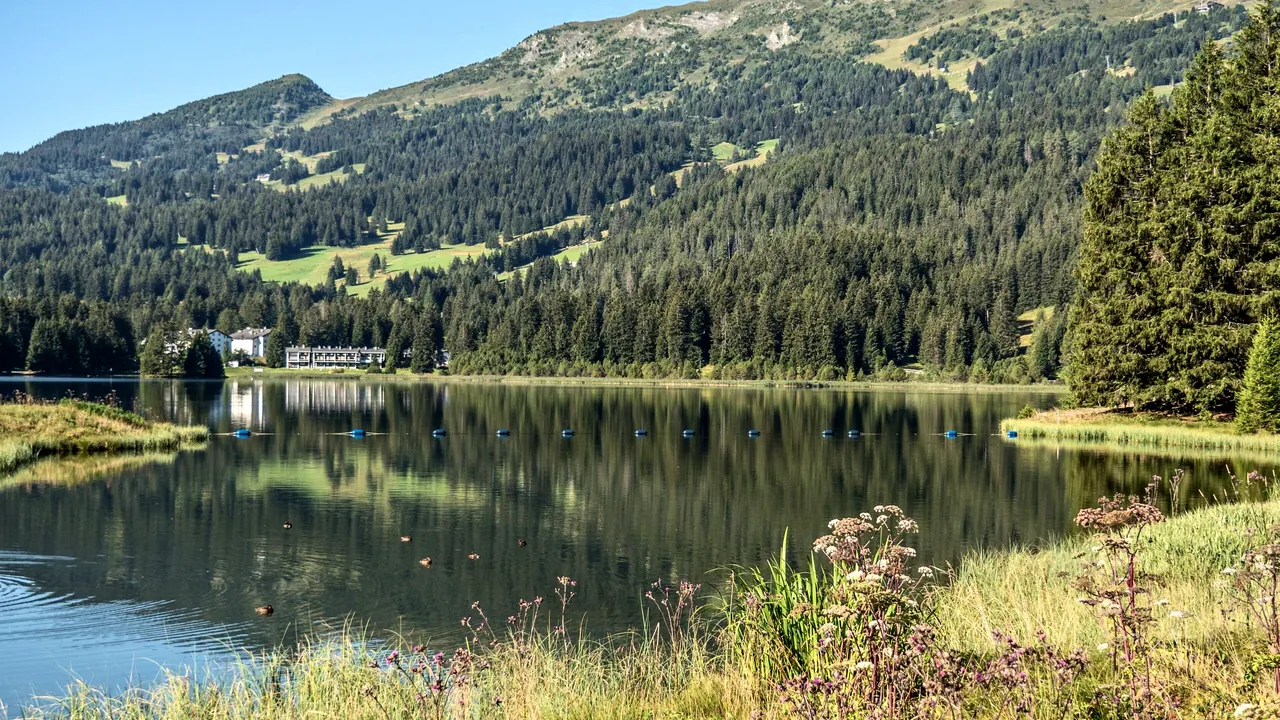
Lenzerheide suits families and active travellers who want a broad, friendly mountain base rather than a showpiece. Its gentle ski terrain, lakeside lido and some of the best mountain biking in the Alps make long summer days easy to fill, and it sits close enough to Chur and the Albula railway that a wet afternoon or a spare day has somewhere to go.
Choose Zermatt for
- getting around
- shopping
- food and drink
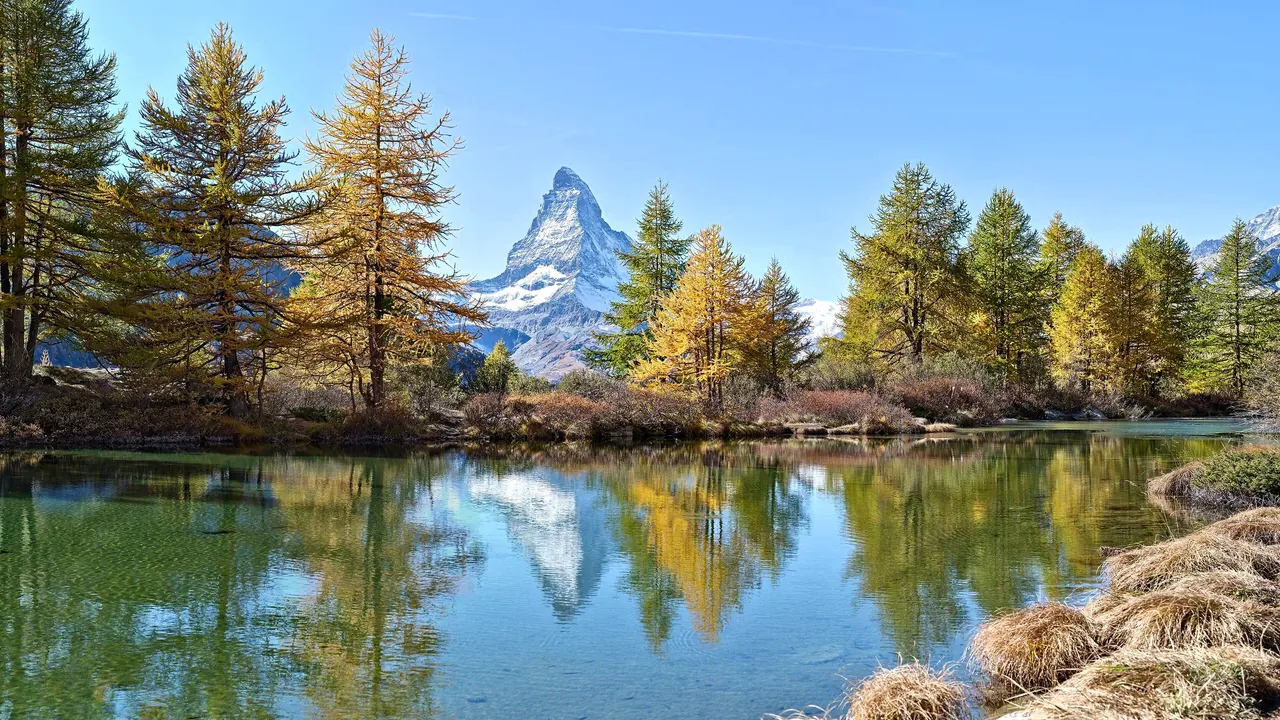
Choose Zermatt for the high Alps at their most dramatic, with the Matterhorn above the streets, glaciers within a lift ride and walking routes among four-thousand-metre peaks. The car-free village is a pleasure to stroll, the mountain-hut lunches and après-ski are livelier, and a pair of music festivals give the calendar some weight. It is the place for skiers, hikers and climbers who mean to spend almost every day up high.
Scoreboard
Twelve categories on one fixed scale from 0 to 100. The shaded stretch is the gap between the two.
Your match
Pick a travel style or drag the sliders, and both match scores follow your weighting.
Too close to call, 2 points apart
Wins on day trips and beaches with your weighting.
Wins on getting around and shopping with your weighting.
What matters to you?
Category by category
What the scores mean for a trip.
Beaches & swimming
Neither resort is a beach destination, but Lenzerheide at least offers a proper summer swim. The Heidsee has a lido and a grassy shore, and in July and August its cool water makes for a brisk dip, with smaller lakes such as the Lai Barnagn for hardier swimmers.
Zermatt has no bathing lake at all. Its tarns are there to reflect the Matterhorn, their meltwater far too cold to swim in, so a swim there means a hotel pool.
Food & drink
Zermatt eats better. Its international ski crowd supports a few fine-dining kitchens, and the real draw is the wooden chalets in hamlets such as Findeln, Furi and Zum See, where a long terrace lunch faces the Matterhorn.
Lenzerheide offers hearty Graubünden cooking, capuns, pizokel and barley soup, mostly in hotel dining rooms and slope huts, with fewer standout tables. The regional styles differ too: Valais raclette with Petite Arvine in Zermatt, Bündner Herrschaft wines and nut tart in Lenzerheide.
Culture & sights
Lenzerheide is a resort first and a village second, so there is little history to visit. A small church or two and the Romansh place names are about all there is, and a day of sightseeing means the bus down to Chur.
Zermatt has a story Lenzerheide lacks: it is where the history of mountaineering was made. The 1865 first ascent of the Matterhorn and the deaths on the way down are remembered in the museum and in the climbers' graves by the church, so you can see the history in the place where it happened. Add the old larch granaries raised on stone slabs and a ride up the Gornergrat railway, and that makes a good morning. After that, you will be back in the mountains like everyone else.
Nightlife
Both resorts come alive mainly in the ski season, but Zermatt's scene is bigger and runs later. Slope-side bars on the runs into the village fill from late afternoon, and a few bars and small clubs along the main street carry on past midnight on busy weekends.
Lenzerheide's après-ski is cheerful but modest, with a couple of village bars and one small club on peak weekends. In summer both quieten to a drink after dinner.
Nature & outdoors
Both are outstanding mountain bases, and the difference is one of scale and style. Zermatt puts you in the high Alps proper, with the Matterhorn overhead, dozens of four-thousanders, the Gorner Glacier, lifts above 3,800m, skiing over into Italy and summer pistes on the glacier.
Lenzerheide is gentler and broader, a bowl of forest and meadow under the Parpaner Rothorn with a ski area linked to Arosa. In summer it becomes one of the great mountain-biking centres of the Alps, while Zermatt leans towards hiking, glacier trips and guided climbs.
Day trips
Lenzerheide is much better placed for outings. Chur, with its cathedral and painted lanes, is half an hour away by PostBus, the UNESCO-listed Albula line climbs its spirals towards St Moritz, and Maienfeld, the Bündner Herrschaft wine villages and Liechtenstein are all within easy reach.
Zermatt sits at the end of a long valley, so every outing begins with the train down to the Rhône. Sion's castle hills and Brig's Stockalper Palace reward the effort, but most visitors stay up in the mountains instead.
Good for families
Lenzerheide is the more rounded family resort. Wide sunny beginner terrain, a lakeside lido with pedalos, summer toboggan runs, rope parks and easy bike trails give children plenty to do, and Chur is close on rainy days.
Zermatt's car-free streets are a real comfort with small children, and the cog railways and marmots delight them. Beyond ski school and easy walks, though, there is little aimed at children, and the highest viewpoints can be too cold and thin-aired for the very young.
Getting around
Zermatt is simpler once you arrive. The car-free village is a compact strip walked end to end, and the Gornergrat railway, the Sunnegga funicular and the main gondolas all start within walking distance, with electric taxis for the edges.
Lenzerheide spreads along several kilometres of valley road, so beyond the centre and the lake you rely on local buses and ski buses. In return it is quicker to reach, half an hour from Chur station, and a car helps for exploring further afield.
Shopping & style
Zermatt has more to browse. Its main street is lined with watch and jewellery boutiques, serious mountaineering outfitters and souvenir shops full of cowbells and chocolate.
Lenzerheide covers the practical side, with ski and bike rental, outdoor clothing and delis selling Graubünden sausage and cheese, and leaves real shopping to Chur or Zurich.
Affordability
Both are expensive Swiss resorts, and neither suits a tight budget. Rooms, lift passes and meals out cost a great deal in either, with self-catering the usual way to ease the bill.
The savings differ in kind. In Lenzerheide the guest card covers local buses and some extras, and summer is a little gentler. In Zermatt, among the dearest places in the Alps, staying down the valley in Täsch is the main way to cut the cost of beds.
Live music & performing arts
Zermatt has the edge thanks to two festivals: Zermatt Unplugged brings acoustic sets by well-known singers to tents and mountain stages in spring, and a late-summer chamber music festival fills the village church with serious classical musicians.
Lenzerheide has no such fixtures, only occasional open-air concerts around its sporting events and a band at an après-ski bar. For a concert or a play you would head to Chur.
Wellness & relaxation
Both offer Alpine hotel wellness rather than a bathing tradition, so the experience is broadly similar. Zermatt has the denser cluster of fine hotel spas, several selling day passes, and its car-free quiet is restful, though peak weeks feel busy and active.
Lenzerheide's larger hotels have generous spas too, and its slower village rhythm suits rest after active days. It is also closer to real thermal water, with the baths at Bad Ragaz about an hour away and Vals within a longer drive.
When should you go?
Pick your month. The climate figures are measured averages, not a forecast.
Lenzerheide in July
Zermatt in July
Daytime high, °C
Rainfall in the month, mm
Where the figures come from
Lenzerheide's temperatures are measured 33 km from the centre, at Samedan.
Lenzerheide's station stands 234 m above the city centre, so the centre is likely a little warmer than the figures say.
Lenzerheide has no rain gauge within 25 km of the centre, so its rainfall comes from a gridded climate dataset read at the destination rather than from a gauge further away.
Zermatt has no weather station within reach, so its figures come from a gridded climate model rather than a measured record, and read a broad area rather than one spot.
Temperature and rainfall are climate normals, averaged over the years shown. Lenzerheide: 2015-2025 (rainfall 1991-2020) normals, Samedan (32.9 km from centre). Zermatt: 1991-2020 normals, TerraClimate 4 km grid at the town, no weather station within 90 km.
Lenzerheide has the warmer summer, with afternoons reaching about 20°C in July and the Heidsee swimmable through July and August. That warmth comes with frequent showers: June to September is the wettest stretch of its year, peaking around 164mm in August, so plan for some afternoons spent under cover. Winter brings highs around freezing from December to February, the right conditions for skiing and cross-country trails round the lake.
Zermatt sits higher and stays colder, with summer highs only around 14°C, and its daytime temperatures hover at or below freezing from December to March, which keeps the snow reliable well into spring. Its summers are noticeably drier than Lenzerheide's, around 80mm a month, which favours long hikes from June to September. The wettest month there is November, at about 130mm, when the shoulder season is at its least appealing in both resorts.
Which traveller are you?
On a family trip with children, Lenzerheide is the safer bet. It sits lower and is warmer in summer, so small children cope better, and the guest card covers the local buses. Zermatt's traffic-free streets are the one comfort families give up.
For a food and nightlife trip, Lenzerheide's quieter evenings fall short, and Zermatt is the place to go, ideally in winter. You can lunch on the slopes, stay late at the bars and walk back through car-free streets with no drive home to plan.
Mountain bikers should base themselves in Lenzerheide in summer, when its warmer, greener valley turns into a riding centre, though afternoon showers come with it. Zermatt's summer is built around walking and climbing among high peaks, not riding.
Before you go
| Measure | Lenzerheide | Zermatt |
|---|---|---|
| Official language | French, German, Italian, Romansh | French, German, Italian, Romansh |
| Currency | Swiss Franc (CHF) | Swiss Franc (CHF) |
| Sockets | CJ230 V, 50 Hz | CJ230 V, 50 Hz |
| Driving side | Right | Right |
| Time zone | UTC+1, UTC+2 in summer | UTC+1, UTC+2 in summer |
| Emergency number | 112 | 112 |
| Elevation | 1,473 m | 1,624 m |
| Main airport | Zürich Airport (ZRH)112 km from centre226 non-stop destinations | Geneva International Airport (GVA)128 km from centre150 non-stop destinations |
| Public holidays this year | 9 days | 9 days |
By the numbers
| Measure | Lenzerheide | Zermatt |
|---|---|---|
| Population | 2,641 | 6,023 |
| People per km² | - | 25 |
| Museums within 10 km | 1 | 2 |
| UNESCO World Heritage sites within 50 km | 1 | 2 |
Where else could you go?
Every comparison below shares a destination with this one, so you can follow Lenzerheide or Zermatt somewhere new.
- Arosavs Lenzerheide
- Saas-Feevs Zermatt
- Davosvs Lenzerheide
- Laaxvs Lenzerheide
- Klostersvs Lenzerheide
- St. Moritzvs Lenzerheide