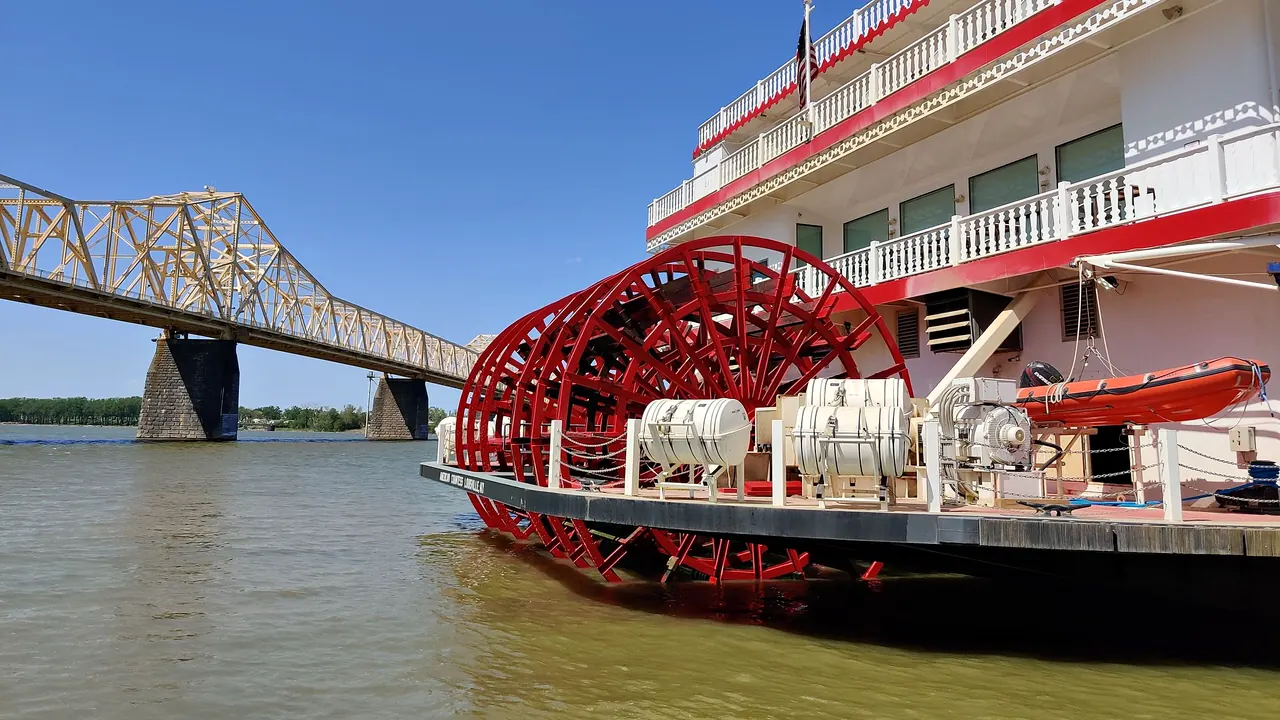
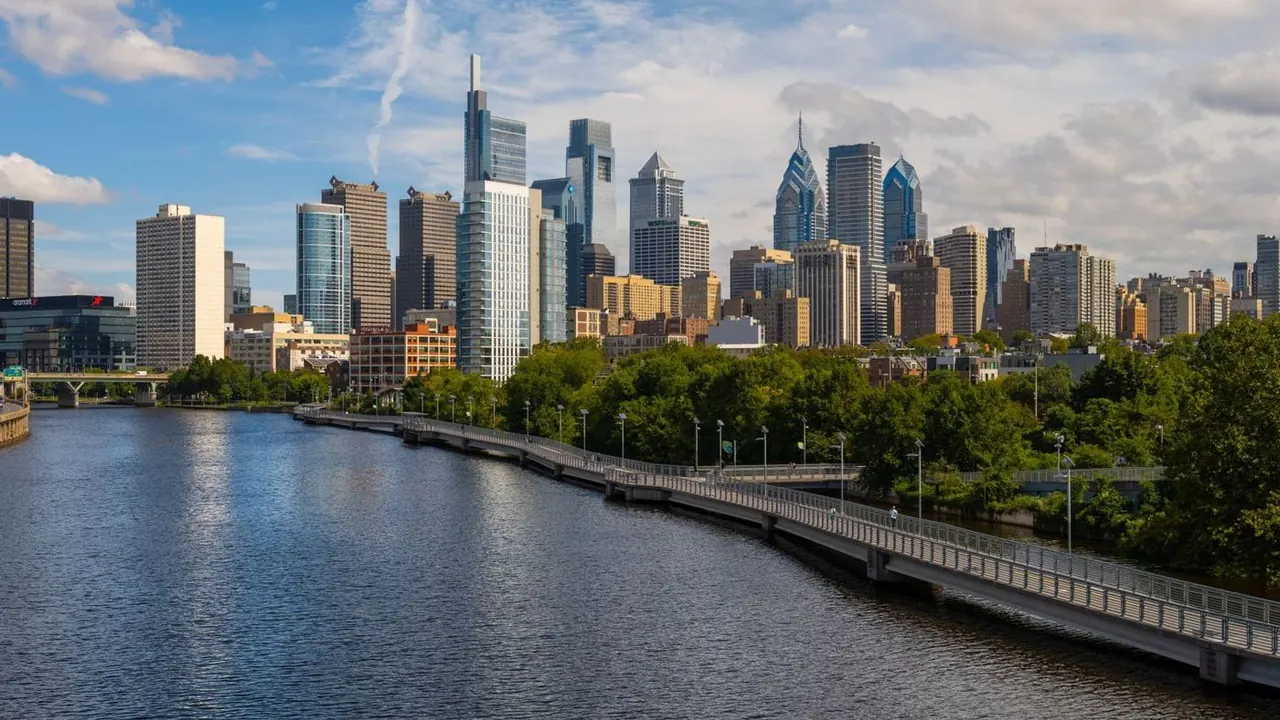
Photos: Louisville by NachoServant, CC BY-SA 4.0, cropped; Philadelphia by Trev W. Adams, Pexels License.
Louisville or Philadelphia?
Our verdict in twelve categories, each scored against the same fixed benchmark cities, and the climate month by month, so you can choose for your trip.
Choose Louisville for
Louisville does not lead in any category we score.
Louisville suits a slower trip built around Kentucky itself: bourbon on Whiskey Row and at the distilleries around Bardstown, Churchill Downs and the horse farms near Lexington, and Olmsted's wooded parks. Plan on a car, because almost everything beyond downtown needs one. Two or three days cover the city before you head into the countryside.
Choose Philadelphia for
- getting around
- beaches
- shopping
For history, art and music in one compact place, Philadelphia is the stronger choice. Independence Hall, the Barnes Foundation and the Philadelphia Orchestra are all in a flat, walkable centre, so a car is optional, and fast trains put New York, Baltimore and Washington within a day's reach. It fills a longer stay far more easily. In summer the Jersey Shore adds beach days that Louisville cannot offer.
Scoreboard
Twelve categories on one fixed scale from 0 to 100. The shaded stretch is the gap between the two.
Your match
Pick a travel style or drag the sliders, and both match scores follow your weighting.
Has no clear advantage with the weighting you have chosen.
Wins on getting around and beaches with your weighting.
What matters to you?
Category by category
What the scores mean for a trip.
Beaches & swimming
Neither city has a beach of its own, but Philadelphia at least has the Atlantic within reach. Atlantic City, Ocean City and Wildwood are a little over an hour's drive away, with wide sand and proper swimming from late June into early September, though summer weekends bring heavy traffic.
Louisville is hundreds of kilometres from any coast, and the Ohio is a working river where nobody swims. Summer bathing there means pools or the reservoir lakes in the Kentucky countryside. If sand matters at all, only Philadelphia can offer it.
Food & drink
Both cities eat with a strong regional accent, but the accents differ. Louisville's table centres on bourbon and Southern cooking: the hot brown, burgoo and Derby pie, farm-to-table kitchens in NuLu, the Highlands and Butchertown, and an old fashioned never far away.
Philadelphia's strength is everyday street food and a wider range. Cheesesteaks, roast pork sandwiches and hoagies come from corner delis, and Reading Terminal and the Italian Market are worth a visit for their own sake. The bring-your-own-wine dining rooms of East Passyunk and Fishtown add Mexican and Vietnamese cooking that Louisville's narrower scene lacks. Go to Louisville to drink, and to Philadelphia to graze.
Culture & sights
Philadelphia has far more to see. Independence Hall and the Liberty Bell, the Georgian streets of Society Hill, and major museums such as the Barnes Foundation, the Philadelphia Museum of Art and the Penn Museum are enough for a long stay. Eastern State Penitentiary and the Mütter Museum add something stranger.
Louisville's sights are fewer and more specialised: Churchill Downs and the Kentucky Derby Museum, the Muhammad Ali Center, the Slugger museum on Main Street and the Victorian mansions of Old Louisville. They are distinctive, but two or three days covers them.
Nightlife
Neither is a clubbing city, and a night out in either runs through neighbourhood bars, but Philadelphia has more of them and more variety. Fishtown's warehouse bars and beer halls, the cocktail crowd around Rittenhouse Square, the Gayborhood and a large student population keep weekends busy across several districts.
In Louisville, evenings centre on the dive bars and patios of Bardstown Road and the bourbon bars of NuLu, with Fourth Street Live for groups. Some bars there pour later than Philadelphia's 2am last call, and Derby week brings the whole city out, but on an ordinary weekend there is less to choose from.
Nature & outdoors
Both are green rather than dramatic, and both rely on large city parks. Louisville has Olmsted's Cherokee and Iroquois parks and the fossil beds at the Falls of the Ohio, with Jefferson Memorial Forest and Bernheim for proper woodland hiking. Mammoth Cave, about an hour and a half away, is the standout outing.
Philadelphia's equivalent is the Wissahickon gorge inside Fairmount Park and the Schuylkill River Trail towards Valley Forge, both easy to reach on foot or by bike from Center City. The Pine Barrens and the Poconos lie further out.
Day trips
Philadelphia's place on the rail corridor gives it the edge. New York, Baltimore and Washington are each a full day out by train, and Lancaster's Amish country can be reached without a car too. Gettysburg, Longwood Gardens and Princeton widen the choice further.
Louisville's outings are narrower but very much its own: the distilleries around Bardstown and Lawrenceburg, the thoroughbred farms and Keeneland near Lexington, and Shaker Village of Pleasant Hill. Nearly all of them need a car, and tastings need a designated driver or a tour.
Good for families
Philadelphia gives children more to do, and the places are easier to get between. The Franklin Institute's giant heart, the Please Touch Museum for under-eights, the dinosaur hall and the country's oldest zoo are all close at hand, and the costumed guides of Old City make history easy for older children to grasp.
Louisville is relaxed with children, with a well-regarded zoo, the Kentucky Science Center, the rides and water park at Kentucky Kingdom, and the underground tram tours of the Mega Cavern. The catch is distance: these places are spread out, so driving becomes part of every day.
Getting around
This is where the two cities differ most in day-to-day travel. Philadelphia's Center City is a flat, compact grid where Old City, Rittenhouse Square and the Parkway museums are all within walking distance. Subway, trolley and regional rail lines, including a train from the airport, cover the rest, if plainly.
Louisville has no rail transit and few useful buses. Beyond Main Street, the waterfront and NuLu, visitors drive or use ride-hailing. Traffic is light and distances are short, so driving is easy, but it is a car-based trip.
Shopping & style
Philadelphia offers much more choice. It has Walnut Street around Rittenhouse Square for brands and boutiques, independent shops in Old City and Fishtown, and Jewelers' Row, with the vast King of Prussia mall half an hour away. Pennsylvania charges no sales tax on clothing, which also helps.
Shopping in Louisville is small and local, mostly vintage clothing and records on Bardstown Road and design shops in NuLu. Its real souvenir is bourbon, with distillery shops selling bottles that are hard to find elsewhere.
Affordability
Both cost what American cities usually cost, with tax and tip added to every meal, and neither is cheap. The difference is where the money goes. In Louisville, hotels outside Derby week are good value, but a hire car or ride-hailing adds to the cost of every day. In Derby week itself, rooms sell at several times their usual rate.
In Philadelphia, rooms cost more, but walking replaces the car. The sights of Independence Park are free, and cheesesteak lunches and bring-your-own-wine dinners keep food spending down.
Live music & performing arts
Philadelphia is by far the stronger city for the stage. The Philadelphia Orchestra, Opera Philadelphia at the 1857 Academy of Music, recitals by Curtis Institute students and the Walnut Street Theatre, the oldest working theatre in the country, are worth planning a trip around. Jazz and indie clubs in Fishtown and University City cover the rest.
Louisville has a full set of companies at the Kentucky Center, and Actors Theatre has a long record of premiering American plays. Bars on Bardstown Road host bluegrass and Americana, and the Iroquois Amphitheater puts on summer shows. It makes a good evening out rather than a reason to go.
Wellness & relaxation
Neither city has a bathing tradition, and in both a spa means a hotel or day spa. Philadelphia's pace is quicker, but it has Korean-style bathhouses in the suburbs and quiet walks in the Wissahickon gorge. Louisville is calmer day to day, and the grand mineral-spring resorts of French Lick and West Baden Springs are about an hour and a half's drive away.
When should you go?
Pick your month. The climate figures are measured averages, not a forecast.
Louisville in July
Philadelphia in July
Daytime high, °C
Rainfall in the month, mm
Temperature and rainfall are climate normals, averaged over the years shown. Louisville: 1991-2020 (sunshine 1981-2010) normals, Standiford Field (8.2 km from centre). Philadelphia: 1991-2020 normals, Philadelphia International Airport (11.3 km from centre).
Both cities have cold winters and hot, humid summers, so spring and autumn are the comfortable months for walking. Louisville warms a little earlier and runs hotter, with July highs of 32°C. May is its wettest month at 132mm, so late April and October, both around 21°C, are the best times to visit. Summer is its sunniest season, which suits pools and lakes but makes sightseeing on foot hard work.
Philadelphia is a degree or two cooler for most of the year, so May and late September are pleasant for its streets and squares. Its rain comes more in late summer than in spring. June to August are warm enough for beach days on the Jersey Shore, although the city itself can be sticky then. From December to February both cities are cold, with January highs around 5°C, and neither is at its best.
Which traveller are you?
On a culture and arts trip, Philadelphia is the clear pick. The founding sights of Old City, the Barnes and the Philadelphia Museum of Art fill several days. Evenings can go to the Orchestra, the opera at the Academy of Music or a play.
For a short city break, Philadelphia works better again. Center City's flat grid puts the Liberty Bell, Rittenhouse Square and Reading Terminal Market within walking distance, and a train runs from the airport. Louisville's sights are spread out and need a car between them.
For bourbon lovers, Louisville has no rival here. Bars on Whiskey Row pour hundreds of Kentucky labels, distilleries run tasting rooms downtown, and Bardstown's stills are an easy day out with a designated driver. Philadelphia takes craft beer seriously but has nothing comparable.
Before you go
| Measure | Louisville | Philadelphia |
|---|---|---|
| Currency | US Dollar (USD) | US Dollar (USD) |
| Sockets | AB120 V, 60 Hz | AB120 V, 60 Hz |
| Driving side | Right | Right |
| Time zone | UTC-5, UTC-4 in summer | UTC-5, UTC-4 in summer |
| Emergency number | 911 | 911 |
| Elevation | 142 m | 12 m |
| Main airport | Louisville Muhammad Ali International Airport (SDF)10 km from centre40 non-stop destinations | Philadelphia International Airport (PHL)11 km from centre130 non-stop destinations |
| Public holidays this year | 14 days | 12 days |
By the numbers
| Measure | Louisville | Philadelphia |
|---|---|---|
| City population | 246,161 | 1,603,797 |
| People per km² | 1,434 | 4,339 |
| Museums within 10 km | 15 | 55 |
| UNESCO World Heritage sites within 50 km | 0 | 1 |
Where else could you go?
Every comparison below shares a destination with this one, so you can follow Louisville or Philadelphia somewhere new.
- Atlantic Cityvs Philadelphia
- Cape Mayvs Philadelphia
- New Yorkvs Philadelphia
- Rehoboth Beachvs Philadelphia
- Baltimorevs Philadelphia
- Bethany Beachvs Philadelphia