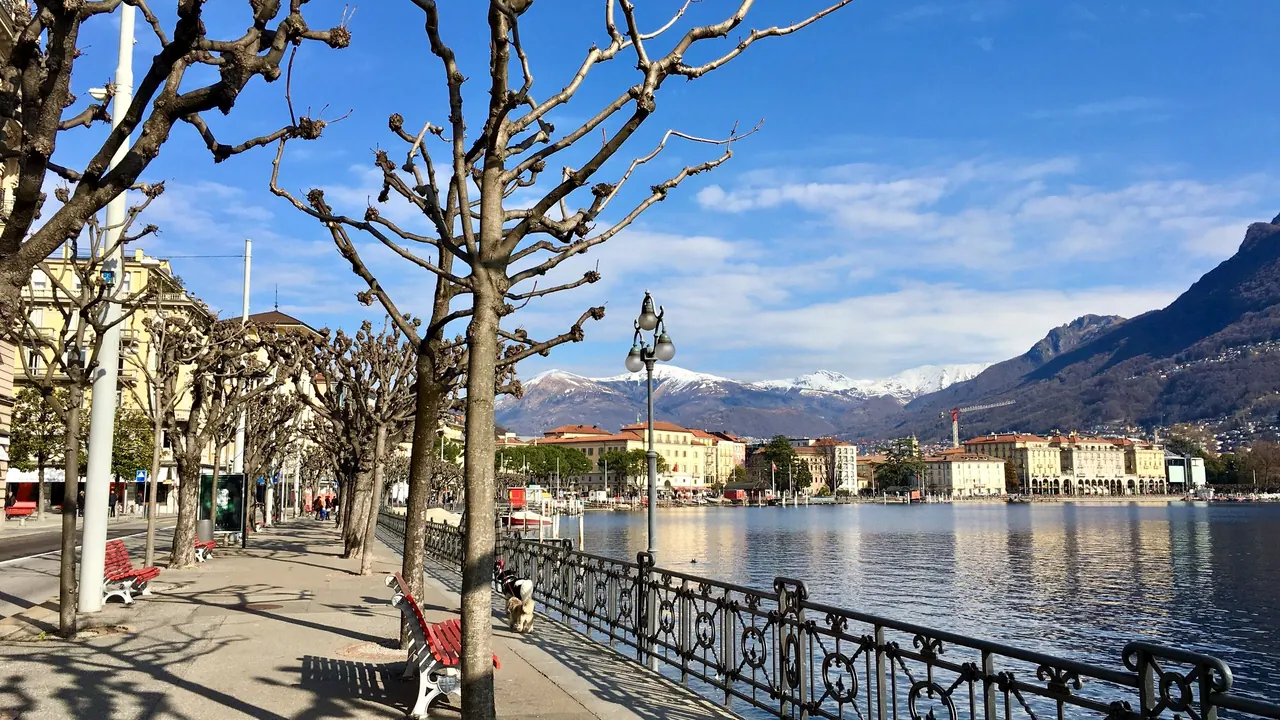
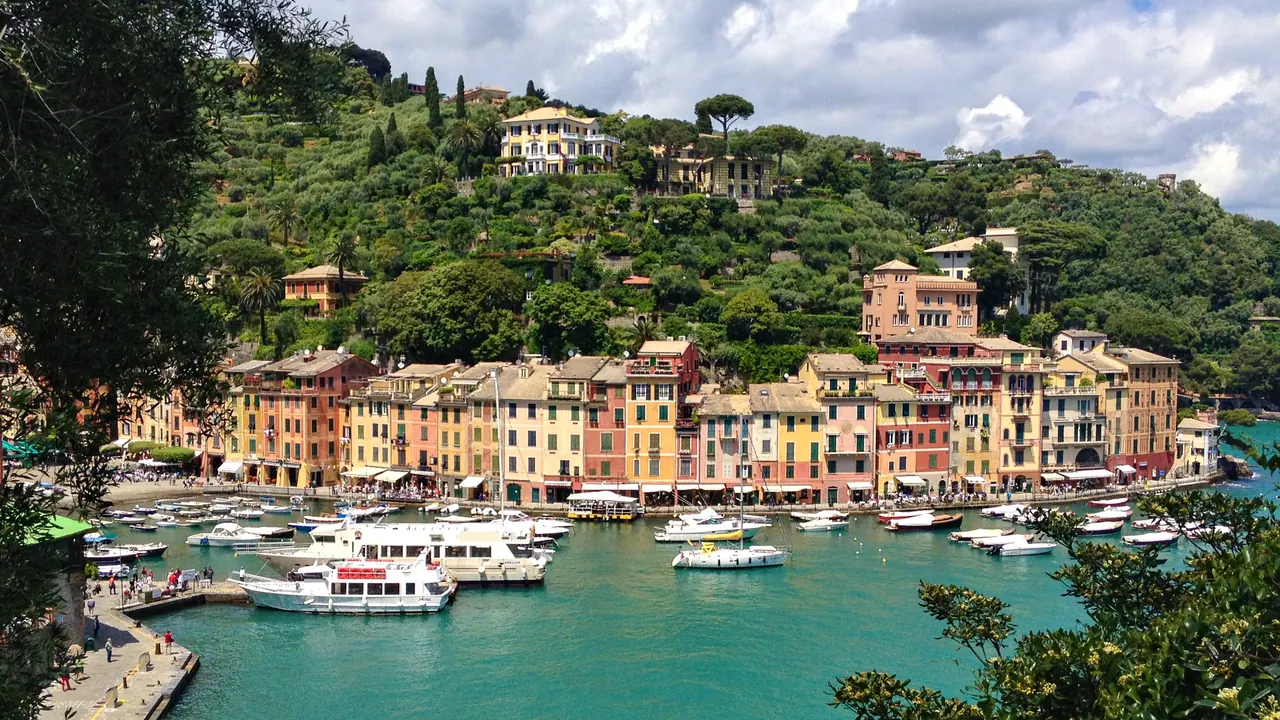
Photos: Lugano by Thomas Woodtli from Zürich, Switzerland, CC BY-SA 2.0, cropped; Portofino by Michal Osmenda, CC BY 2.0, cropped.
Lugano or Portofino?
Our verdict in twelve categories, each scored against the same fixed benchmark cities, and the climate month by month, so you can choose for your trip.
Choose Lugano for
- live music and the arts
- getting around
- families
Lugano is the better base for a longer, more varied stay. It pairs lake swimming and funicular rides into the mountains with an arcaded old town, a serious concert hall and grotto dinners under chestnut trees. Swiss trains also put Milan, Como and the castles of Bellinzona within easy reach, so families, walkers and anyone who wants plenty to do each day will find more here.
Choose Portofino for
- beaches
Choose Portofino for a short, sea-focused stay where the setting is the point. Here you swim off the rocks in clear salt water, hike the headland park to San Fruttuoso and take ferries along the Riviera. Couples who are happy with an aperitivo by the harbour and an early night will love it. Anyone needing museums, children's attractions or easy transport will find it thin.
Scoreboard
Twelve categories on one fixed scale from 0 to 100. The shaded stretch is the gap between the two.
Your match
Pick a travel style or drag the sliders, and both match scores follow your weighting.
Wins on live music and the arts and getting around with your weighting.
Wins on beaches with your weighting.
What matters to you?
Category by category
What the scores mean for a trip.
Beaches & swimming
Portofino is the better place to swim because the sea is right there. Ladders drop from the rocks into clear, deep water along the path to the lighthouse, Paraggi has a sheltered sandy bay, and boats run to the pebbles below the abbey at San Fruttuoso. The weak points are space and cost: the spots are small, much of Paraggi is taken by paid beach clubs, and everything fills up in August.
Lugano offers lake bathing rather than beaches. You get lawns, wooden decks and pools at the lido by the Cassarate river and smaller spots towards Castagnola and Paradiso. The water is fine on a hot afternoon but cool outside high summer, and the season ends in early September, weeks before Portofino's does.
Food & drink
Lugano has the more rewarding table, mainly thanks to its grotti. These rustic hill and lakeside taverns serve polenta, braised meats and local cheeses at granite tables, with Ticino Merlot from vineyards close by. Good pastry shops and a weekly market in the old centre add to it, though the range is narrow and nothing is cheap.
Portofino has fine Ligurian ingredients, such as trofie with pesto and the cheese-filled focaccia from nearby Recco. Around the harbour, though, you mostly pay for the view of the yachts, and there is no market or casual everyday eating. Food lovers in both places tend to look elsewhere for their best meals: across the Italian border from Lugano, and to Camogli or the hill trattorie from Portofino.
Culture & sights
Lugano has more to see, though neither town needs more than a day or so. Its Lombard-style old town of arcades leads up to San Lorenzo cathedral. You can see Luini's great Passion fresco in Santa Maria degli Angioli and art collections at the LAC and Palazzo Reali, and the Hermann Hesse museum is up in Montagnola.
In Portofino the sight is the village itself: the painted harbour houses, San Giorgio church and Castello Brown with its gardens. The medieval abbey at San Fruttuoso is the high point, and you can only reach it on foot or by boat. There are no museums of any size, so it suits travellers who come for atmosphere rather than sights.
Nightlife
Neither town is for going out, but Lugano has a little more life after dinner. It has wine and cocktail bars, a few lounges by the water and one or two clubs, and the lake promenade stays lively on summer weekends. Portofino has no clubs at all. A few smart harbour bars face the yachts, and the village goes quiet early outside July and August. A real night out means the train to Milan from Lugano, or Santa Margherita, Rapallo or Genoa from Portofino.
Nature & outdoors
The scenery is equally strong in both, but it is a different kind. Lugano's is lake and mountain. Funiculars climb Monte Brè and San Salvatore, a rack railway goes up Monte Generoso to views of the Alps, the Lema to Tamaro ridge walk fills a day, and the green rivers of the Verzasca and Maggia valleys are about an hour away.
Portofino packs land and sea into one small protected headland. Its trails run through holm oak and pine to cliffs above the water, with some exposed stretches on chains. Offshore, the marine reserve offers diving among red coral walls and down to the Christ of the Abyss statue. In both places spring and autumn are the best seasons for hiking.
Day trips
Lugano has the broader reach because it straddles a border. Milan's cathedral and The Last Supper are about an hour away by train, Como is half an hour, and the castles of Bellinzona are a short ride north. Lake Maggiore and Bergamo are also in range, and the Swiss rail network gets you to all of them year-round.
Portofino's outings follow the coast. Camogli and Santa Margherita are close, Genoa's palaces and old centre take less than an hour, and summer ferries reach the Cinque Terre and Portovenere. Arriving by boat is part of the pleasure, but outside the ferry season it all takes more planning.
Good for families
Lugano is much easier with children, mostly thanks to the lake. Boat trips, lido slides, funicular rides and the playgrounds in Parco Ciani fill the days, and the miniature Swiss landmarks at Melide are a short trip away. The steep streets are hard work with a pushchair, and older children may miss big attractions.
Portofino is just as safe, but it is built for adults. It has no playgrounds, its steps rule out pushchairs and most of the sand is in paid clubs. Families usually stay in Santa Margherita or Rapallo instead and visit Genoa's aquarium.
Getting around
Lugano is much simpler to move around. You can walk the centre along the lakefront, a short funicular links the station to the old town, buses and boats cover the rest, and trains connect you smoothly to the wider region. You don't need a car.
Portofino itself takes minutes to cross on foot, but getting in and out is the problem. A single narrow road runs 5km to Santa Margherita station, and in summer the buses are crowded and the traffic jams. Ferries help from spring to autumn.
Shopping & style
Lugano gives shoppers more. Via Nassa's arcades are lined with Swiss watchmakers, jewellers and Italian fashion houses, and the old town adds delicatessens and wine shops. The designer outlet at Mendrisio is close, with Milan beyond it.
In Portofino a few lanes behind the harbour hold big-name boutiques, resort wear, Ligurian lace and jars of pesto, and you can see the lot in under an hour. For anything more, you go to Rapallo, Chiavari or Genoa.
Affordability
Both are among the most expensive places you could choose, so the real difference is how you soften the cost. In Lugano, Swiss prices apply to everything, and there is no cheap way to stay in town. Hotel stays usually include free regional transport, and grotti and set lunches are the better-value meals.
In Portofino the few hotels are luxury properties, and the piazzetta charges heavily for its view. The way around it is simple, though: sleep in Santa Margherita, Rapallo or Camogli and come over by bus or on foot.
Live music & performing arts
This is where Lugano pulls clearly ahead. The LAC arts centre's concert hall is home to the Orchestra della Svizzera italiana and hosts visiting soloists, and its theatre stages drama and dance. In summer the Estival Jazz festival fills Piazza della Riforma with free open-air concerts.
Portofino has no theatre or regular venue, only occasional summer events in the piazzetta or at the castle. For a real performance you go to Genoa's Teatro Carlo Felice, just as Lugano's opera lovers go to La Scala in Milan.
Wellness & relaxation
Neither has a bathing tradition, so in both places the hotel spas and a slow pace do the work. Lugano's calm lasts all day: coffee under the arcades, afternoons at a lido or in Parco Ciani, and a big indoor pool and sauna complex near Rivera.
Portofino can feel more restorative at its best, on shaded paths with only birdsong and the sea for company. In high summer, though, tour-boat crowds fill the harbour at midday, so it is most peaceful early, late or out of season.
When should you go?
Pick your month. The climate figures are measured averages, not a forecast.
Lugano in July
Portofino in July
Daytime high, °C
Rainfall in the month, mm
Where the figures come from
Portofino's temperatures are measured 31 km from the centre, at Genova / Sestri.
Portofino has no rain gauge within 25 km of the centre, so its rainfall comes from a gridded climate dataset read at the city rather than from a gauge further away.
Temperature and rainfall are climate normals, averaged over the years shown. Lugano: 1991-2020 normals, Lugano (1.2 km from centre). Portofino: 1991-2020 normals, Genova / Sestri (31 km from centre).
Lugano has a warm, sunny summer that is also wet. July and August reach about 27°C and are the sunniest months, which makes June to early September the time for the lake lidos. Heavy rain is likely in every month from April to November, so walkers should expect some wet days whenever they come and pack waterproofs. Late spring and September are mild enough for the mountain paths, but they are not dry. The driest months are December to March, though they are cold, with January highs near 7°C.
Portofino's year runs the other way. Summer is dry, with only 32mm of rain in July. The sea is warm enough for swimming from June into early October and reaches 25°C in August. The rain comes in autumn: October and November are by far the wettest months and can wash out days on the coastal paths. April to June is the best time for walking, drier than autumn and before the summer heat settles on the open slopes. Winters are mild, with January highs near 12°C, so the coast is the more comfortable choice in the cold months.
Which traveller are you?
For a beach and sun trip, Portofino is the better choice. You swim in the clear, deep sea from rock ladders, at the sandy bay of Paraggi or at San Fruttuoso's pebble cove, and the season runs well into autumn. Lugano offers only lake lidos.
On a family trip with children, Lugano works far better. It has lido slides, Parco Ciani's playgrounds, funicular and rack-railway rides and the miniature Switzerland at Melide. Portofino has steep steps, paid beach clubs and nothing designed for children.
On a culture and arts trip, Lugano gives you much more. The LAC arts centre hosts the city's orchestra and its art collection, Luini's fresco hangs in Santa Maria degli Angioli, and Milan is an hour away. In Portofino, culture means one castle, one abbey and the view.
Before you go
| Measure | Lugano | Portofino |
|---|---|---|
| Official language | French, German, Italian, Romansh | Italian |
| Currency | Swiss Franc (CHF) | Euro (EUR) |
| Sockets | CJ230 V, 50 Hz | CFL230 V, 50 Hz |
| Driving side | Right | Right |
| Time zone | UTC+1, UTC+2 in summer | UTC+1, UTC+2 in summer |
| Emergency number | 112 | 112 |
| Elevation | 283 m | 20 m |
| Main airport | Milan Malpensa International Airport (MXP)46 km from centre208 non-stop destinations | Genoa Cristoforo Colombo Airport (GOA)32 km from centre25 non-stop destinations |
| Public holidays this year | 15 days | 13 days |
By the numbers
| Measure | Lugano | Portofino |
|---|---|---|
| City population | 63,495 | 355 |
| People per km² | 837 | 142 |
| Museums within 10 km | 17 | 14 |
| UNESCO World Heritage sites within 50 km | 5 | 2 |
| Swim season, months above 21 °C | - | 4 months |
Where else could you go?
Every comparison below shares a destination with this one, so you can follow Lugano or Portofino somewhere new.