Malta
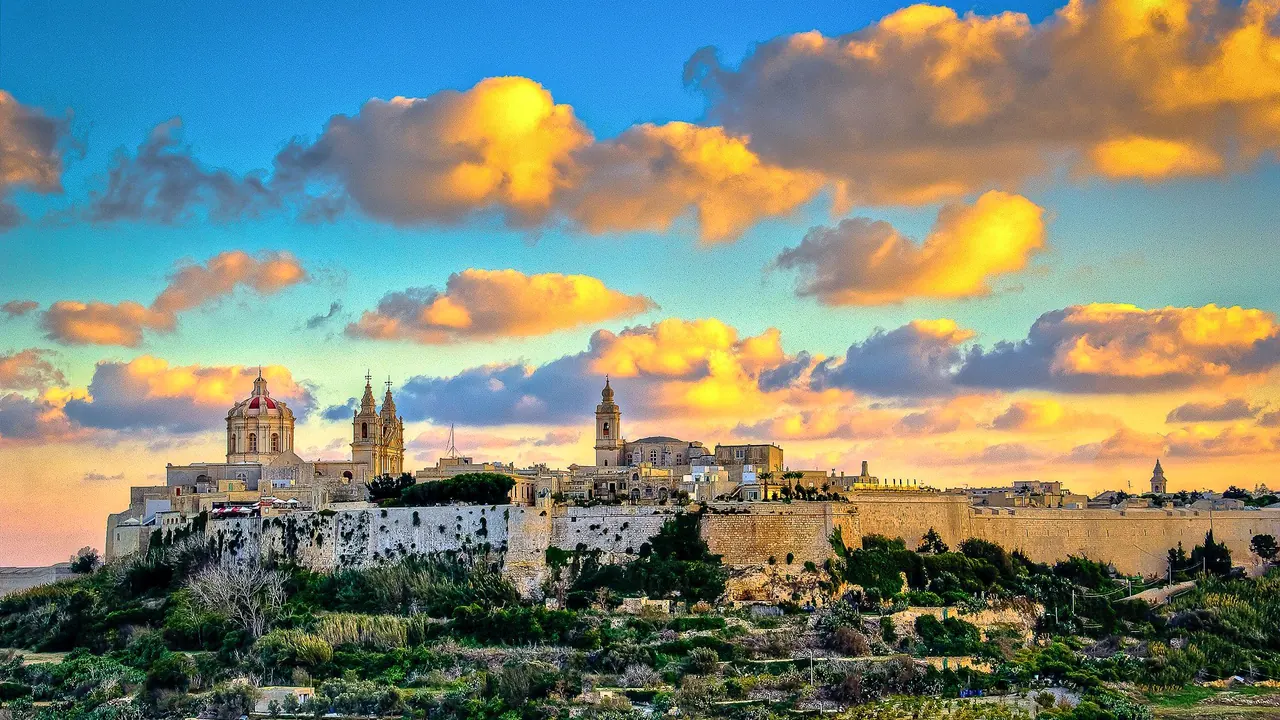
The walled old capital of Mdina and its cathedral
- Culture & sights80
- Beaches76
- Families64
Photo: Nsm Photography, CC BY 3.0, cropped
Match
56
Every category weighted equally
- Beach & sun57
- Culture & arts56
- Food & nightlife54
- Family trip59
- Outdoors57
- Relax & unwind55
- Shopping & style54
- On a budget56
Malta in twelve categories
Our verdict on the country as a whole, scored 0 to 100 against the same fixed benchmark cities as every destination, so a score means the same thing on every page.
Beaches & swimming. Scores 76 out of 100.
Food & drink. Scores 55 out of 100.
Culture & sights. Scores 80 out of 100.
Nightlife. Scores 60 out of 100.
Nature & outdoors. Scores 60 out of 100.
Day trips. Scores 48 out of 100.
Good for families. Scores 64 out of 100.
Getting around. Scores 56 out of 100.
Shopping & style. Scores 40 out of 100.
Affordability. Scores 54 out of 100.
Live music & performing arts. Scores 40 out of 100.
Wellness & relaxation. Scores 38 out of 100.
Malta category by category
Under each: where in Malta it is best, and our destinations in Malta that score highest on it.
Beaches & swimming
76Swimming is one of the main reasons to come in summer. The sea is very clear and reaches about 26°C by August, and the season runs from June to October. Sand is scarce, though. The sandy bays sit in the north and west of the main island: Golden Bay, Ghajn Tuffieha and the long, shallow Mellieha Bay. Gozo has the red sand of Ramla Bay. Comino's Blue Lagoon has extraordinary colour, but day boats pack it from late morning.
Most Maltese swimming happens off rocks. Ladders and flat limestone shelves line the Sliema and St Julian's waterfront, and there are dramatic swimming spots such as St Peter's Pool near Marsaxlokk and the narrow inlet of Wied il-Ghasri on Gozo. Distances are short, so you can stay almost anywhere and reach a different bay each day. If you want long, empty sand, Malta will disappoint you.
Where: Gozo, Mellieha and the northwest bays, Comino, Sliema and St Julian's
Our top destinations in Malta
Food & drink
55Maltese cooking is a Mediterranean island cuisine with Sicilian and North African threads. Small bakeries sell hot pastizzi from early morning, flaky pastries filled with ricotta or mushy peas. Ftira is a ring-shaped bread split and filled with tuna, capers and tomato. Rabbit stew is the national dish, and lampuki pie appears in autumn when the dorado run. In the resort strips around St Julian's and Bugibba, much of the food is ordinary pasta and pizza, so it pays to choose where you eat.
Valletta has the most interesting dining rooms and wine bars, many in vaulted cellars and on the steep side streets, with Maltese wines from the islands' small vineyards. Marsaxlokk is the place for fish, served beside a harbour of painted luzzu boats and its Sunday fish market. Gozo has a slower farmhouse kitchen of its own, with small sheep's-milk cheeses, sun-dried tomatoes, honey and long lunches in village restaurants.
Where: Valletta, Marsaxlokk, Gozo
Our top destinations in Malta
Culture & sights
80For its size, Malta holds an exceptional amount of history. Its megalithic temples at Ggantija on Gozo and at Hagar Qim, Mnajdra and Tarxien are older than the pyramids. The Hal Saflieni Hypogeum is an underground burial complex carved out of rock and is one of the most remarkable prehistoric sites in Europe. Visitor numbers there are kept very small, so it needs planning.
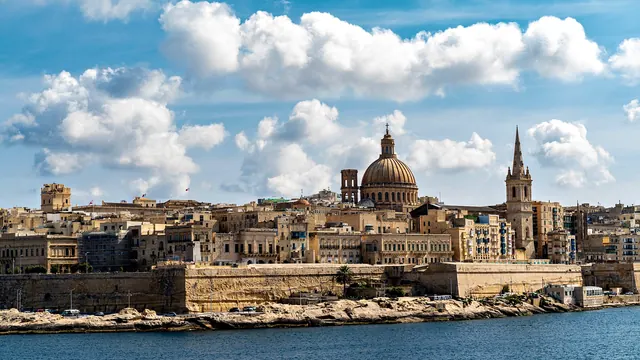
Valletta is a fortified Baroque city built by the Knights of St John after the Great Siege of 1565. St John's Co-Cathedral has a gilded interior and two Caravaggios, and the Grand Master's Palace and the bastions above the Grand Harbour sit nearby. Across the water are the dockyard towns of Birgu, Senglea and Cospicua, known as the Three Cities. Inland, the walled hill town of Mdina and the catacombs of Rabat add a medieval and early Christian layer.
Where: Valletta, Mdina and Rabat, The Three Cities, Gozo
Our top destinations in Malta
Nightlife
60Most going out in Malta happens in Paceville, a few packed streets in St Julian's. It runs late, especially in summer, with clubs, shot bars and crowds of language students and young Europeans, and at weekends it hardly stops before dawn. It is loud and cheerful but not refined. Summer also brings open-air club nights at venues around the island.
If you want something calmer, Valletta is the better choice. Wine bars and cocktail bars spread along the stepped streets and old Strait Street, once the sailors' quarter, and people drink outside on warm evenings. It is lively but winds down earlier. Gozo and the villages are quiet after dinner, so for nights out you should stay near St Julian's or Valletta.
Where: St Julian's, Valletta
Our top destinations in Malta
Nature & outdoors
60Malta's outdoors is mostly at sea level. Diving is the highlight, with clear water, caves, arches and many wrecks off Malta, Gozo and Comino, including scuttled ships placed for divers, and it is one of the strongest dive destinations in the Mediterranean. Kayaking along the cliffs of Comino and Gozo and snorkelling in the rocky inlets are also good.
On land, the best walking follows the coast: the Dingli Cliffs above the southwest shore, and the cliff paths and salt pans around Gozo, which is greener and less built up. The landscape is dry limestone with terraced fields and stone walls, green in winter and spring and parched by July. There are no mountains or forests, and on the main island it is hard to escape development, so walkers should come in spring and base themselves on Gozo.
Where: Gozo, Comino, Dingli Cliffs, Northwest Malta
Our top destinations in Malta
Day trips
48Malta is so small that the outings are short hops rather than full days elsewhere, and many of them are the sights you would visit anyway. Gozo is the one that feels like a real trip. It is a short ferry ride away, but it has a different pace, with the hilltop citadel in Victoria, farming villages, salt pans and a quieter coast. It easily fills a day.
Mdina and the neighbouring town of Rabat fill half a day inland, and the Three Cities are a short boat ride across the Grand Harbour from Valletta. The fishing village of Marsaxlokk is best on a Sunday morning, when its market runs along the quay. A fast catamaran also crosses to Sicily, but the Baroque towns of the southeast lie beyond that crossing, which makes for a long, tiring day. Once you have seen the islands' towns, there is little left.
Where: Gozo, Mdina and Rabat, Three Cities, Marsaxlokk
Our top destinations in Malta
Good for families
64Malta is easy with children. English is spoken everywhere and distances are short, so time in cars and on ferries stays short too. The north of the main island suits families best. Mellieha Bay is long, sandy and shallow, Golden Bay is close by, and at Anchor Bay the colourful film set built for Popeye has become a seaside play village. The national aquarium is at Qawra, and a marine park and a water park sit on the coast road nearby.
Around the Grand Harbour, older children usually enjoy the forts, cannon salutes and wartime tunnels of Valletta and the Three Cities, and the Esplora science centre overlooks the water at Kalkara. Midsummer heat is hard on younger children, and narrow roads and heavy traffic make pushchairs awkward away from the promenades. Late spring and early autumn are the easiest times to come.
Where: Mellieha, Qawra, Valletta and the Three Cities
Our top destinations in Malta
Getting around
56Nothing in Malta is far away, but getting from place to place takes longer than the map suggests. There is no railway. A bus network radiates from Valletta to every town and beach, but buses are often slow and crowded, and traffic on the main island is heavy at most hours. Small ferries cross the harbours from Valletta to Sliema and the Three Cities, which is the most pleasant way to move around the centre, and a regular car ferry and fast boats link Malta to Gozo.
Valletta, Mdina and Sliema are easy to walk, though Valletta is steep. Ride-hailing is widely used and fills the gaps. Driving is on the left on narrow, busy roads. A car is useful on Gozo, where buses are sparse.
Where: Valletta, Sliema, Gozo
Our top destinations in Malta
Shopping & style
40Shopping is a modest part of a trip to Malta. Republic Street in Valletta and Tower Road in Sliema have the main high-street and international chains, and Sliema also has shopping malls. The local crafts are more interesting: Maltese silver filigree, hand-blown glass from the Ta' Qali crafts village, and bobbin lace and woollens from Gozo, where the craft tradition is strongest.
The Sunday market at Marsaxlokk mixes fish with souvenirs and household goods. There is very little luxury or independent design, so you will not build a trip around shopping here.
Where: Valletta, Sliema, Ta' Qali, Gozo
Our top destinations in Malta
Affordability
54Malta is in the middle range for Southern Europe. Bus fares and bakery food are cheap, and a couple of pastizzi make a filling snack for very little. Simple local restaurants are fair, but anything on the Valletta waterfront or in St Julian's costs noticeably more. Hotels in July and August are the biggest expense, especially Valletta's boutique palazzos.
Sliema is a sensible middle choice, with plenty of mid-range hotels and apartments along the seafront and a ferry across the harbour to Valletta. The resort towns of Bugibba and Qawra give the best value for rooms, and the farmhouse rentals on Gozo are good value for families and groups. From November to March, room prices fall considerably.
Where: Bugibba and Qawra, Gozo, Sliema
Our top destinations in Malta
Live music & performing arts
40The performing arts in Malta are small in scale but full of character. Valletta's Manoel Theatre dates from the 1730s and is one of the oldest working theatres in Europe, with a gilded wooden interior. It stages plays, chamber music and the Valletta Baroque Festival in winter. The Malta Philharmonic Orchestra plays in Valletta and around the islands. Victoria on Gozo has two opera houses, the Aurora and the Astra, run by rival band clubs, and each mounts a full opera production in autumn.
The Malta Jazz Festival takes place on the Valletta waterfront in summer. Village festas also bring brass bands into the streets in the warmer months. Outside these festivals and seasons, there is not much to attend on a given night.
Where: Valletta, Victoria (Gozo)
Our top destinations in Malta
Wellness & relaxation
38Malta has no bathing tradition of its own. Wellness means hotel spas, which are found mainly in the larger resort hotels around St Julian's and on Gozo. The main island is crowded and noisy for a small country, with building and traffic almost everywhere.
Gozo is where the pace really slows down. Converted stone farmhouses with private pools, quiet villages and long, unhurried lunches make it a good place to rest for a week. If you come mainly to unwind, stay on Gozo rather than in the resort strip.
Where: Gozo
Our top destinations in Malta
When should you go?
Malta has no single climate. Its months are measured at Valletta; pick one to see it. The figures are measured averages, not a forecast.
Valletta in July
Daytime high, °C
Rainfall in the month, mm
Temperature and rainfall are climate normals, averaged over the years shown. Valletta: 1991-2020 normals, Luqa (5.9 km from centre).
Compare Malta with
Every comparison with a written verdict behind it.
Our destinations in Malta
Every place in Malta with its own page: its twelve scores, its texts and its months.