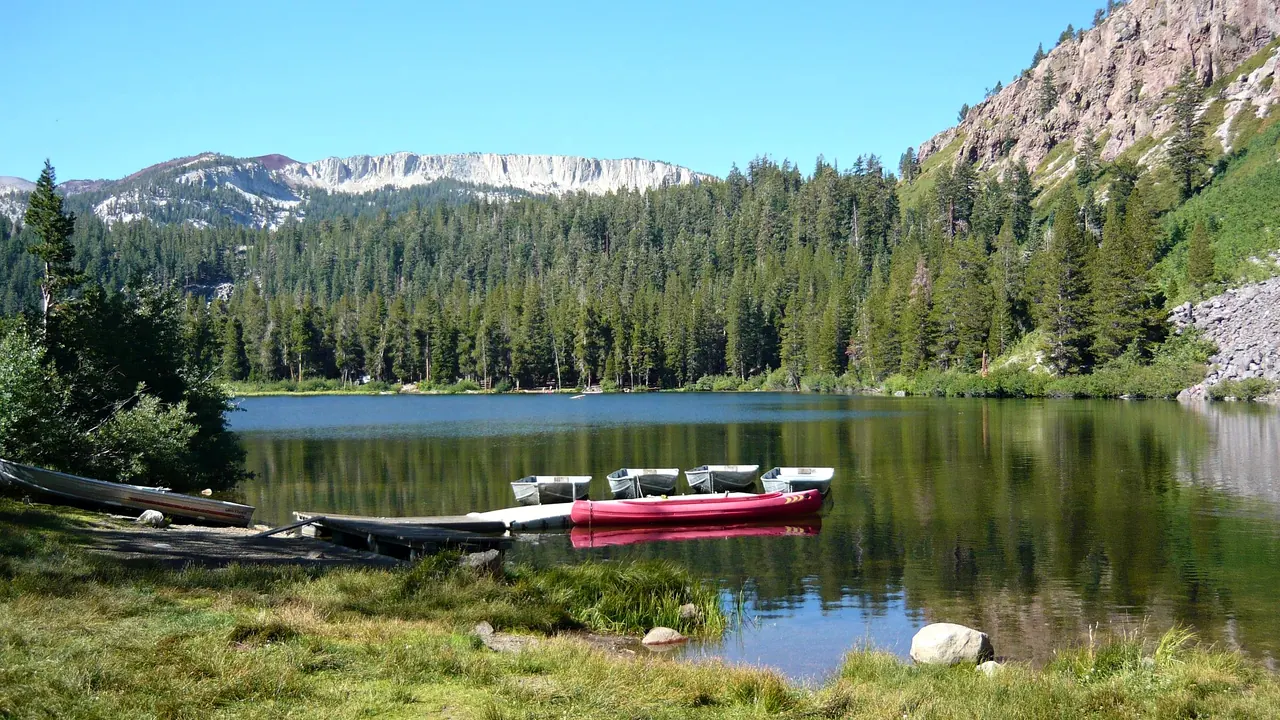
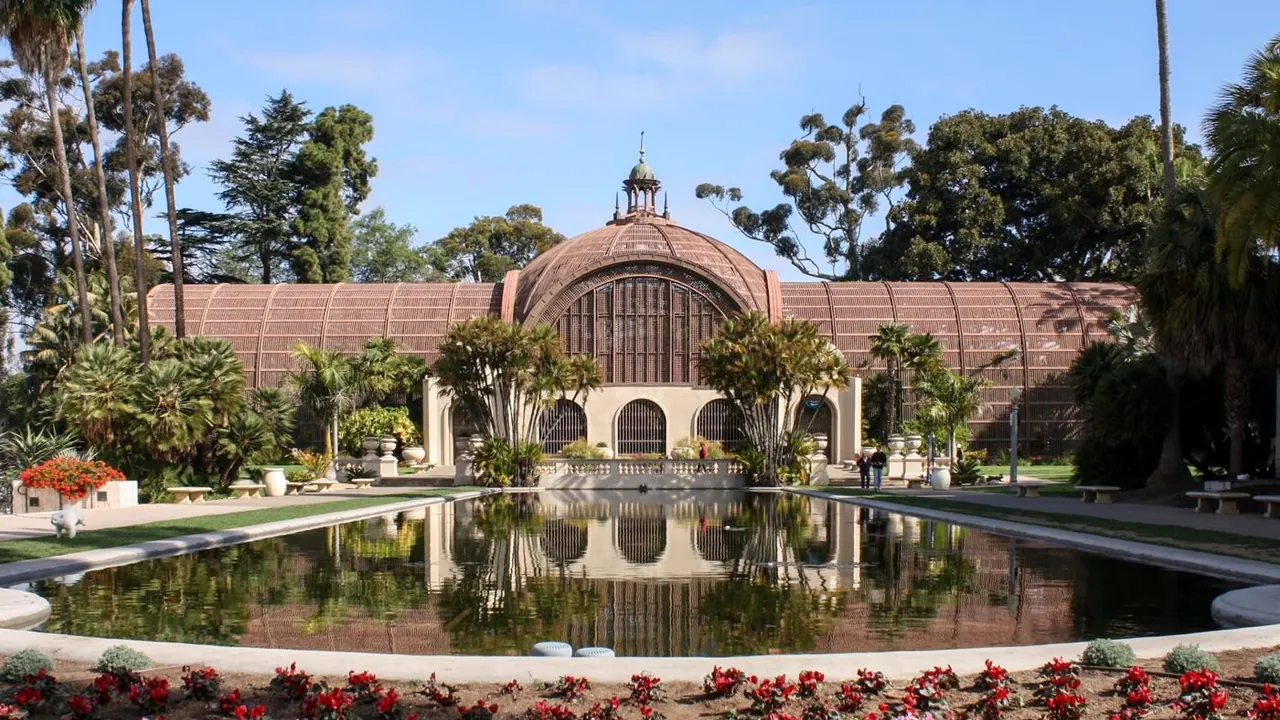
Photos: Mammoth Lakes by Dr. Al. K. Lisch, CC BY-SA 3.0, cropped; San Diego by Bernard Gagnon, CC BY-SA 3.0, cropped.
Mammoth Lakes or San Diego?
Our verdict in twelve categories, each scored against the same fixed benchmark cities, and the climate month by month, so you can choose for your trip.
Choose Mammoth Lakes for
- nature and the outdoors
- wellness
- getting around
Mammoth Lakes is for travellers whose vacation happens outdoors and at altitude. You ski one of North America's biggest mountains in winter, then hike, fish and paddle the Lakes Basin and the high Sierra once the snow has gone. In return you accept quiet evenings, filling but plain food and almost nothing to see in town, and the mountain country you get is something San Diego cannot match.
Choose San Diego for
- beaches
- culture and sights
- live music and the arts
San Diego is the broader choice, and the clear one for families. The zoo, Safari Park, SeaWorld and Legoland, a long coast of sandy beaches, the museums of Balboa Park, serious theatre and Baja-style tacos give a stay far more variety. The climate is gentle enough that outdoor plans rarely have to change.
Scoreboard
Twelve categories on one fixed scale from 0 to 100. The shaded stretch is the gap between the two.
Your match
Pick a travel style or drag the sliders, and both match scores follow your weighting.
Wins on nature and the outdoors and wellness with your weighting.
Wins on beaches and culture and sights with your weighting.
What matters to you?
Category by category
What the scores mean for a trip.
Beaches & swimming
There is no real contest here. Mammoth Lakes is a mountain town far from the sea, and its version of swimming is a short, chilly dip in Horseshoe Lake or Crowley Lake in July and August. Most people at the lakes are there to paddle or fish, not to swim.
San Diego has a whole coast to choose from. There is the wide sand at Coronado, the boardwalk scene of Mission and Pacific Beach, the gentle surf at La Jolla Shores and the quieter cliff-backed beaches to the north. Mission Bay's sheltered water suits small children. The Pacific stays cool, but the beaches themselves are the main reason many people come.
Food & drink
San Diego eats much better. The border shapes its cooking: Baja fish tacos, carne asada burritos and late-opening taco shops are everywhere. Convoy Street runs to Korean, Japanese and Vietnamese kitchens, and Little Italy has its farmers' market.
Mammoth Lakes serves ski-town food, such as big breakfasts, burgers, steaks and pizza. It is satisfying after a day outside but has little range. Both places brew their own beer, but in very different amounts: Mammoth has a taproom or two in town, while San Diego has a whole county of West Coast IPA breweries to tour.
Culture & sights
Mammoth Lakes has almost nothing to visit in town apart from a small mining and settler museum in a log cabin. Its buildings are mostly modern lodges and condominiums.
San Diego has plenty to fill a few days. Balboa Park's exposition buildings house art, natural history and air and space collections, the Midway and the old sailing ships line the waterfront, and Old Town and the first California mission tell the Spanish and Mexican story. None of it is world class, but it is far more than the mountains offer.
Nightlife
Evenings in Mammoth Lakes revolve around après-ski. The Village bars fill in the late afternoon in winter, and the town is mostly asleep before midnight because everyone has an early start.
San Diego offers real choices. The Gaslamp Quarter has rooftop bars and dance clubs, Pacific Beach has a rowdy beach-town strip, and North Park and Hillcrest have cocktail bars, taprooms and the city's gay scene. It is still not a city people visit for its nights out, but it is a good deal livelier than a ski town.
Nature & outdoors
Mammoth Lakes is built around its landscape. The big ski mountain becomes a bike park in summer, the Lakes Basin sits just above town, and the trails lead into the Ansel Adams and John Muir wildernesses. Devils Postpile, Mono Lake's tufa towers and Tuolumne Meadows are all within reach. At about 2,400m, this is high, raw country.
San Diego's outdoors is gentler and closer to the sea. You can walk the bluffs at Torrey Pines, kayak to the La Jolla sea caves among sea lions, surf all year and watch grey whales in winter. It also has mountains and the Anza-Borrego desert an hour or two inland. It is very good, but less dramatic than the Sierra.
Day trips
San Diego has the more varied list, largely because Mexico is so close. Tijuana is a trolley ride and a walk away, and the Valle de Guadalupe vineyards are a long day out. Temecula's wine country, apple-pie Julian, the North County beach towns by train and even Los Angeles also make day trips.
From Mammoth Lakes, the outings are few and spread along one highway. The Bodie ghost town and the Manzanar internment camp are both worth the drive, while Bishop and Lee Vining are smaller stops. In winter the closed passes shorten the list further.
Good for families
San Diego is one of the easiest family destinations anywhere. It has a world-class zoo with a skyfari ride, the Safari Park, SeaWorld and Legoland, plus an aquarium and science centre for cooler days and a mild climate that keeps outdoor plans on track.
Mammoth Lakes is good for active families. It has a big ski school, a tubing hill, rowing boats and trout fishing in the Lakes Basin, and condominiums with kitchens. However, there is nothing indoors for children on a stormy day, and the altitude can tire young children for the first day or two.
Getting around
Getting around is similar in both places, though in different ways. In Mammoth Lakes, a ski vacation works without a car thanks to the free winter shuttles and the gondola from the Village, and in summer a trolley serves the lakes. Anything further afield in the Eastern Sierra means driving, sometimes with snow chains.
San Diego's centre, Little Italy and the waterfront are easy on foot, and the trolley and coastal trains are useful. La Jolla, the beaches and the big theme parks are spread far apart, though, so most visitors end up hiring a car.
Shopping & style
San Diego clearly has more for shoppers. Fashion Valley has the department stores and luxury brands, there is a large outlet centre at the border, and Little Italy, North Park and La Jolla have independent boutiques and galleries. Old Town sells Mexican pottery and crafts. Mammoth's shops are for gear: skis, climbing equipment, fly-fishing tackle and framed landscape photographs.
Affordability
Neither is cheap, and San Diego is only slightly easier on the wallet. In Mammoth Lakes, the season decides the cost: winter lift tickets and peak-week lodging are steep, while a summer of hiking and lakes costs little beyond a park pass.
In San Diego, the big attractions are what drive up a family's budget, with high admission at the zoo, SeaWorld and Legoland. Taco shops, free beaches and Balboa Park's gardens help balance that out.
Live music & performing arts
San Diego has a real theatre city. The Old Globe, with its outdoor Shakespeare stage, and the La Jolla Playhouse both produce their own shows and have sent productions to Broadway. The symphony also plays summer concerts on the bay.
Mammoth Lakes has a community theatre on the college campus, and in summer a jazz festival and chamber concerts held in meadows with the peaks behind. That is enough for a pleasant evening, but not enough to plan a trip around.
Wellness & relaxation
Both are easy places to slow down, in different ways. In Mammoth Lakes, the classic way to relax is a soak in a primitive hot spring out in the sagebrush with the Sierra on the skyline. After skiing, the lodge hot tubs and massage are the comfortable alternative.
San Diego has no thermal bathing at all. Instead it has polished resort spas in La Jolla, Coronado and Carlsbad, the long-standing yoga culture of Encinitas, and slow mornings in its beach towns.
When should you go?
Pick your month. The climate figures are measured averages, not a forecast.
Mammoth Lakes in July
San Diego in July
Daytime high, °C
Rainfall in the month, mm
Where the figures come from
Mammoth Lakes's station stands 227 m below the city centre, so the centre is likely a little cooler than the figures say.
Mammoth Lakes has no rain gauge within 25 km of the centre, so its rainfall comes from a gridded climate dataset read at the city rather than from a gauge further away.
Temperature and rainfall are climate normals, averaged over the years shown. Mammoth Lakes: 2008-2020 (rainfall 1991-2020) normals, Mammoth / Whitmore Hot Springs (12 km from centre). San Diego: 1991-2020 (sunshine 1981-2010) normals, San Diego International Airport (2.8 km from centre).
Mammoth Lakes has two clear seasons. From December to March it is properly cold, with daytime highs around 6°C in January, and these are its wettest months, with about 80mm falling as snow in midwinter. That is the ski season. In April and May the mountain usually keeps skiing, often into early summer, while the valley days warm up. The high trails and the Lakes Basin stay snowbound until the melt, though, so spring suits skiers rather than hikers. From June to September the days are dry and warm, reaching 28°C at the peak. This is the time for the lakes, the trails and the drive over Tioga Pass. October is still mild and brings the aspen colour. November is the only real gap, too cold for the trails and usually too early for good snow.
San Diego hardly changes through the year. It is comfortable for walking in every month, almost rainless from May to October and only lightly wet in winter. For the beach, choose late summer, when the sea reaches 21°C in August and September. In winter it falls to 15°C, which means wearing a wetsuit. July is the sunniest month, though early summer mornings can start under cloud.
Which traveller are you?
For an outdoors trip, Mammoth Lakes is the one to pick. A major ski mountain, a lift-served bike park, granite lakes and wilderness trails all start at the edge of town, and the Yosemite high country is within reach in summer.
On a beach and sun trip, San Diego is the only real option. It has long sandy strands from Coronado to Carlsbad, a boardwalk and surf breaks for every level, and dry sunny summers. Mammoth's cold mountain lakes are for a quick dip, not a beach day.
For a culture and arts trip, San Diego has far more to fill the days and evenings: the museums of Balboa Park, the USS Midway, the adobes of Old Town, and theatre at the Old Globe and La Jolla Playhouse. Mammoth has one small history museum.
Before you go
| Measure | Mammoth Lakes | San Diego |
|---|---|---|
| Currency | US Dollar (USD) | US Dollar (USD) |
| Sockets | AB120 V, 60 Hz | AB120 V, 60 Hz |
| Driving side | Right | Right |
| Time zone | UTC-8, UTC-7 in summer | UTC-8, UTC-7 in summer |
| Emergency number | 911 | 911 |
| Elevation | 2,402 m | 129 m |
| Main airport | Reno Tahoe International Airport (RNO)217 km from centre25 non-stop destinations | San Diego International Airport (SAN)3 km from centre87 non-stop destinations |
| Public holidays this year | 13 days | 13 days |
By the numbers
| Measure | Mammoth Lakes | San Diego |
|---|---|---|
| City population | 7,191 | 1,386,932 |
| People per km² | 110 | 1,438 |
| Museums within 10 km | 0 | 26 |
| UNESCO World Heritage sites within 50 km | 0 | 0 |
| Swim season, months above 21 °C | - | 1 month |
Where else could you go?
Every comparison below shares a destination with this one, so you can follow Mammoth Lakes or San Diego somewhere new.
- Laguna Beachvs San Diego
- Newport Beachvs San Diego
- Huntington Beachvs San Diego
- Palm Desertvs San Diego
- Palm Springsvs San Diego
- Anaheimvs San Diego