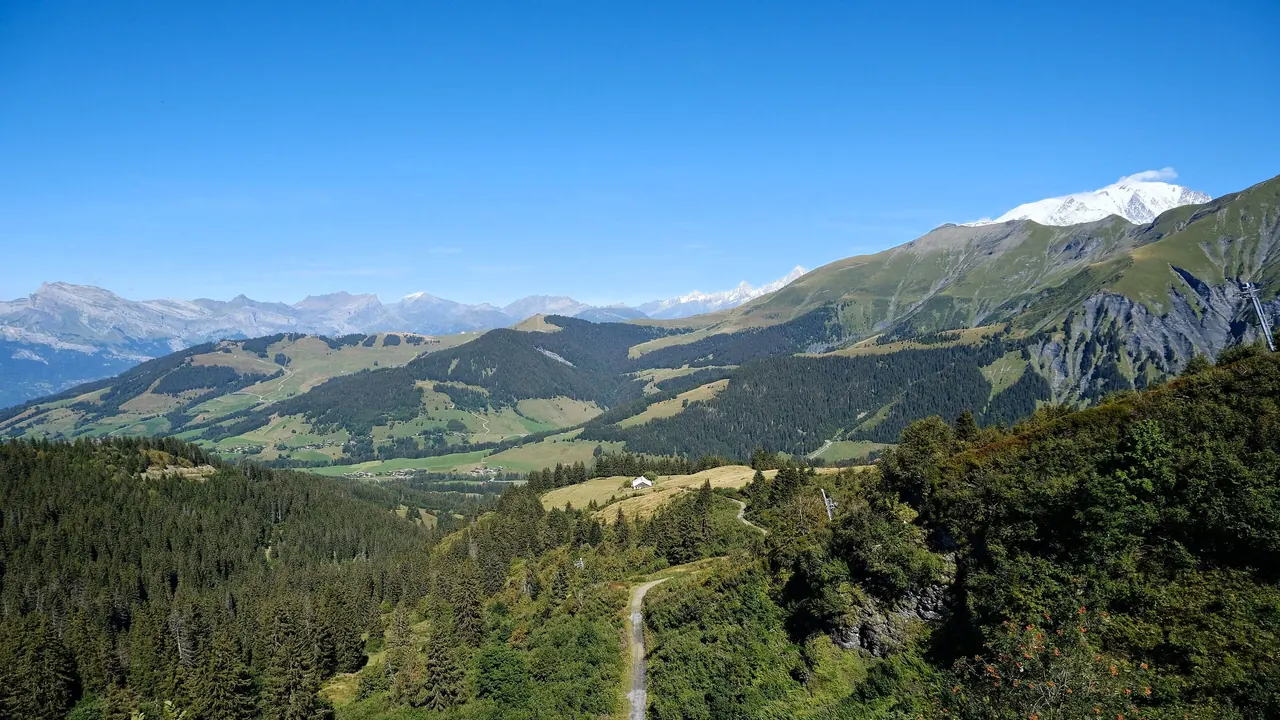
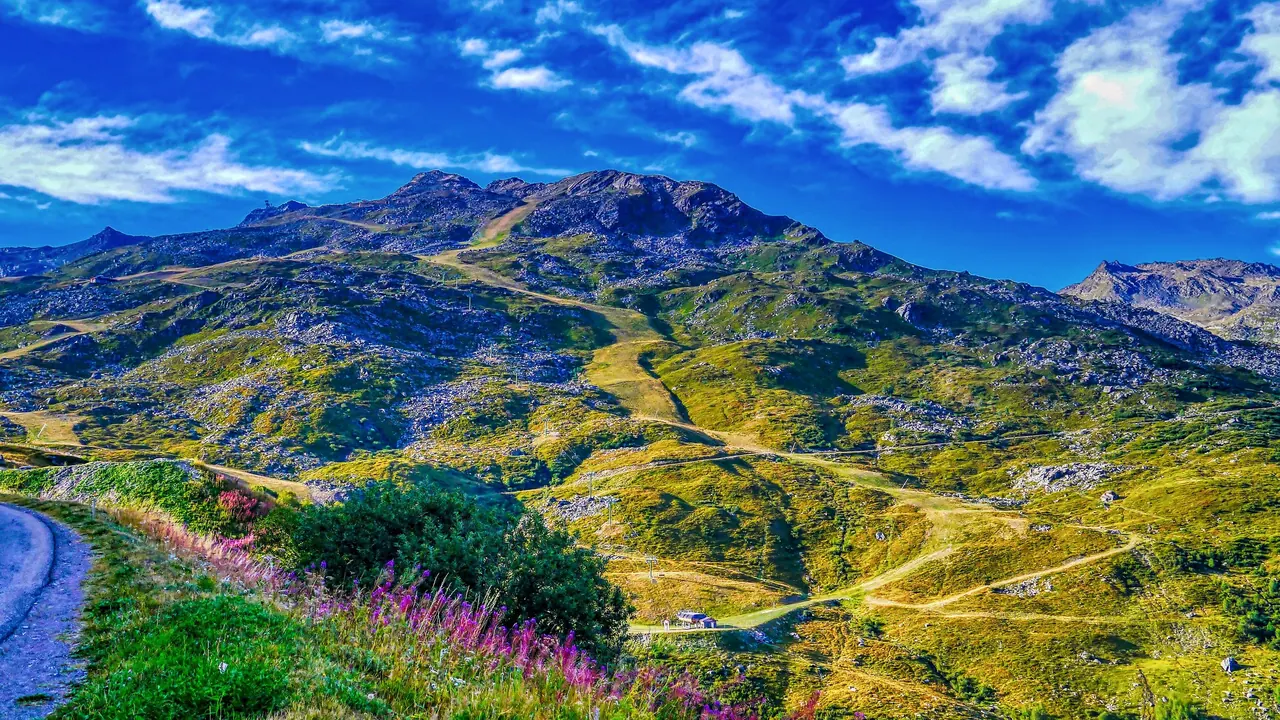
Photos: Megève by Guilhem Vellut, CC BY 2.0, cropped; Val Thorens by Zairon, CC BY-SA 4.0, cropped.
Megève or Val Thorens?
Our verdict in twelve categories, each scored against the same fixed benchmark cities, and the climate month by month, so you can choose for your trip.
Choose Megève for
- day trips
- shopping
- wellness
Megève suits travellers who want the mountains with a village around them. Its cobbled medieval centre, starred kitchens, grand-hotel spas and car-free lanes make for a slower, more polished stay, and it works in summer as well as winter, with lake swimming nearby and easy drives to Chamonix, Annecy, Geneva and Aosta. Couples, families and anyone who skis gently and lunches long will feel at home.
Choose Val Thorens for
- getting around
- nightlife
- prices
Choose Val Thorens if the snow comes first and everything else is secondary. As Europe's highest resort, it keeps its season into May and opens straight onto the whole Three Valleys, with glacier and off-piste terrain that Megève's lower, wooded slopes cannot match. Groups of friends who want to ski hard all day, stay ski-in, ski-out and dance on terrace tables at four o'clock will get more from it, as long as they don't expect much beyond the pistes.
Scoreboard
Twelve categories on one fixed scale from 0 to 100. The shaded stretch is the gap between the two.
Your match
Pick a travel style or drag the sliders, and both match scores follow your weighting.
Wins on day trips and shopping with your weighting.
Wins on getting around and nightlife with your weighting.
What matters to you?
Category by category
What the scores mean for a trip.
Beaches & swimming
Neither is a swimming destination, but Megève at least offers a summer swim outdoors. There are natural bathing ponds in the neighbouring valleys, the Palais has an outdoor pool, and the clear water of Lake Annecy is about an hour's drive away.
At Val Thorens the lakes are glacier-fed and far too cold to swim in at any time of year, so swimming means an indoor pool.
Food & drink
Both cook the same Savoyard dishes of fondue, raclette, tartiflette and Beaufort, and both make a long lunch on a slope-side terrace part of the ski day. Megève goes further. It has several Michelin-starred kitchens in the village and on Mont d'Arbois, and in summer there are farmhouse auberges in the side valleys.
Val Thorens has a few ambitious hotel restaurants, but most menus repeat cheese dishes, pizza and burgers, and many visitors cook in their apartments. Neither offers much variety or anything cheap.
Culture & sights
Neither is a place for sightseeing, but Megève at least has a real village to wander. Its car-free core still follows a medieval street pattern around the parish church and clock tower, and the chapel-lined Calvaire path above it makes a short climb with a view. The interwar chalets of Henry Jacques Le Même show how Megève set the style for the smart Alpine resort, and a single morning covers the lot.
Val Thorens has nothing like this. It is a purpose-built ski station from the 1970s with no old quarter, museum or monument, so the peaks around it are the only thing to look at. For any taste of Savoyard heritage you have to drive down to the valley.
Nightlife
Val Thorens is where the party is. Après-ski means dancing on tables at mountain terraces as the lifts close, then pubs in the village and a few clubs, one of them underground, that keep going until the early hours, mostly for students and groups of friends.
Megève's evenings are chic and quieter: fireside hotel bars, piano and wine bars on the cobbles, and long dinners for an older, wealthier crowd. In both places the scene largely shuts down outside winter.
Nature & outdoors
Both are built around the mountains, but the landscapes are very different. Megève sits low and sunny among woods and meadows facing Mont Blanc, with wide cruising pistes that intermediates love but snow at the bottom that varies from year to year. Its summer is long and green, with hiking on Mont Joly, paragliding, mountain biking and golf.
Val Thorens is stark, high country above the treeline, all rock, snowfields and glacier. The snow is reliable from late November into May, and the Three Valleys open up off-piste and glacier skiing on a far larger scale. Its summer is short and cool, with trails to high lakes and marmots and ibex at the edge of the Vanoise.
Day trips
Megève is a far better base for exploring. Chamonix is about forty minutes away, while Annecy and Geneva each make an easy day out, and through the Mont Blanc tunnel lie Courmayeur and Roman Aosta in Italy. Saint-Gervais, Combloux and Cordon add baroque churches close to home.
From Val Thorens most outings are on skis to Méribel and Courchevel. Off the mountain, the long, winding road leads to Moûtiers and medieval Conflans, while Annecy and Chambéry are a long day at about two hours away. Both places really need a car.
Good for families
Both resorts handle the practical side of a family ski week well, with car-free centres, children's ski schools and gentle beginner slopes. Megève adds a calmer, safer village atmosphere, sleigh rides, an ice rink and a summer season of pony rides and walks to mountain farms.
Val Thorens is convenient, with lodgings close to the slopes and a long toboggan run, but at that height it is often bitterly cold, lifts can close in bad weather and small children may sleep badly. Its young party crowd also sets the tone. Neither has zoos or theme parks for a wet day.
Getting around
Once you have arrived, Val Thorens is the easier of the two. The village is compact, many lodgings are ski-in, ski-out, and the lifts carry you across the whole Three Valleys. The catch is the journey up, which takes about an hour of hairpin bends from the station at Moûtiers.
Megève's pedestrian centre takes minutes to cross, but many chalets and hotels are spread across steep hillsides. There is no railway station nearer than Sallanches, and summer shuttles are sparse, so most visitors rent a car.
Shopping & style
Megève is a place to browse. Its cobbled lanes hold designer ski-wear, cashmere and fur, jewellers and galleries of Alpine interiors, and Allard, the ski-wear house founded in the village in the 1920s, is still there. It is all fairly small, though, and none of it is cheap.
In Val Thorens shopping means ski hire, technical gear, delicatessens and supermarkets for the apartment.
Affordability
Neither is cheap, but Val Thorens is the less punishing of the two. It is less exclusive than its smartest neighbours, and groups sharing a self-catering apartment can bring the cost of a week down considerably.
Megève is one of the dearest places in the Alps, with chalets, hotels and village dinners priced for a wealthy crowd. Budget-minded visitors often sleep in the valley towns and drive up, and summer or the quieter weeks of January and March ease the bill a little.
Live music & performing arts
Neither has a theatre or a concert season. Megève has a long attachment to jazz, with live sets in a jazz cellar or piano bar in winter and a few open-air and church concerts in summer.
In Val Thorens live music means cover bands and DJs at après-ski bars.
Wellness & relaxation
Megève makes slowing down part of the stay. The grand hotels compete on their spas, the Palais has a public wellness area, and the thermal baths of Saint-Gervais are twenty minutes down the road. Sleigh rides and quiet snowy evenings set the pace.
Val Thorens has good hotel spas and a public spa at its sports centre, and the old spa town of Brides-les-Bains is an hour away. The resort itself runs on hard skiing and loud evenings, so rest is something you find indoors rather than in the atmosphere.
When should you go?
Pick your month. The climate figures are measured averages, not a forecast.
Megève in July
Val Thorens in July
Daytime high, °C
Rainfall in the month, mm
Where the figures come from
Megève's temperatures are measured 29 km from the centre, at Bourg-St-Maurice.
Megève's station stands 162 m below the city centre, so the centre is likely a little cooler than the figures say.
Megève has no rain gauge within 25 km of the centre, so its rainfall comes from a gridded climate dataset read at the destination rather than from a gauge further away.
Val Thorens has no weather station within reach, so its figures come from a gridded climate model rather than a measured record, and read a broad area rather than one spot.
Temperature and rainfall are climate normals, averaged over the years shown. Megève: 1999-2020 (rainfall 1991-2020) normals, Bourg-St-Maurice (29.1 km from centre). Val Thorens: 1991-2020 normals, TerraClimate 4 km grid at the town, no weather station within 90 km.
The two climates are far apart. Megève has a real summer: from June to August afternoons reach around 27°C, warm enough for the bathing ponds and Lake Annecy, and good weather for hiking and long terrace lunches. Winter days stay just above freezing, which is pleasant for the village but leaves snow on the lower slopes less certain. Rain is spread fairly evenly through the year, with the wettest spell from November to January, peaking at 140mm in December.
Val Thorens never gets warm. Even in August the high is only about 16°C, and from December to February daytime highs stay below freezing at around -3°C, so it is a place for skiing rather than strolling. That cold is what keeps the snow reliable from late November into May. Precipitation is heavy, reaching 180mm in November, and at this height much of it falls as snow. Summer is a short, cool window for walkers rather than a season in its own right.
Which traveller are you?
On a family trip with young children, Megève is the gentler choice. Its small, car-free village, ski kindergartens, sleigh rides, ice rink and summer pony rides suit little ones better than Val Thorens, where the altitude brings biting cold and disturbed sleep.
For a relaxing and wellness trip, Megève also comes out clearly ahead. The grand-hotel spas, the public wellness area at the Palais and the thermal baths of Saint-Gervais nearby fit its quiet evenings, while Val Thorens is built around hard skiing and loud après-ski.
On a trip on a tight budget, Val Thorens is the slightly easier of two expensive resorts. A group sharing a self-catering apartment and cooking for themselves can cut costs there, whereas Megève's hotels, chalets and restaurants are priced for a wealthy crowd.
Before you go
| Measure | Megève | Val Thorens |
|---|---|---|
| Official language | French | French |
| Currency | Euro (EUR) | Euro (EUR) |
| Sockets | CE230 V, 50 Hz | CE230 V, 50 Hz |
| Driving side | Right | Right |
| Time zone | UTC+1, UTC+2 in summer | UTC+1, UTC+2 in summer |
| Emergency number | 112 | 112 |
| Elevation | 1,027 m | 1,710 m |
| Main airport | Geneva International Airport (GVA)58 km from centre150 non-stop destinations | Geneva International Airport (GVA)111 km from centre150 non-stop destinations |
| Public holidays this year | 11 days | 11 days |
By the numbers
| Measure | Megève | Val Thorens |
|---|---|---|
| Population | 2,893 | - |
| People per km² | 66 | - |
| Museums within 10 km | 2 | 0 |
| UNESCO World Heritage sites within 50 km | 1 | 1 |
Where else could you go?
Every comparison below shares a destination with this one, so you can follow Megève or Val Thorens somewhere new.
- Les Menuiresvs Val Thorens
- Saint-Gervais-les-Bainsvs Megève
- Méribelvs Val Thorens
- Courchevelvs Val Thorens
- La Clusazvs Megève
- Le Grand-Bornandvs Megève