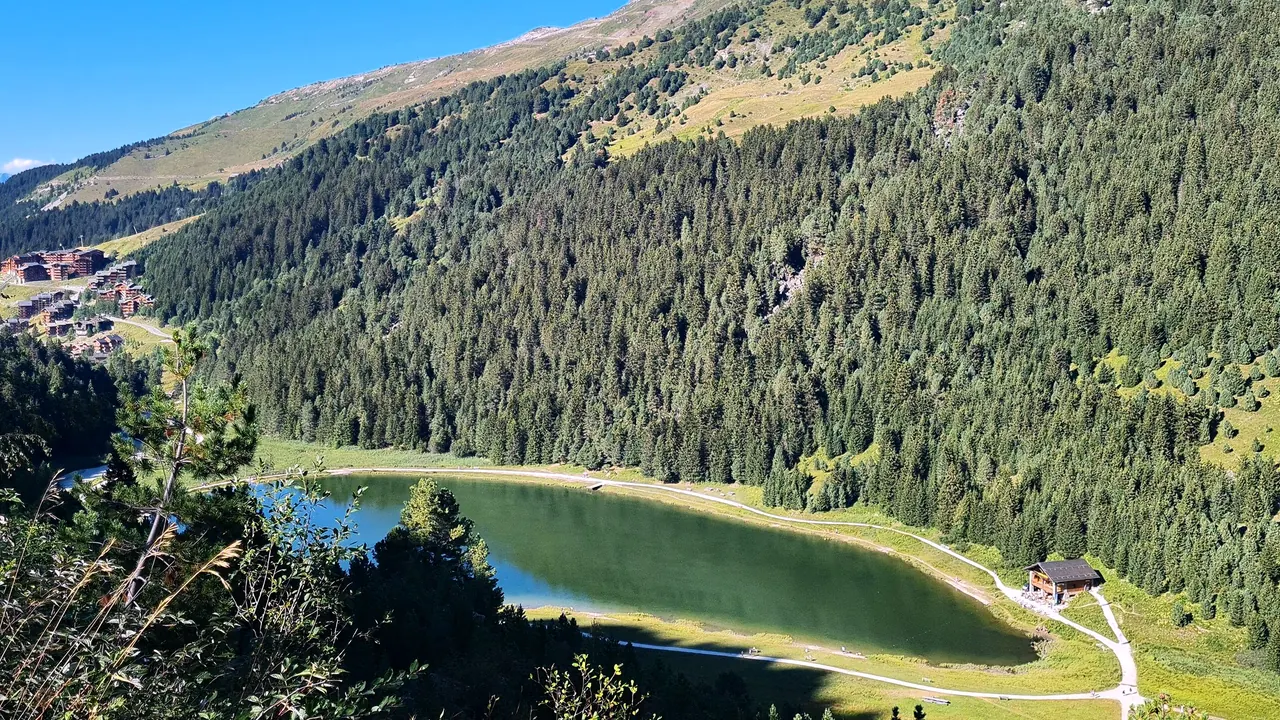
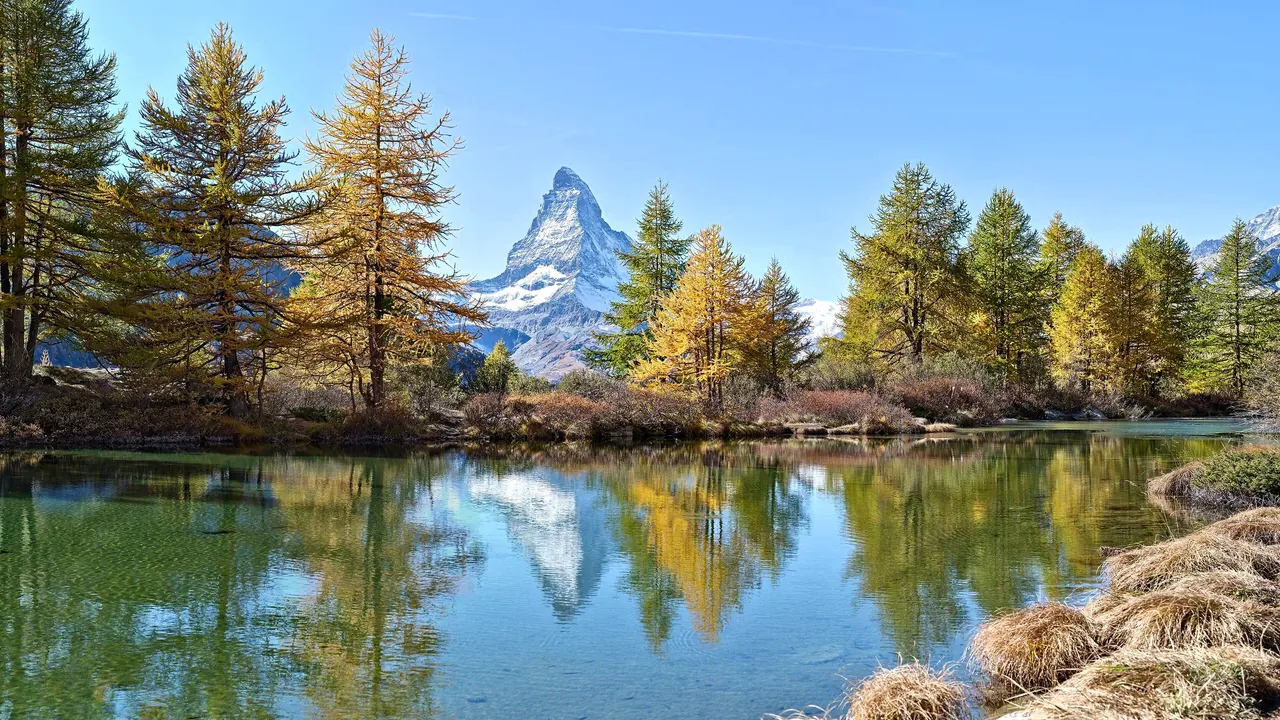
Photos: Méribel by Augustin Cléchet, CC BY-SA 3.0, cropped; Zermatt by Roy Egloff, CC BY-SA 4.0, cropped.
Méribel or Zermatt?
Our verdict in twelve categories, each scored against the same fixed benchmark cities, and the climate month by month, so you can choose for your trip.
Choose Méribel for
- nightlife
- families
- day trips
Méribel suits skiers who want as much linked terrain as possible, a proper après-ski scene and an easier time with children. It sits in the middle of the 3 Vallées, so a week can range from Courchevel to Val Thorens without repeating a run. Ski schools, childcare in chalets and the Olympic Park make family logistics simpler, and it is slightly less ruinous on the wallet. Annecy and Chambéry are within reach for a day off the snow.
Choose Zermatt for
- getting around
- shopping
- culture and sights
Zermatt is for travellers who want to stand under the Matterhorn and step out of the hotel into a car-free village where everything is a walk away. The high glacier lifts, the summer skiing and the long trails make it the stronger pick for mountain walkers and climbers as well as skiers. Its small mountaineering heritage and two music festivals give it a little more to do off the slopes. Evenings are quieter, and the bills are higher still.
Scoreboard
Twelve categories on one fixed scale from 0 to 100. The shaded stretch is the gap between the two.
Your match
Pick a travel style or drag the sliders, and both match scores follow your weighting.
Too close to call, 2 points apart
Wins on nightlife and families with your weighting.
Wins on getting around and shopping with your weighting.
What matters to you?
Category by category
What the scores mean for a trip.
Beaches & swimming
Neither resort is any use for a beach or a proper swim. Méribel at least has the pool at the Olympic Park, and the big Savoie lakes are a drive of over an hour away. In Zermatt swimming means a hotel pool, because the meltwater tarns under the Matterhorn are too cold even in August.
Food & drink
The two eat at much the same level, and in both the best meals are lunches on mountain terraces. What differs is the regional cooking. Méribel serves Savoyard food such as tartiflette, diots sausages and Beaufort cheese, and a fair share of its cooking happens in catered chalets.
Zermatt's huts in Findeln, Furi and Zum See serve Valais air-dried beef, rye bread and apricot desserts with the Matterhorn in view. They come with local wines such as Petite Arvine and Cornalin, which give the meal a stronger sense of place.
Culture & sights
Zermatt has more heritage worth seeing, even if it is small. The Matterhorn Museum tells the story of the 1865 first ascent, and climbers' graves lie beside the church. The Hinterdorf's raised larch granaries survive from the old farming village, and the Gornergrat cog railway, running for well over a century, is a sight in itself.
Méribel's main sight is its own chalet architecture, which is unusually consistent, along with a chapel and some traces of the 1992 Olympics. Anyone who wants more history has to head down the valley.
Nightlife
Méribel has the livelier evenings. Table-dancing in the mountain bars at last lift carries on into village pubs with a big British crowd and a small club that stays open late on busy weeks.
Zermatt's après-ski is cheerful but shorter, with slope-side bars on the runs home and a few spots along the main street. In summer its hikers are in bed early, and Méribel goes very quiet out of season too.
Nature & outdoors
Both are outstanding mountain bases, but they are strong in different ways. Méribel's draw is scale: the 3 Vallées lets skiers cover huge distances between resorts on lifts and pistes. In summer the Tueda reserve opens onto the Vanoise National Park, and there is a large lift-served network of bike trails.
Zermatt's draw is height and drama. The Matterhorn rises above the village, a ring of four-thousanders surrounds it and lifts climb to over 3,800m. The glacier keeps summer skiing going, the pistes link into Italy, and guided ascents of the high peaks start right from the village.
Day trips
Méribel has the better spread of towns to visit, as long as you have a car. Annecy's canals and lake, the Savoy dukes' castle at Chambéry, hilltop Conflans and the Beaufort cheese villages are all within about two hours.
From Zermatt, every outing starts with the long train down the valley. Sion's castle hills among the vineyards are the best of them, and Brig and the Visperterminen vineyards are pleasant extras. Most visitors spend their spare days up in the mountains instead.
Good for families
Méribel is better set up for skiing families, with young-age ski schools, snow gardens, childcare in chalets and the Olympic Park's ice rink and pool. Its weak point is the steep, icy hillside between chalets and lifts.
Zermatt turns that around. Its car-free streets are safe and the walks are short, but there is little built for children beyond nursery slopes and marmot-spotting. The highest viewpoints can be too cold and too high for small children.
Getting around
Zermatt is far easier to get around. Once you are off the train, the compact strip of village, the cog railway, the underground funicular and the gondolas are all on foot, with electric taxis for the outlying lifts. It also connects smoothly with the Swiss rail network.
Méribel relies on lifts and free shuttle buses because the village climbs a steep hillside and many chalets sit a ride from the centre. Arrival means a transfer from Moûtiers, and any trip beyond the valley means driving.
Shopping & style
Zermatt gives you more to browse, though only along one street. Its Swiss watch and jewellery boutiques, serious mountaineering outfitters and chocolate and cowbell souvenirs make a short, pleasant stroll.
Méribel's shops are mostly practical: ski hire, technical gear, a few ski-wear boutiques and delicatessens for Beaufort and sausages to take home.
Affordability
Both are among the costliest places in the Alps, but Méribel is a little less punishing. Self-catering in Mottaret or sleeping down in Brides-les-Bains brings costs down, and summer is noticeably cheaper.
Zermatt is dearer at almost every turn, from plain hotel rooms to terrace drinks and the cog railways. Staying in Täsch and picnicking from the supermarket help, but they only go so far.
Live music & performing arts
Zermatt has the edge because of two festivals. Zermatt Unplugged brings acoustic sets to tents and mountain stages in spring, and a late-summer chamber music festival brings classical players to the church. Outside those weeks there is little.
In Méribel, live music means cover bands and DJs in the après-ski bars, and the nearest theatre or concert stage is a long drive away in Chambéry or Annecy.
Wellness & relaxation
The two are well matched here, but the kind of rest differs. Méribel has a real thermal tradition close at hand: the Olympe gondola runs down to Brides-les-Bains, whose large spa takes day visitors.
Zermatt has no springs. Instead it has an unusually high number of polished hotel spas with mountain views, and its car-free quiet makes the whole village feel calmer than Méribel's brisk ski rhythm.
When should you go?
Pick your month. The climate figures are measured averages, not a forecast.
Méribel in July
Zermatt in July
Daytime high, °C
Rainfall in the month, mm
Where the figures come from
Méribel has no weather station within reach, so its figures come from a gridded climate model rather than a measured record, and read a broad area rather than one spot.
Zermatt has no weather station within reach, so its figures come from a gridded climate model rather than a measured record, and read a broad area rather than one spot.
Temperature and rainfall are climate normals, averaged over the years shown. Méribel: 1991-2020 normals, TerraClimate 4 km grid at the town, no weather station within 90 km. Zermatt: 1991-2020 normals, TerraClimate 4 km grid at the town, no weather station within 90 km.
Both resorts have two good seasons, winter snow and a summer walking season, but Méribel's summer is longer and warmer. Its daytime highs reach about 17°C in June and 20°C in August, so early summer and September are comfortable for the valley walks and the trails up into the Vanoise. Zermatt is markedly colder all year. Its highs stay below freezing from December into February and peak at only about 14°C in July and August, so its walking season is shorter, and the cold helps keep the high snow in good condition through the winter.
Méribel is also the wetter of the two, with rain or snow in every month and the heaviest falls in November and December, at around 150mm a month. Zermatt is drier through most of the year, and November is its one clearly wet month. In both resorts, May and October fall between seasons, too late or too early for good snow and too cool for the high trails. In Zermatt, June belongs with them.
Which traveller are you?
On a family trip with young children, Méribel is the easier choice. Its ski schools take children young, many chalets provide childcare, and the Olympic Park has an ice rink and a pool for days off the snow. Zermatt offers less made for children.
For a food and nightlife trip, Méribel gives more to the evening. Après-ski starts with dancing in the mountain bars and moves on to village pubs and a late club. Zermatt's dining is just as good, but its nights end earlier.
On a culture and arts trip to the Alps, Zermatt has more to offer. The Matterhorn Museum, the mountaineers' cemetery and the old larch barns of the Hinterdorf fill a morning, and spring acoustic sets and late-summer chamber music add to the evenings.
Before you go
| Measure | Méribel | Zermatt |
|---|---|---|
| Official language | French | French, German, Italian, Romansh |
| Currency | Euro (EUR) | Swiss Franc (CHF) |
| Sockets | CE230 V, 50 Hz | CJ230 V, 50 Hz |
| Driving side | Right | Right |
| Time zone | UTC+1, UTC+2 in summer | UTC+1, UTC+2 in summer |
| Emergency number | 112 | 112 |
| Elevation | 1,447 m | 1,624 m |
| Main airport | Geneva International Airport (GVA)100 km from centre150 non-stop destinations | Geneva International Airport (GVA)128 km from centre150 non-stop destinations |
| Public holidays this year | 11 days | 9 days |
By the numbers
| Measure | Méribel | Zermatt |
|---|---|---|
| Population | - | 6,023 |
| People per km² | - | 25 |
| Museums within 10 km | 0 | 2 |
| UNESCO World Heritage sites within 50 km | 0 | 2 |
Where else could you go?
Every comparison below shares a destination with this one, so you can follow Méribel or Zermatt somewhere new.
- Courchevelvs Méribel
- Les Menuiresvs Méribel
- Val Thorensvs Méribel
- La Plagnevs Méribel
- Saas-Feevs Zermatt
- Les Arcsvs Méribel